Search
83 results for “leather” in materials
- Ostrich LeatherOstrich is a luxurious leather well know for its softness, flexibility and durability. Ostrich leather is one of the strongest leathers available. Naturally occurring oils in the leather contribute to its durability, preventing cracking, even under extreme temperatures and sun exposure.
- Recycled LeatherSpinneybeck collects scrap leather and cuttings of 100% vegetable tanned leather, a mix of ground-up shoe soles and a water-based binding agent. The leather scraps, which otherwise would be discarded, are processed to create the final recycled leather product.
- Leather tilesThe appearance of a leather floor covering actually improves with age and wear. Anyone walking over a leather floor immediately notices how different it is from hardwood or stone. Footsteps are muffled and it is possible to feel the softness of the leather beneath one’s feet.
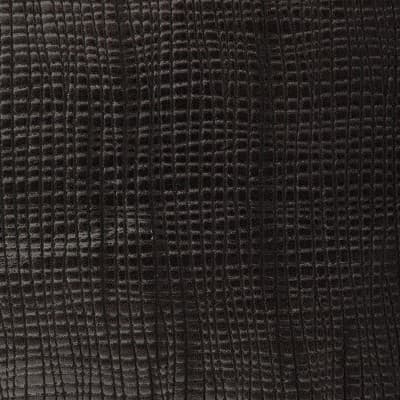
- Embossed LeatherProdital works in the field of furnishings for exclusive homes, luxurious hotels and yachts, and for excellent fitting outs in general. The embossed leather series provides the exotic/animal prints, floral prints and the geometrical/abstract prints. Possible is transferring in digital or laser directly on leather any type of imagine, colour, black and white, marks, decors, graffiti, and phrases.
- Cod LeatherLeather made from the cod is an unusual mix of fine and coarse textures.
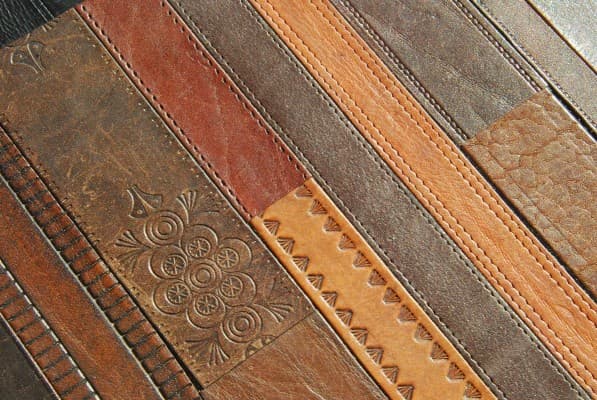
- Vintage Leather BeltTING’s luxury leather flooring, is a new re-working of vintage leather belts to create a glossy and hardwearing surface.
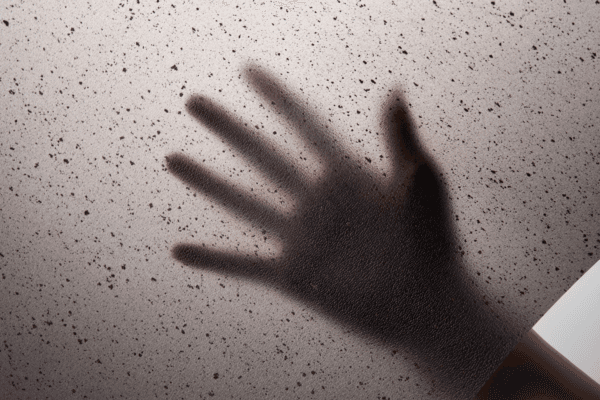
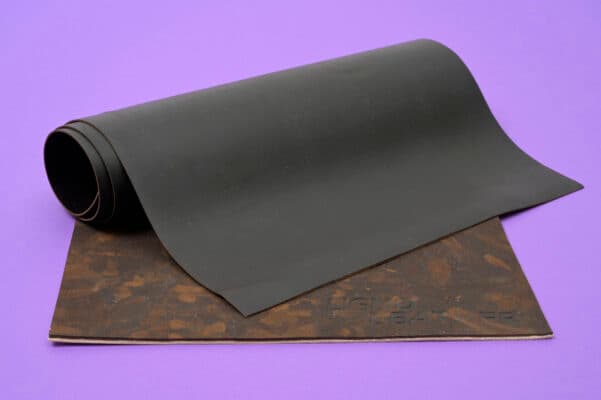
- OBRO – Leather-Infused Translucent PVC CompositeOBRO is a translucent composite material developed by integrating finely powdered recycled leather into black PVC (polyvinyl chloride). The material is designed to combine the structural durability and water resistance of PVC with the tactile warmth and depth typically associated with leather.
- LigNo LeatherLigNo Leather is a biobased leather alternative, which mostly consists of lignin. LigNo Leather is a material consisting of 70% lignin, a byproduct of the cellulose and paper industries, as well as biorefinery processes. This innovative material is developed by Lignopure as part of the LignoLight research project, funded by the Federal Ministry for Economic Affairs and Climate Action, Germany.
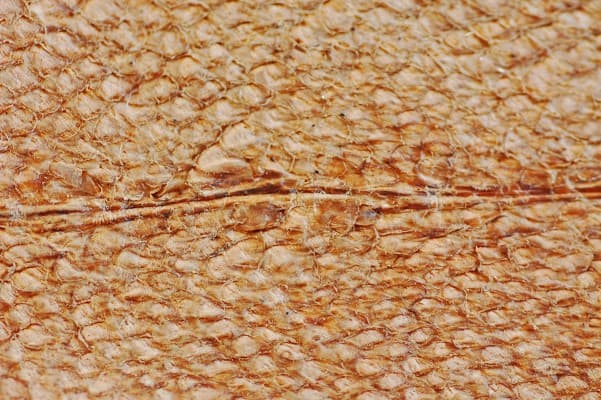
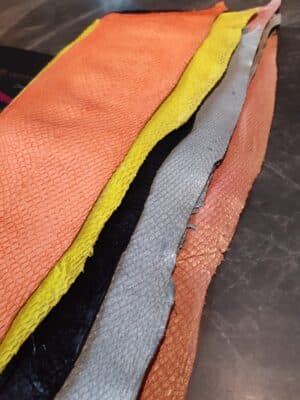
- Salmon leatherSearious Fish Leather specialises in washing, degreasing and descaling fish skins, after which a semi-finished product is created in the form of a sheet of pure functional collagen protein. This can be used as a source material for fish leather. It has developed a leather tanning concept that allows production without environmentally harmful substances. The result is a piece of leather with the structure of a snake.
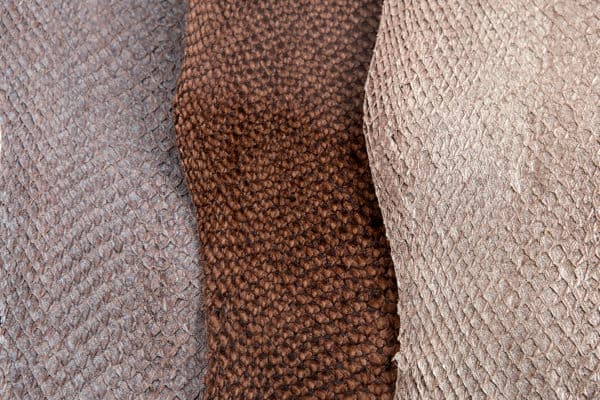
- Vegetable tanned salmon leatherThis vegetable tanned salmon leather is called Mimosa, named after the tree from which the bark is used for the tanning is derived. As of now, there is one base colour available for the vegetable tanned leather: light brown, the colour achieved by using only Mimosa bark. However, through various finishes a lot of colour/hue variations can be achieved.
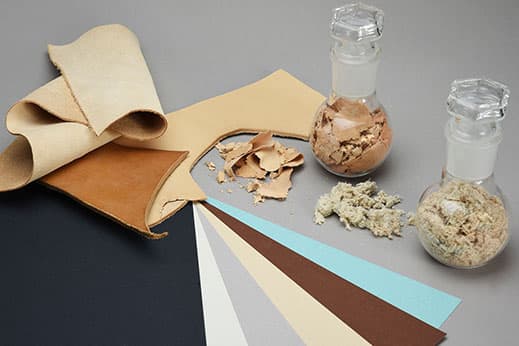
- Remake: leather paperRemake paper is made from the discarded residue of the leather manufacturing process and is a revolutionary example of ‘upcycling’. This unique and innovative paper replaces 25% of wood tree pulp with leather residues. Remake is not only a unique paper made of leather. It’s also 100% recyclable and compostable, and perfectly suited to luxury printing and packaging.
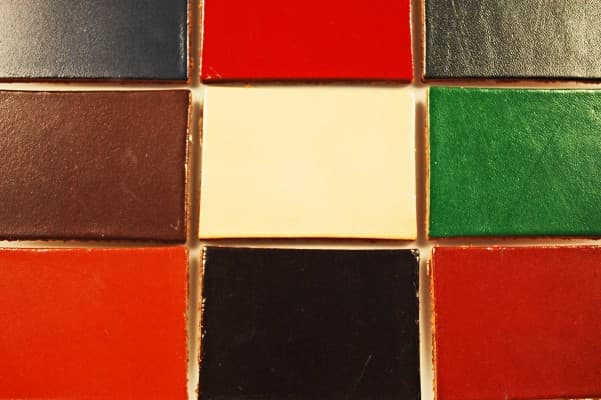
- Leather TilesThese richly textured and luxurious wall tiles are designed by London-based Genevieve Bennett for Spinneybeck. Historically the art of laser engraving or laser etching was used to create intricate patterns and designs on materials such as wood and glass. Here, this technique is extended to full grain, vegetable tanned Belting Leather.
- Bespoke 3D LeatherAll bespoke work of Genevieve Bennett is crafted, by hand, in London. These unique pieces, characteristically working with premium leather, are exquisite statements of intricate hand sculpting. Commissions range from small single panels to the imposing larger works covering entire walls. Her expertise in engraving and embossing leathers has been utilized in a series of bespoke leather wall tile projects.
- Leather-TilesA natural leather in different colours and embosses, combined with foam plates, between 6 and 8 mm thick. The material has a natural look and feel, good sound absorbing qualities and is warm and very comfortable to the touch.
- Leather Floor TileThe Interior Surfaces leather tile has a wear life of 50 plus years and a “living finish” that will become more beautiful with use and age. All the used leather hides are a byproduct of food source cattle.
- Wintan recycled leatherThis recycled leather reuses the waste of the tanning companies. The material has the appearance and touch of natural leather, because it is treated with the same processes as tanneries. The bovine-type fibres used to make the recycled leather come from the tanning process, when the skins are divided to match their thickness. These fibres are bound with natural latex.
- Cork LeatherCork leather is a high quality fabric produced from thin cork shavings obtained directly from the bark of the cork oak tree. Much of the production is hand crafted. Cork leather is soft to the touch, environmentally friendly and ecologically minded, easily cleaned and long lasting, durable as leather and versatile as fabric, waterproof and stain resistant as well as dust, dirt, and grease repellent.
- Glamorous leatherSeveral techniques enhance the leather with glamorous looks and textures. The hides for the Allure collection are laser-cut to mimic velvet. For Finesse, the leather is laser-cut and brushed with a light metallic finish. Futura Corduroy combines the familiar embossed pattern of corduroy with a metallic finish in the wales.
- Embossed leatherLeather hides are embossed and printed to enhance the natural material with three-dimensional patterns and eye-catching colours. The embossing brings the contrasts of colour and texture within the leather to the front. Several techniques, like using heat and pressure, milling and extended tanning are used for the separate collections.
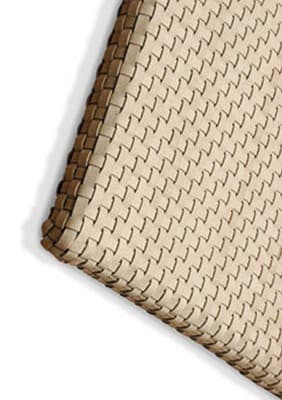
- Leather Belt Floor TilesSecond hand leather belts re-worked to create hardwearing surfaces. Each hand selected belt is chemical free cleaned and then shaved. The belts are glued onto a reconstituted leather backing. Suitable for table and bar tops, walls and floors. Available in Brown and Black.
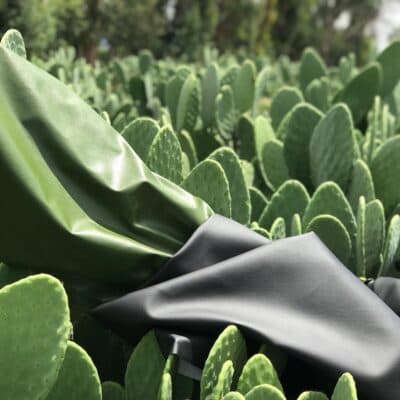
- Desserto® cactus leatherDesserto® is a cactus-based biomaterial as an alternative to leather from Mexico. The leather is made from the Nopal cactus, also known as prickly pear. This species is found in abundance in Mexico. It is free of toxic chemicals, phthalates and PVC, and its PETA approved vegan.
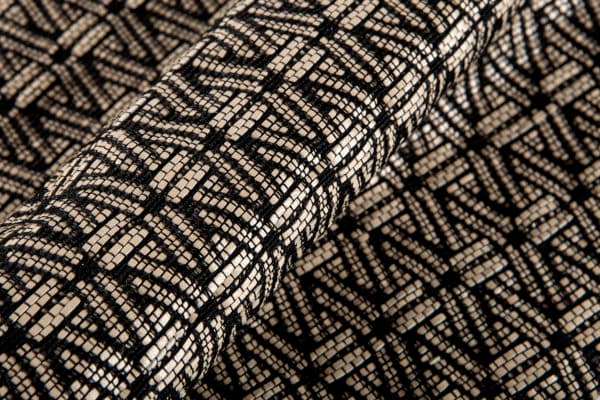
- Hand loomed leather & silkTo make the fabric, the leather is finely into cut micro strips in the US, like it is thread, before it is shipped to Laos, where it is spooled. The leather is then weaved onto silk looms by hand, a process which can take days, depending on the complexity of the patterns. The silk is naturally dyed, using organic Laotian pigments.
- Wolffish LeatherIt is the natural array of dark spots that gives leather from the spotted wolffish its bold, unique character.
- Phoenix Leather CollectionDecorative panels from reclaimed used leather belts. The panels are made using cleaned, measured, and polished leather belts. The substrate is either a flexible surface or thin MDF. The belt panels are available in brown, black or ‘multicolour’ options. Panel sizes range from 15cm x 120cm up to 120cm x 120cm.