Zurich Pioneers Next-Generation Urban CO₂ Monitoring

Understanding a city’s carbon footprint is becoming increasingly important for architects, interior and landscape designers, as well as product and packaging designers who work with sustainable materials and circular strategies. A new approach tested in Zurich now offers unprecedented insight into how CO₂ emissions behave across an urban environment. Developed as part of the EU-funded ICOS Cities project, the system demonstrates how real-time atmospheric measurements can complement traditional emissions inventories, providing faster and more precise data that can support future climate-conscious design decisions.
A New Layer of Climate Data for Urban Design
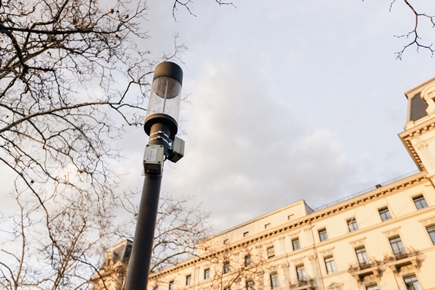
Most cities rely on emissions inventories, which estimate CO₂ output from known sources such as heating systems, transport, or waste streams. Zurich, which has set a target of net-zero emissions by 2040, now benefits from a complementary method capable of directly detecting CO₂ concentrations across the city. Researchers from Empa and partner institutions installed a dense network of measurement tools, including 60 compact sensors mounted on streetlamps and trees, additional high-precision instruments placed on telecommunication towers, and a sophisticated system on a high-rise building that captures CO₂ and wind data several times per second.
The resulting dataset provides designers and planners with a detailed picture of how emissions fluctuate in real urban conditions. Such insights can inform decisions ranging from façade material selection and passive ventilation strategies to landscape configurations that support carbon uptake or the organisation of mobility infrastructure.
Turning Atmospheric measurements Into Actionable Insight
Because concentration measurements alone do not reveal where emissions originate, the research team combined their data with three advanced atmospheric transport models. The most comprehensive model, ICON-ART, tracks how CO₂ is emitted and moves across the city with a spatial resolution of around 500 metres. A second model, GRAMM/GRAL, focuses on airflow around individual buildings, offering a highly detailed view of how emissions behave at street level. A third method, based on eddy flux analysis, directly measures emission flows around the high-rise installation and then uses a dispersion model to identify their likely sources.
Despite their different approaches, all three models produced remarkably consistent results and closely matched Zurich’s existing emissions inventory. This suggests that atmospheric monitoring can reliably confirm, refine, or challenge official calculations, improving the accuracy of urban climate reporting.
Implications for Sustainable Material and Urban Design
For the design community, this research provides valuable opportunities. High-resolution emissions data can help assess how materials influence microclimates, whether through reflective façades, biobased cladding, porous surfaces, or green roofing systems. Urban designers and landscape architects can evaluate how natural interventions contribute to real-time carbon fluxes, while planners can use the data to optimise transport corridors or low-carbon districts. The ability to observe the atmospheric effect of interventions also supports circularity goals, allowing cities and designers to verify whether material choices, local sourcing strategies or building retrofits are delivering measurable climate benefits.
Following a three-year pilot phase, Zurich plans to integrate this monitoring system into its long-term climate strategy, making it one of the first European cities to combine emissions inventories with atmospheric observations. As the system evolves, designers across disciplines may gain access to dynamic CO₂ data that can inform more sustainable, circular and climate-responsive material solutions.
Source: Empa
Photos: Pekka Pelkonen / ICOS RI

Comments