Carbon-Neutral Concrete Bridge Shows New Direction for Structural Materials
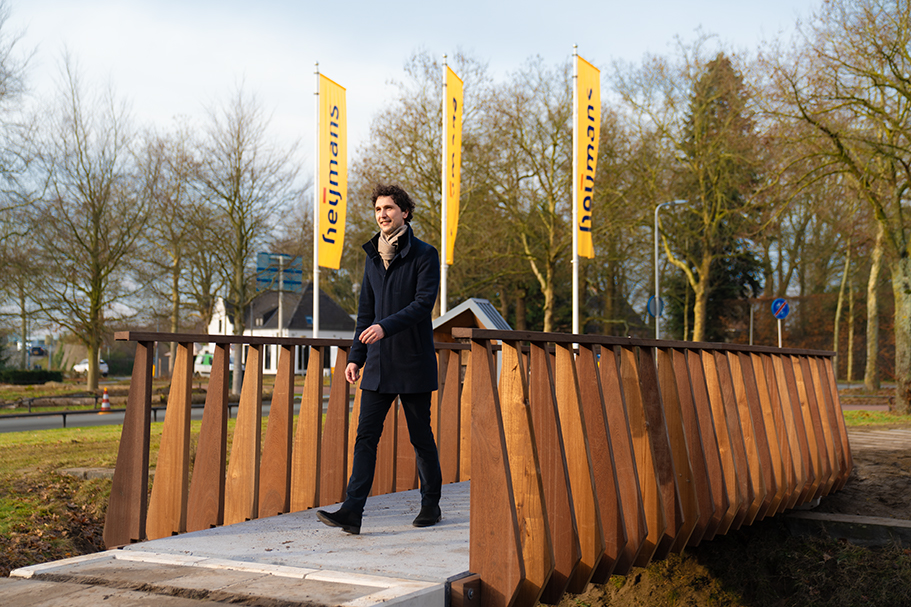
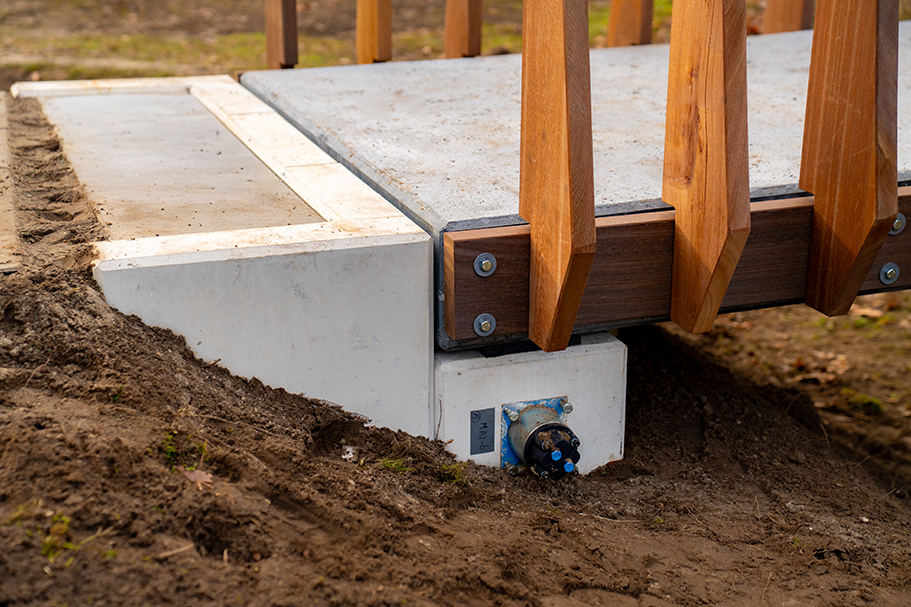
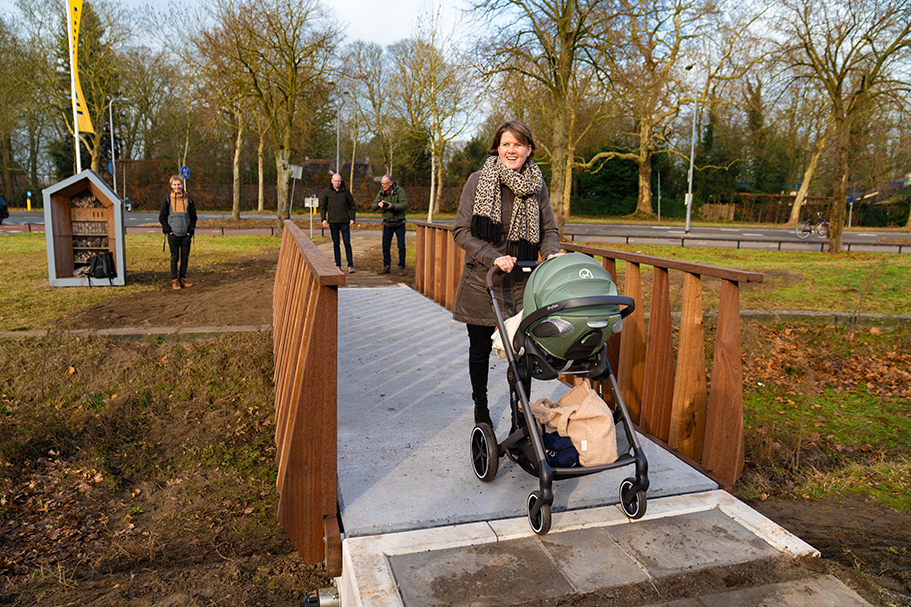
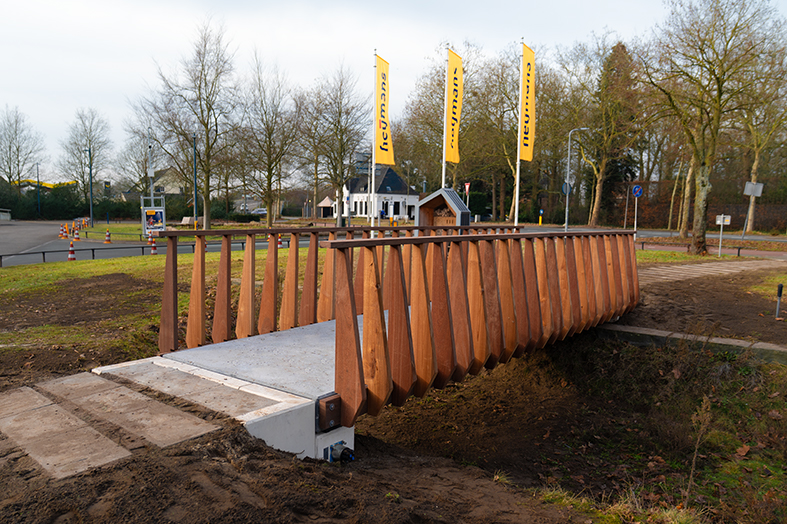
In Rosmalen, the Netherlands, construction company Heijmans and materials innovator Paebbl have completed what they describe as the world’s first pedestrian bridge made with CO₂-neutral structural concrete. With this project, the partners show that concrete infrastructure no longer has to contribute to climate change.
The pedestrian bridge, which opened in January 2026, spans seven metres. More importantly, it proves that carbon-storing materials can be used in fully structural applications. Until now, designers mainly associated such materials with experimental or non-load-bearing uses. This project challenges that assumption.
Circular Concrete Without Compromising Performance
The bridge uses a concrete mix that consists of 75% circular raw materials. Instead of primary sand and gravel, the team applied recycled aggregates supplied by Urban Mine. In addition, CarStorCon Technologies integrated biochar into the mix, further reducing its environmental impact.
Despite this high level of circularity, the concrete still meets the C30/37 strength class. As a result, the bridge complies with all structural requirements. This outcome shows that sustainable concrete solutions can deliver the same performance as conventional mixes. For architects and landscape architects, this opens new possibilities for low-carbon public infrastructure.
Cement Reduction Through Carbon Storage
Another key innovation lies in the reduction of traditional cement. In this project, the team replaced 30% of the cement with Paebbl’s carbon-storing material. This marks the highest cement replacement rate Paebbl has achieved so far in structural concrete.
Paebbl’s technology mineralises captured CO₂ and stores it permanently within the concrete. Consequently, the bridge deck locks in 66 kilograms of CO₂. When combined with the use of recycled materials, the total embodied carbon footprint becomes more than neutral. In fact, the project achieves an overall carbon reduction of over 100%.
Relevance for Architects and Material Specifiers
Concrete remains one of the most widely used materials in architecture and infrastructure. At the same time, it is responsible for a significant share of global emissions. Therefore, innovations that address cement use and material sourcing are crucial.
This pedestrian bridge demonstrates how cement reduction, recycled aggregates and carbon storage can come together in a single, scalable solution. For architects, engineers and landscape designers, it offers a clear and practical reference for future low-carbon projects in the public realm.
As Heijmans’ Innovation Manager Nick Vervoort explains, carbon-neutral structural concrete is no longer a distant ambition. Instead, this project shows that it is already achievable today.
Source & photos: Paebbl

Comments