3io
Request Information
Please sign in first or register for free to contact University of Innsbruck, department of experimental architecture | building design and construction.
- story by MaterialDistrict
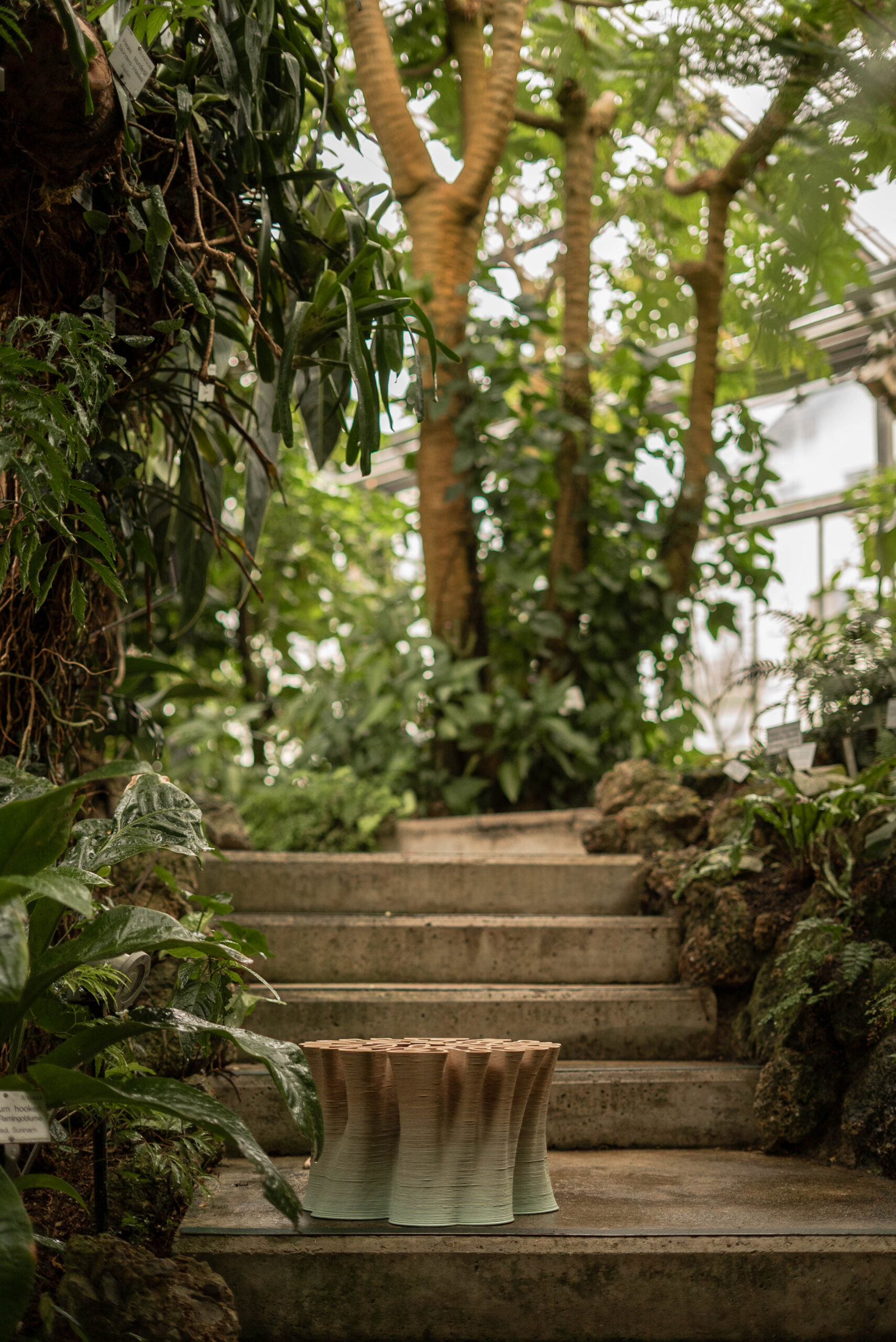
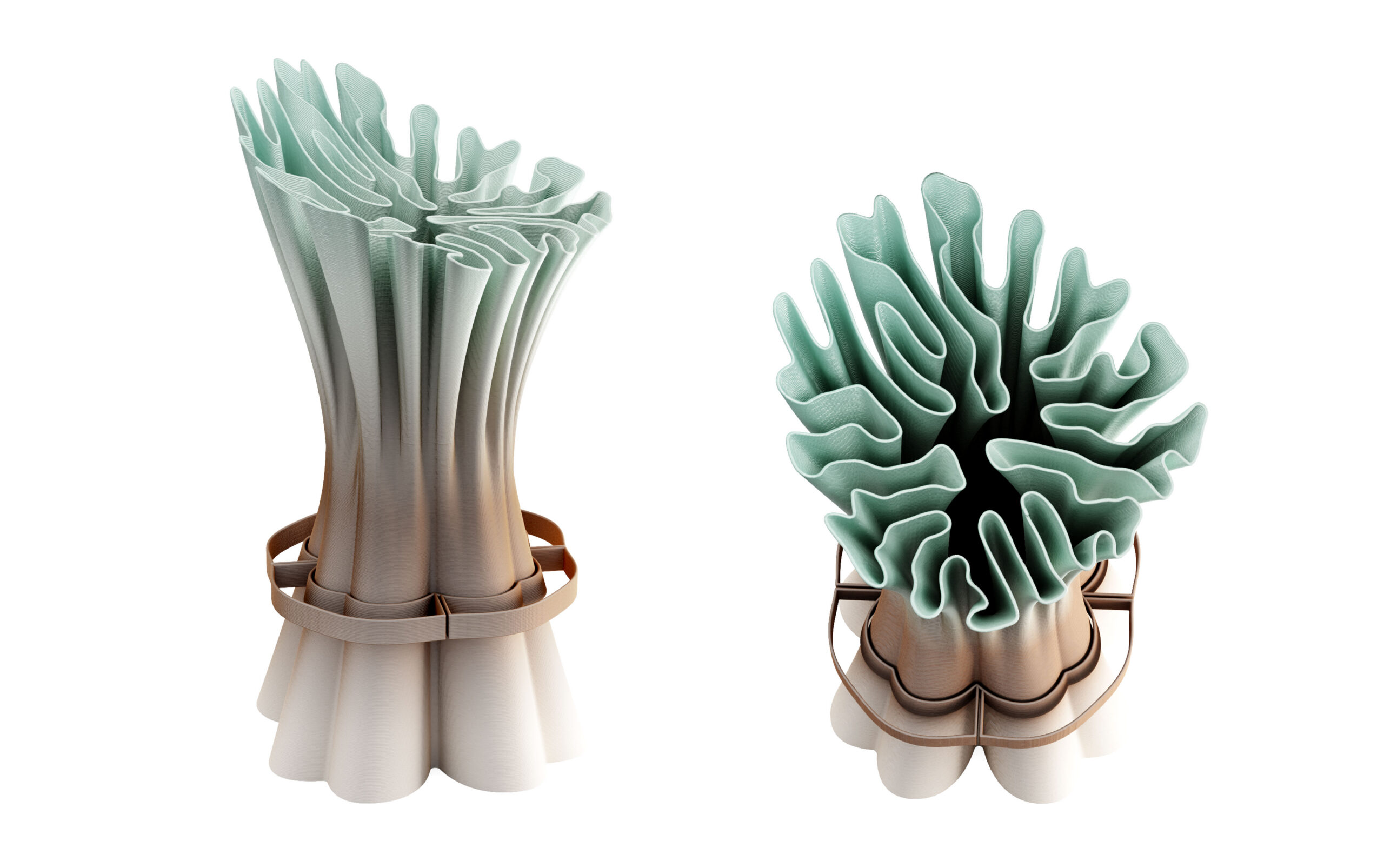
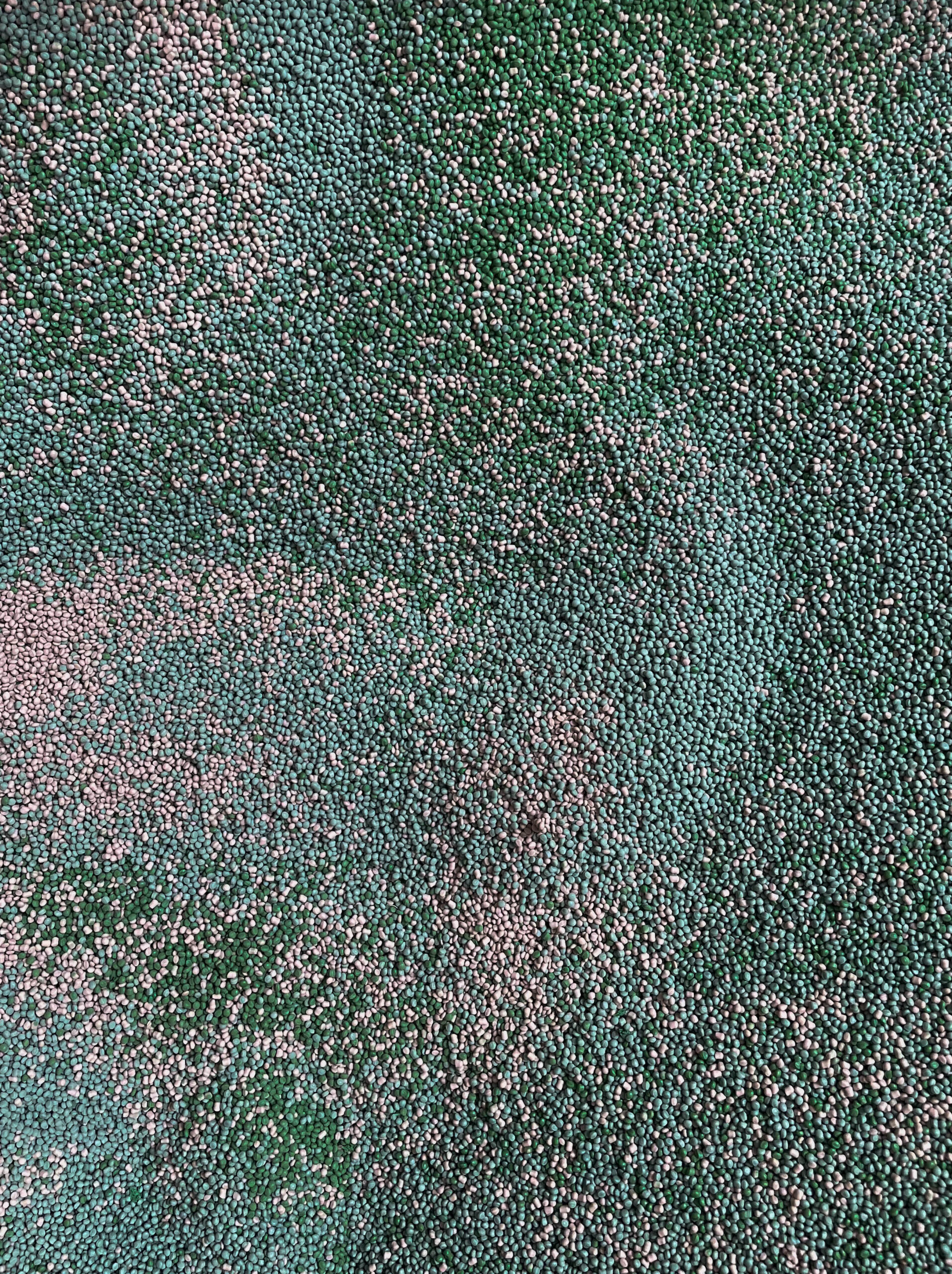
3io is a material system developed from renewable resources, merging biological matter with robotic precision, to create expressive, high-performance objects. The blends combine a wide spectrum of biobased materials including: PHA, PCL, PLA, bio-PE, bio-PA, lignin, cellulose, natural resins, waxes, oils, and plant fibres, resulting in thermoplastic composites consisting of up to 100% renewable content. Depending on the formulation, the material can be designed to biodegrade naturally or to remain durable and weather-resistant for long-term applications.
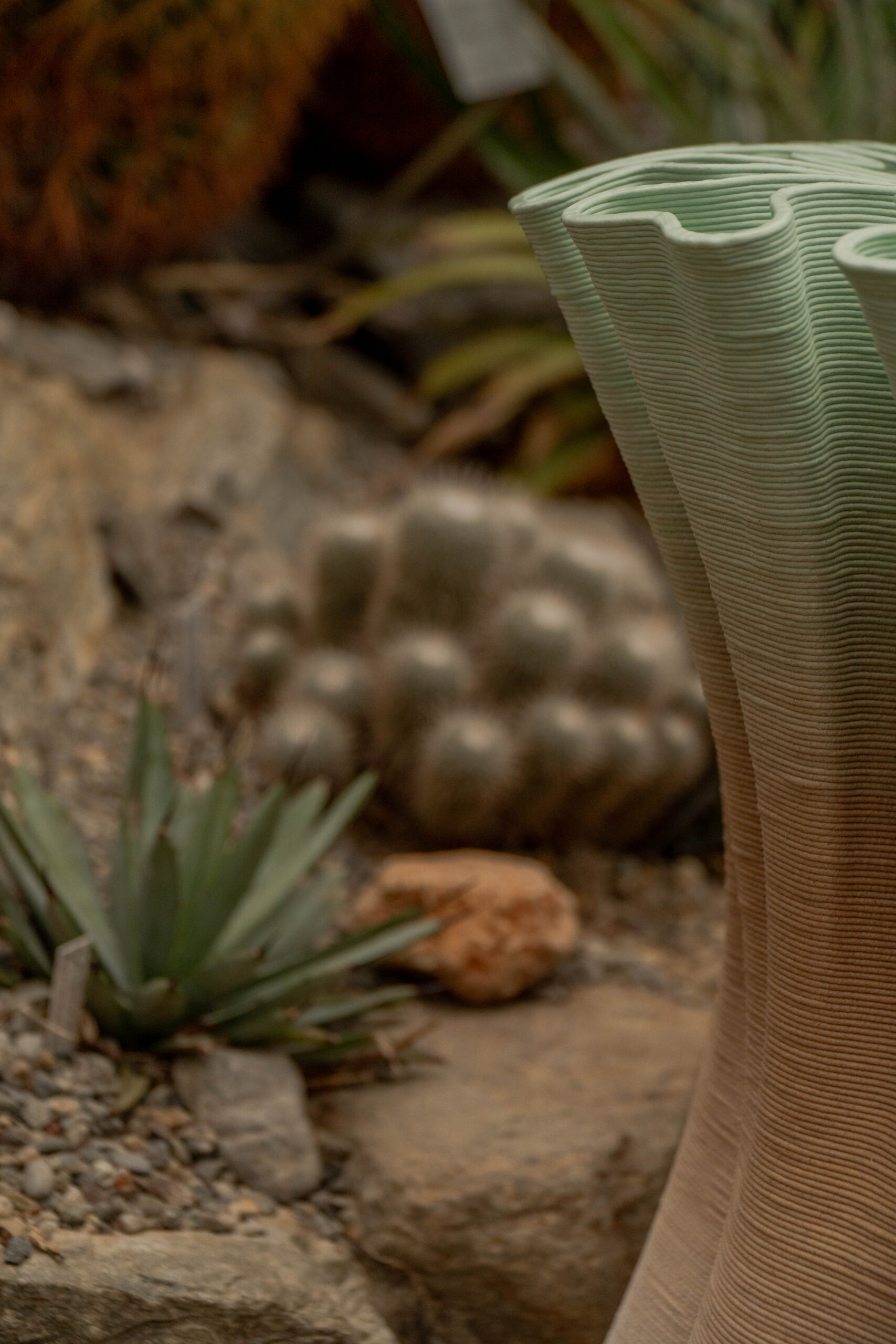
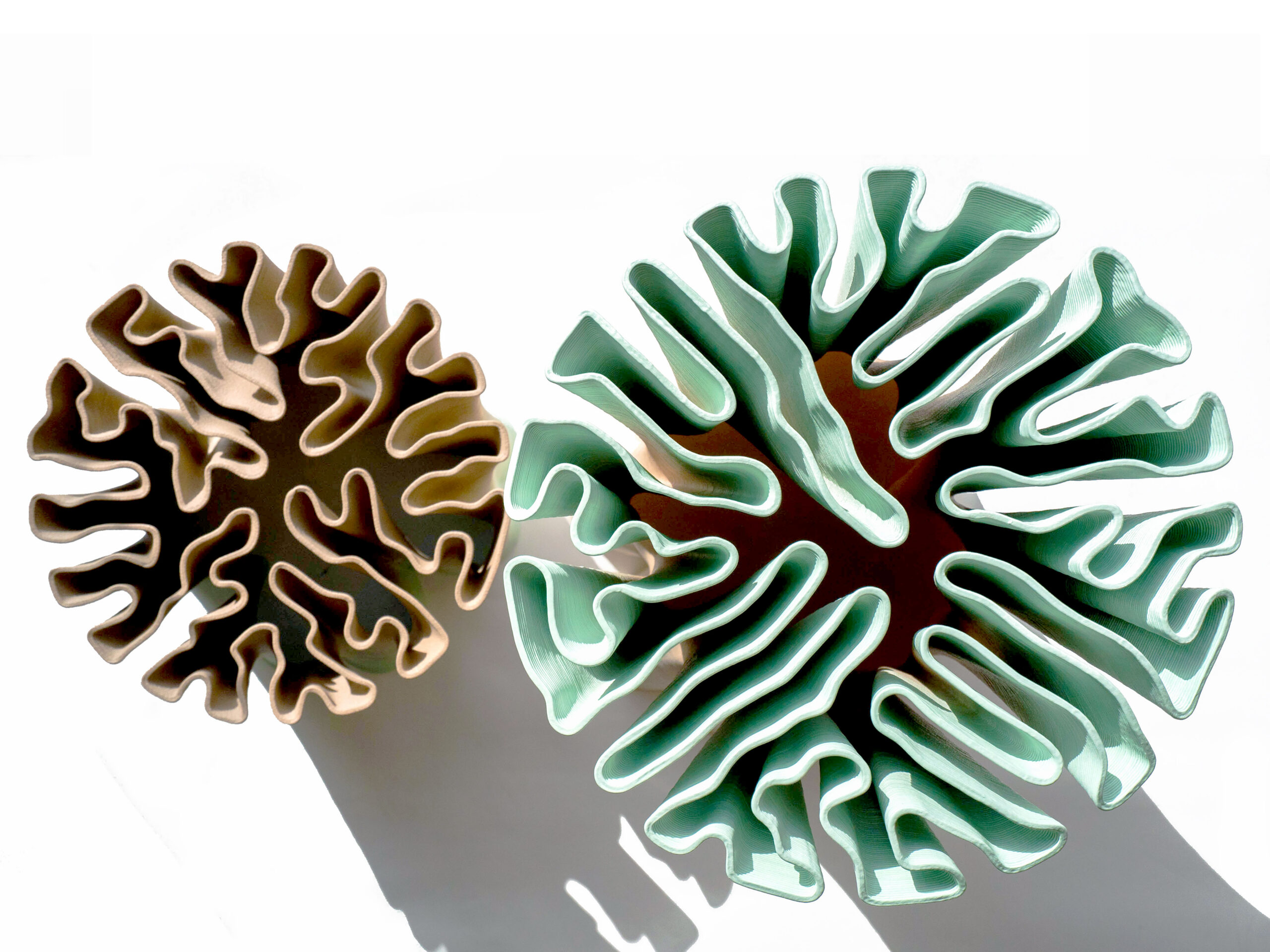
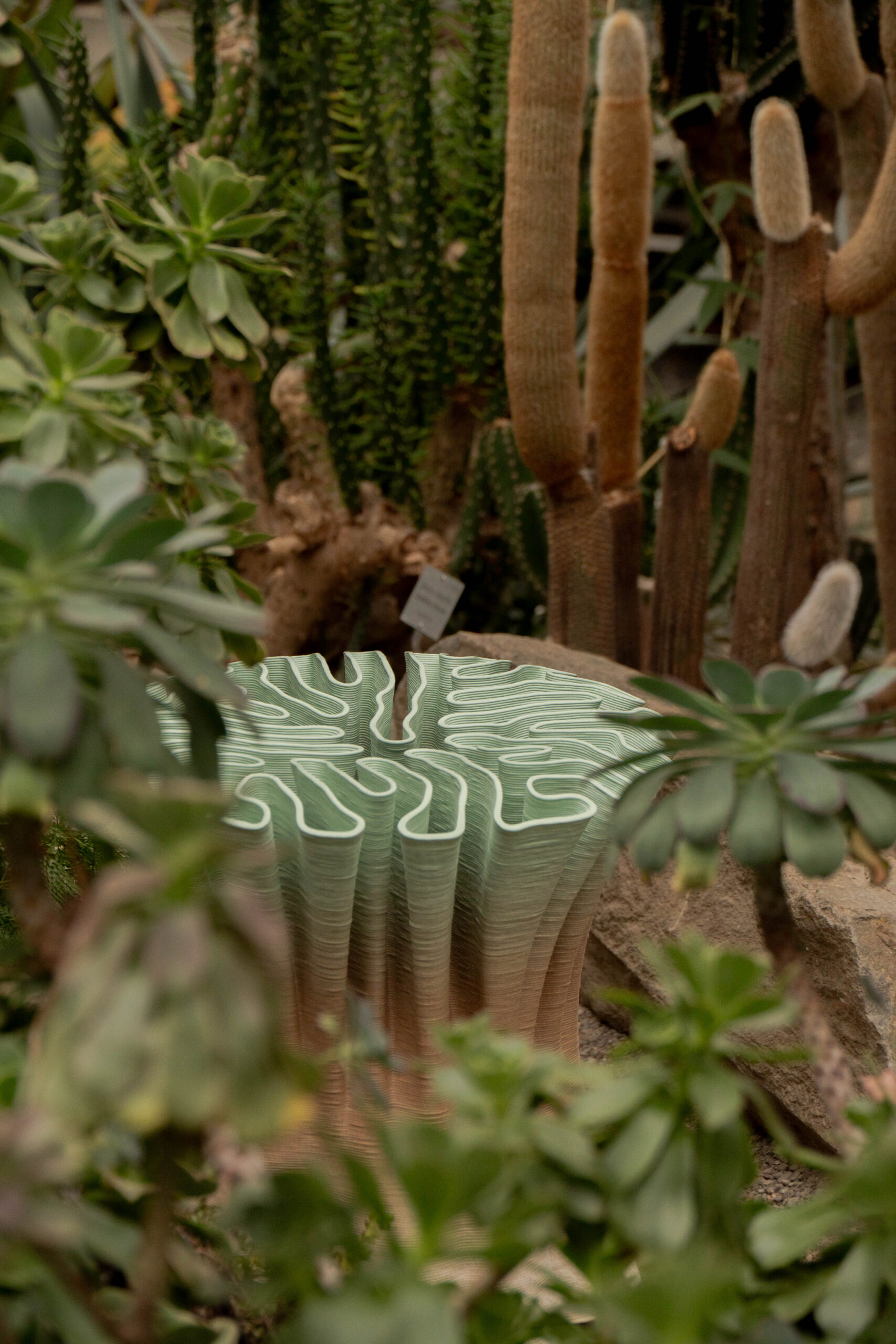
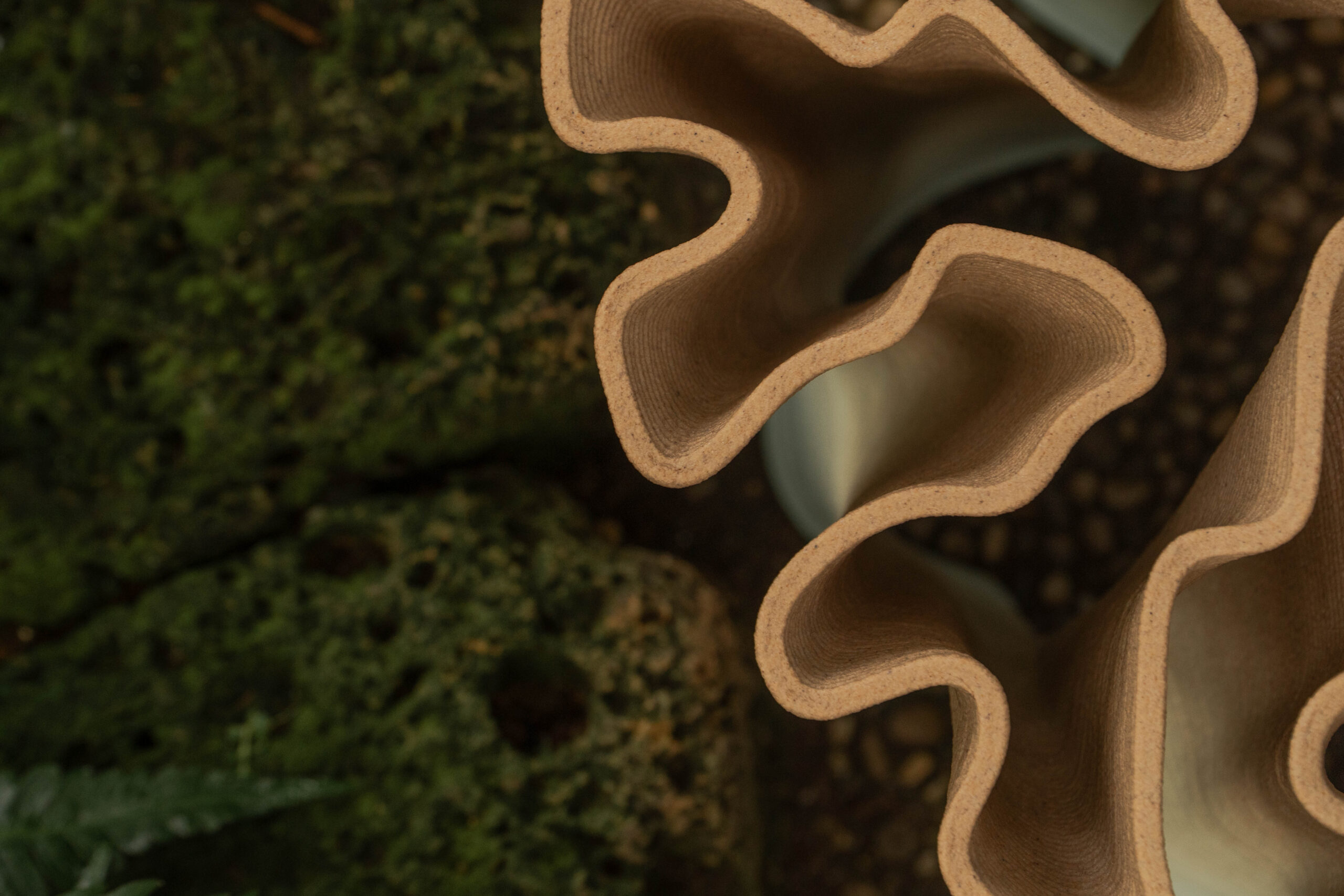
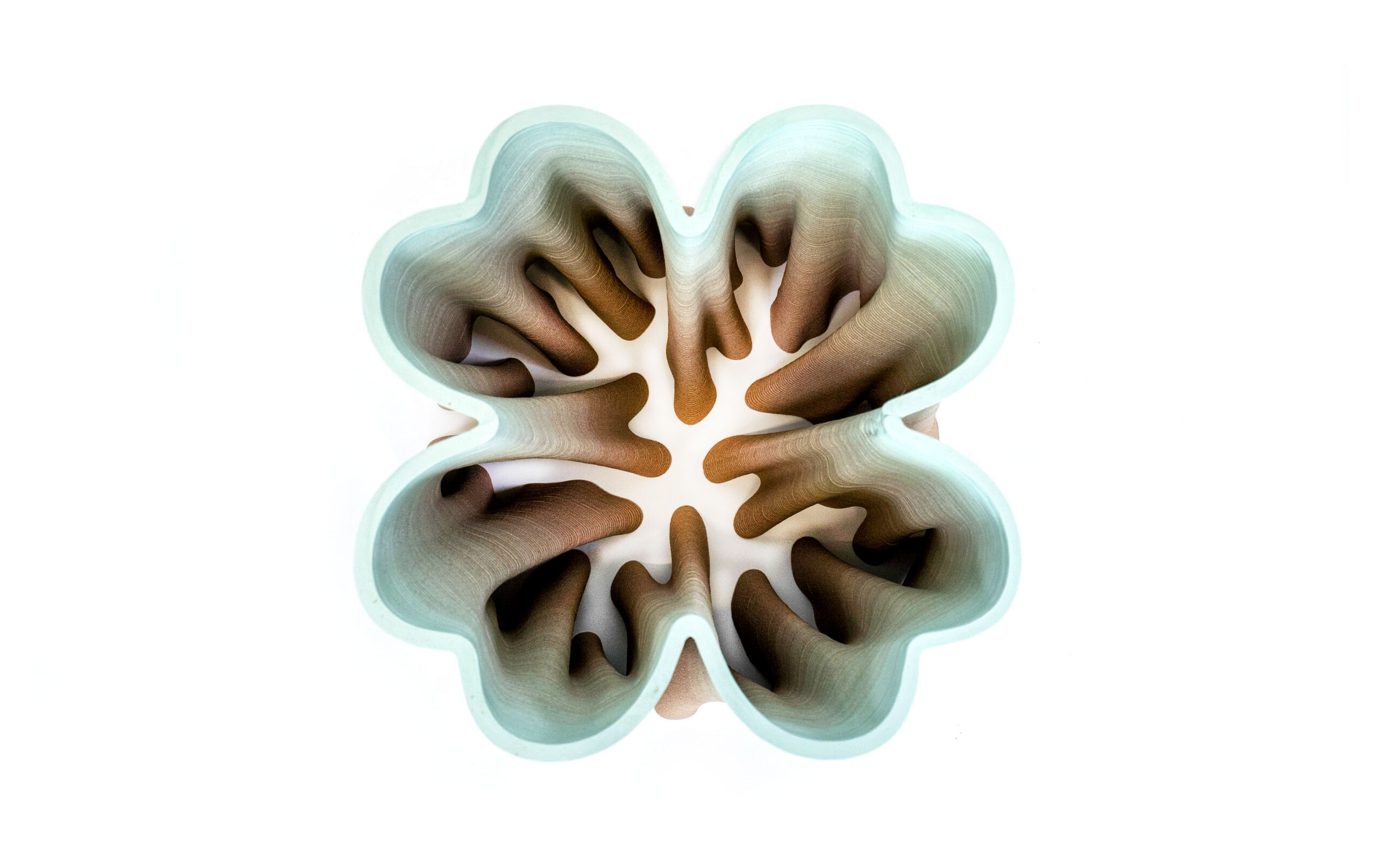
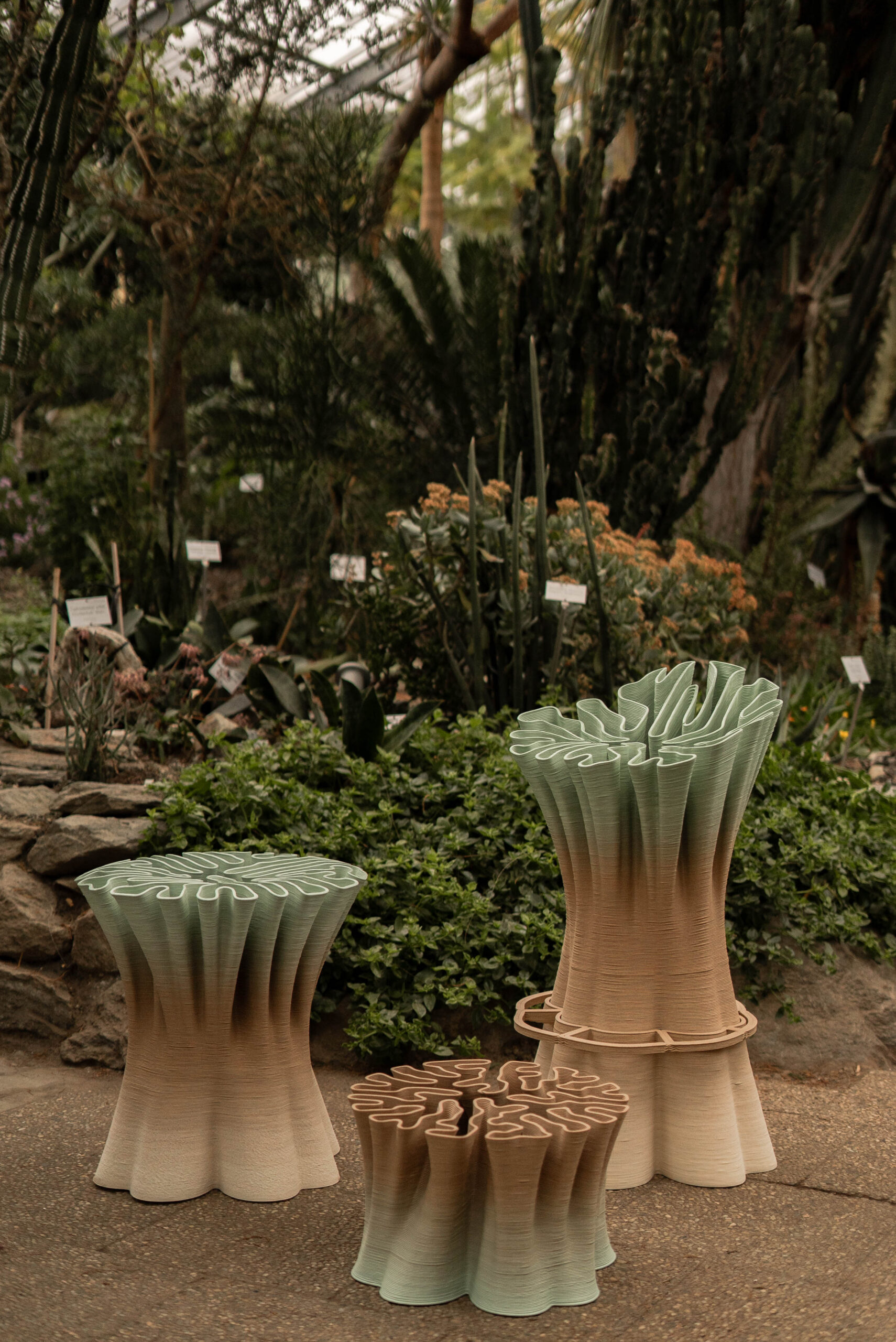
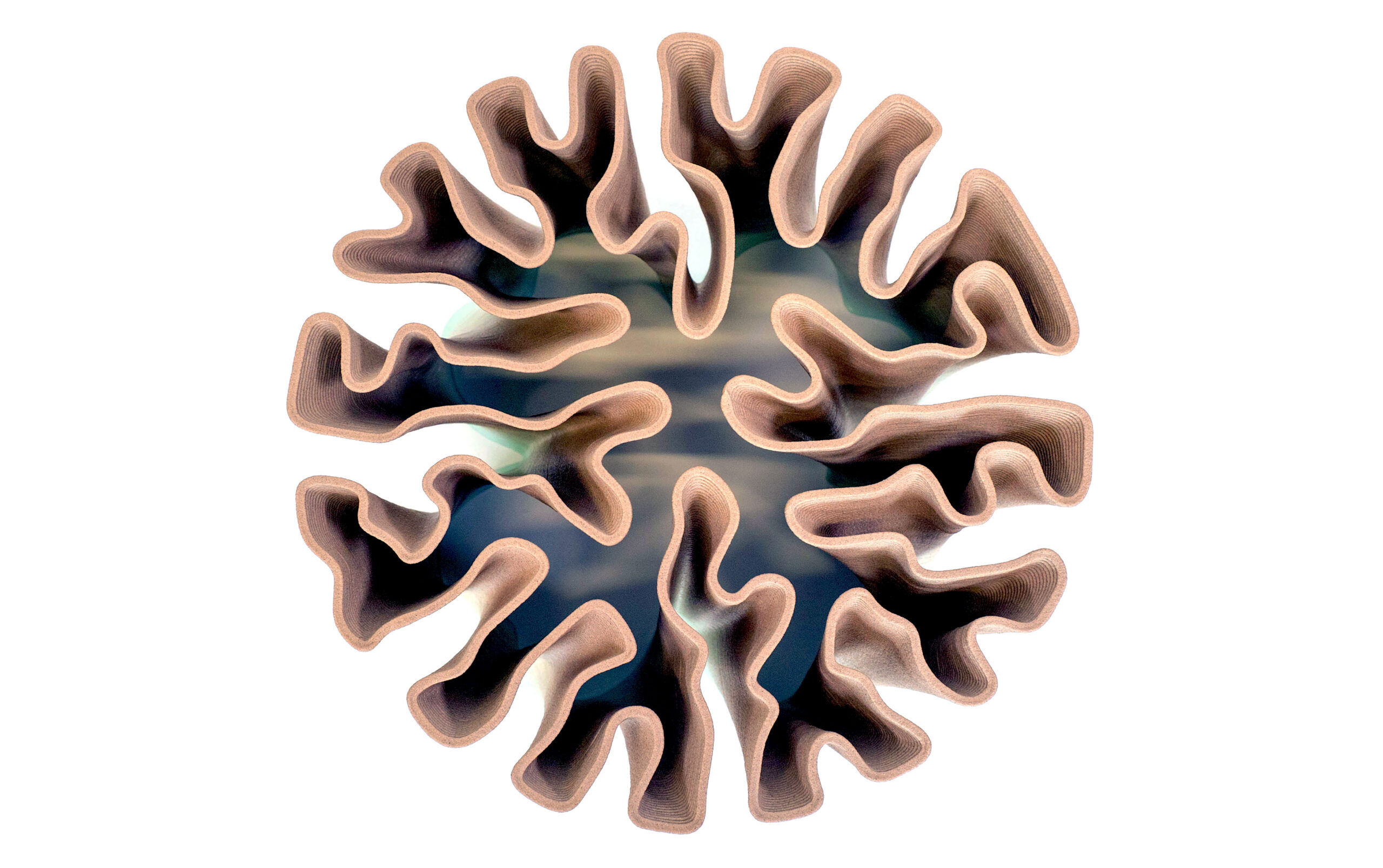
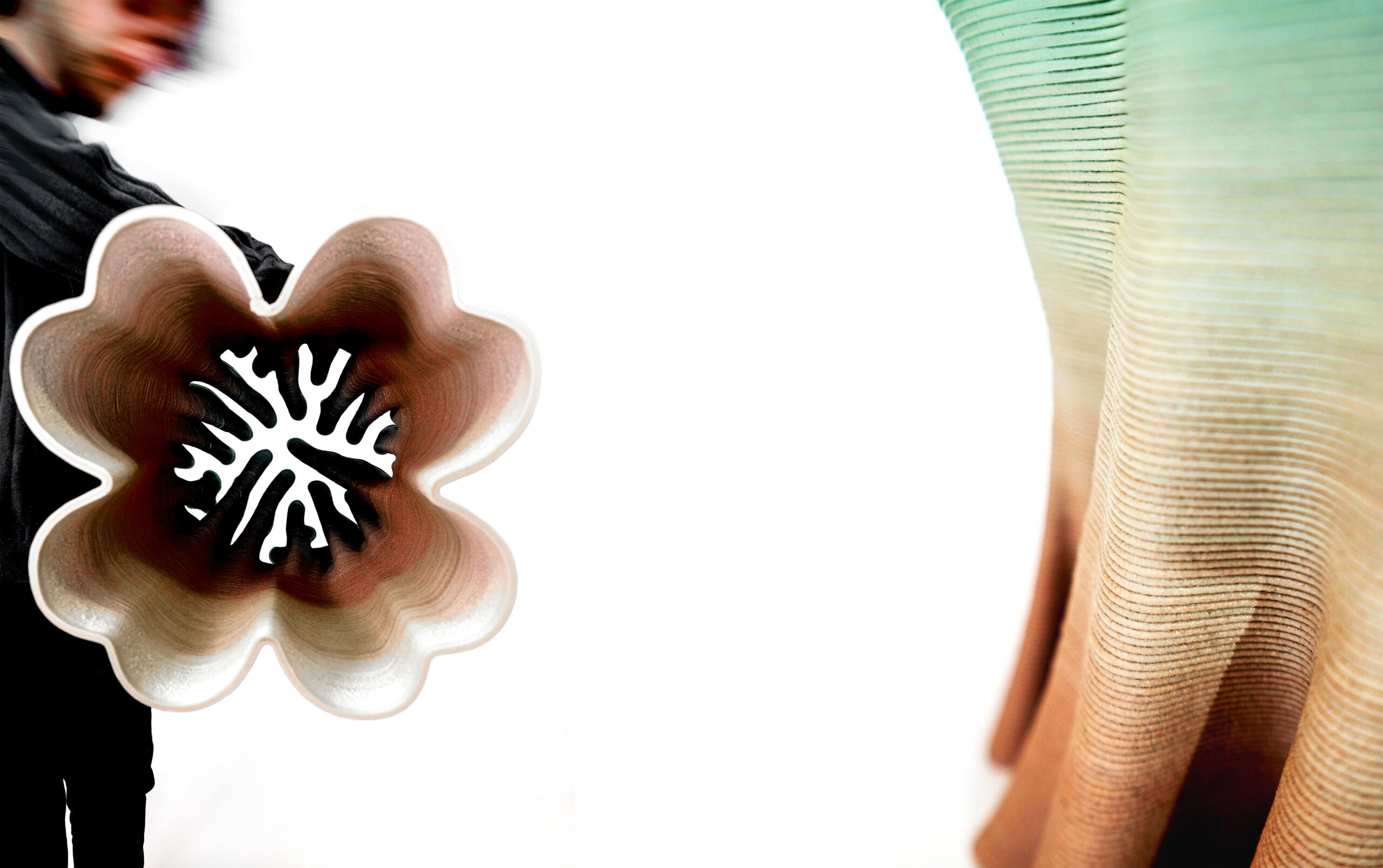
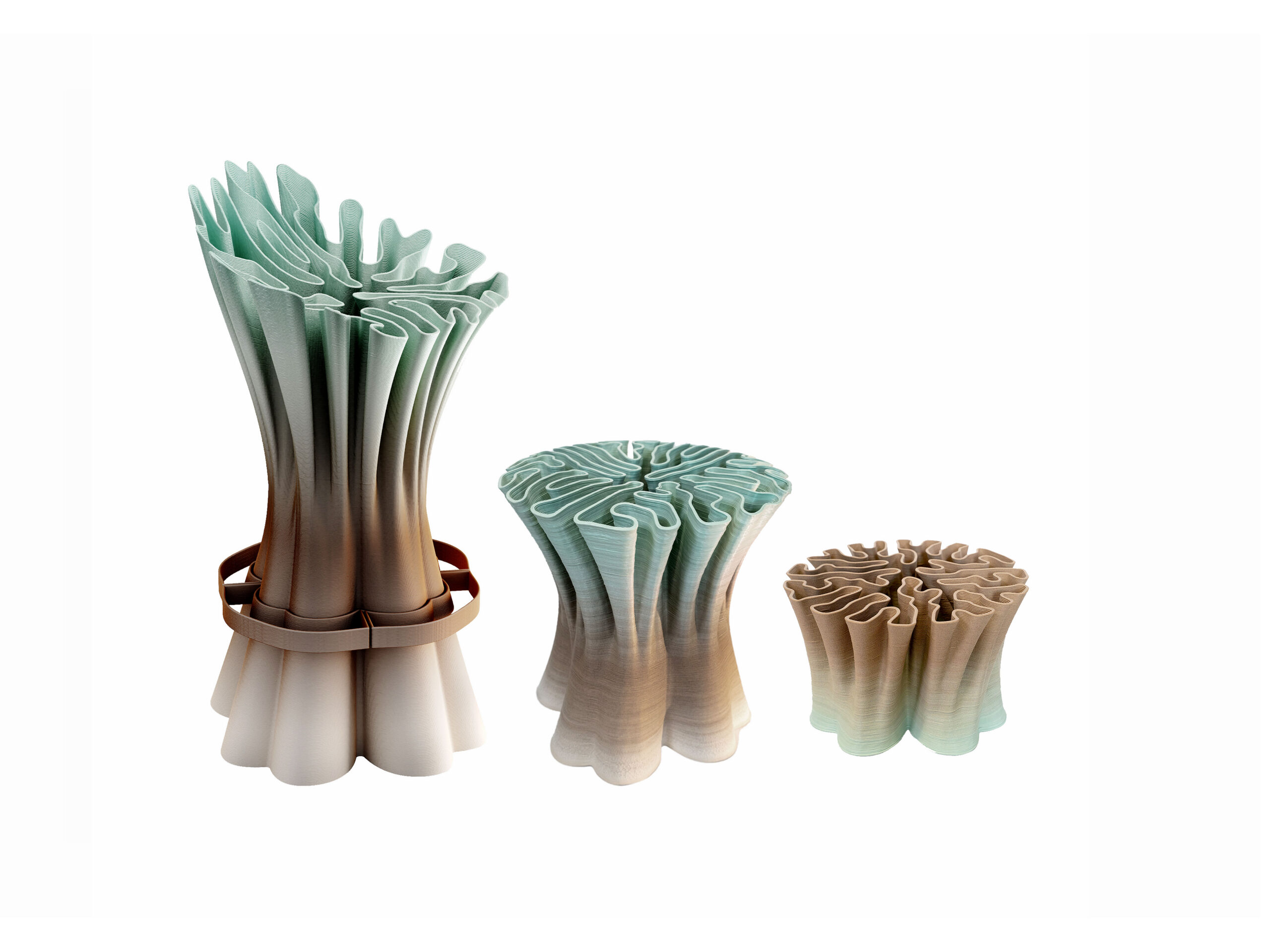
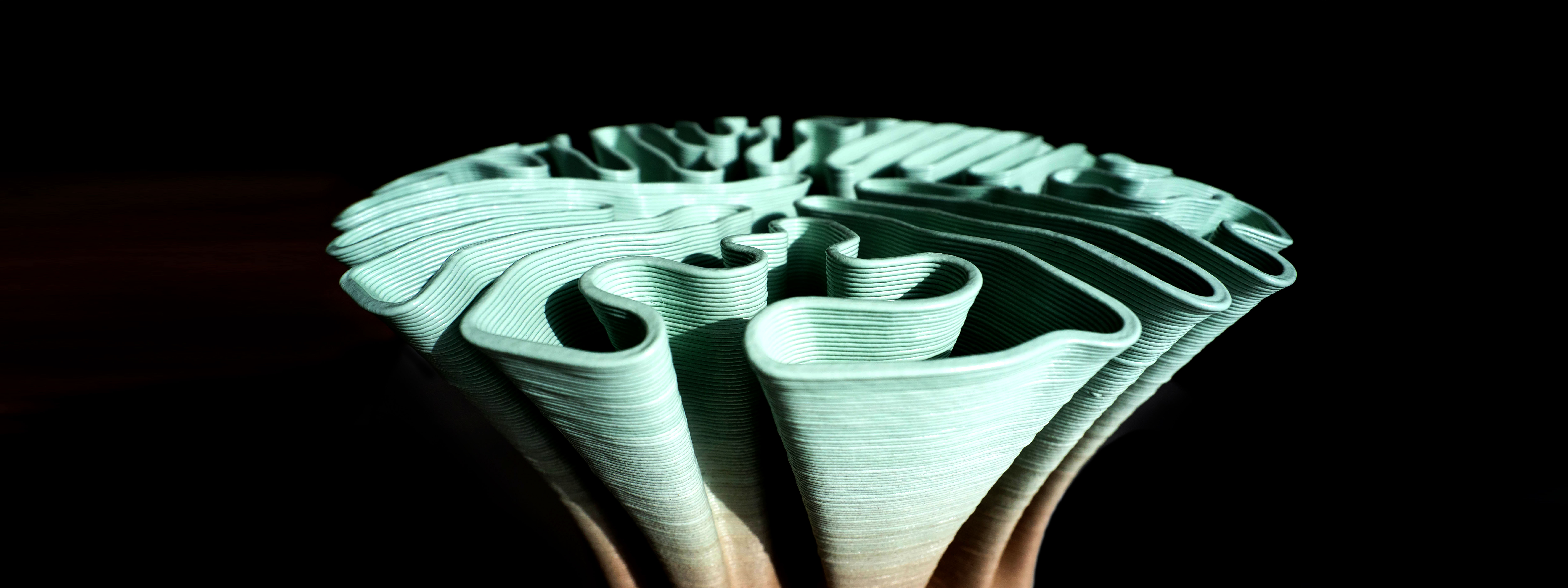
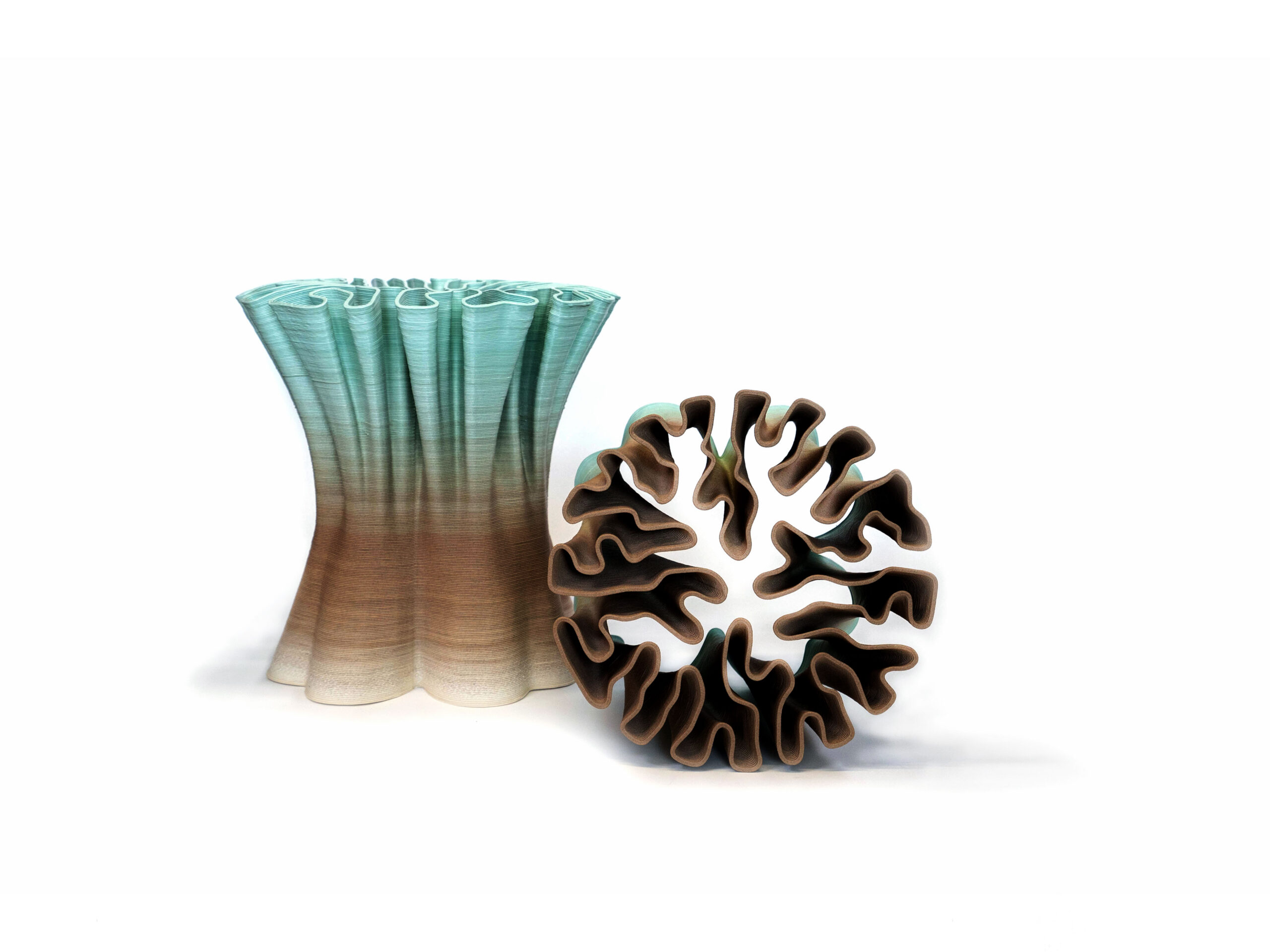
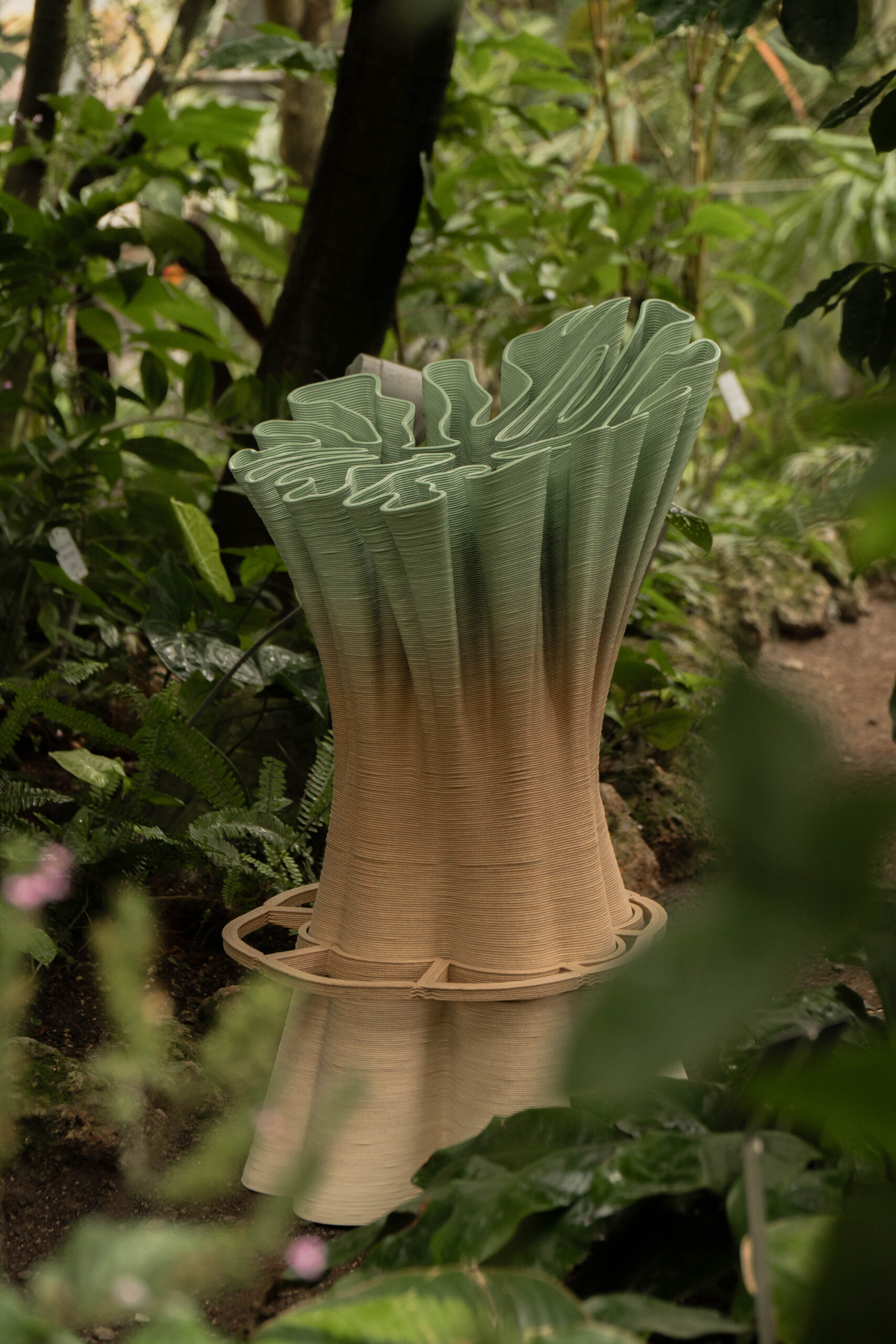
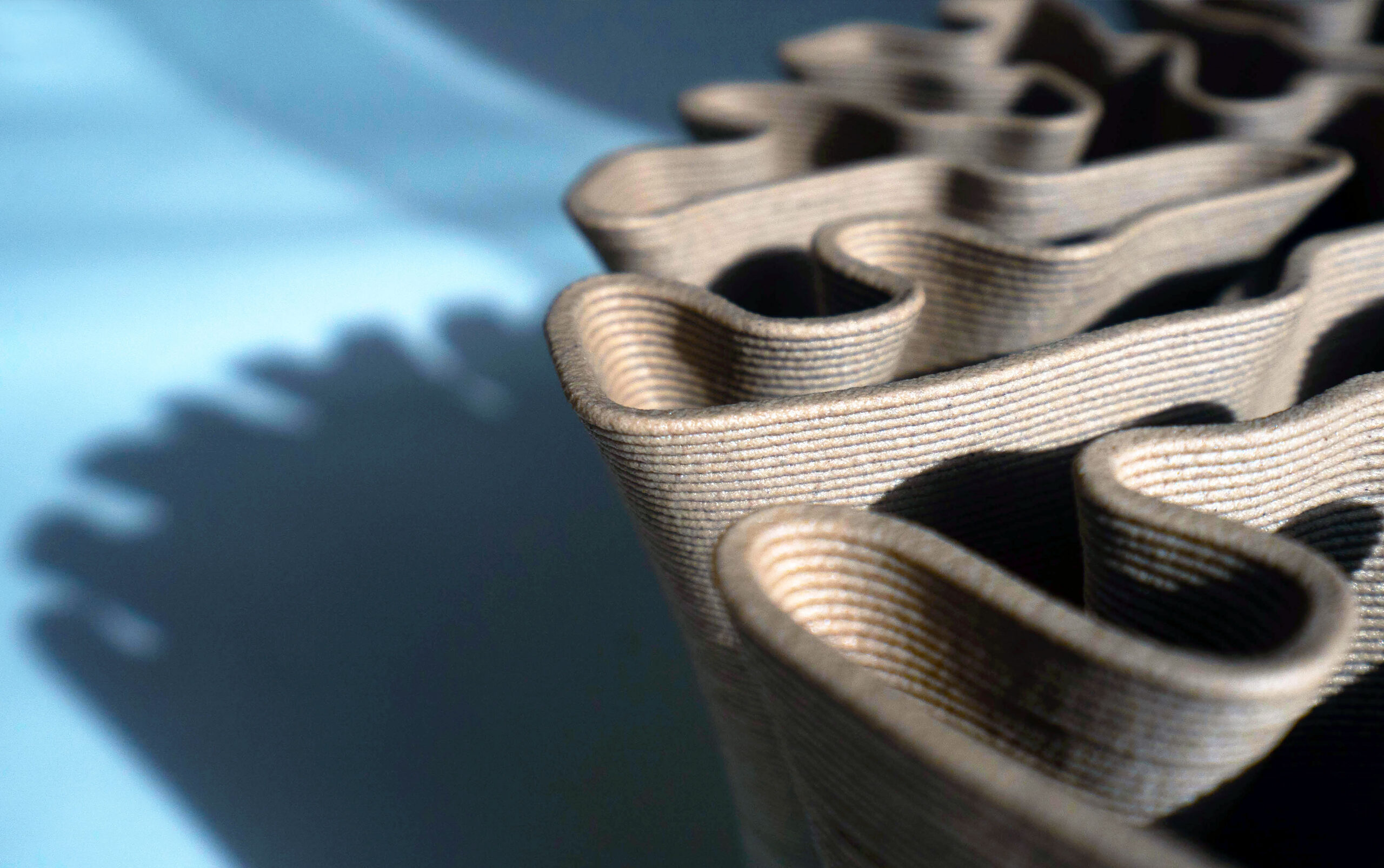
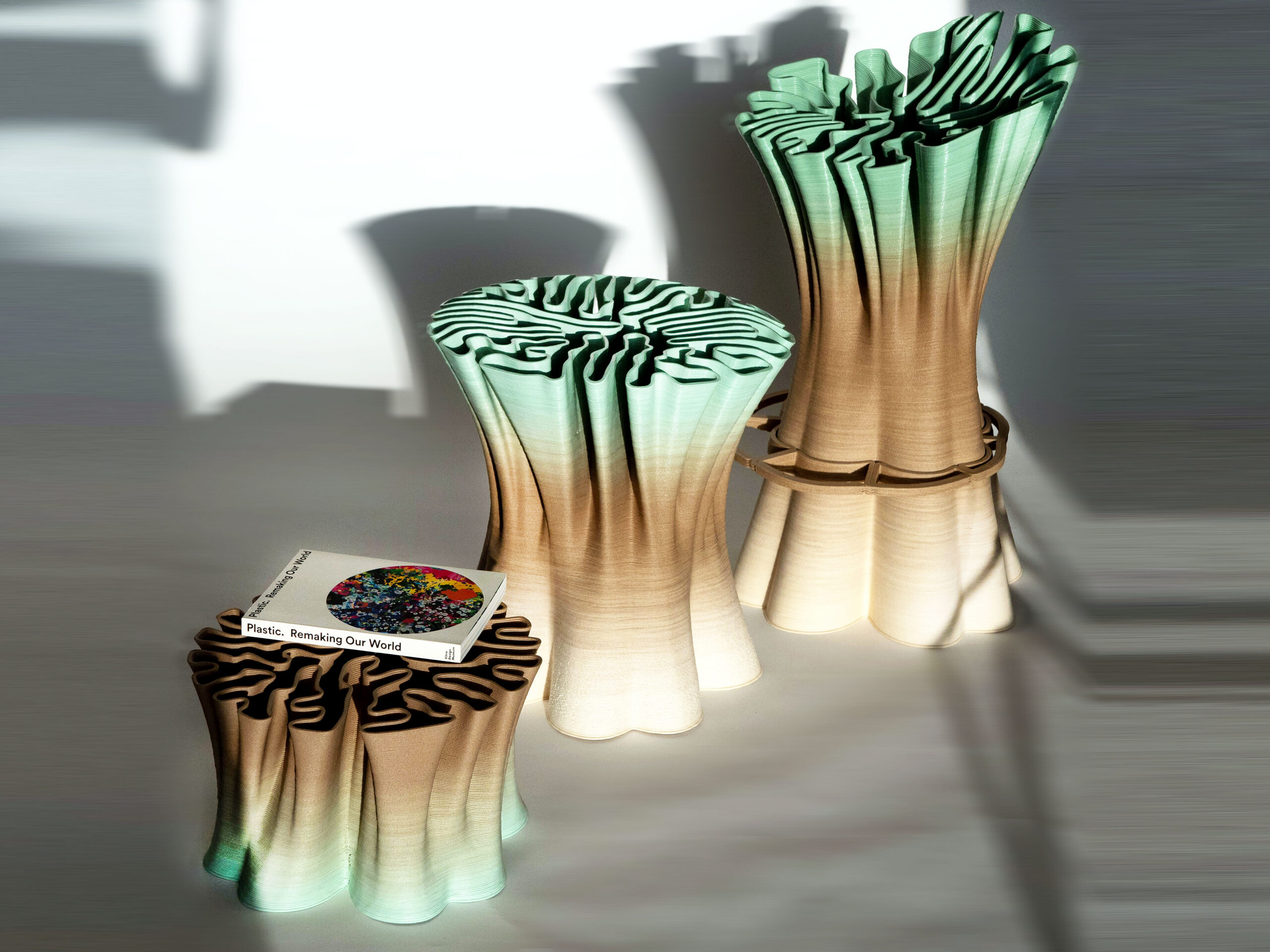
Rooted in additive manufacturing, the material is deposited through robotic Multi-Material Additive Manufacturing (MMAM), enabling continuous, precise layering with minimal waste. Unlike conventional homogeneous plastics, this process allows multiple material compositions to blend seamlessly within a single printed object. Gradual transitions, or gradients, in strength, flexibility, colour, or surface texture are embedded directly into the geometry, enhancing structural integrity while creating subtle visual and tactile variation.
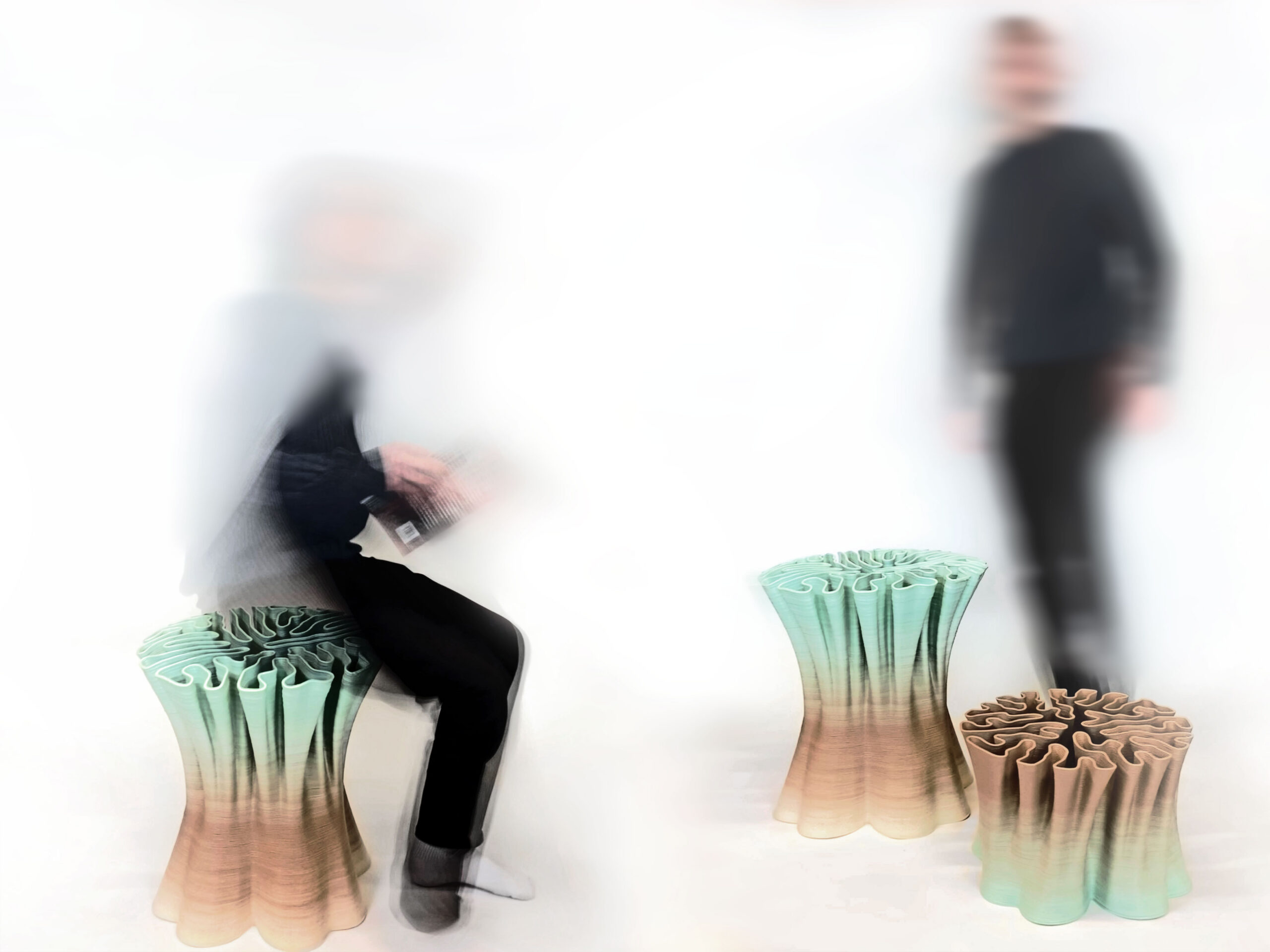
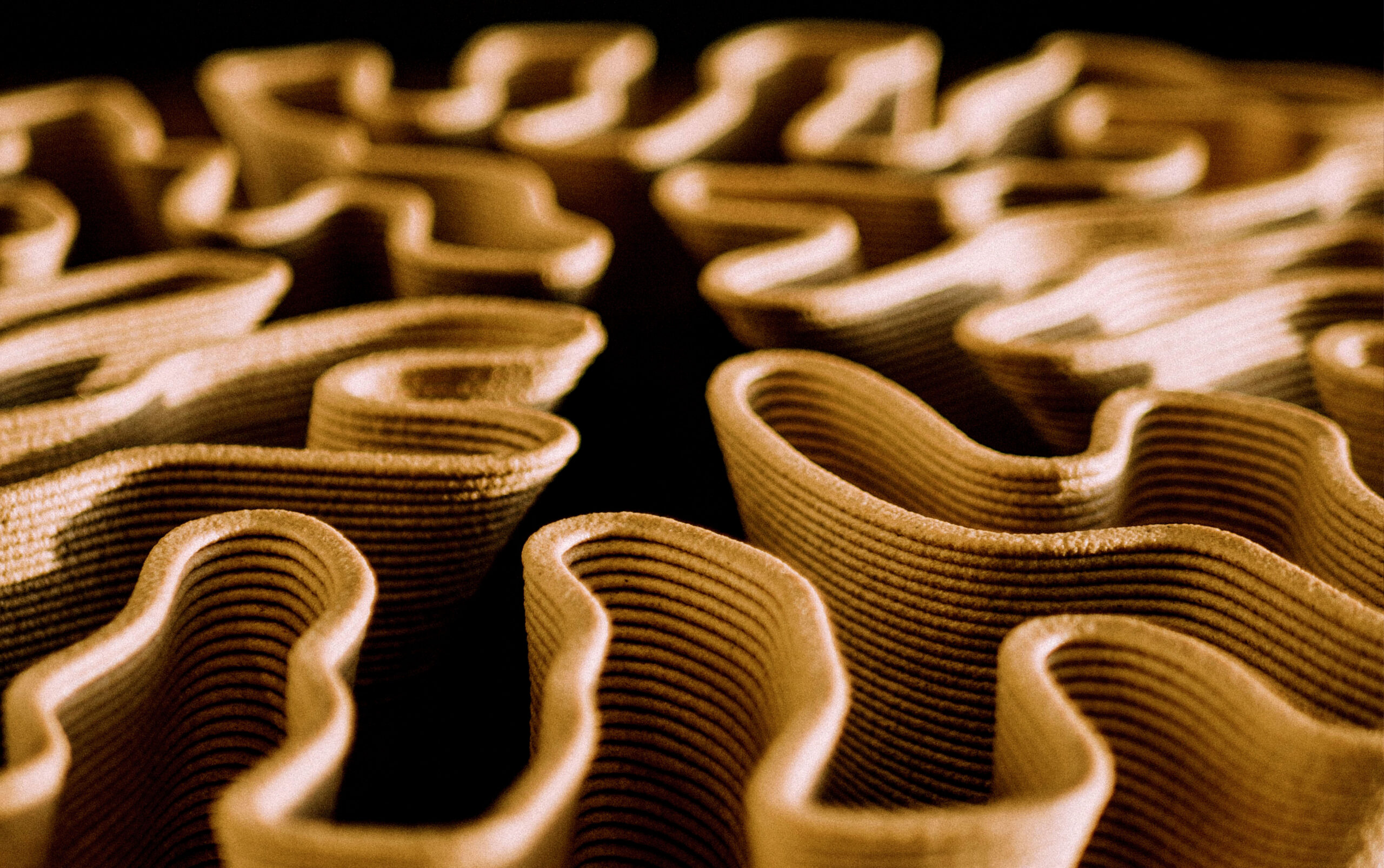
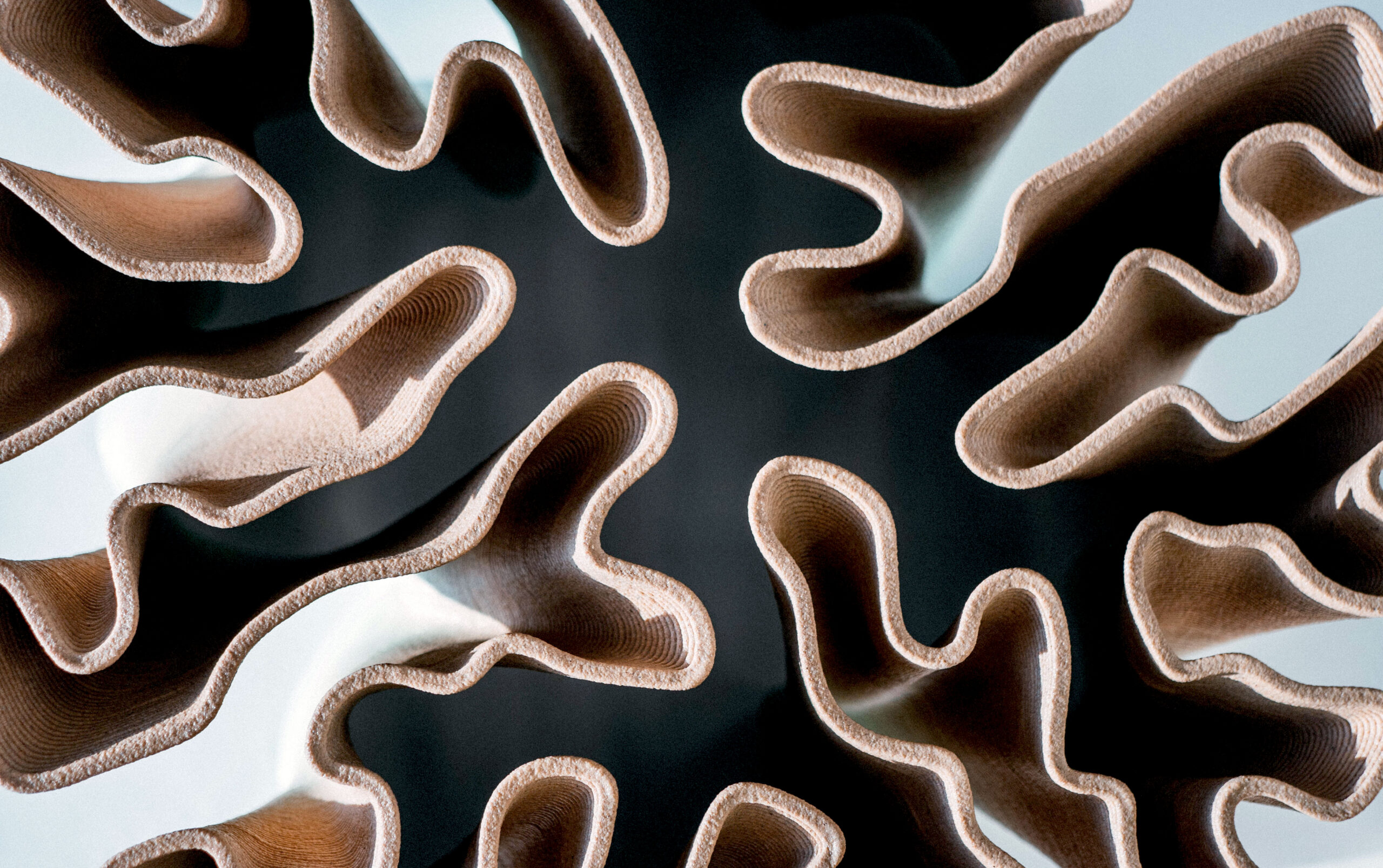
Each printed element reveals the dialogue between material behaviour and robotic control. The layered deposition creates expressive surface articulation, while functionally graded compositions improve stress distribution and reduce failure at material interfaces. This makes the system equally suited for furniture, temporary installations, wall panels, screens and facade elements.
The material family is based on bio-composite thermoplastics that can be extruded, shredded, and reprocessed, supporting circular design strategies and reduced resource consumption. Large-scale robotic 3D printing expands architectural freedom, enabling free-form geometries and adaptive structures that respond to environmental conditions. The result is a versatile, sustainable material platform that bridges biology and advanced manufacturing. By combining renewable inputs with multi-material gradients and robotic fabrication, the system offers both function and aesthetic depth.