Circular Tables Made From Recycled Chopsticks At Raffles City Singapore
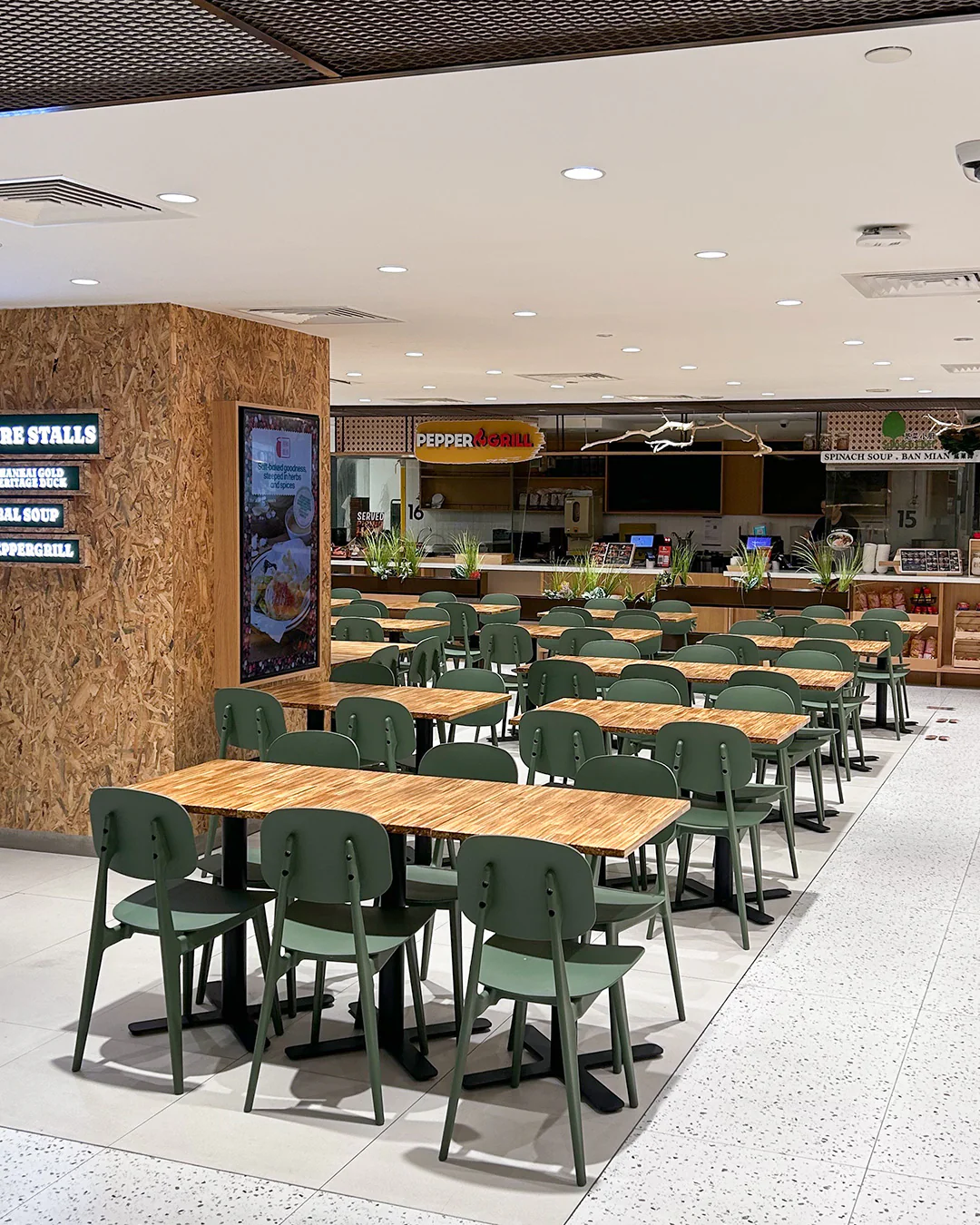
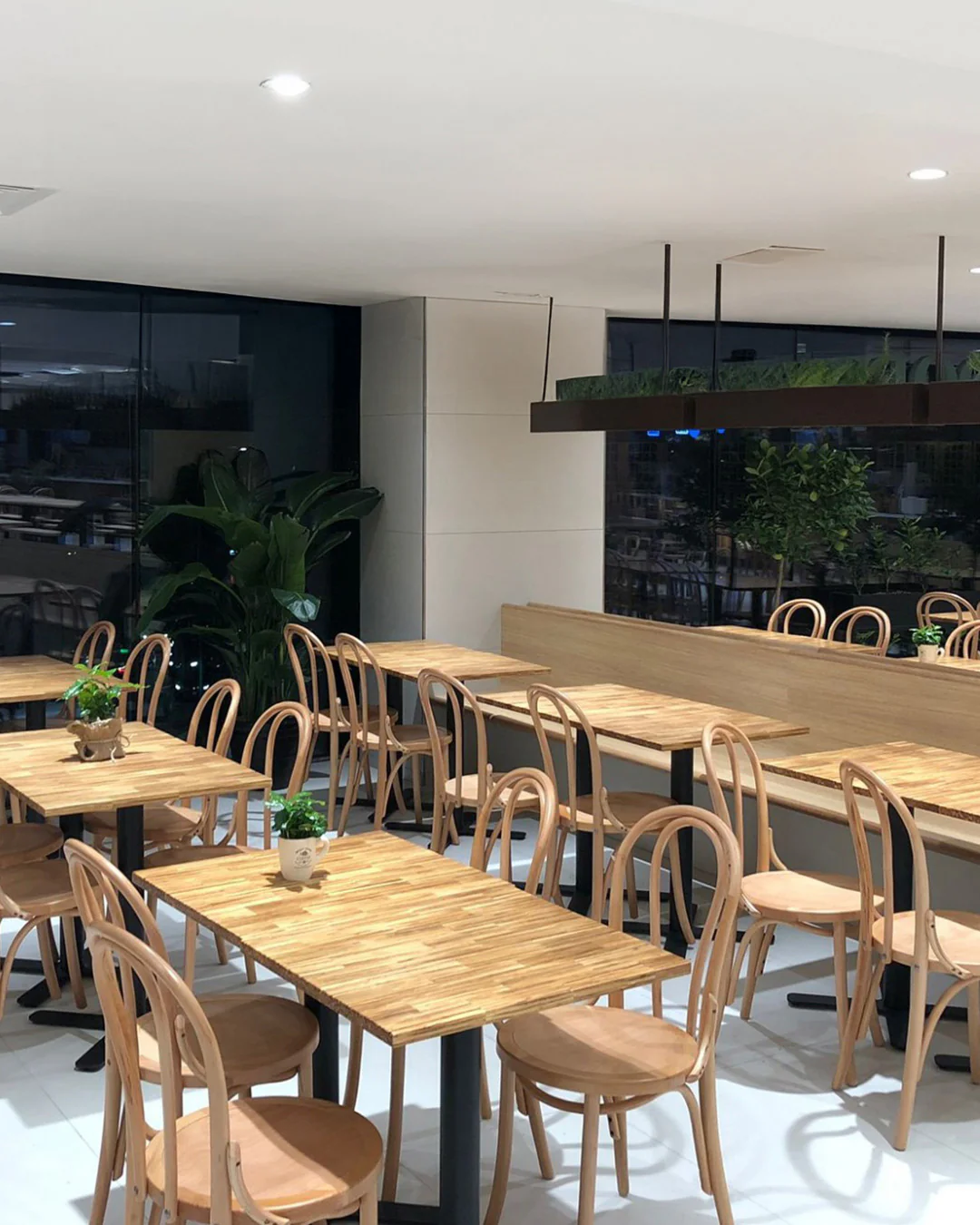
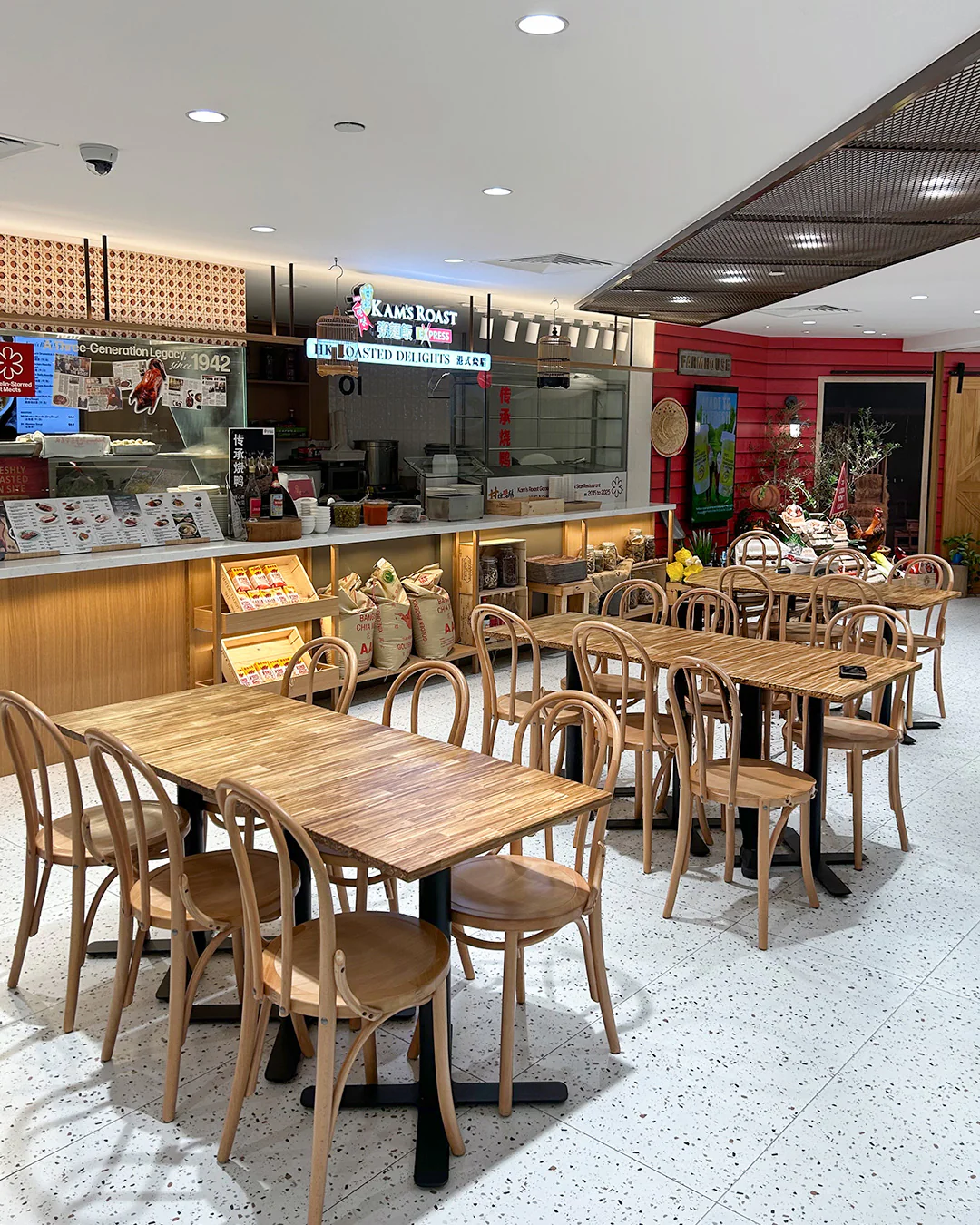
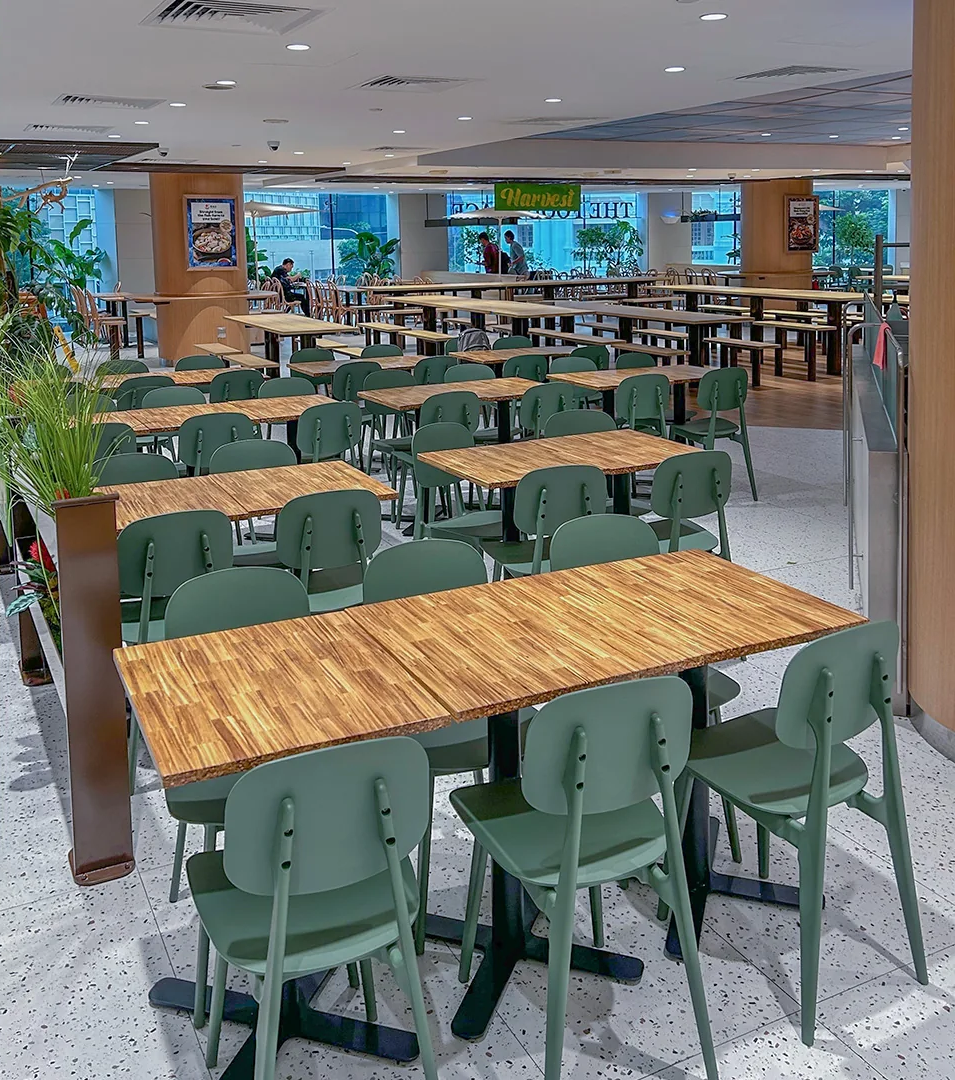
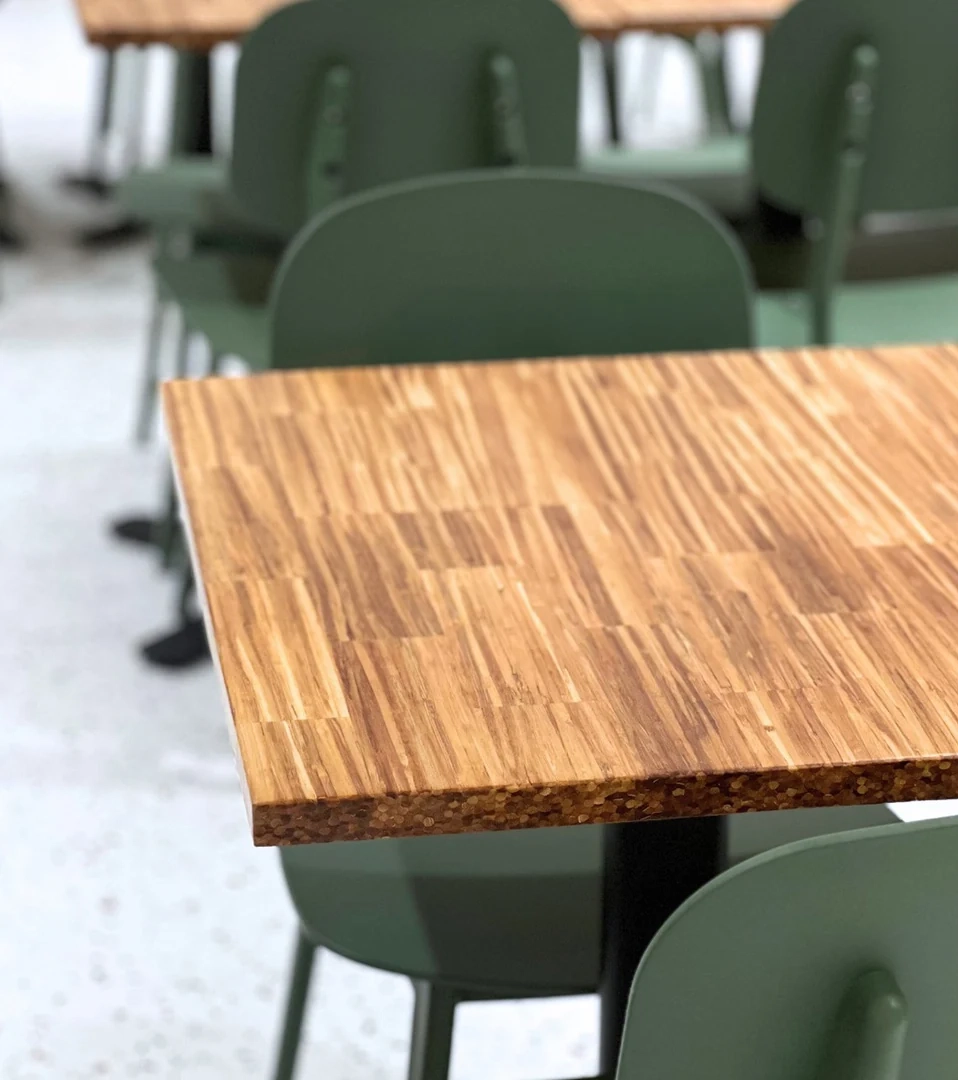
At Raffles City Singapore, the food court includes tables made from recycled bamboo chopsticks. The project shows how waste from the food service sector can become a material for interior furniture in hospitality spaces.
Circular manufacturing company ChopValue developed and supplied the tables. The company collects used chopsticks from restaurants and processes them into engineered bamboo panels. In total, the project reused 288,000 chopsticks. As a result, ChopValue estimates a reduction of approximately 14,000 kg of CO₂ emissions. Therefore, the installation illustrates how designers can reuse locally collected waste as a raw material for interior products.
From Chopsticks To Engineered Bamboo Panels
The food court uses tables in several formats. Smaller tables seat one or two visitors, while larger versions accommodate up to six people. As a result, the layout supports different ways people use the space, including quick meals and shared dining.
ChopValue processes the chopsticks in local microfactories. First, workers clean and sanitise the bamboo. Next, the company compresses the material into dense panels. Designers then machine these panels into tabletops and other interior components.
The final material functions as an engineered bamboo composite. According to the manufacturer, it provides the strength and durability required for commercial furniture and interior applications.
Circular Material Use In Hospitality Interiors
The Raffles City food court contains around 20 food stalls, including both international and local vendors. Meanwhile, the seating area accommodates approximately 600 visitors. Consequently, the furniture must withstand frequent and intensive use. In this context, the recycled material forms part of the everyday interior environment. The tables remain in continuous use as visitors move through the food court throughout the day.
As a result, the project provides an example of how designers can introduce reclaimed materials into high-traffic hospitality interiors.
Reusing Food Service Waste In Interior Design
The tables at Raffles City show how designers can repurpose single-use products into longer-lasting materials. In this case, restaurants supply discarded bamboo chopsticks as the raw material.
After processing, the material returns to the same urban environment as furniture. Consequently, the project demonstrates how cities can close local material loops by transforming waste into functional interior elements.
For architects, interior designers and product designers, the installation highlights the potential of reclaimed materials for hospitality interiors and furniture design.
Source & photos: ChopValue

Comments