Climate-Responsive Office Design With Recycled And Low-Carbon Materials
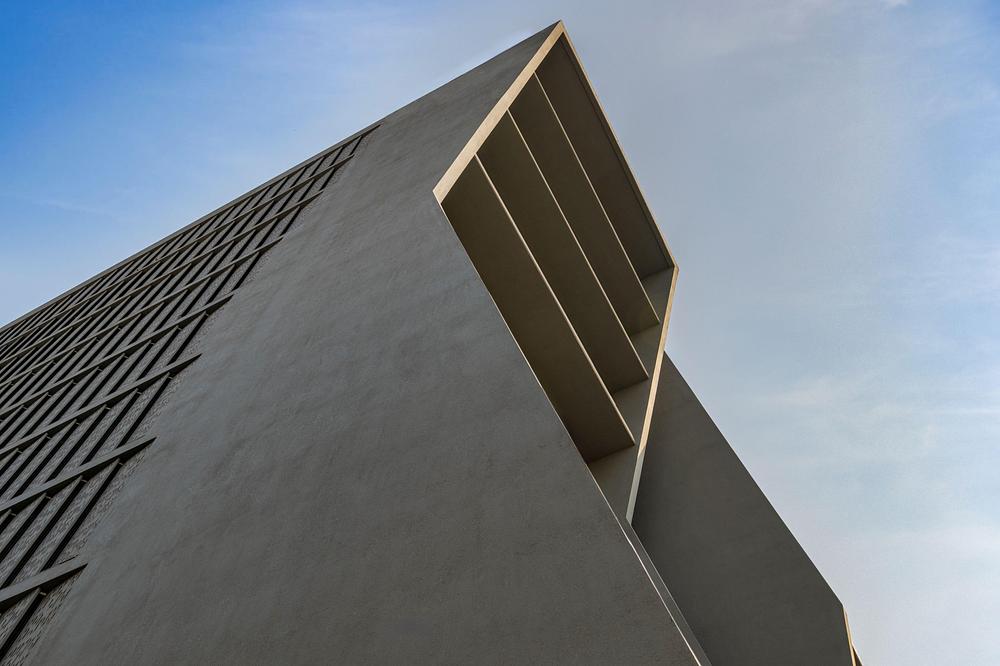
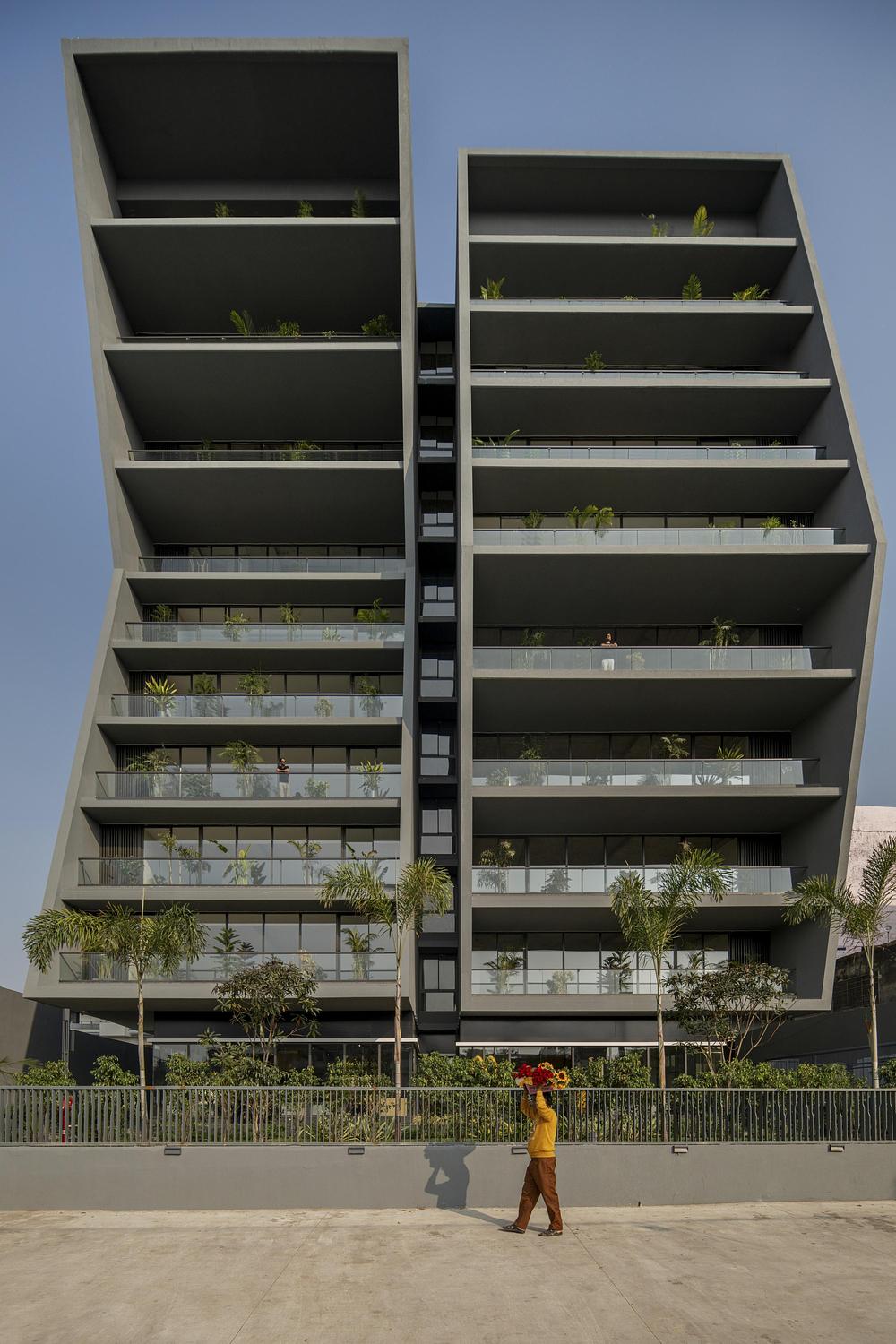
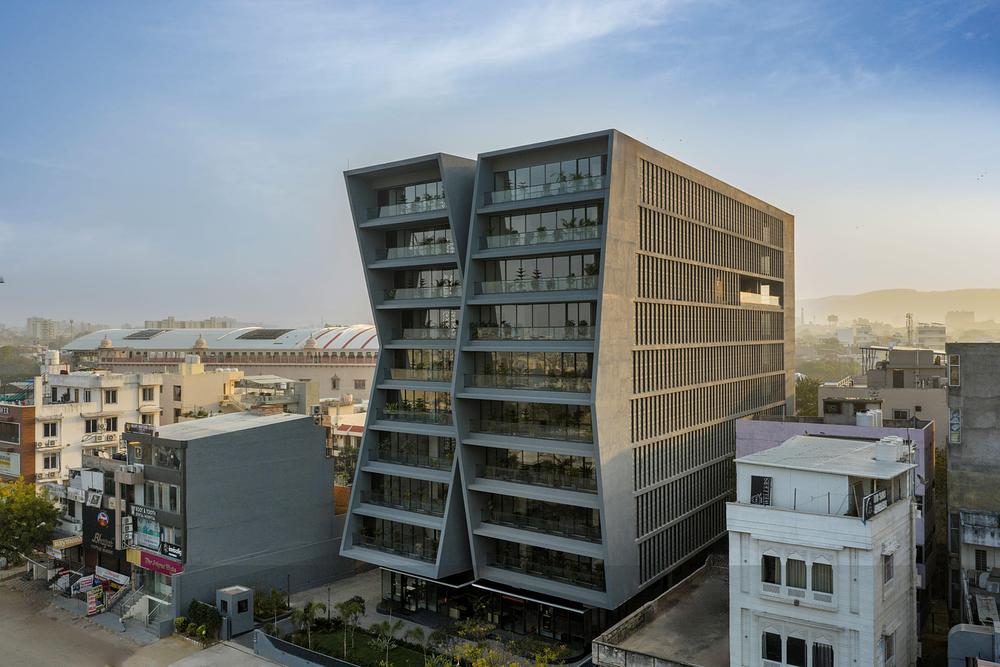
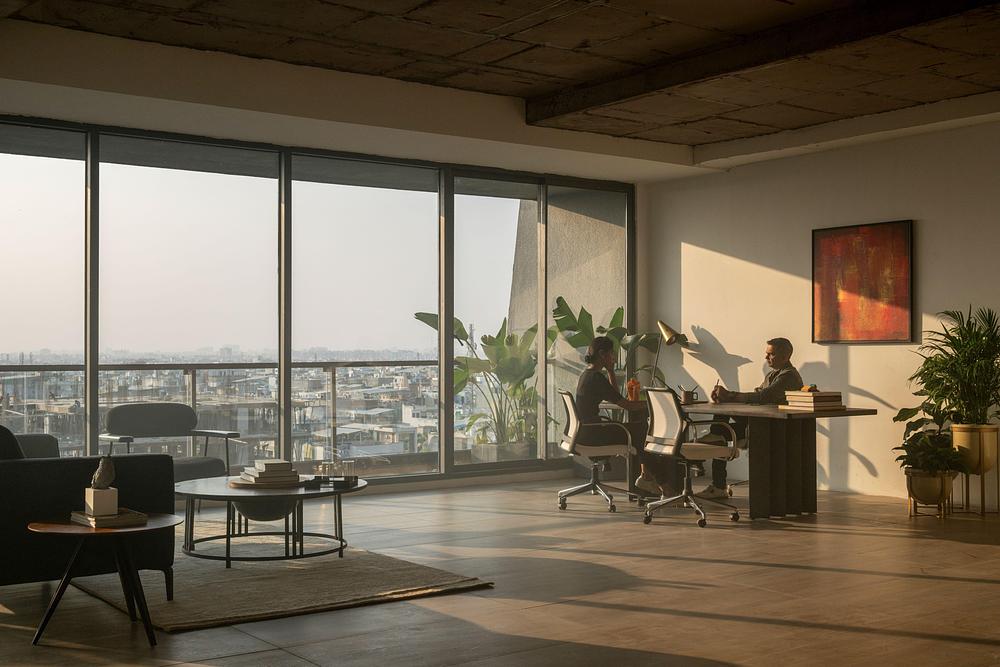
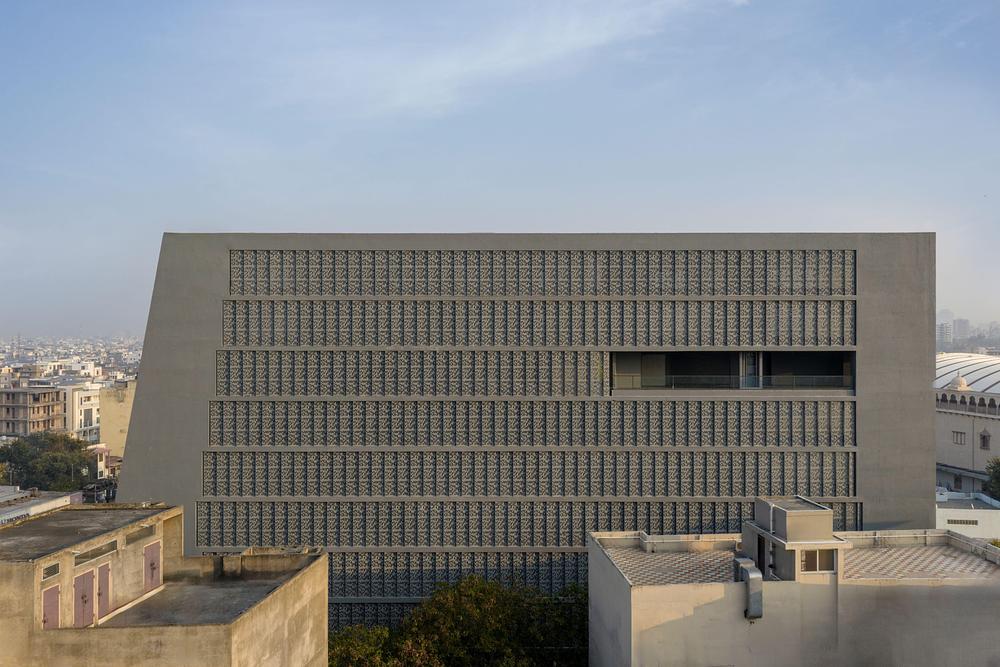
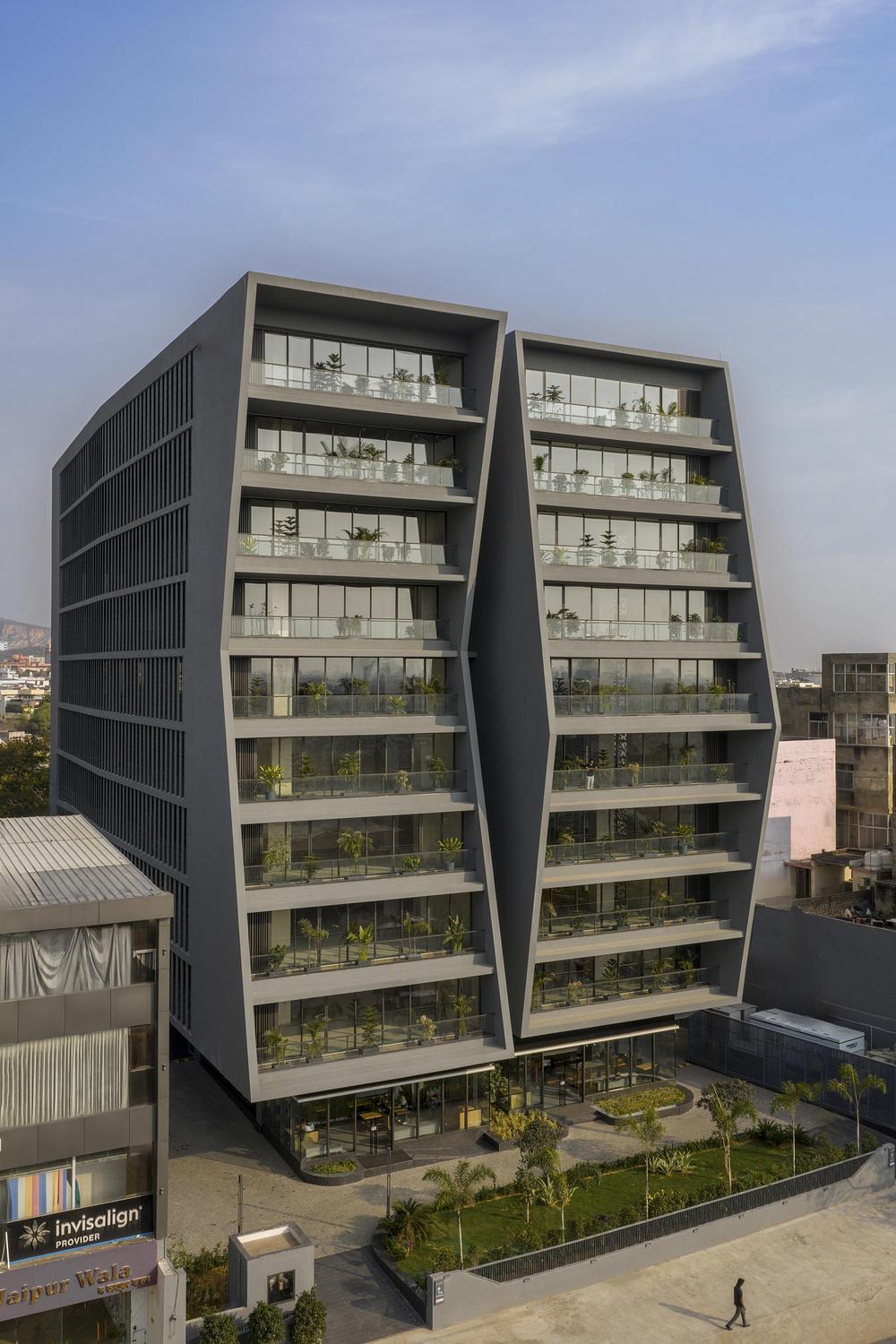
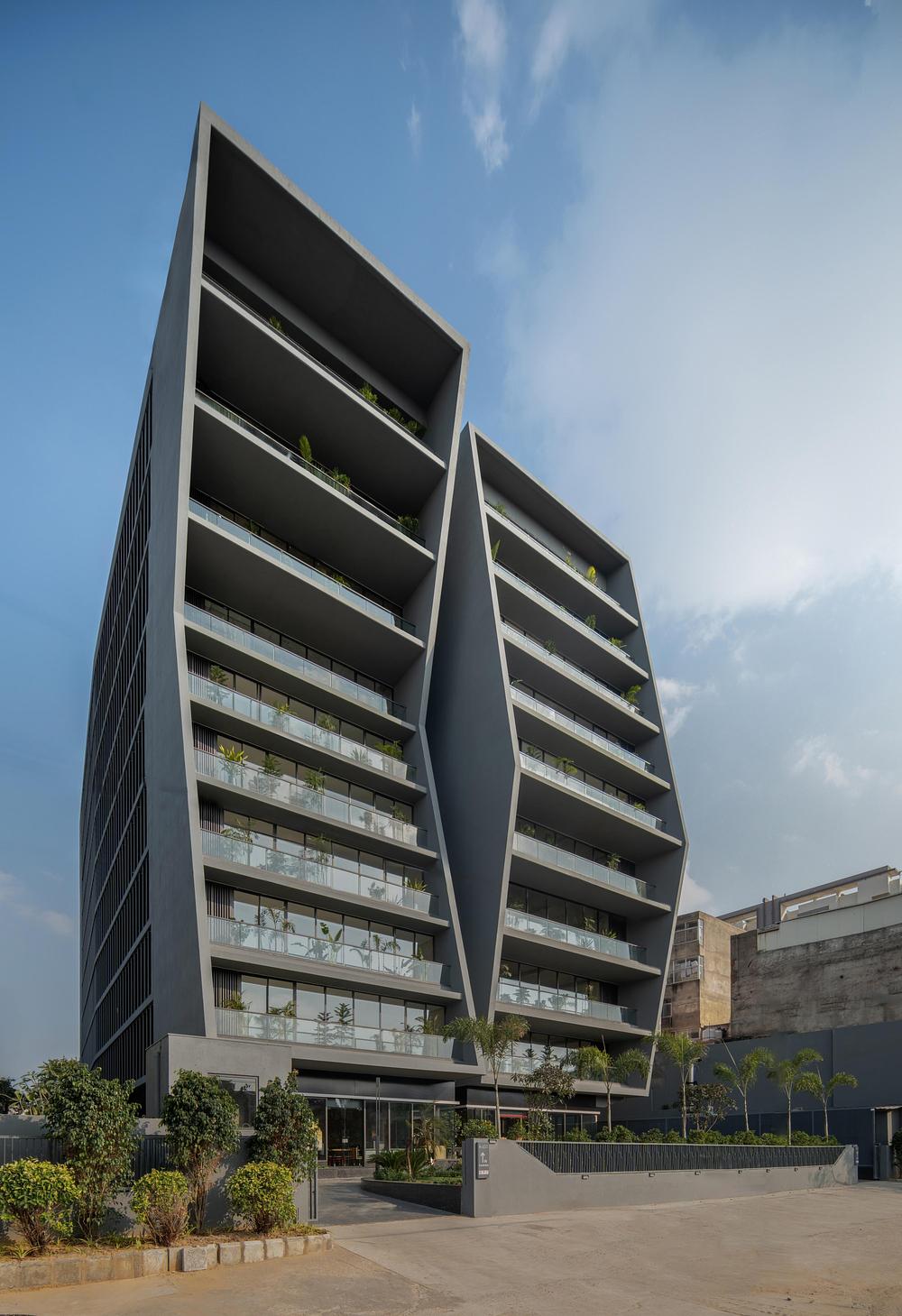
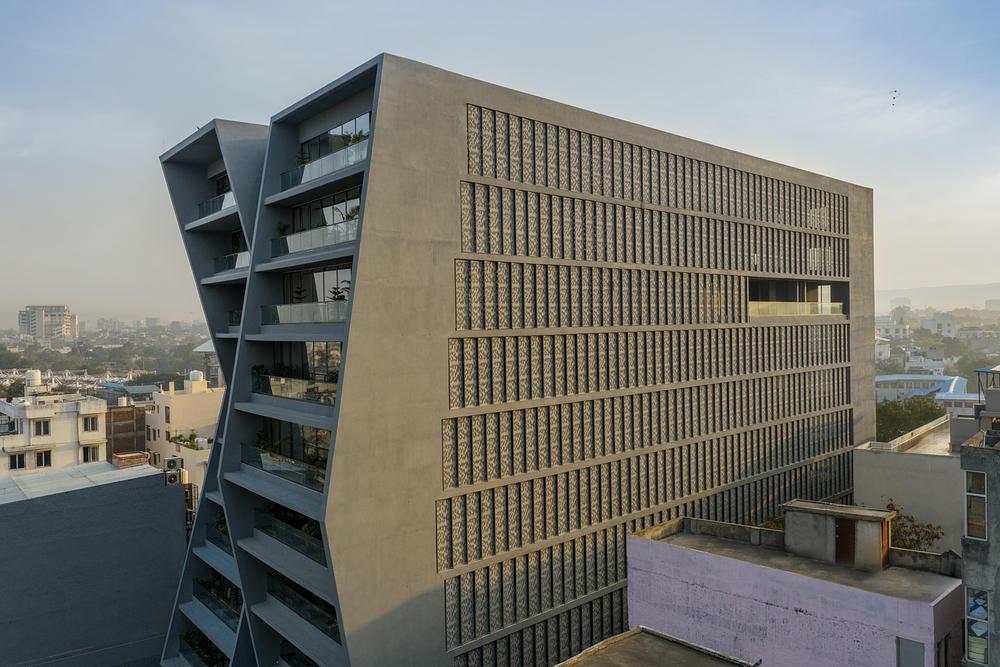
Located along a busy arterial road in Jaipur, India, Magnus by Sanjay Puri Architects demonstrates how material innovation can drive climate-responsive architecture. The office building combines recycled and low-impact materials—including fly ash bricks and lightweight foam concrete made largely from recycled content—with passive design strategies tailored to extreme heat conditions.
Reinterpreting Tradition Through Material Innovation
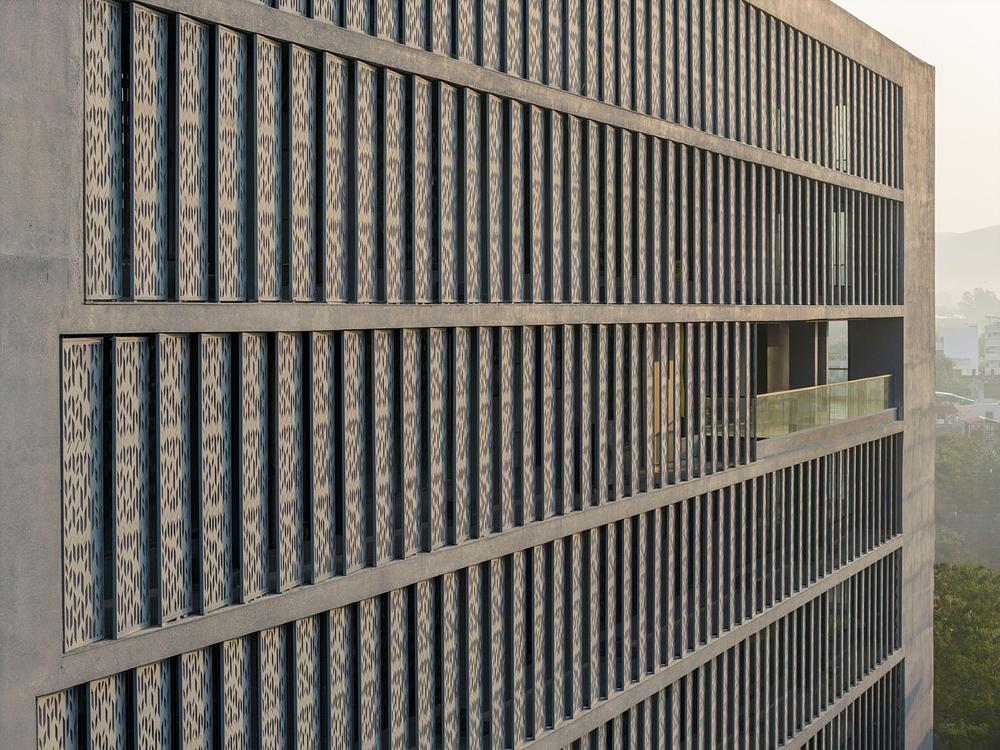
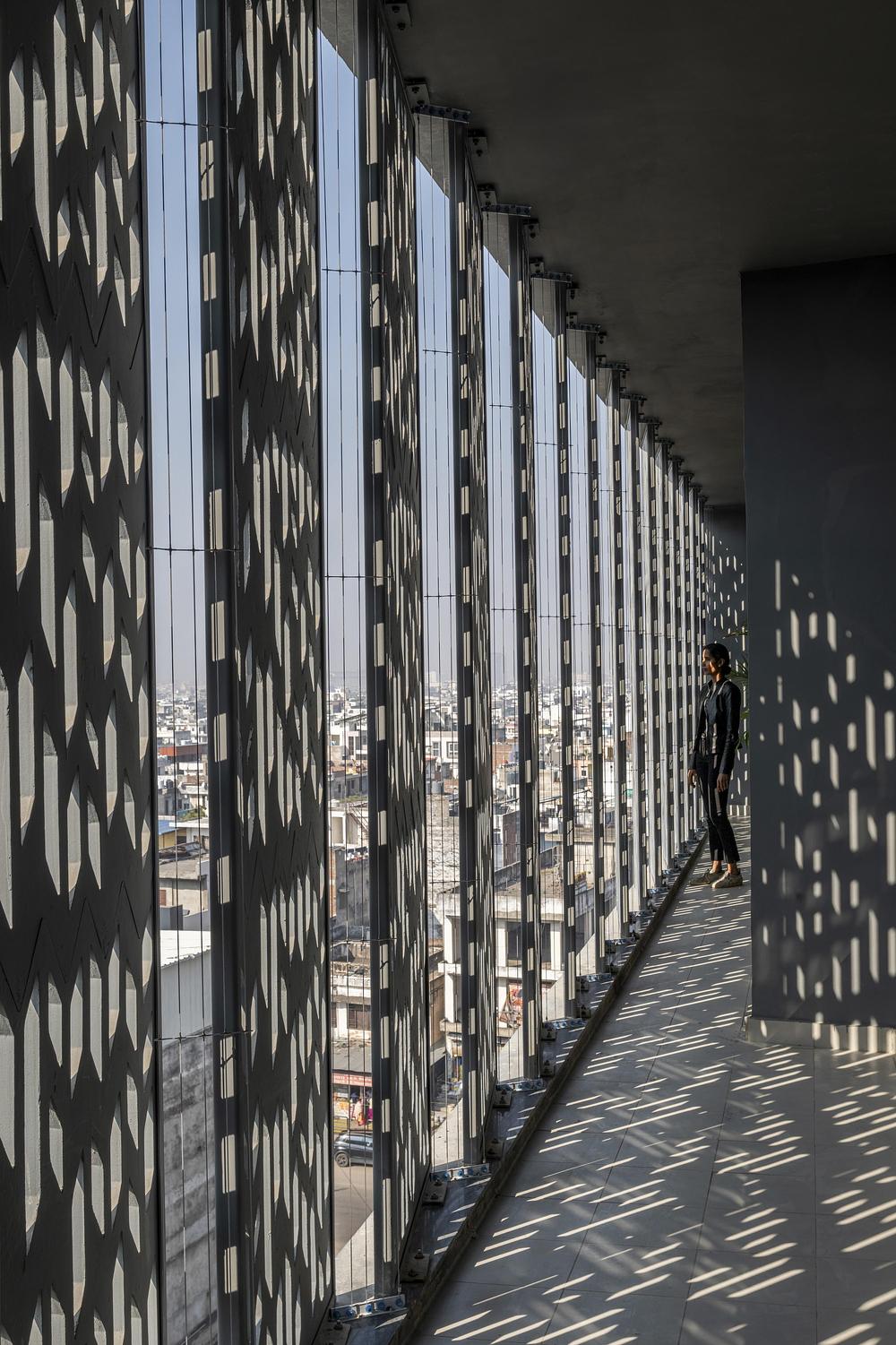
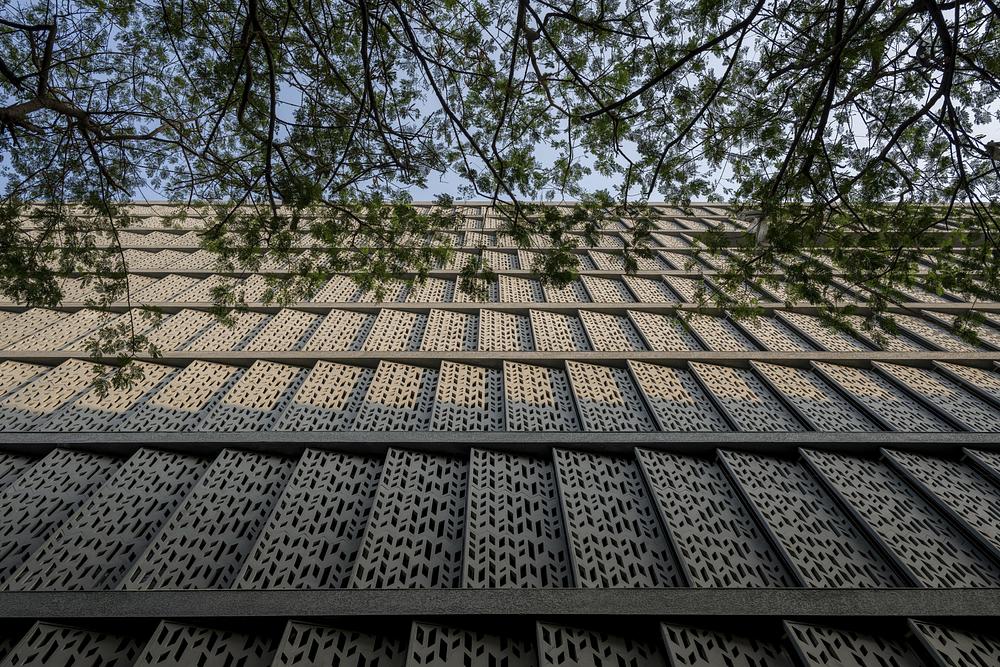
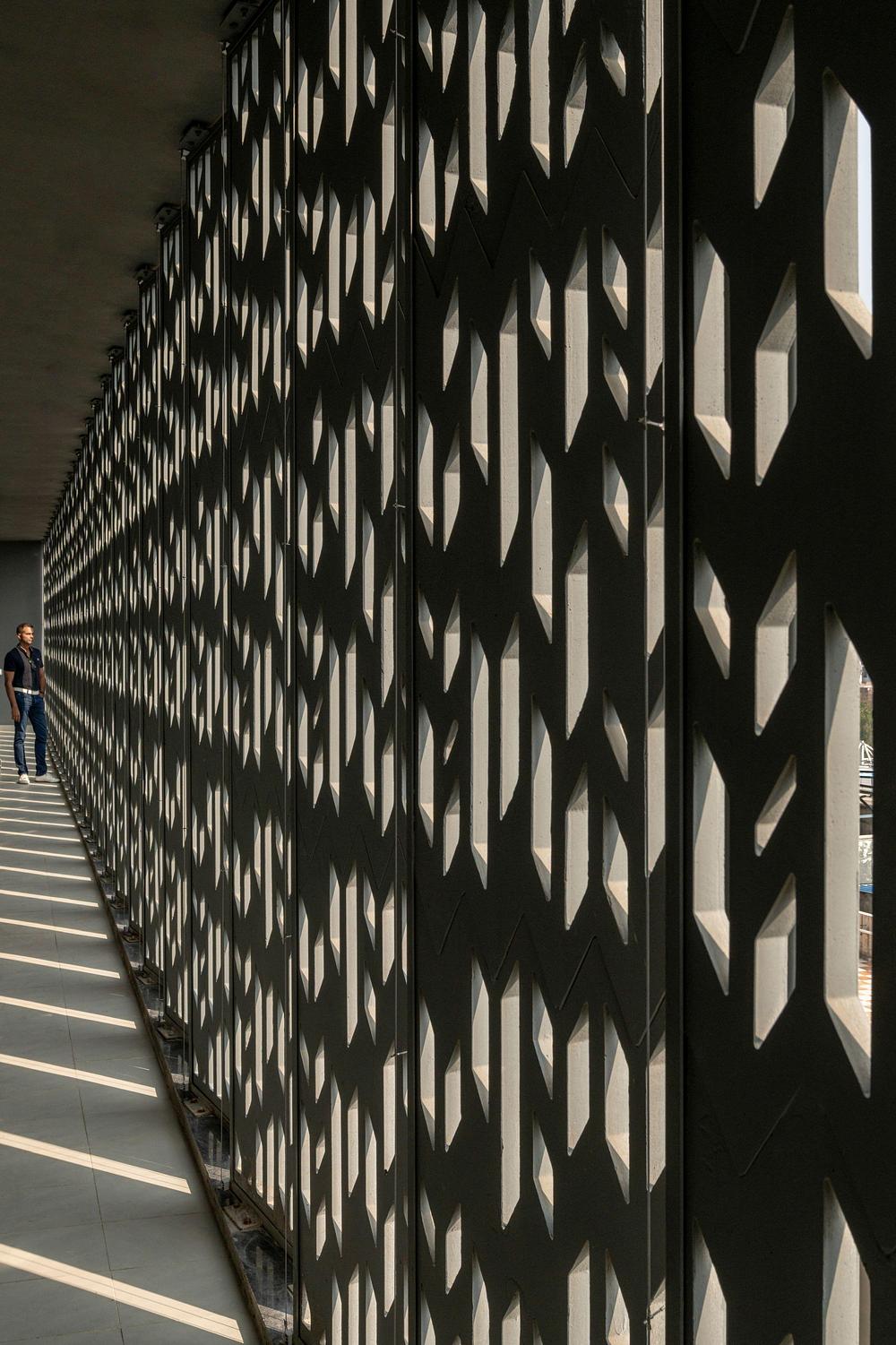
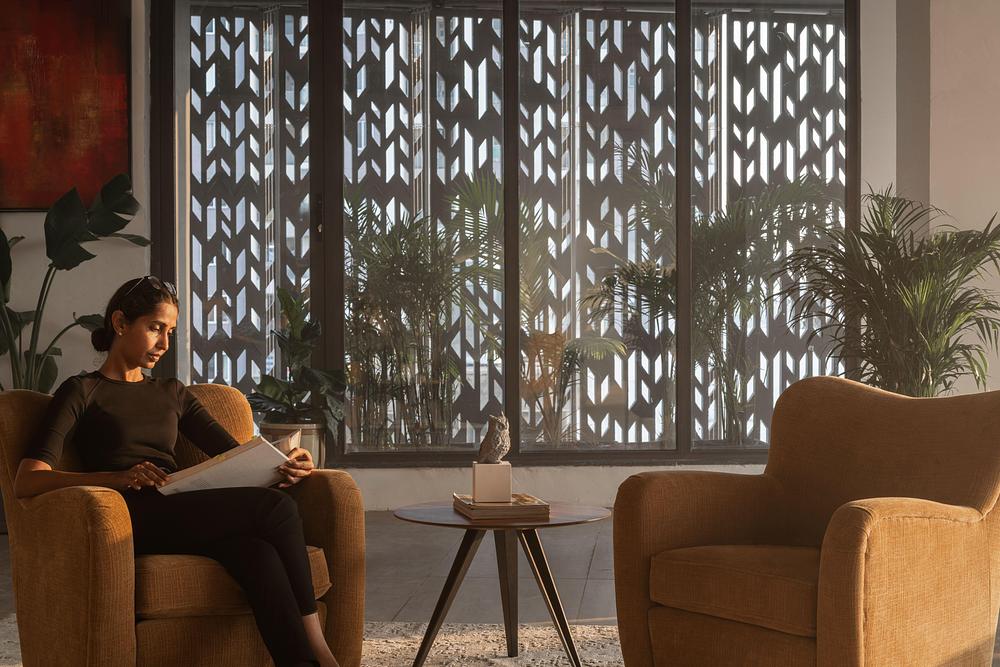
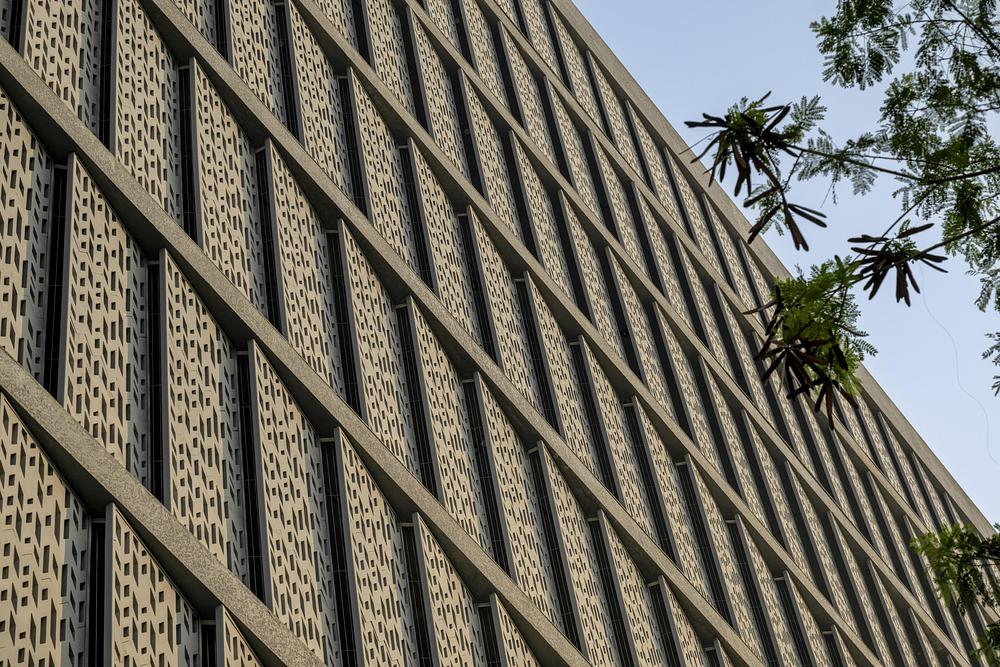
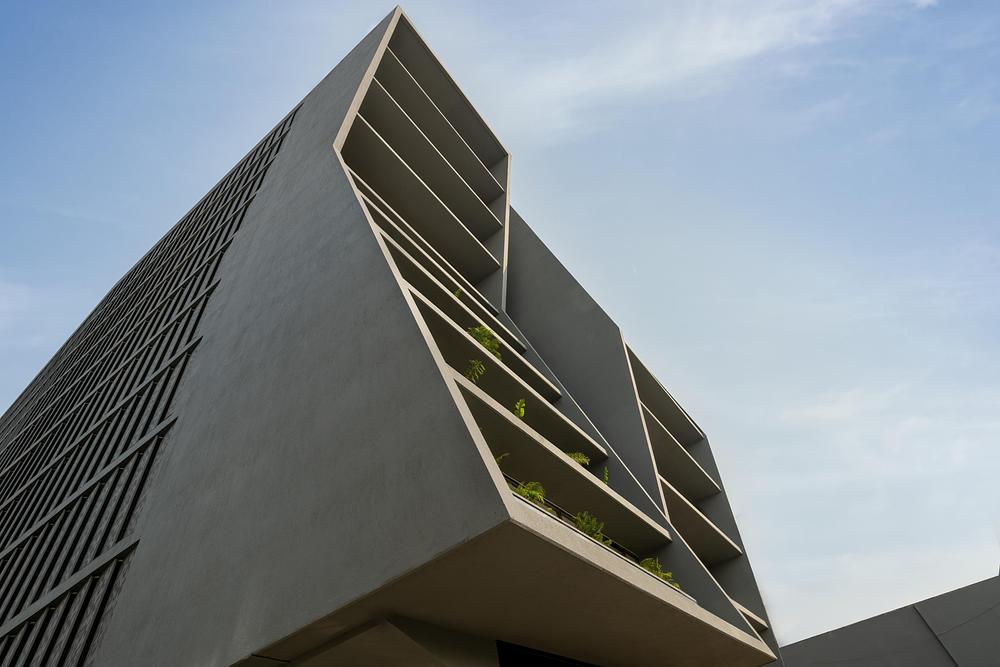
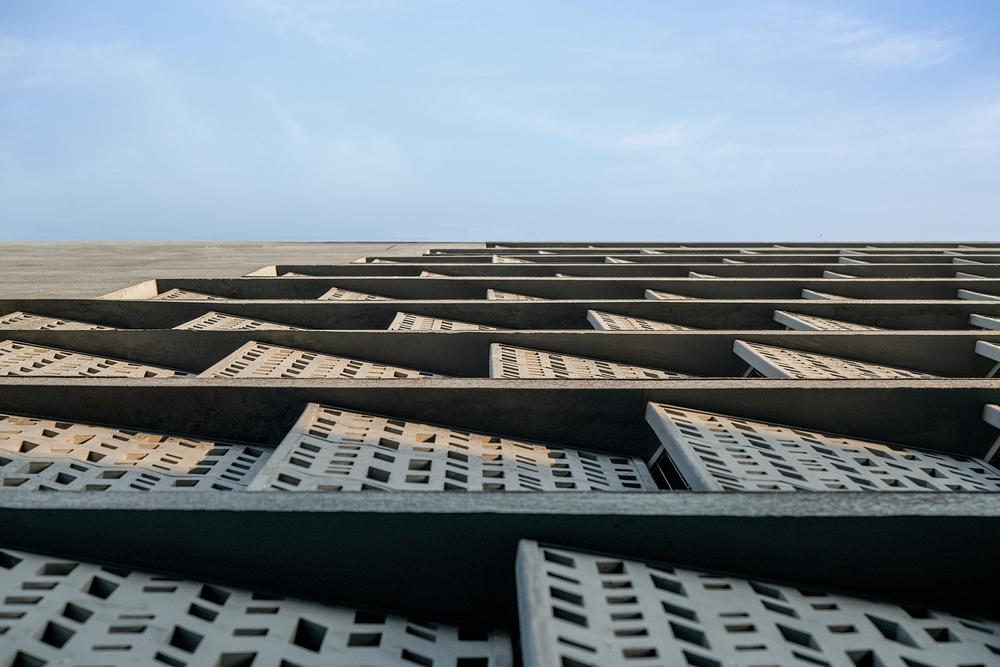
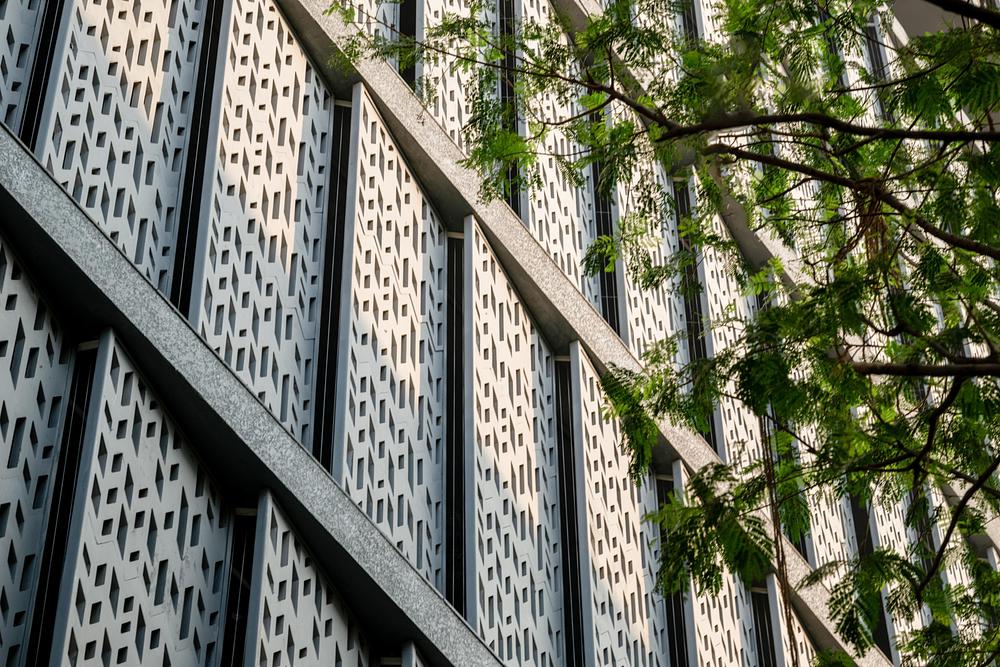
A defining feature of the building is its perforated façade, inspired by traditional jaali screens found in regional historic architecture. Rather than using stone, the architects reinterpret this element in lightweight foam concrete composed largely of recycled materials. This material innovation reduces weight while maintaining durability and providing effective thermal insulation.
The perforated screens wrap the building’s sides, acting as a climate-responsive envelope. By filtering sunlight and promoting airflow, they significantly reduce heat gain—an essential strategy in Jaipur’s hot climate. This passive approach lowers reliance on mechanical cooling, contributing to reduced operational energy use and lifecycle carbon emissions.
Layered Façade Design For Comfort And Performance
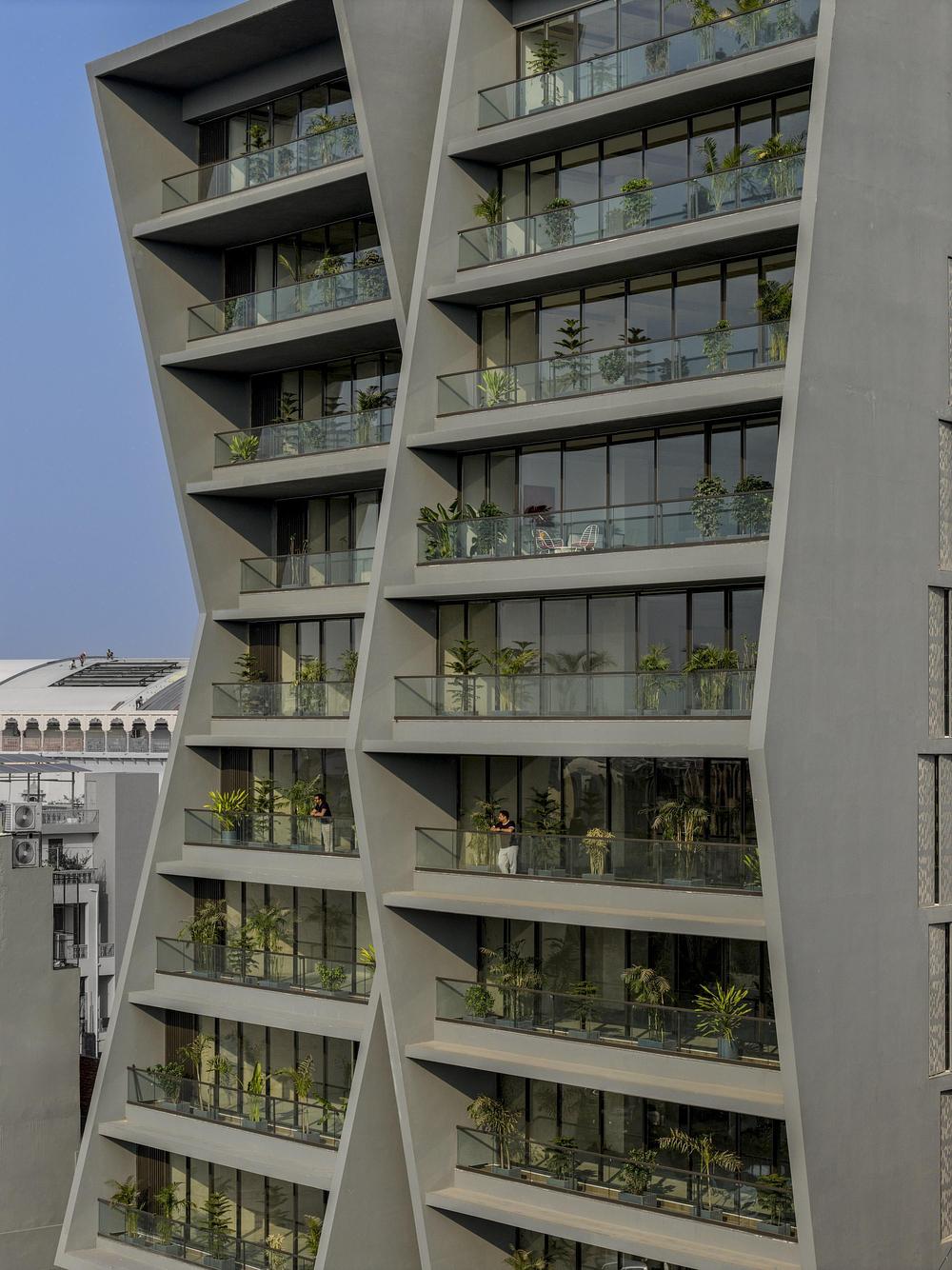
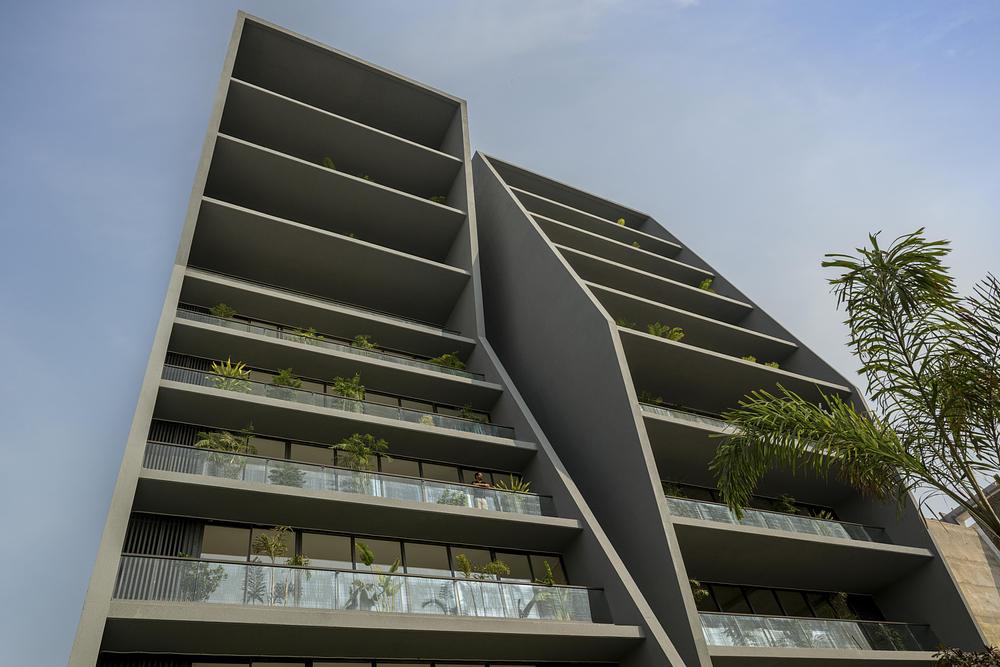
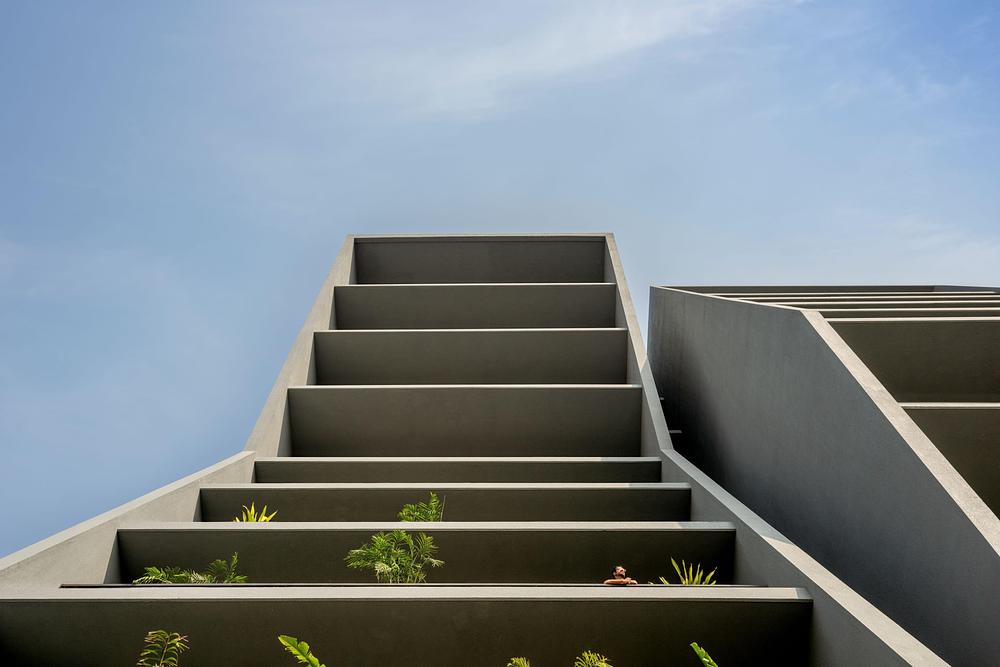
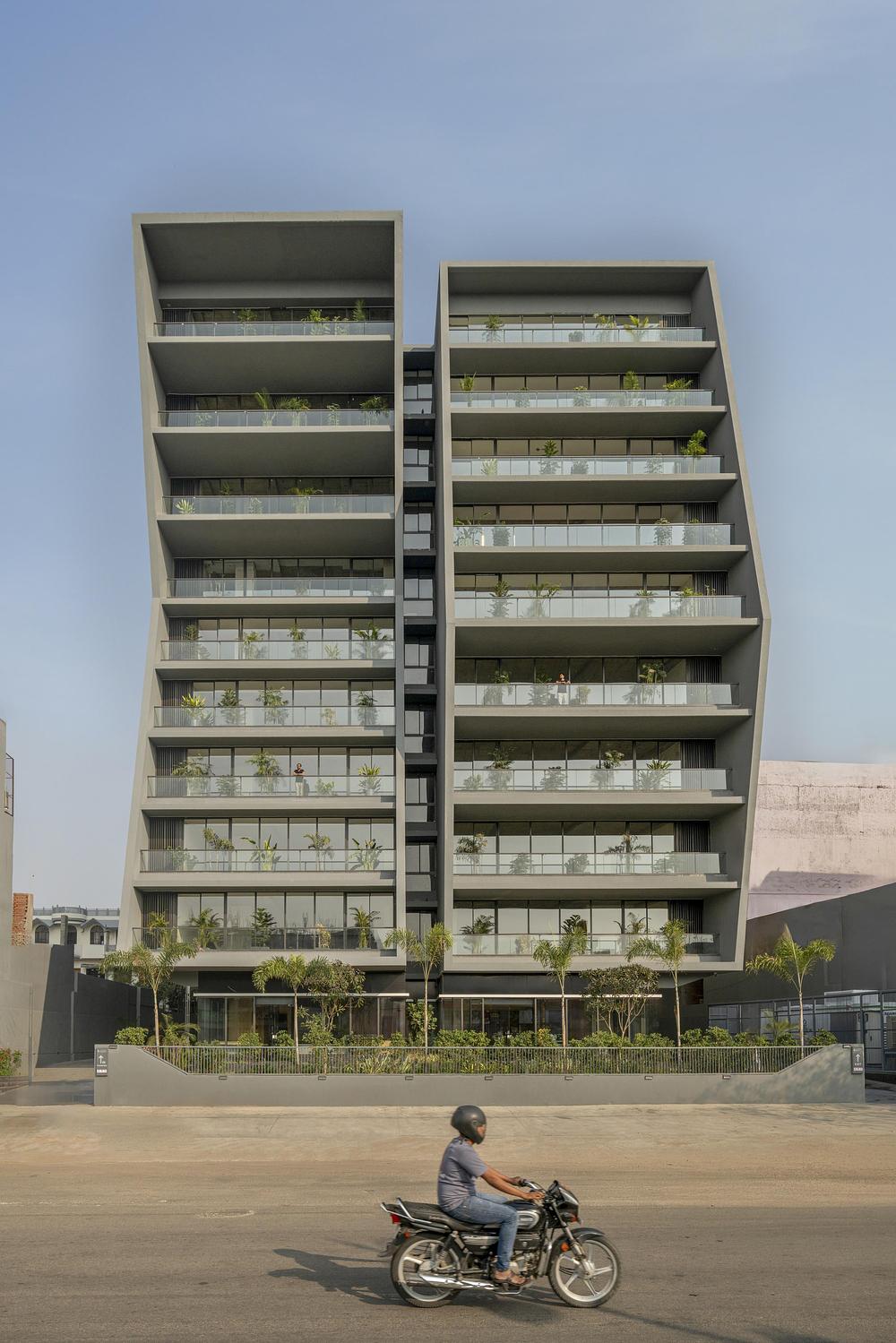
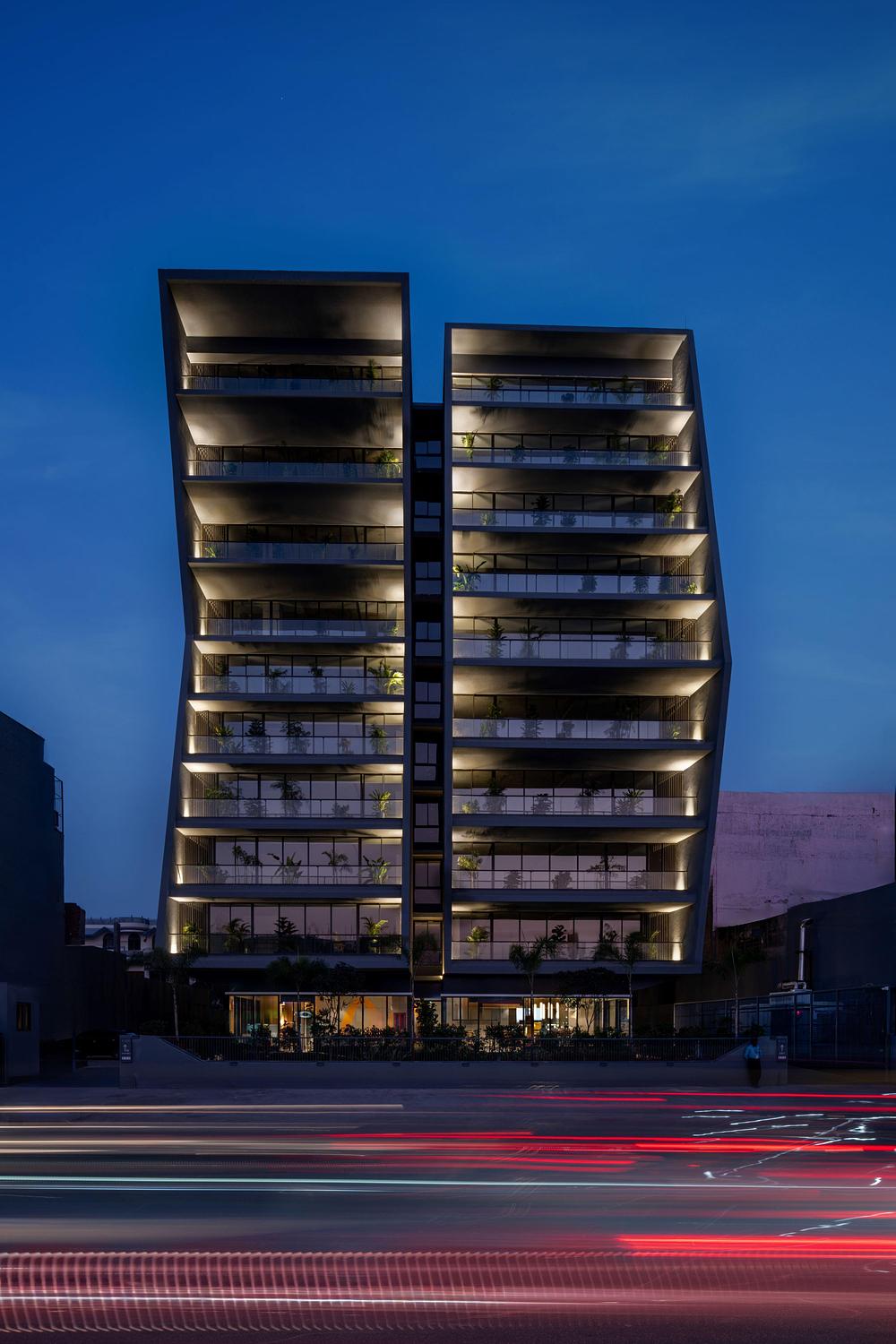
Between the perforated outer layer and the glazed façade, a continuous planter zone introduces vegetation across all levels. This green buffer serves multiple functions: it mitigates noise from the adjacent road, improves microclimate conditions, and enhances occupant wellbeing through visual and environmental comfort.
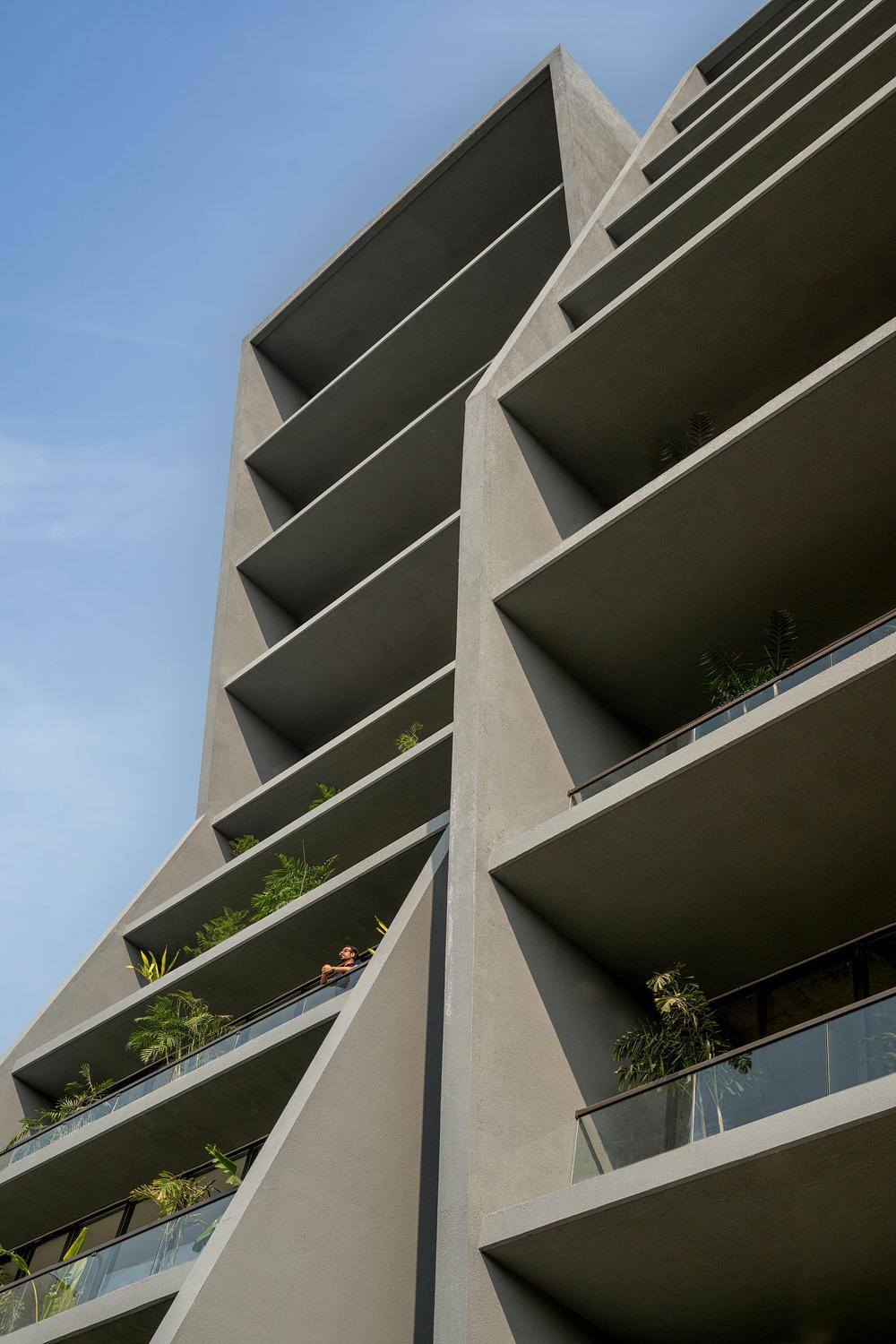
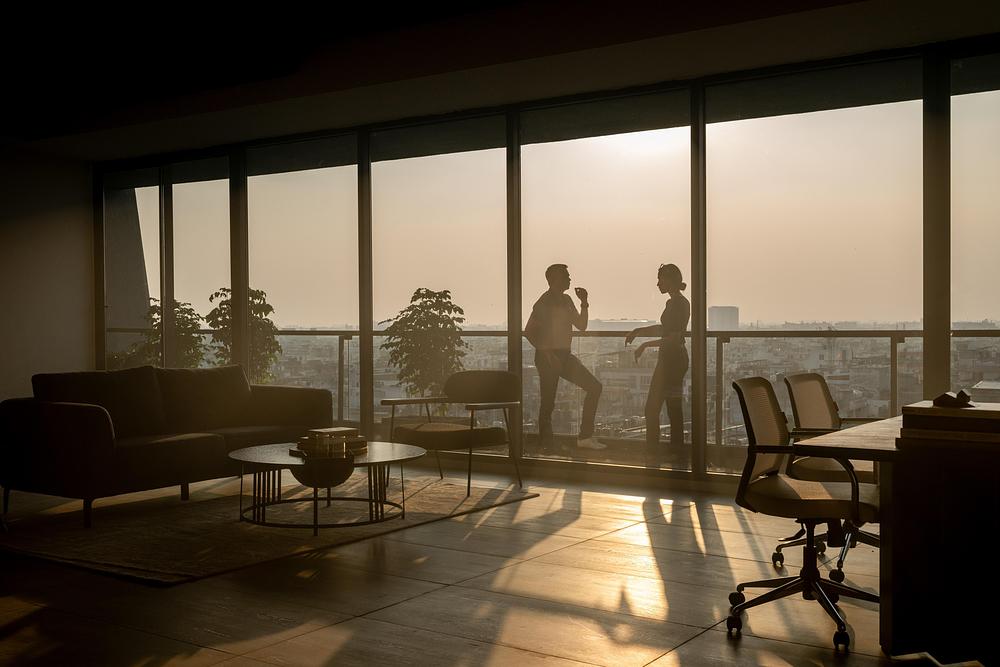
The building’s dynamic massing—featuring opposing inclined volumes on the western façade—creates shaded terraces for each office unit. These recessed outdoor spaces not only improve usability but also act as additional passive shading devices, further reducing solar exposure.
Flexible Spaces And Urban Activation
Internally, the structure is designed for flexibility, with service cores positioned along the southern edge and perimeter columns allowing adaptable floor plates. Smaller office units occupy the lower levels, while larger workspaces are placed above, accommodating a range of commercial tenants.
At street level, a restaurant and conference facilities activate the public realm, while the rooftop integrates a cafeteria, gym, and landscaped garden. These programme elements contribute to a more holistic and socially engaging workplace environment.
Low-Carbon Construction Strategies
Material choices play a key role in reducing the building’s embodied carbon. The use of fly ash bricks—an industrial by-product—alongside a reinforced concrete frame helps lower the environmental impact compared to conventional construction methods.
Additional sustainability measures include water recycling systems, rainwater harvesting, and rooftop solar panels. Together, these strategies position the building as a comprehensive example of climate-responsive and resource-efficient design.
Source: Sanjay Puri Architects via V2com
Photos: Vinay Panjwani

Comments