All Straw House Demonstrates the Potential of High-Density Straw Construction
LTL Architects, in collaboration with Guy Nordenson and Associates, is exploring new possibilities for straw-based construction through the All Straw House, a residential prototype currently under construction. Supported by Princeton University’s Sustainability of our Planet Fund, the project demonstrates how an agricultural by-product can become a high-performance building material.
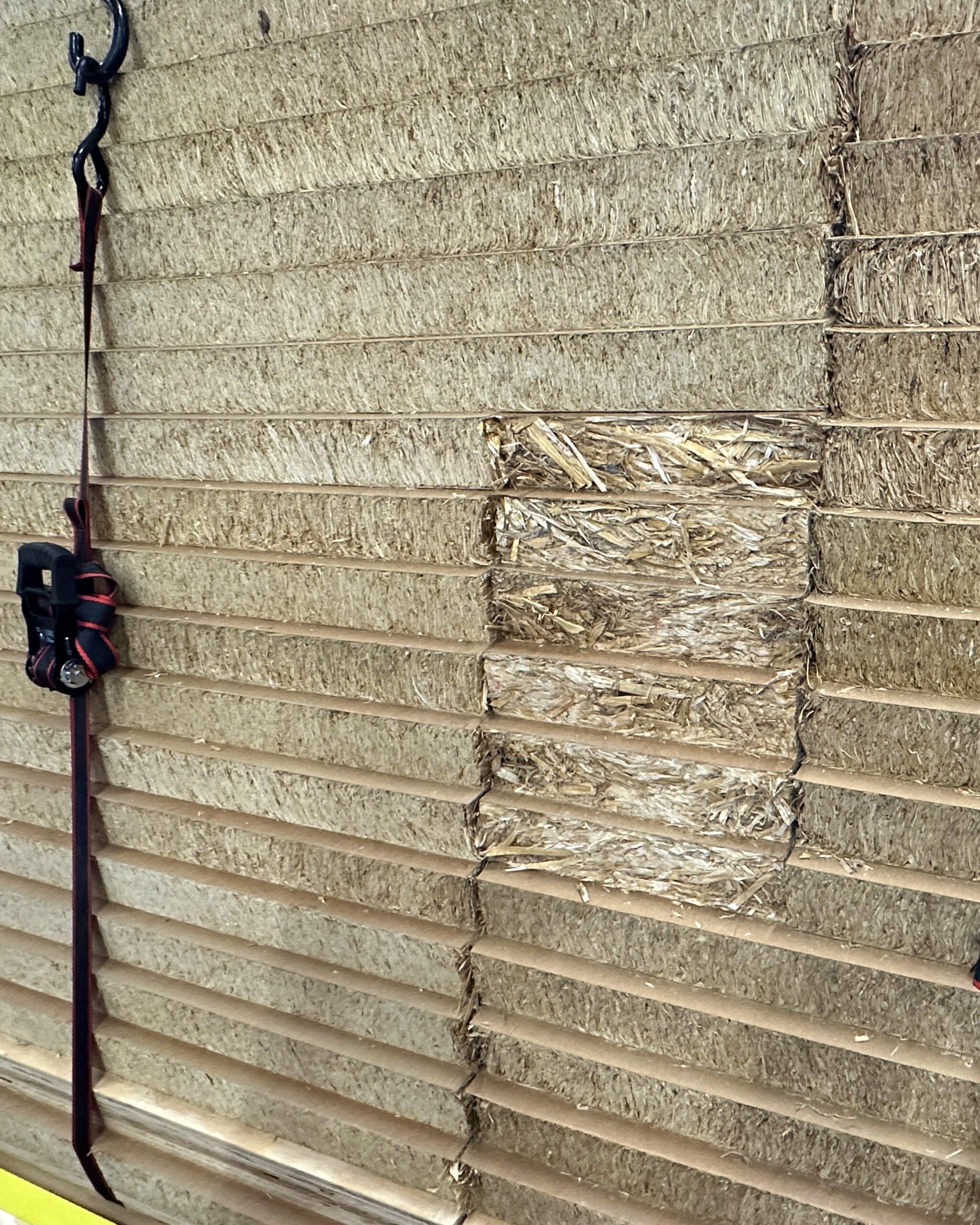
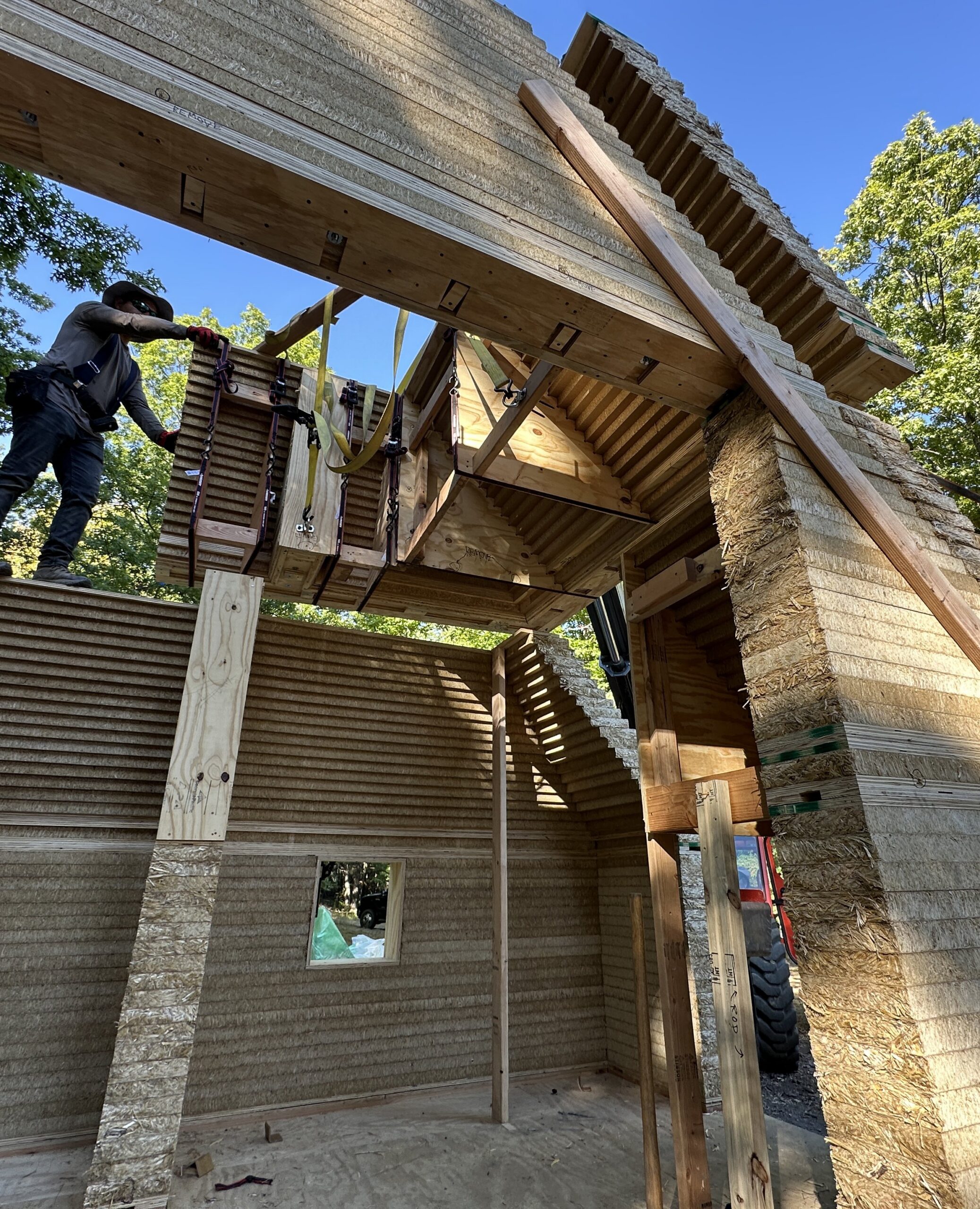
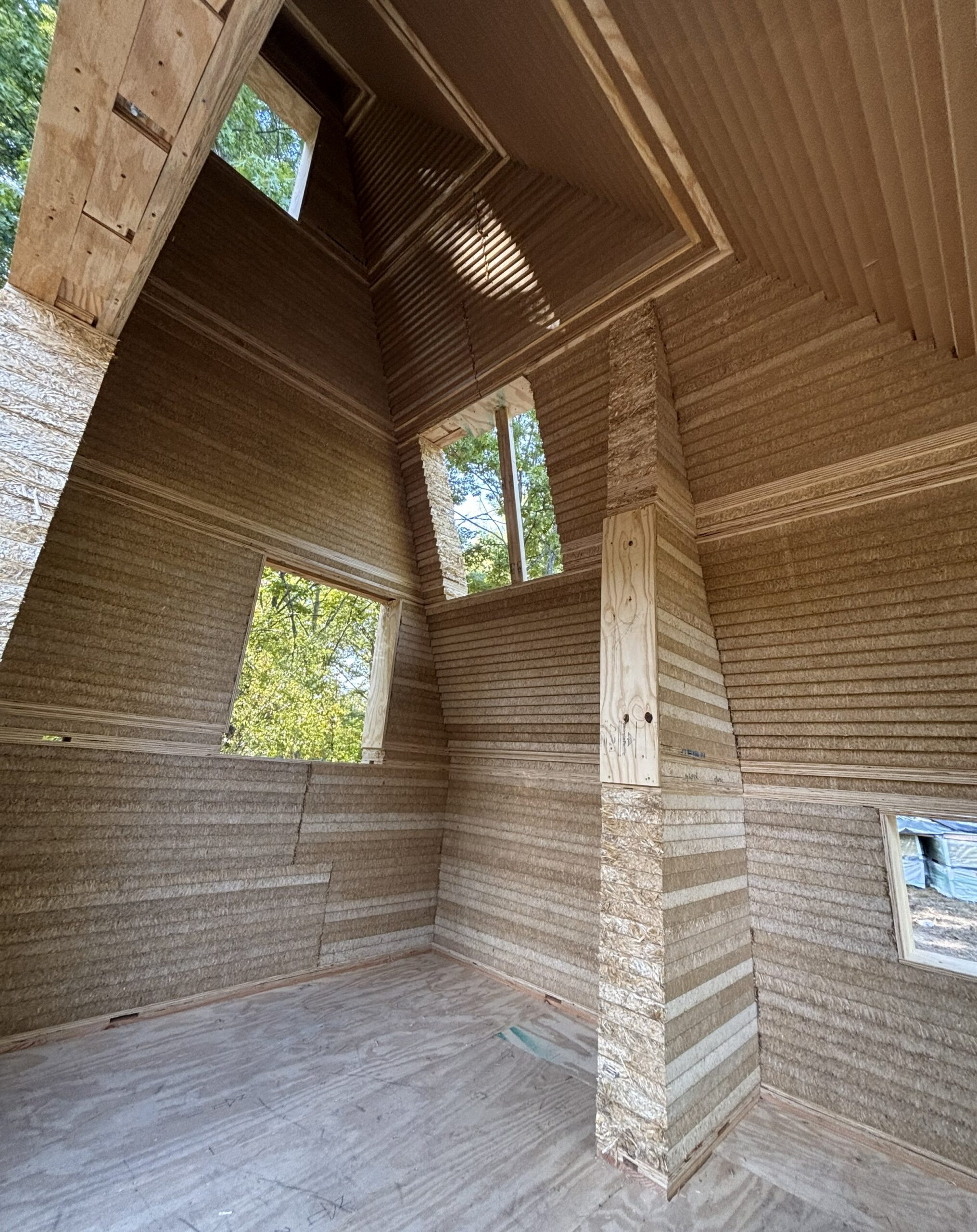
The house uses highly compressed straw boards that are cut, stacked and compressed into a novel building system. Unlike traditional straw bale construction, the boards have a density of approximately 370 kg/m³, making them around three times denser than straw bales. As a result, the material provides structural support, thermal insulation and an interior finish within a single assembly. The increased density also improves resistance to pests and fire.
Turning Agricultural Waste into a Construction Material
Straw is one of the most widely available agricultural by-products in the world. Because it grows quickly and stores carbon during its lifecycle, it offers significant environmental benefits. In addition, it is affordable, widely accessible and often underutilised. The project therefore highlights the potential of straw as a regenerative and carbon-storing building material.
The team prefabricated the house over a two-month period at Princeton University’s Architecture Lab. Throughout the process, researchers and students worked together to test new construction methods. Consequently, the project combines practical experimentation with architectural research.
Contemporary Applications of Traditional Thatching
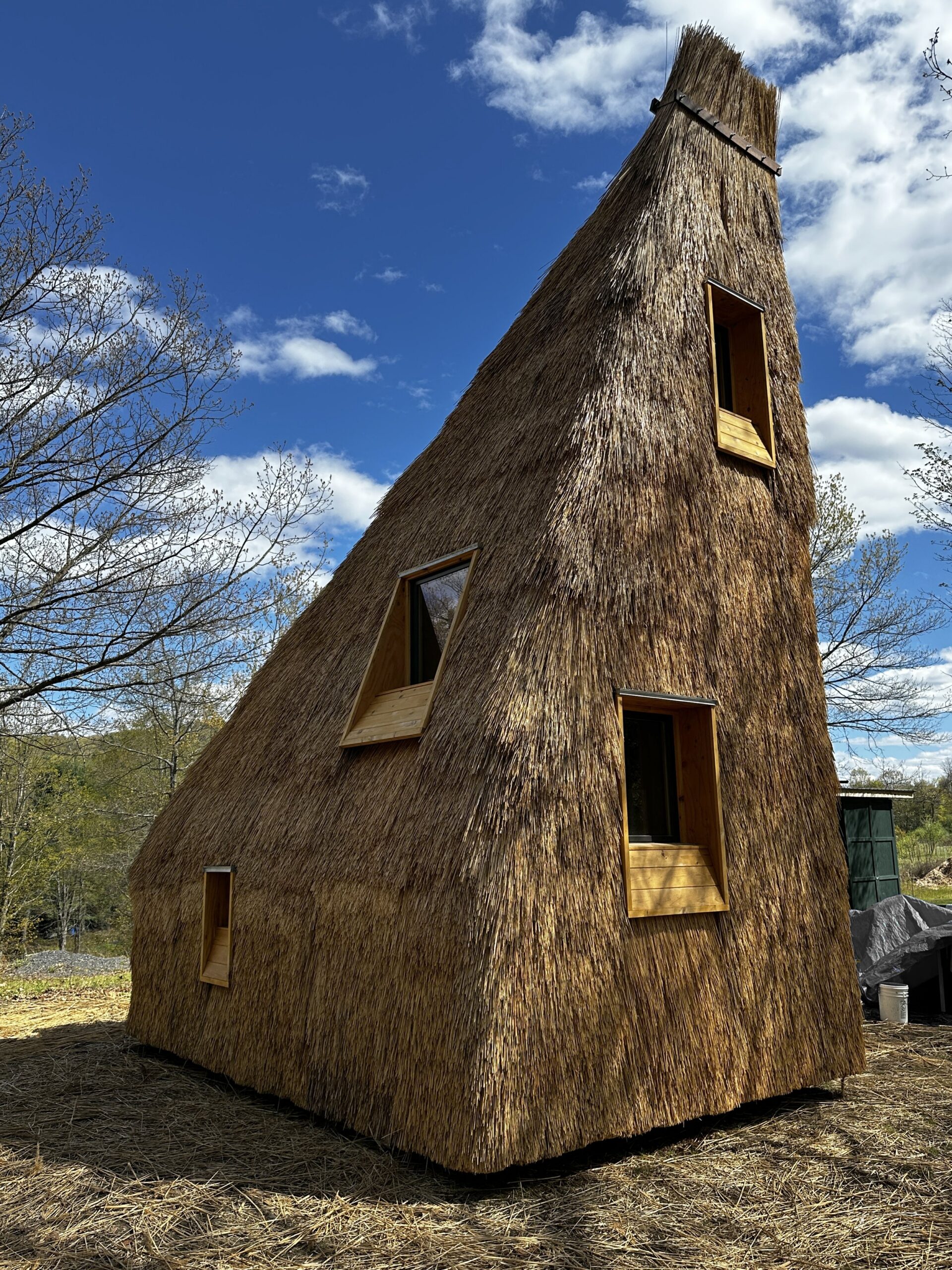
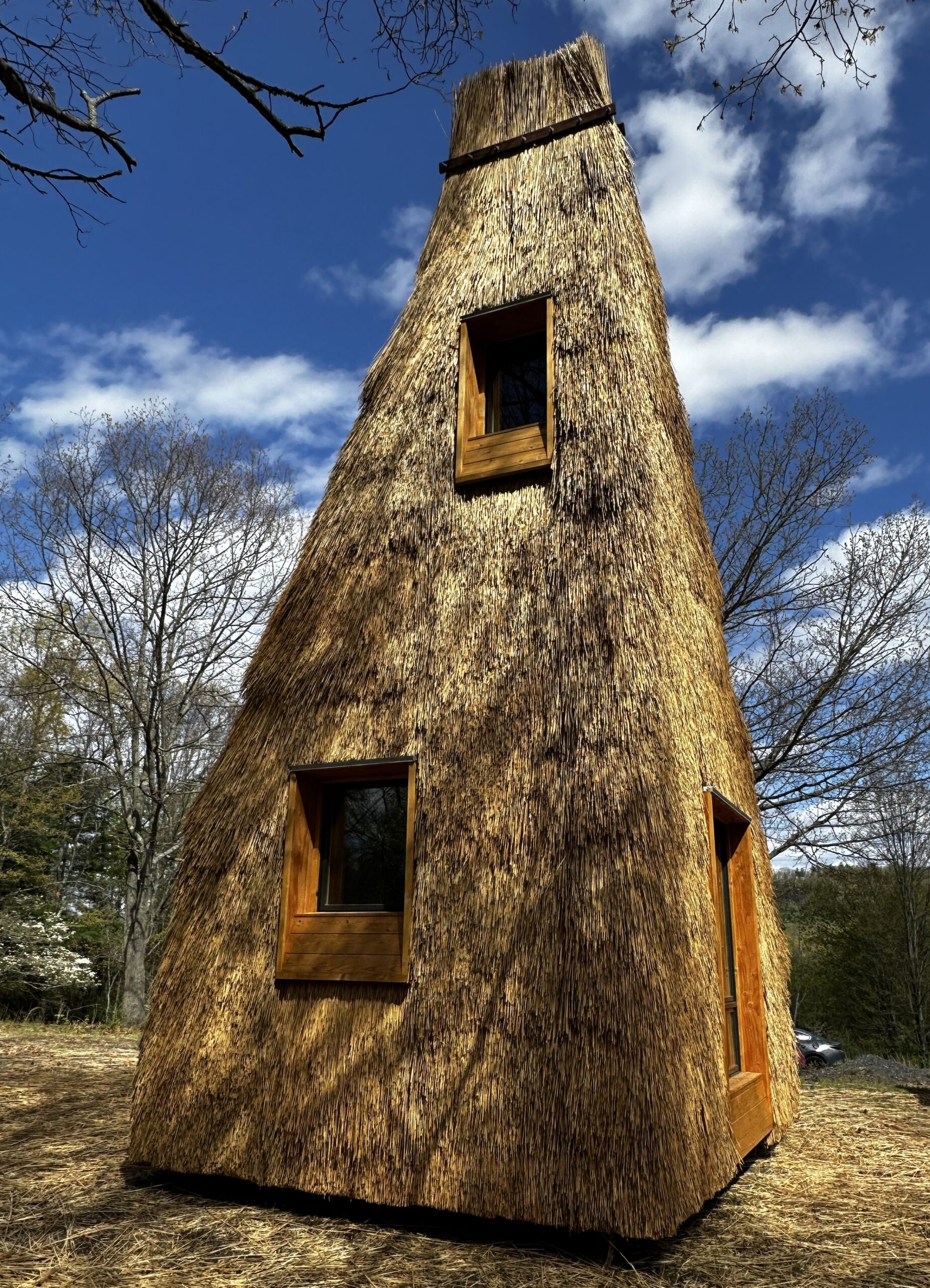
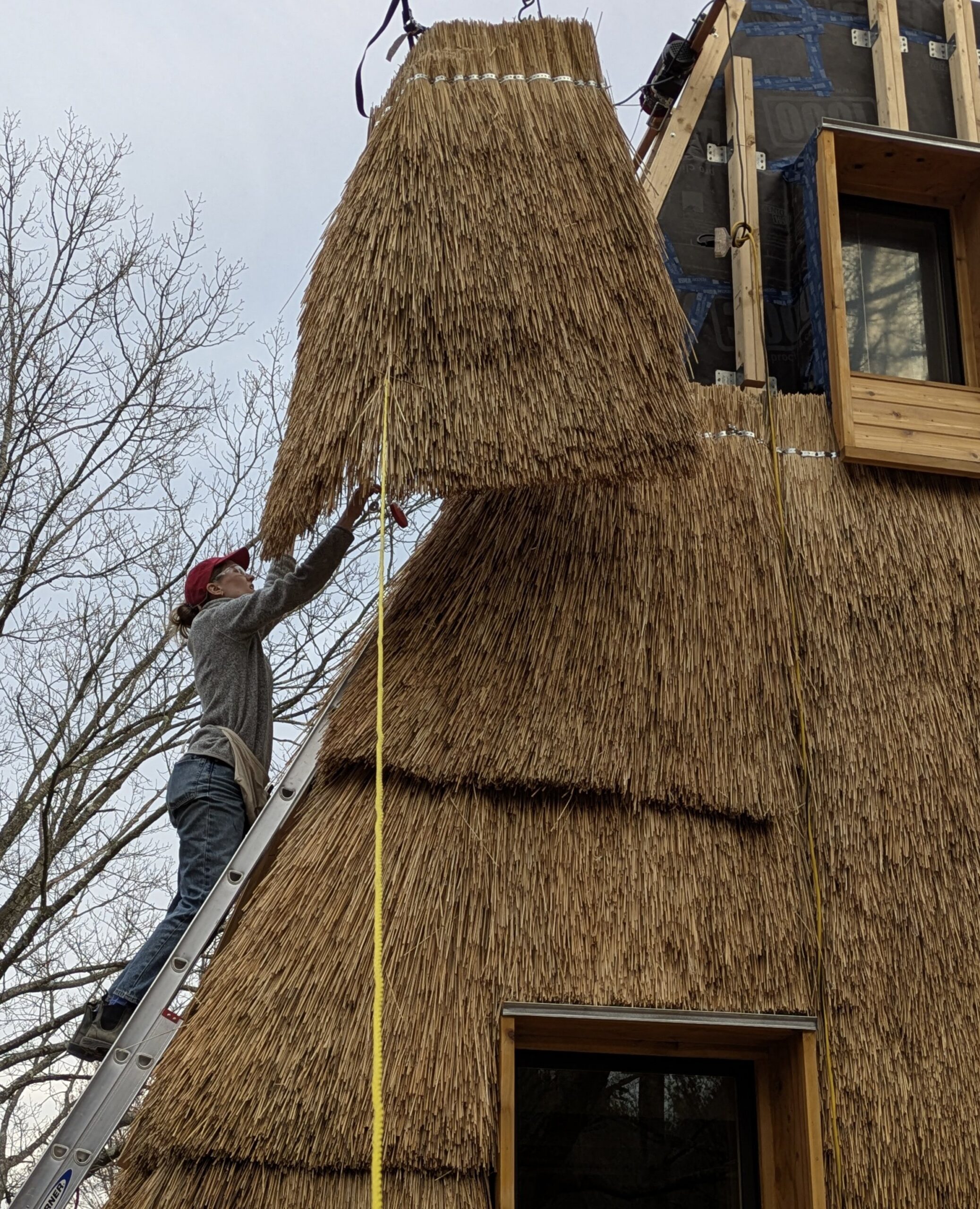
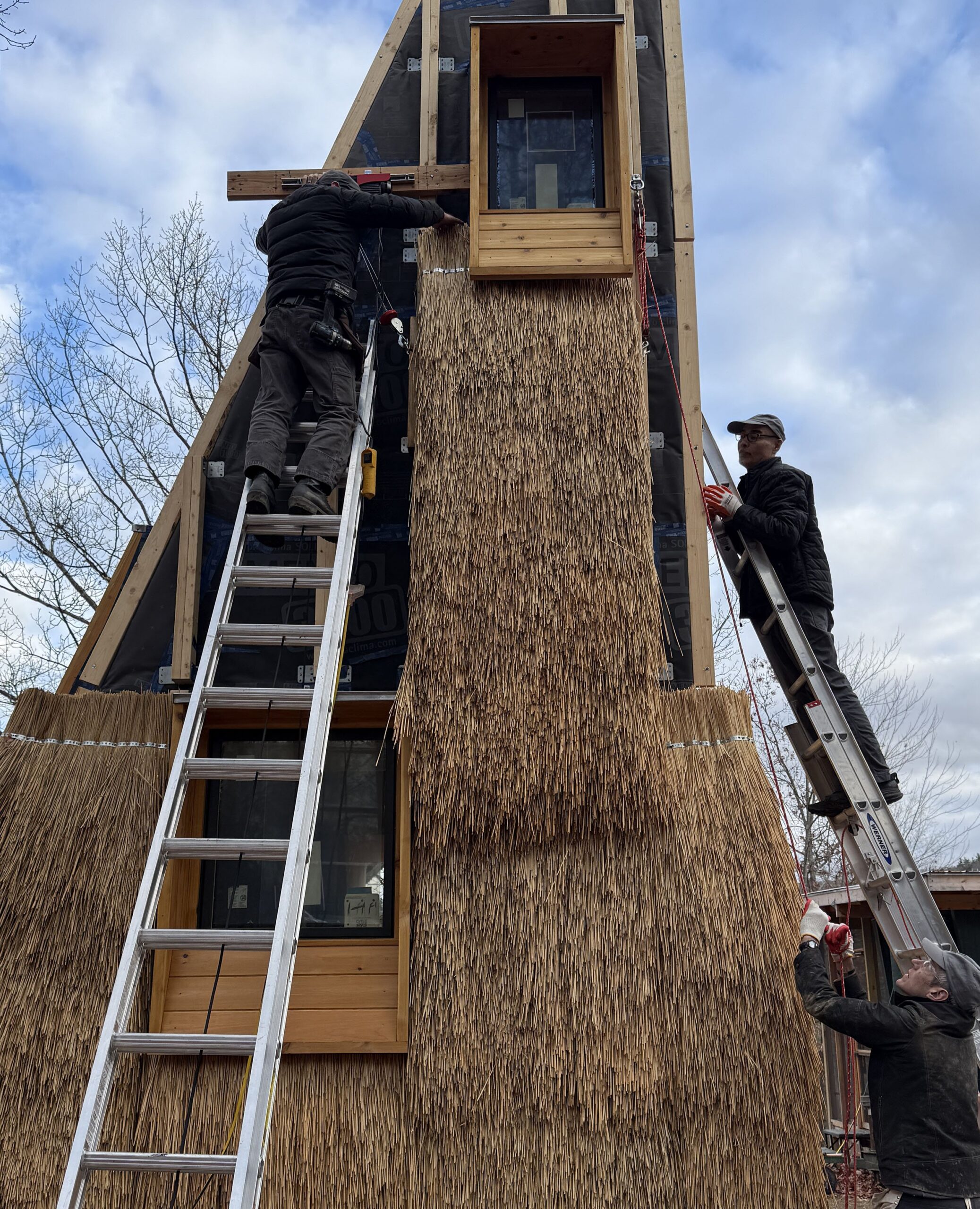
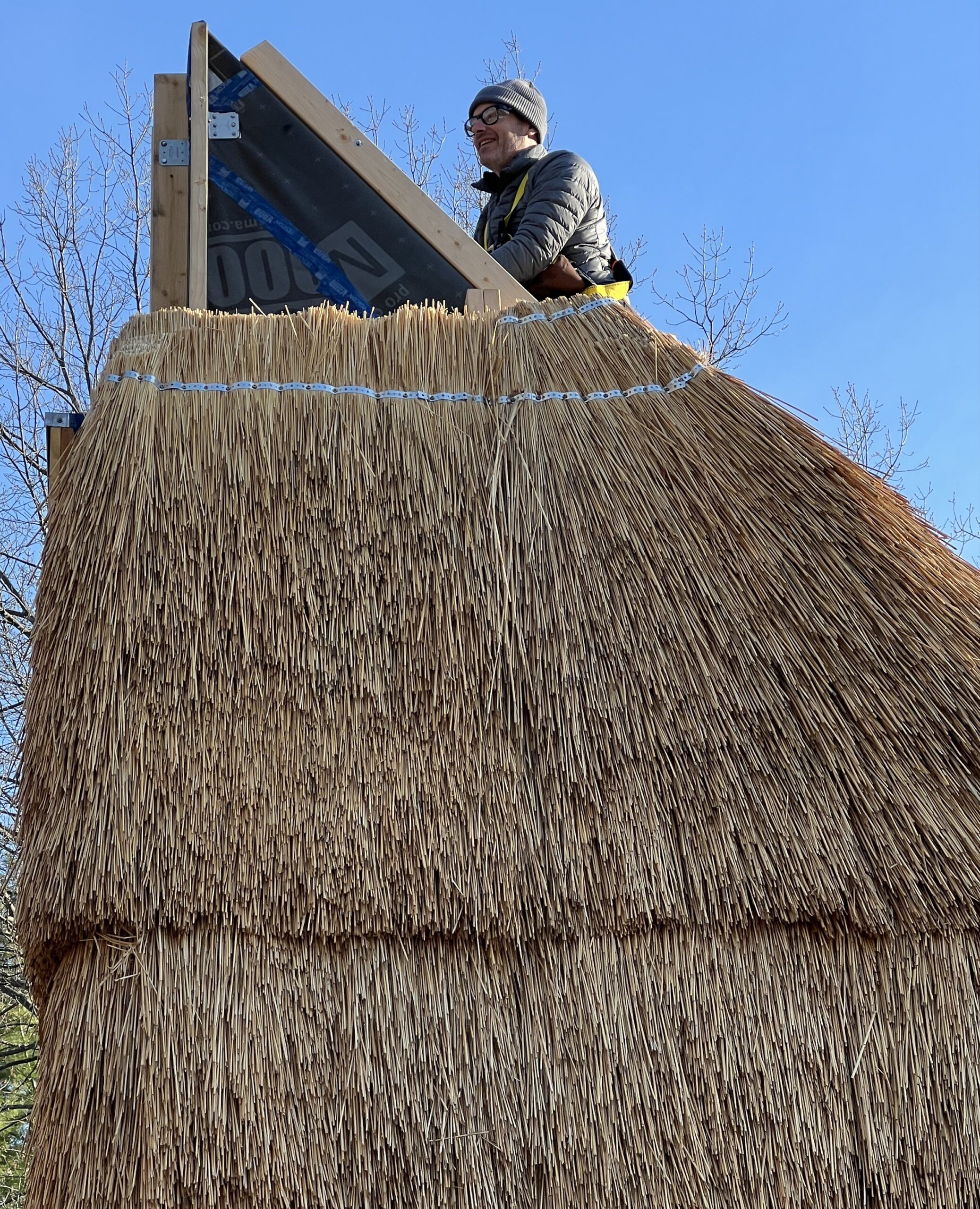
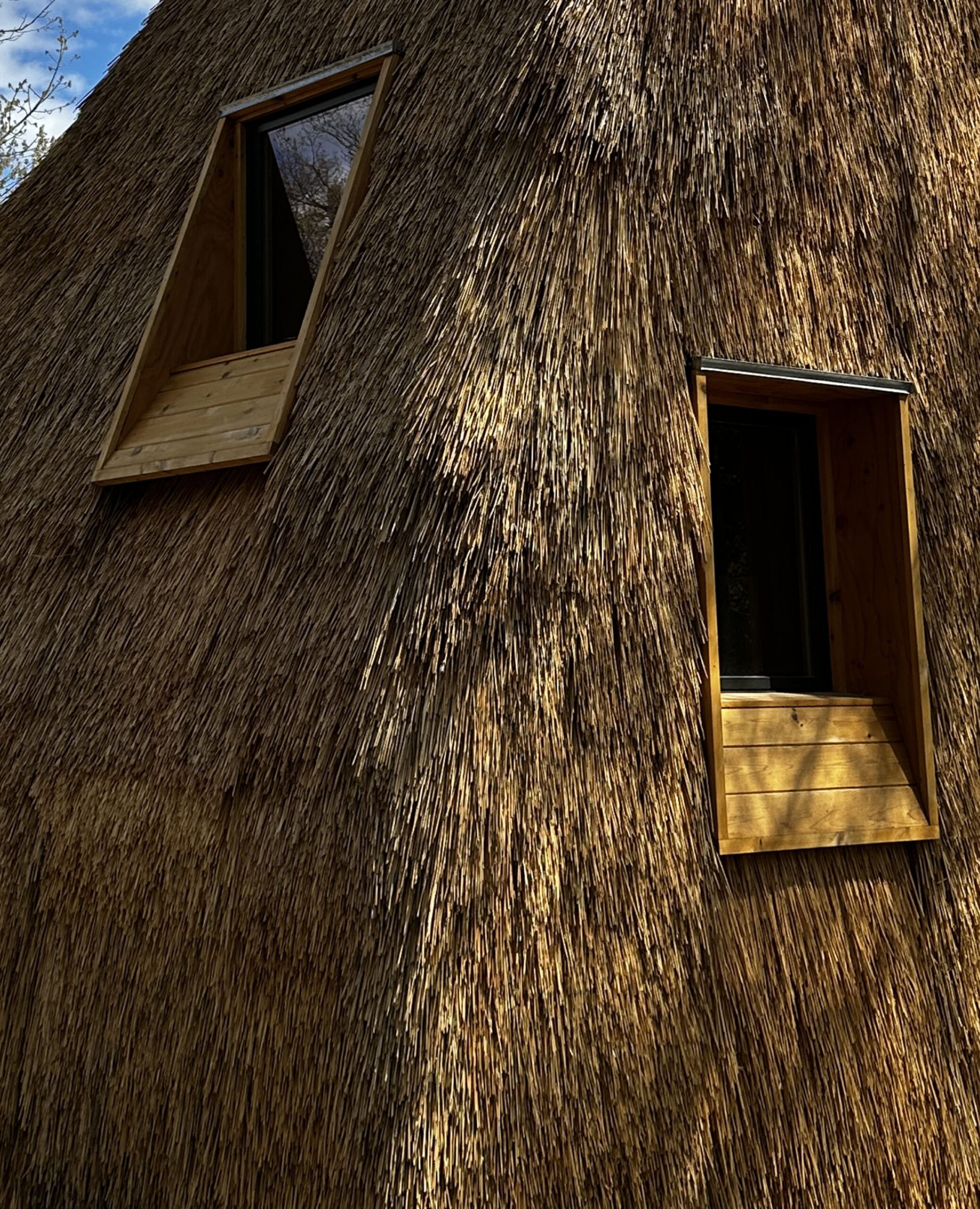
The exterior envelope features 33 prefabricated thatch panels that act as a durable rainscreen. Each panel overlaps the one below, creating continuous protection from the weather. Thousands of reeds form a layer between 150 and 200 mm thick. Together, they create a textured façade that reinterprets traditional thatching techniques for contemporary architecture.
Inside the house, the layered structure of the straw panels remains visible. The assembly consists of 111 stacked layers, while timber ring beams provide lateral stability throughout the structure. In wet areas, such as around the walnut sink, the team applied waterproof tadelakt plaster directly onto the straw surface.
Architecture Shaped by Material Properties
The building’s form responds directly to the characteristics of straw and thatch. For example, the geometry reflects both the structural limits of corbelled straw panels and the roof pitch required for effective drainage. As a result, the walls and roof form a single integrated material assembly rather than separate construction systems.
By combining biogenic materials with innovative design, the All Straw House challenges conventional building methods. Moreover, it demonstrates how agricultural by-products can contribute to more regenerative forms of construction. The project therefore offers valuable insights into the future of low-carbon architecture and material-driven design.
Source & photos: LTL Architects

Comments