Plant-Based PEF Enters Performance Textiles


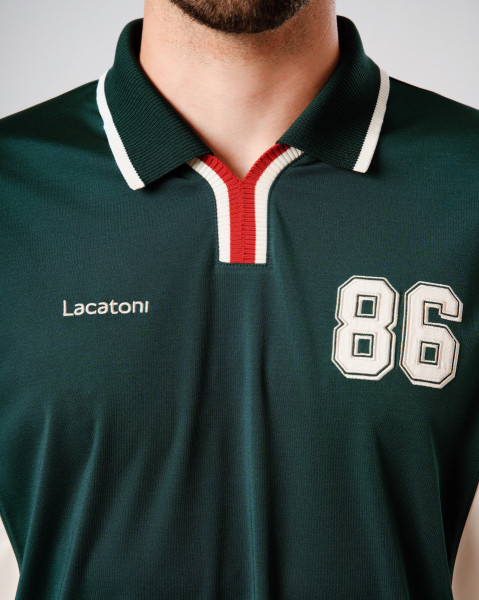

Dutch renewable materials company Avantium has joined forces with Portuguese textile manufacturer Casa da Malha and sportswear brand Lacatoni to develop textile prototypes made from PEF (polyethylene furanoate), a plant-based and recyclable polymer. The partners are exploring PEF as an alternative to conventional polyester for technical textiles, with an initial focus on sportswear.
Branded as releaf, Avantium’s PEF is produced from renewable feedstocks. The material combines a lower environmental impact with high performance. Although PEF has already gained attention in packaging, this collaboration demonstrates its potential for textile applications, where demand for renewable and recyclable fibres continues to increase.
From Renewable Feedstocks to Knitted Fabrics
PEF offers a plant-based alternative to fossil-derived polyester. In addition, the material is recyclable and provides strong mechanical performance. These characteristics make it suitable for a wide range of textile applications.
To test these possibilities, Casa da Malha produced premium circular knitted fabrics using PEF-based yarns. The Portuguese company specialises in advanced knitting technologies and continuously explores innovative materials that can reduce the environmental footprint of textile products. During the project, the company translated the polymer into knitted fabric constructions that meet the quality and durability standards required for technical apparel.
Prototype Sportswear Demonstrates Material Potential
The collaboration has already produced several textile prototypes. One of the first results is a sports shirt that Casa da Malha developed for Lacatoni. The prototype shows how PEF can support performance apparel while maintaining the functional properties expected for active use.
The partners presented the sports shirt at Milano Unica, which took place in Milan from 7 to 9 July 2026. They also showcased a wider collection of textile prototypes. As a result, brands, manufacturers and other industry stakeholders can evaluate how plant-based polymers perform in practical applications.
Accelerating Renewable Polymer Innovation
This collaboration supports Avantium’s wider ambition to commercialise renewable and circular polymer materials. The company uses its YXY technology to convert plant-based sugars into FDCA (furandicarboxylic acid), the key building block for PEF. Furthermore, Avantium is preparing to start production at what it describes as the world’s first commercial FDCA plant in Delfzijl, the Netherlands.
By working closely with textile manufacturers and apparel brands, Avantium aims to speed up the adoption of renewable polymers. At the same time, collaborations like this help manufacturers assess new materials under real-world conditions before bringing them to market. Consequently, the project provides valuable insight into the future role of plant-based polymers in technical textiles.
Source & photos: Avantium

Comments