3D Printed Floor Trusses From Recycled Plastic Could Transform Sustainable Housing
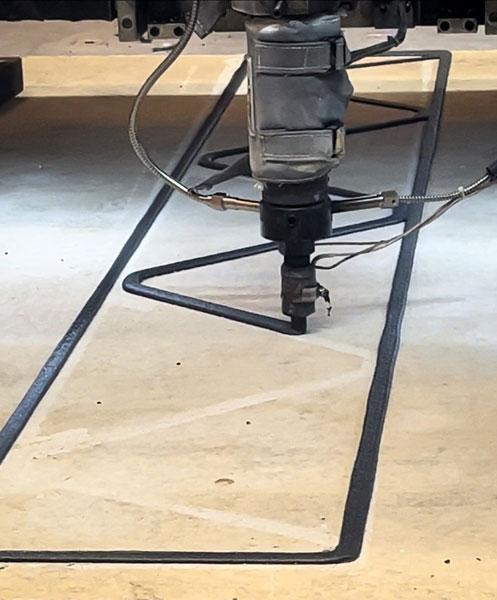
Engineers at the Massachusetts Institute of Technology (MIT) are developing structural building components made from recycled plastic using large-scale 3D printing. Their latest prototype — a 3D printed floor truss — shows how polymer waste could become a viable alternative to timber in housing construction.
Turning Plastic Waste Into Structural Components
The research team designed a floor truss system using recycled PET reinforced with glass fibres. They printed four trusses with an industrial large-format 3D printer. Each truss measured around 2.4 metres long, weighed approximately 6 kilograms, and took less than 13 minutes to produce.
Floor trusses typically consist of timber beams connected with metal plates in a ladder-like configuration. These structures support plywood or other floor decking. The MIT team replicated this geometry but optimised the joints to improve stiffness and strength.
The researchers assembled the printed trusses into a standard 1.2 x 2.4 metre floor frame and tested its structural performance. The system supported more than 1,800 kilograms before failure. This result exceeds key U.S. housing standards for stiffness and deflection. The printed elements therefore meet structural requirements for residential floors.
Designing For Performance And Material Efficiency
The team prioritised a high stiffness-to-weight ratio. Floors must resist bending under load and remain comfortable to walk on. Using digital simulations, the researchers refined the truss geometry before printing the final design.
For architects and structural designers, the project demonstrates how additive manufacturing can produce load-bearing elements, not only walls. The same approach could apply to wall studs, roof trusses, stair stringers and foundation piles.
The lightweight nature of polymer composites also simplifies transport and on-site handling. Compared with timber or concrete systems, these elements require less heavy logistics and could support modular construction strategies.
From ‘Dirty’ Plastic To Circular Construction
A key ambition of the project involves the use of “dirty” post-consumer plastic. The team aims to process waste such as used bottles and food containers without extensive cleaning or sorting.
In the future, local micro-factories could shred plastic waste, convert it into pellets and feed it directly into large-scale 3D printers. This decentralised model would reduce transport emissions and keep material streams local.
Global housing demand continues to rise. Researchers estimate that the world may require one billion new homes by 2050. Expanding housing supply using only timber would place significant pressure on forests. Recycled plastic framing could reduce demand for virgin wood while giving single-use plastics a durable second life.
Implications For Sustainable Architecture
Cost reduction remains an important next step before large-scale adoption becomes feasible. However, the study proves that recycled polymer composites can perform as structural building elements.
For architects, product designers and housing innovators, this research highlights the growing role of digital fabrication in circular construction. By combining 3D printing with recycled materials, the construction sector can reduce waste, lower embodied carbon and develop new lightweight building systems.
Source & photos: MIT

Comments