AI As Reflective Material: Bridging Digital Design And Ceramic Craft
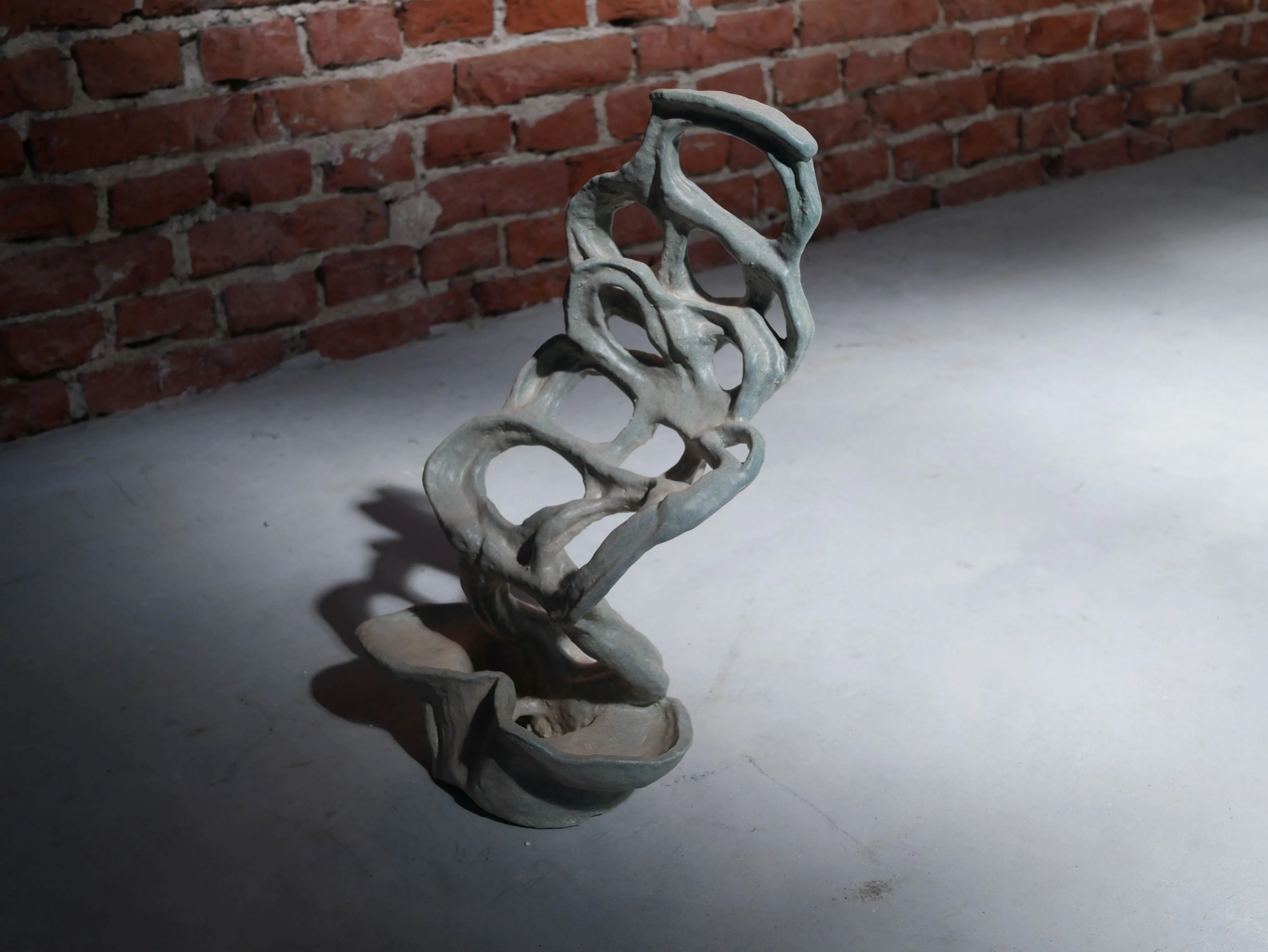
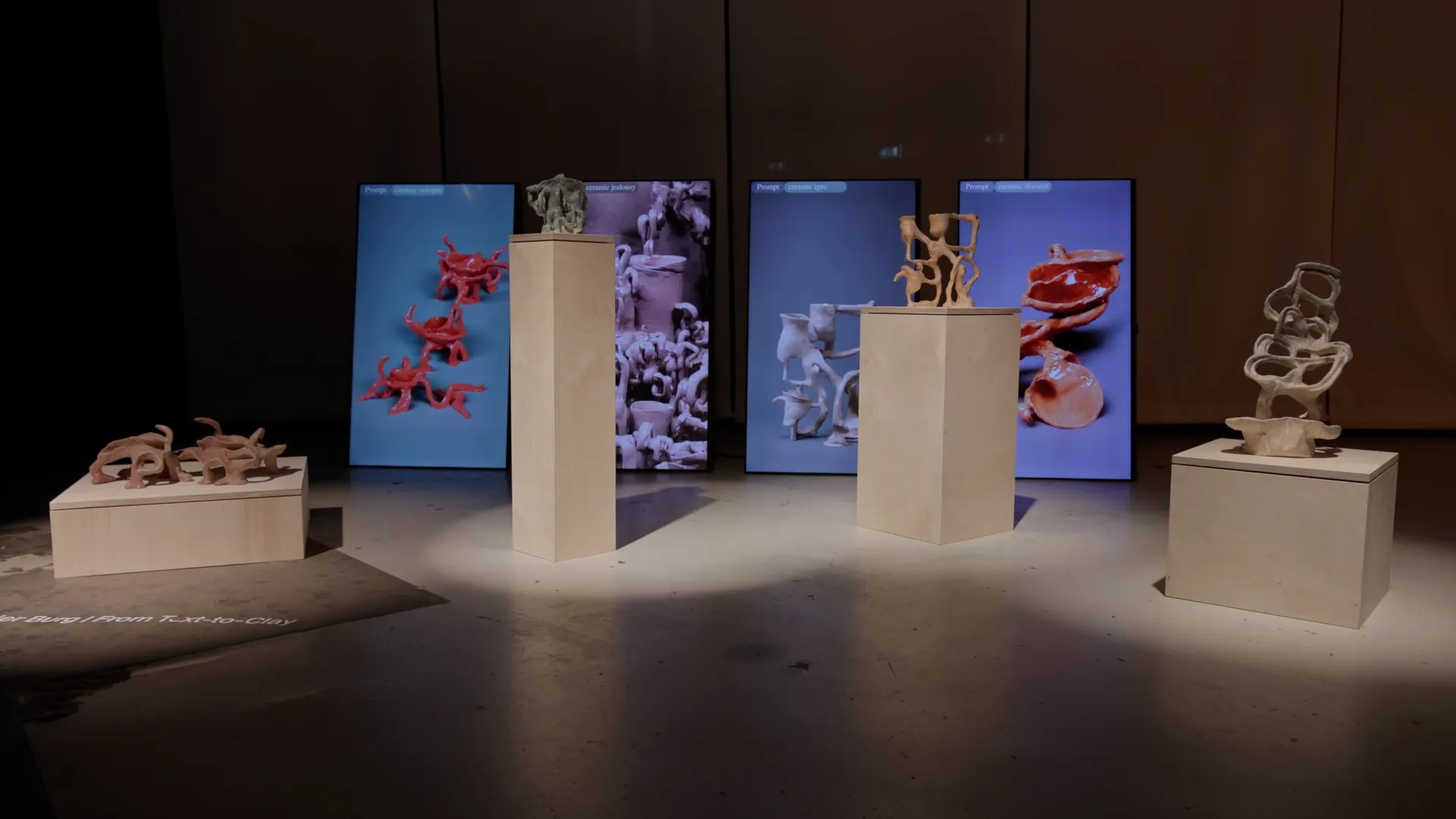
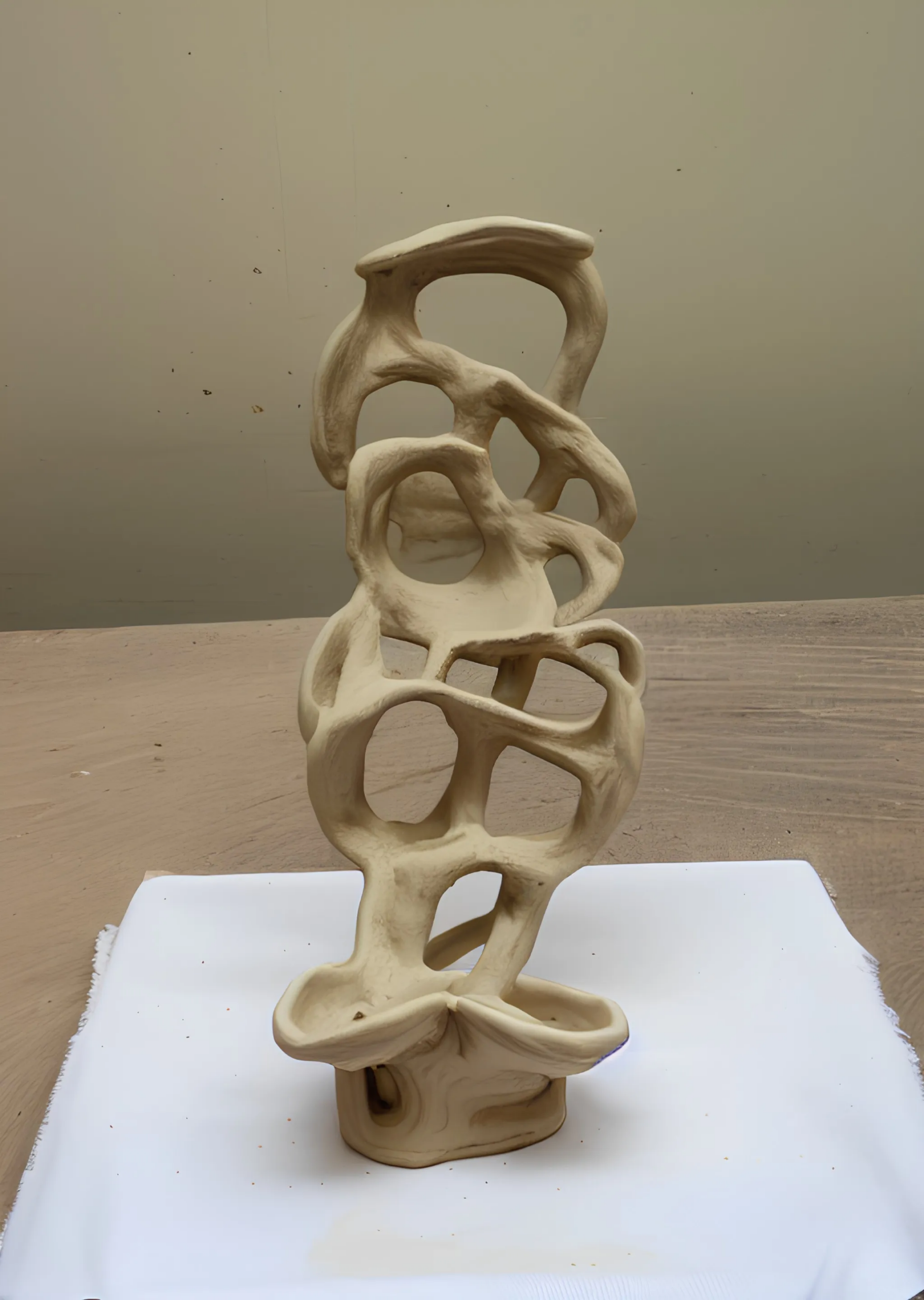
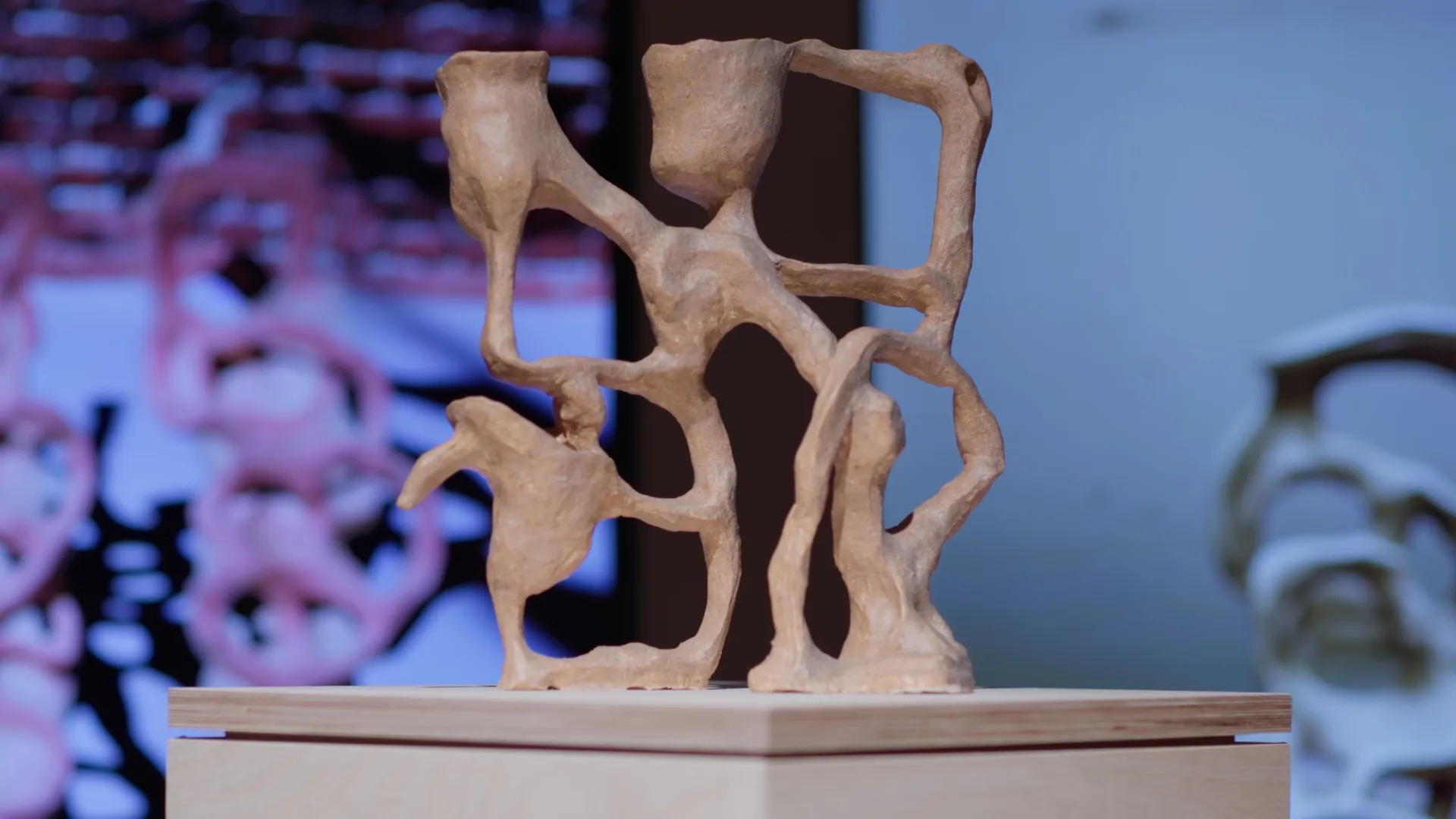
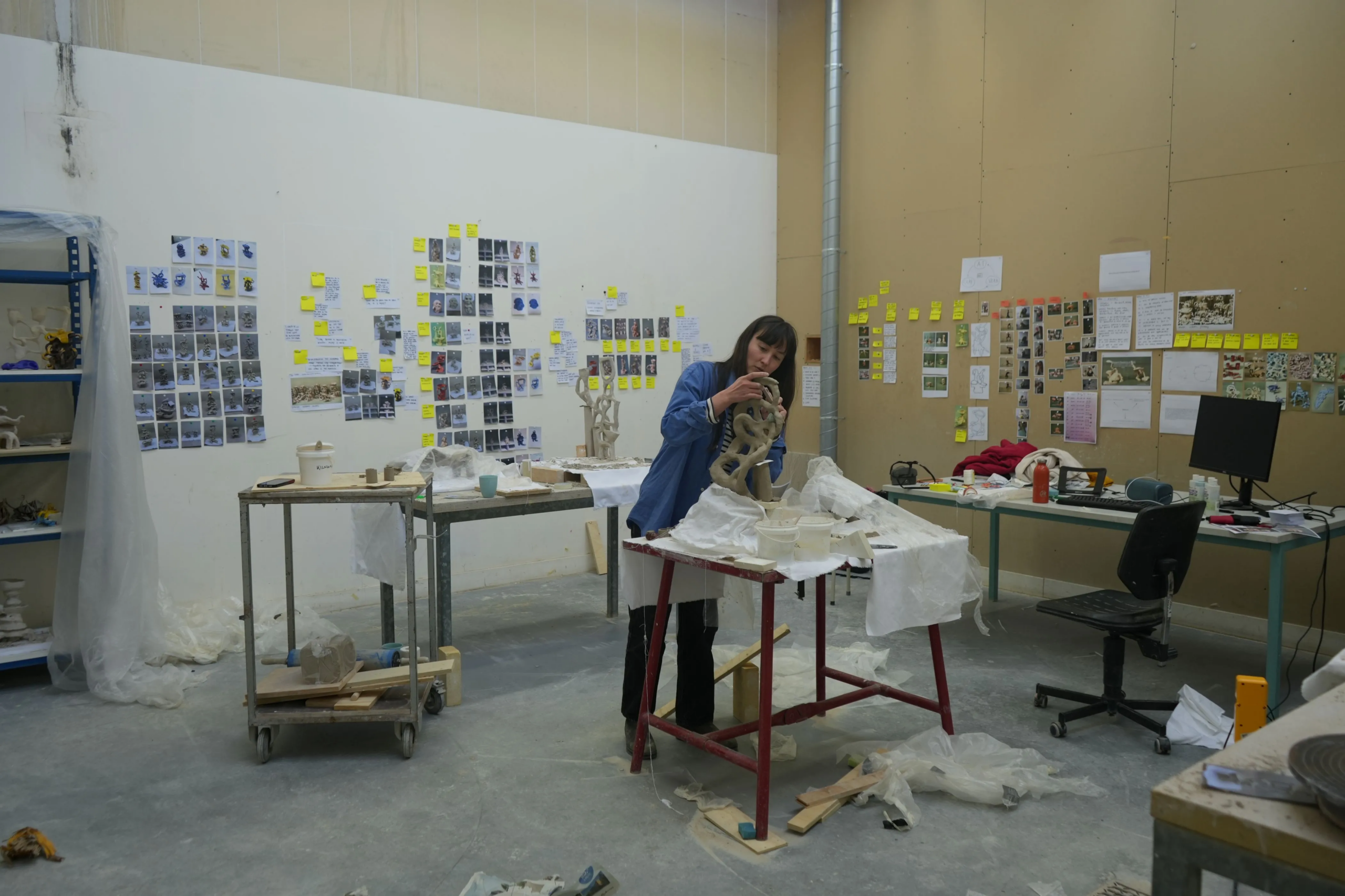
At TU Delft, PhD candidate Vera van der Burg explores how designers can use artificial intelligence as a reflective medium. Instead of focusing on speed and efficiency, her work centres on questioning and learning. She trains custom AI models rather than using standard tools. This allows designers to shape the system and explore their own ideas. In this context, AI does not produce final outcomes. It helps generate questions and insights.
This approach challenges current design workflows, which often prioritise optimisation. Van der Burg shows that slowing down can also be part of digital design.
Ceramics As A Counterpoint To Digital Speed
Her research combines generative AI with ceramics. Clay is slow, tactile, and unpredictable. It requires time, care, and physical engagement.
During a residency at the European Ceramic Workcentre (EKWC), van der Burg trained an AI model on her own ceramic work. She used abstract prompts such as “ceramic jealousy” to generate images. These outputs then guided the creation of physical sculptures. This process created a clear dialogue between digital and physical making. AI introduced unexpected ideas, while clay grounded them in reality. The limitations of ceramics—such as drying time and firing—forced a slower pace. The project highlights the importance of working with materials rather than controlling them.
The Designer’s Role In The Age Of AI
Van der Burg does not reject generative AI. However, she warns against relying on it too much. AI can recognise patterns, but it cannot replace human creativity. When designers outsource key steps, such as defining a brief, they risk losing control of the process. Instead, she proposes using AI as a collaborative partner. This keeps the designer actively involved. This perspective supports a more responsible approach to innovation. It encourages critical thinking rather than passive use of technology.
By combining digital tools with traditional craft, the project points towards a hybrid design future. In this future, technology supports—not replaces—material thinking.
Source: TU Delft
Photos: Esther van der Heijden / Marica de Michele

Comments