Bacterial Factories Turn CO₂ into Feedstock for Sustainable Materials
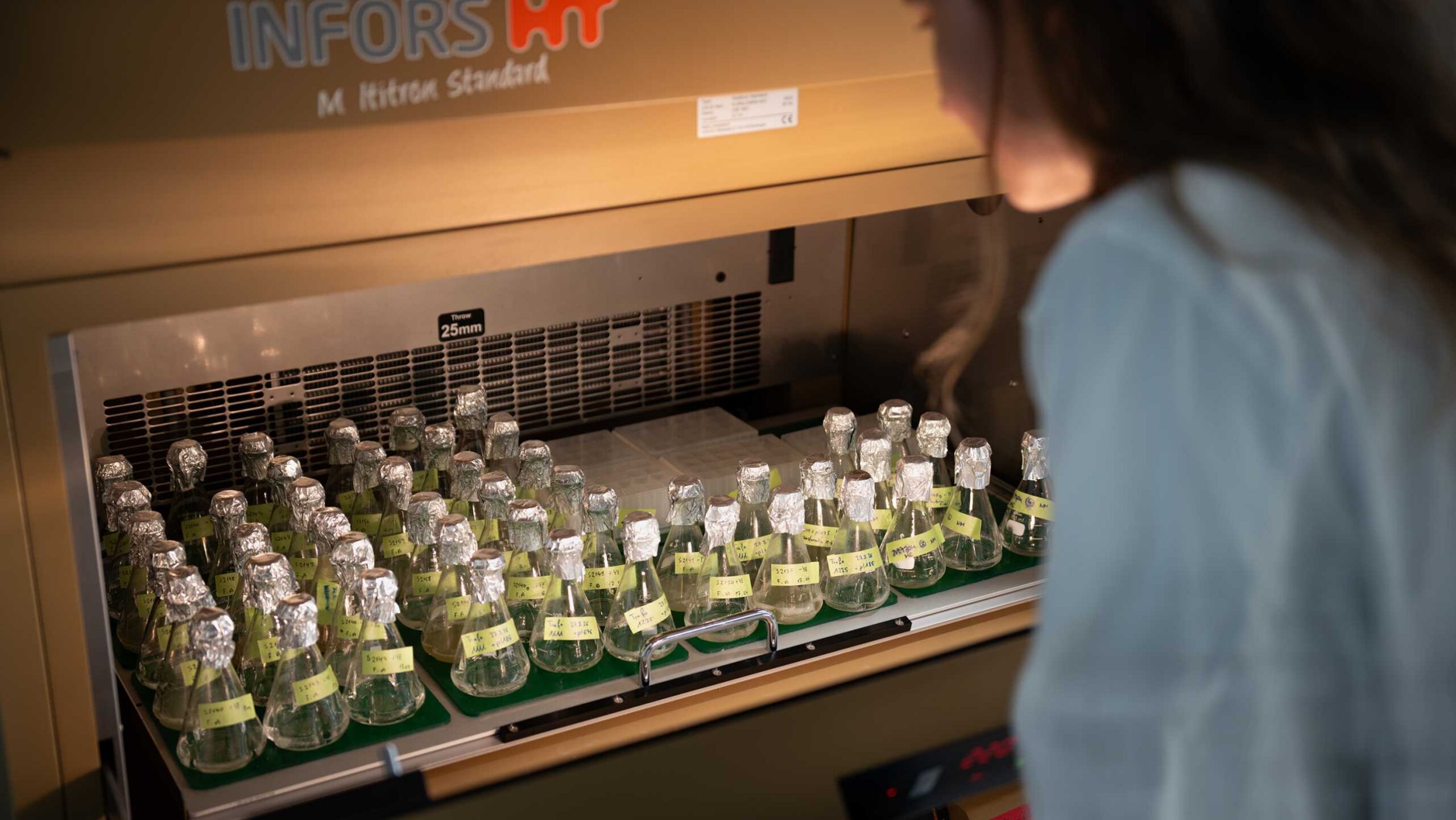
The chemical industry underpins almost every aspect of modern life, supplying the building blocks for products ranging from textiles and cosmetics to insulation materials and plastics. Yet the sector is also responsible for approximately six percent of global greenhouse gas emissions. Researchers at ETH Zurich are working to address this challenge by transforming carbon dioxide from a waste product into a valuable resource.
Through the planned spin-off Teno Bioworks, biotechnologist Ronja Rappold and her team are developing a microbial production platform that converts captured CO₂ into high-value chemicals. The approach could help reduce the chemical industry’s dependence on fossil feedstocks while creating more sustainable pathways for manufacturing materials used across multiple design sectors.
From Carbon Emissions to Chemical Building Blocks
Using CO₂ directly as a raw material is notoriously difficult due to its gaseous nature. To overcome this challenge, the researchers employ an intermediate step: converting CO₂ into so-called green methanol. Unlike carbon dioxide, methanol is a liquid, making it easier to store, transport and integrate into industrial production systems.
The innovation lies in the use of specially engineered bacteria that consume methanol and convert it into useful chemical compounds through fermentation. While scientists have explored methanol-based microbial production since the 1970s, large-scale industrial implementation has remained elusive.
Drawing on years of research at the laboratory of ETH Zurich microbiologist Professor Julia Vorholt, Rappold’s team has taken a different route. Rather than relying on naturally occurring methanol-consuming microorganisms, they reprogrammed a bacterium already widely used in industrial biotechnology, enabling it to metabolise methanol instead of sugar.
According to the researchers, this creates a highly efficient biological production platform capable of generating chemicals from carbon-derived feedstocks rather than fossil resources.
Potential Applications for Sustainable Materials
Teno Bioworks is positioning the technology as a platform rather than a single-product solution. By modifying the microorganisms, the system can be tailored to produce a wide range of chemical compounds.
Potential applications include ingredients for cosmetics, precursors for sustainable plastics and components for insulation materials. Such products could be relevant for designers and manufacturers seeking lower-carbon alternatives to conventional petrochemical materials in packaging, interiors, fashion and the built environment.
Beyond reducing reliance on fossil resources, the technology aims to lessen pressure on land, water and biodiversity by shifting chemical production towards circular carbon flows.
Scaling Towards Industrial Production
The technology is currently being tested at laboratory scale, with initial scale-up milestones already achieved. The next phase involves developing a pilot facility before progressing towards industrial-scale production.
For Rappold, the long-term goal is clear: to demonstrate that industrial manufacturing and environmental stewardship can work hand in hand. If successful, the approach could contribute to a future where greenhouse gases become a valuable resource for producing the materials and products society depends on.
Source: ETH Zurich
Photo: Michel Büchel / ETH Zurich

Comments