Carbon-Negative Building Material Offers Alternative to Concrete
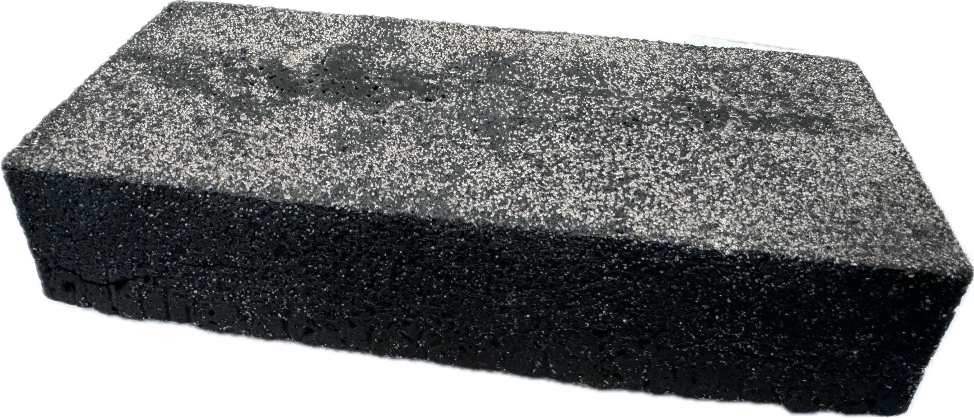
Researchers at Worcester Polytechnic Institute (WPI) have developed a carbon-negative building material that could change how we construct buildings. The innovation, published in the journal Matter, introduces an enzymatic structural material (ESM) that combines structural strength with carbon capture.
Concrete remains the world’s most widely used construction material. Its production, however, causes nearly 8% of global CO₂ emissions. ESM addresses this problem directly. Instead of releasing carbon, the material actively removes CO₂ from the atmosphere during production.
Bioinspired Production With Low Energy Demand
The researchers use an enzyme to convert carbon dioxide into solid mineral particles. These particles bind together under mild conditions. The process avoids the high temperatures required for cement production.
As a result, ESM cures within hours. Traditional concrete often needs several weeks. This rapid curing could support faster construction timelines and reduce energy use on site.
The production method aligns with current design strategies that prioritise low-energy processes, biobased systems and circular material flows. According to the research team, one cubic metre of ESM captures more than 6 kilograms of CO₂. By contrast, the same volume of conventional concrete emits around 330 kilograms.
Design Potential And Circular Advantages
ESM offers properties that are highly relevant for architects and designers. The material’s strength can be adjusted, making it suitable for different structural uses. Potential applications include wall panels, roof elements and modular building components. The material also supports repair and recycling. Designers can therefore reduce waste and extend the lifespan of building elements. These qualities fit well within circular construction models.
For architects working with prefabrication, the fast curing time could offer additional benefits. It allows for quicker production cycles and lower environmental impact during manufacturing.
Applications In Resilient And Sustainable Construction
The research team sees strong potential in affordable housing, climate-resilient buildings and disaster relief projects. In these contexts, fast production and material efficiency play a crucial role.
Because ESM relies on low-energy processes and renewable biological inputs, it supports global goals for carbon-neutral construction. While further testing and scaling remain necessary, the material shows how material innovation can directly address climate challenges in the built environment.
For architects and designers, ESM highlights a future where structural performance, sustainability and circularity reinforce each other.
Source & image: Worcester Polytechnic Institute

Comments