Craft, Code and New Material Logics at Dutch Design Week 2025




At Dutch Design Week 2025 (18–26 October, Eindhoven), designers pair craft with computation to push materials into fresh territory. The results range from data-driven textiles to repairable furniture and flexible wood composites. Across the programme, making becomes a system: local resources, digital tools and hands-on techniques align to reduce waste and unlock new performance.
Data woven into matter
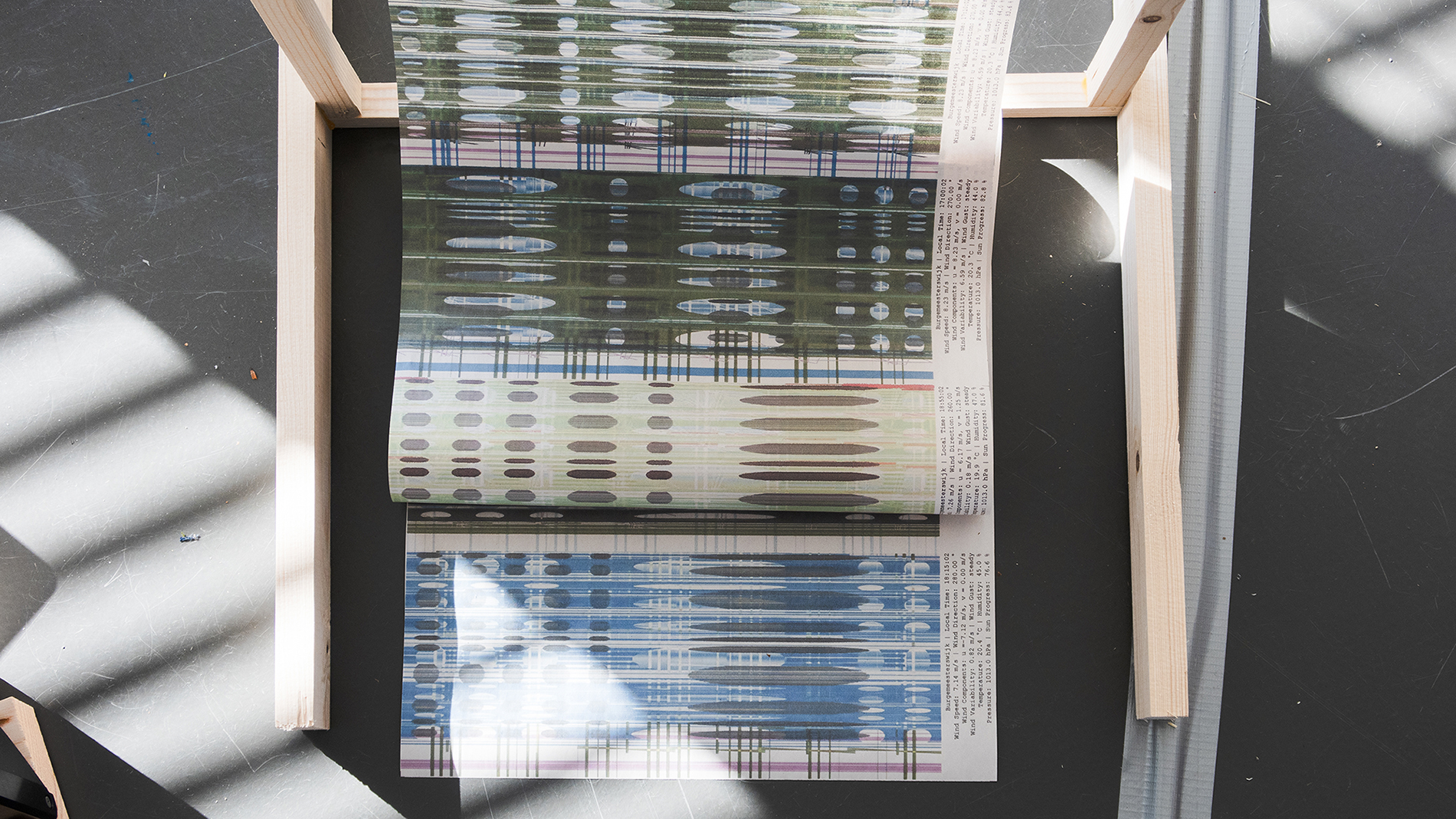
Weave the Wind translates live wind data into generative woven visuals. The project turns invisible movement into a readable, archivable textile language. It shows how environmental data can inform surfaces and patterns in interiors and wayfinding. In From Text-to-Clay, a residency at EKWC stages a slow dialogue between ceramics and AI. Instead of rapid automation, the designer embraces AI’s unpredictability and clay’s agency, arriving at forms that sit between digital intent and material truth.
Prototyping colour and structure
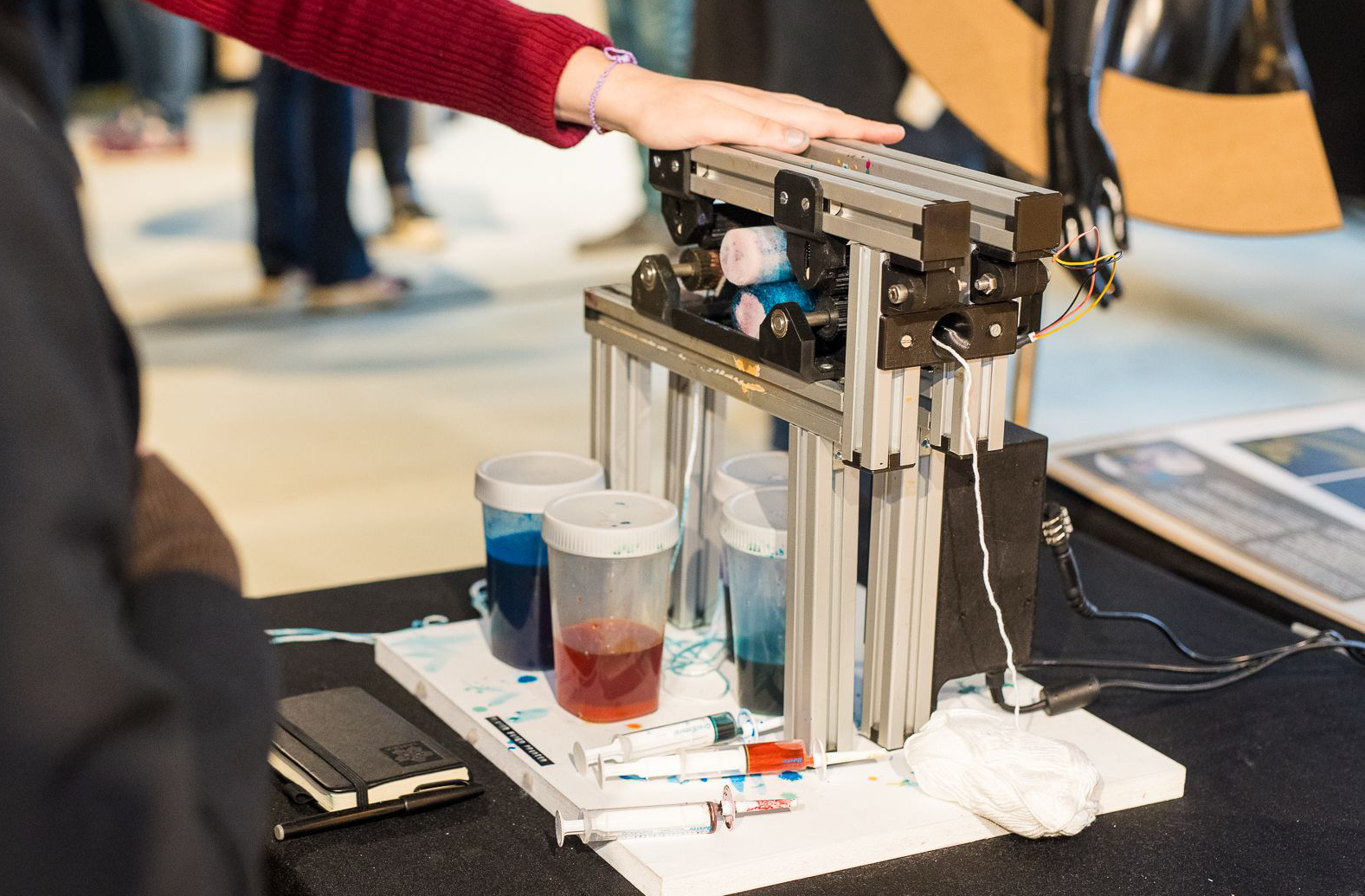
Sliver Fiber Printer lets designers dye loose fibres before spinning. Position-specific colour can be prototyped in-house, reducing sampling waste and opening new aesthetics for fashion and interior textiles. Math Art meets Sustainable Material explores wool through natural spirals and Fibonacci logics. Mathematics becomes a method to shape tactile, felted surfaces with clear material provenance.
Wood and light
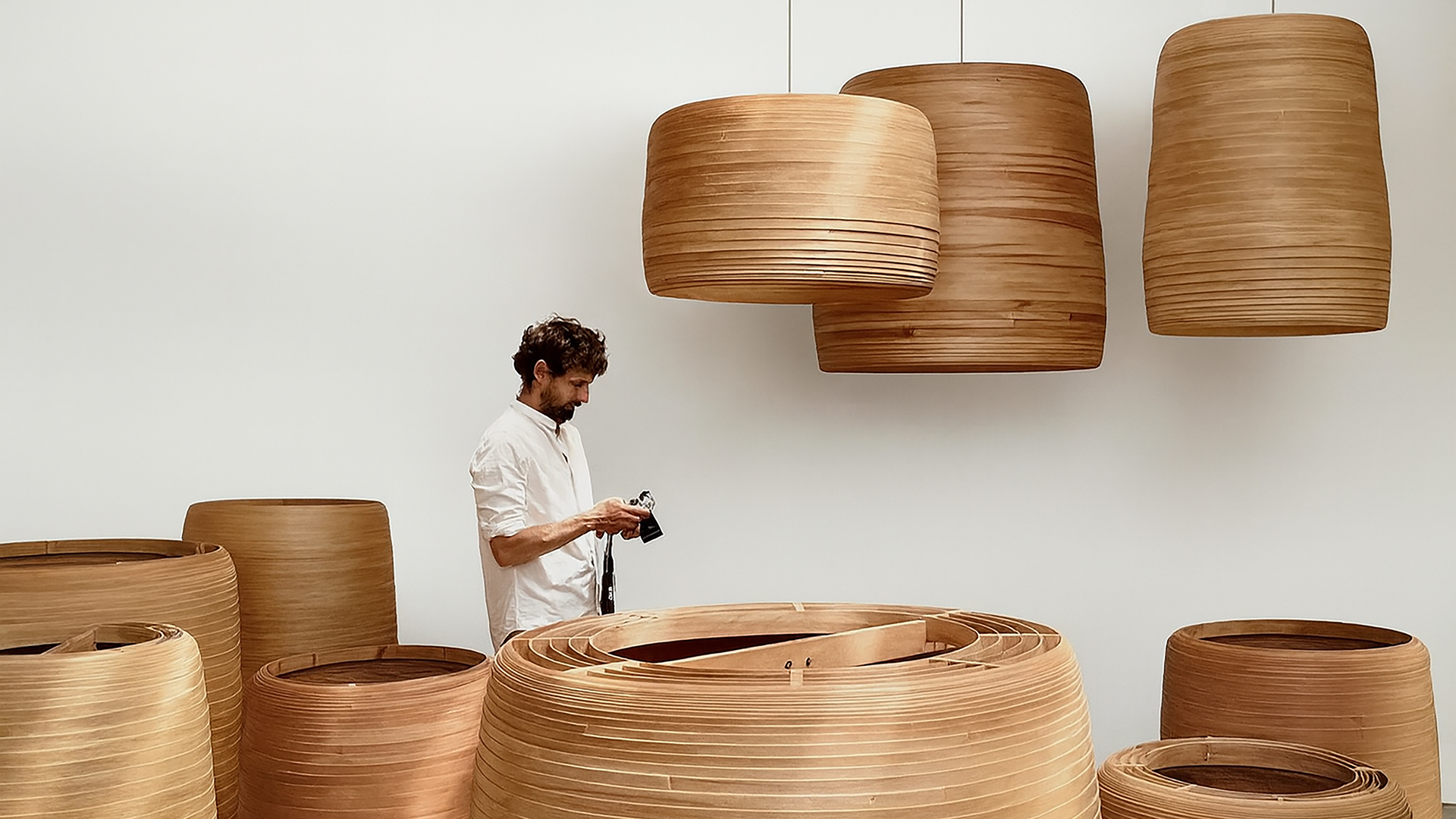
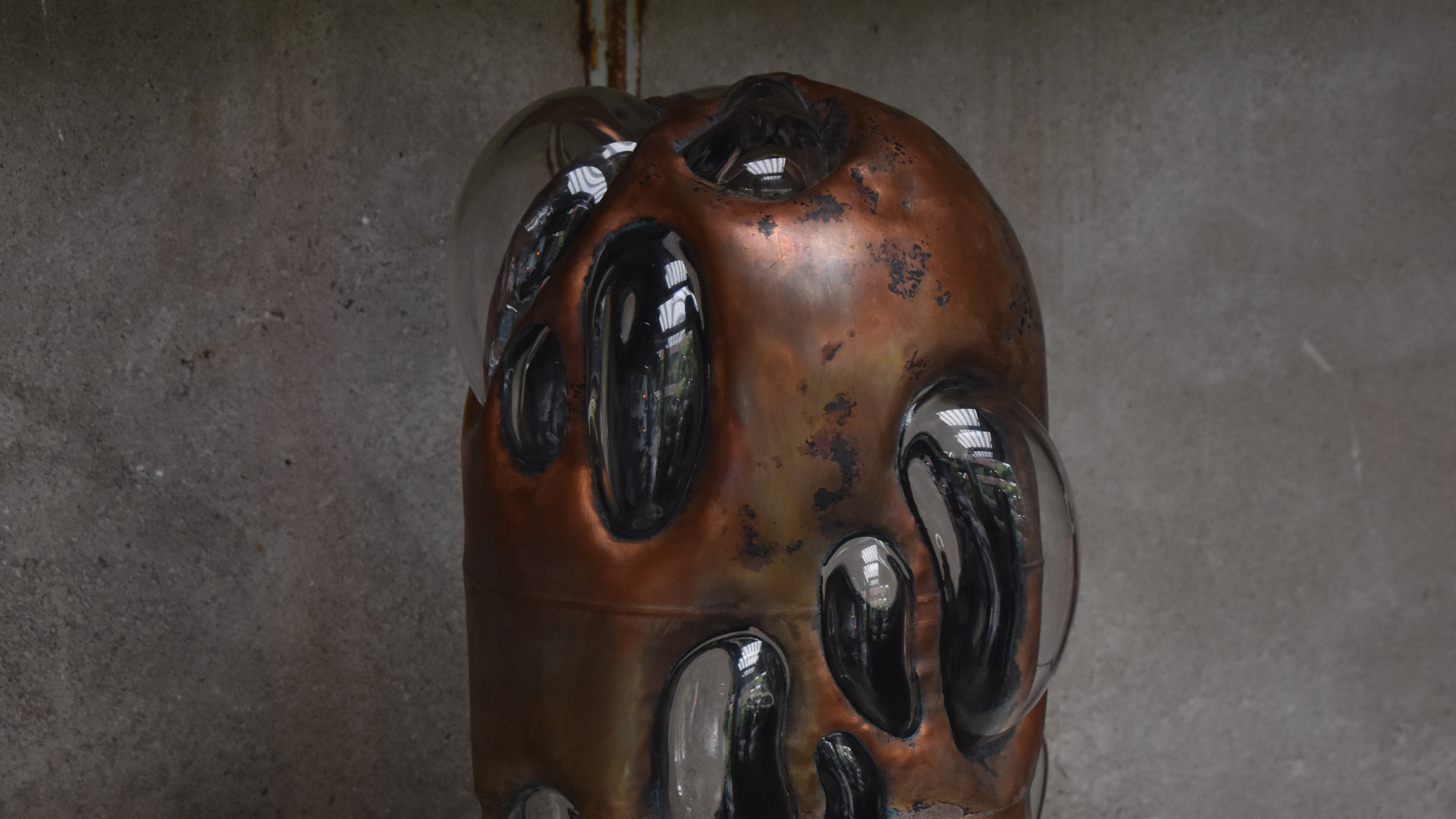
Sawdust Futures – Printing Wood transforms regional sawdust into a 3D printable feedstock, linking local craft knowledge with additive manufacturing. Poly Ply combines patterned plywood cuts with a flexible polymer to create thin, strong sheets that bend where needed. The approach enables lighter components, smarter packing and potential demountability. FAAJA / wood coil lamps build sculptural lighting from layered wood, while Boilers blows glass into old copper boilers to form lenses that refract light—turning scrap into luminous objects.
Repairable, modular and human-centred
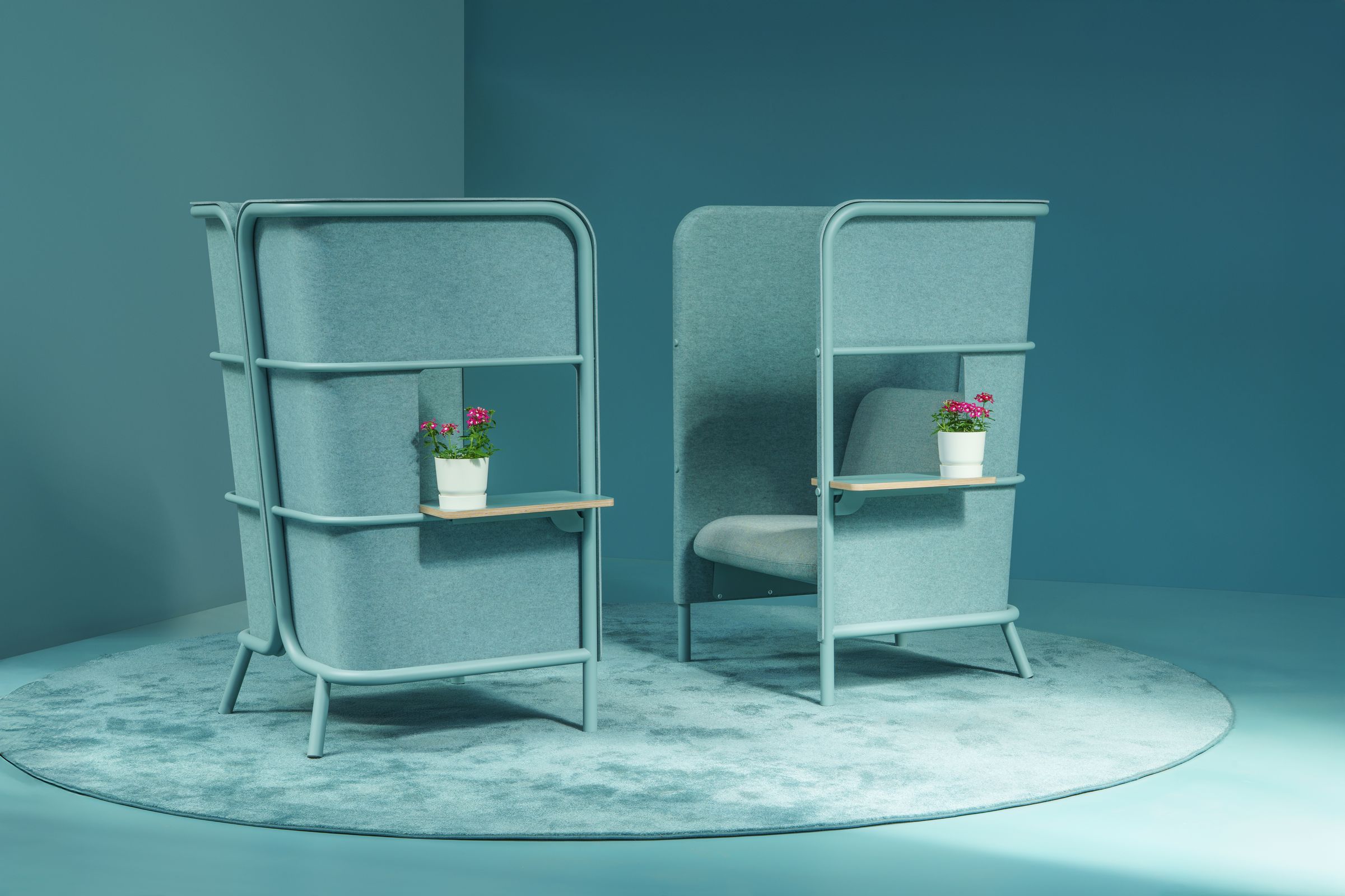
Wireworks by Ineke Hans & Vepa presents a modular “room-in-room” system made with recycled PET felt. The design focuses on disassembly, industrial scalability and acoustic comfort for shared spaces. Mohs Chair & Echo Side Tables tests circular furniture thinking. The armchair is designed for repair and separation of parts, while the side tables reuse playful offcuts to create new organic shapes.
Making process visible
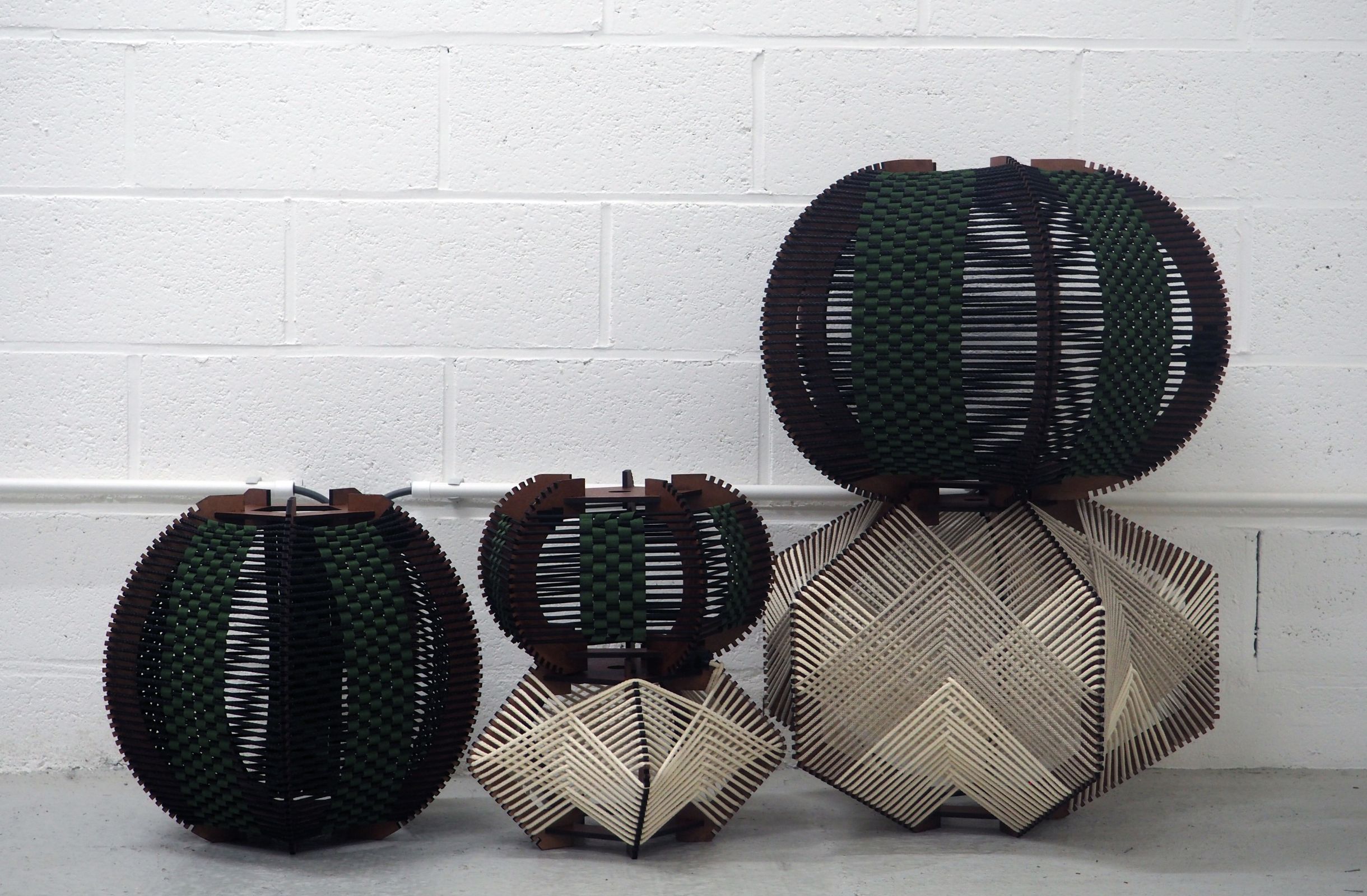
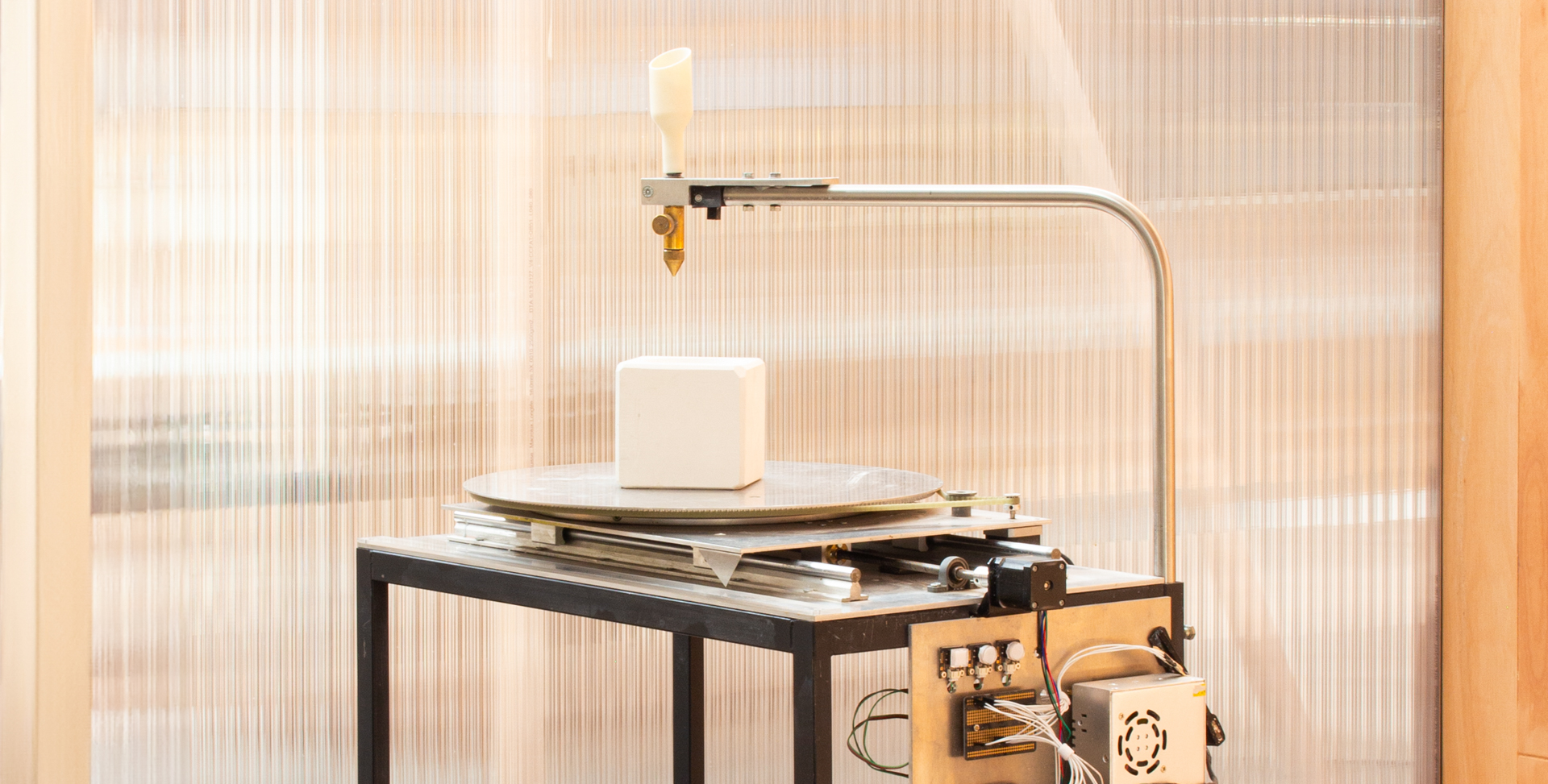
Moca Tableware reveals a custom dripping machine that deposits porcelain in rhythmic patterns. Each piece is unique, yet reproducible in a controlled craft–tech workflow. Totem lamp merges natural dyeing and weaving with laser-cut wooden ribs. The result is customisable lighting that minimises waste and remains easy to repair.
Across these showcases, designers treat materials as partners rather than passive inputs. By prototyping locally, coding responsibly and celebrating repair, DDW 2025 points to a practical path: richer aesthetics, lower impact, and systems that keep resources in play.
Source & photos: Dutch Design Week

Comments