DESERT: Computational Design And Hybrid Biobased Materials In Furniture Research
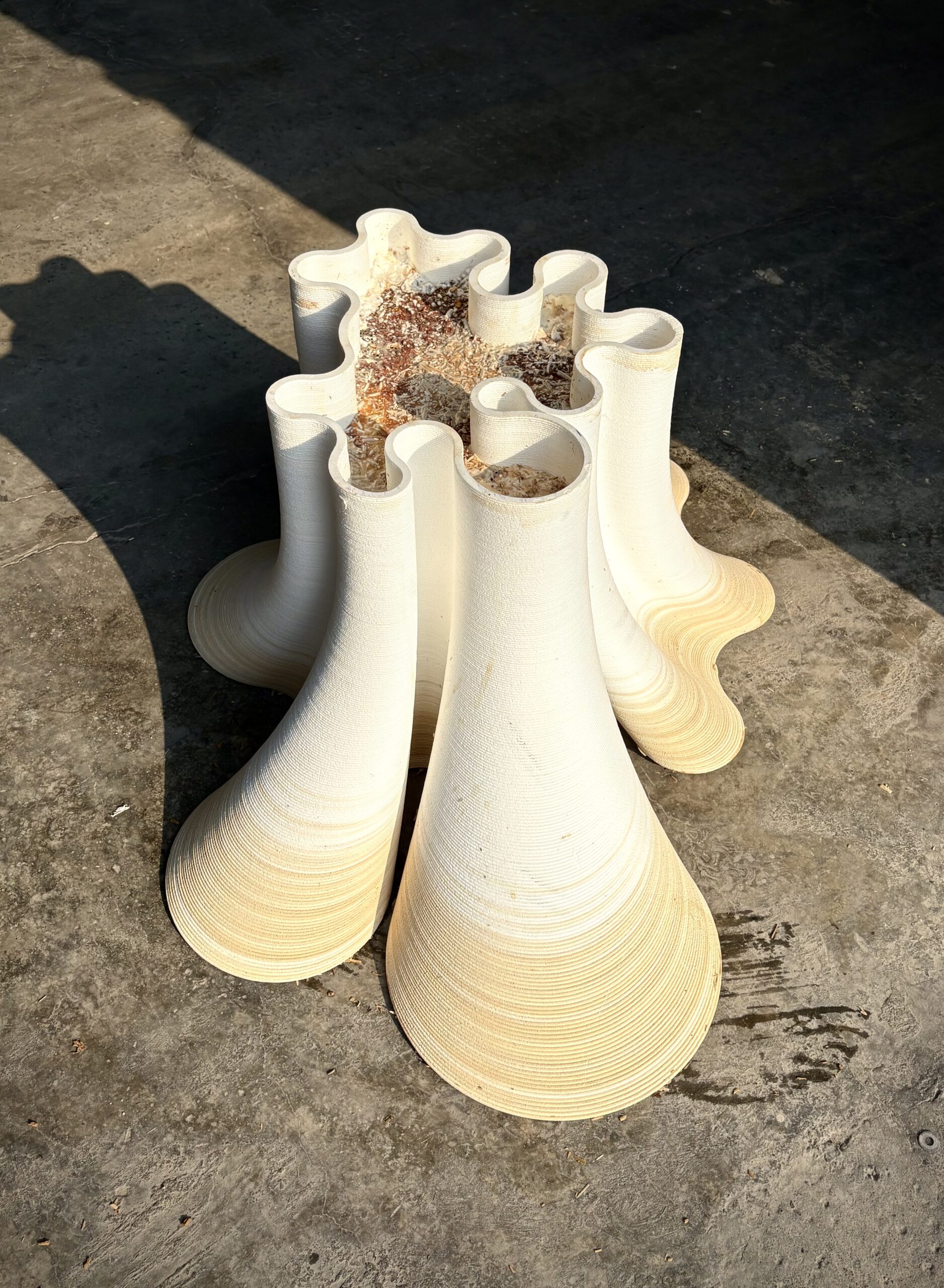
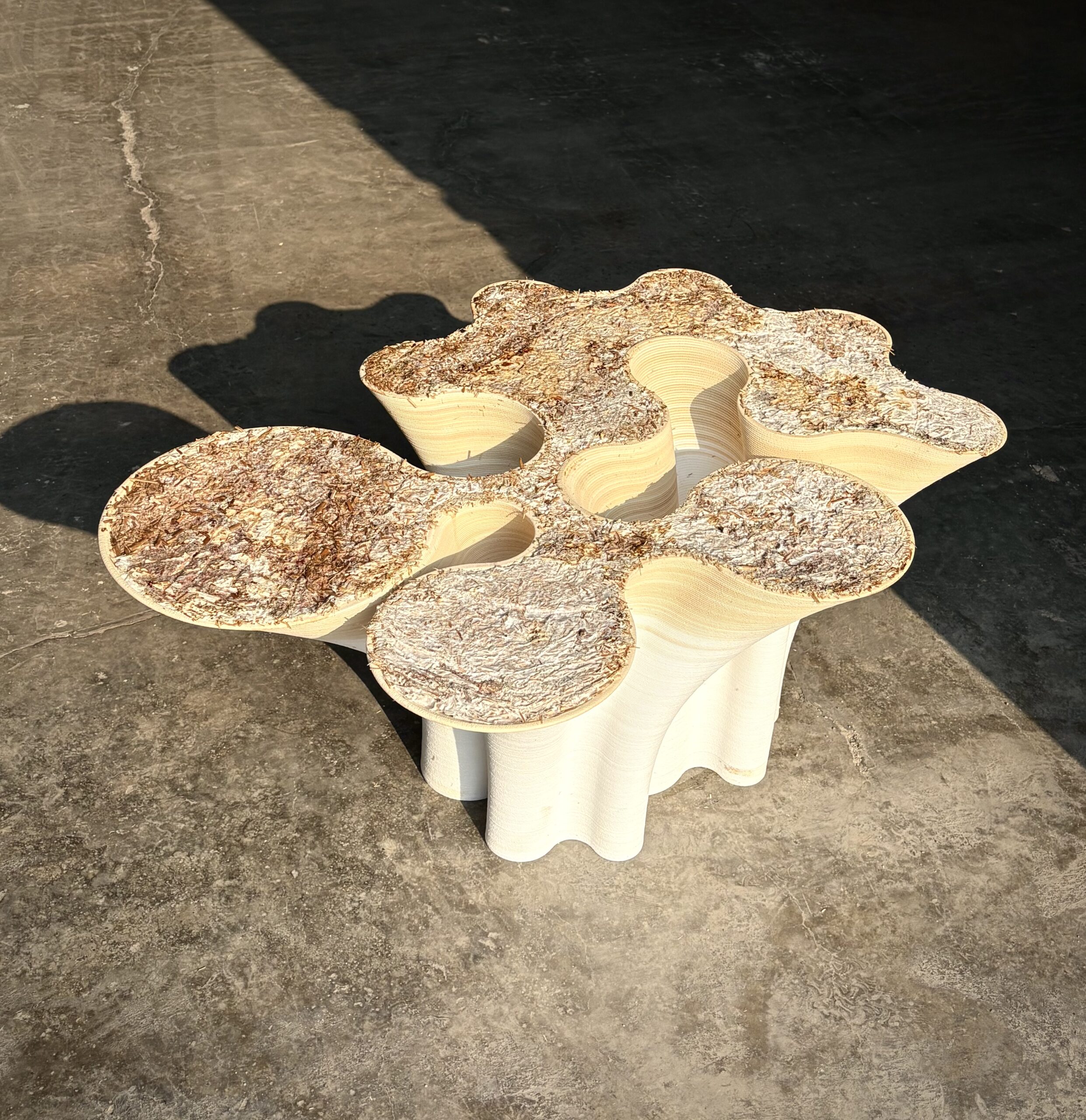

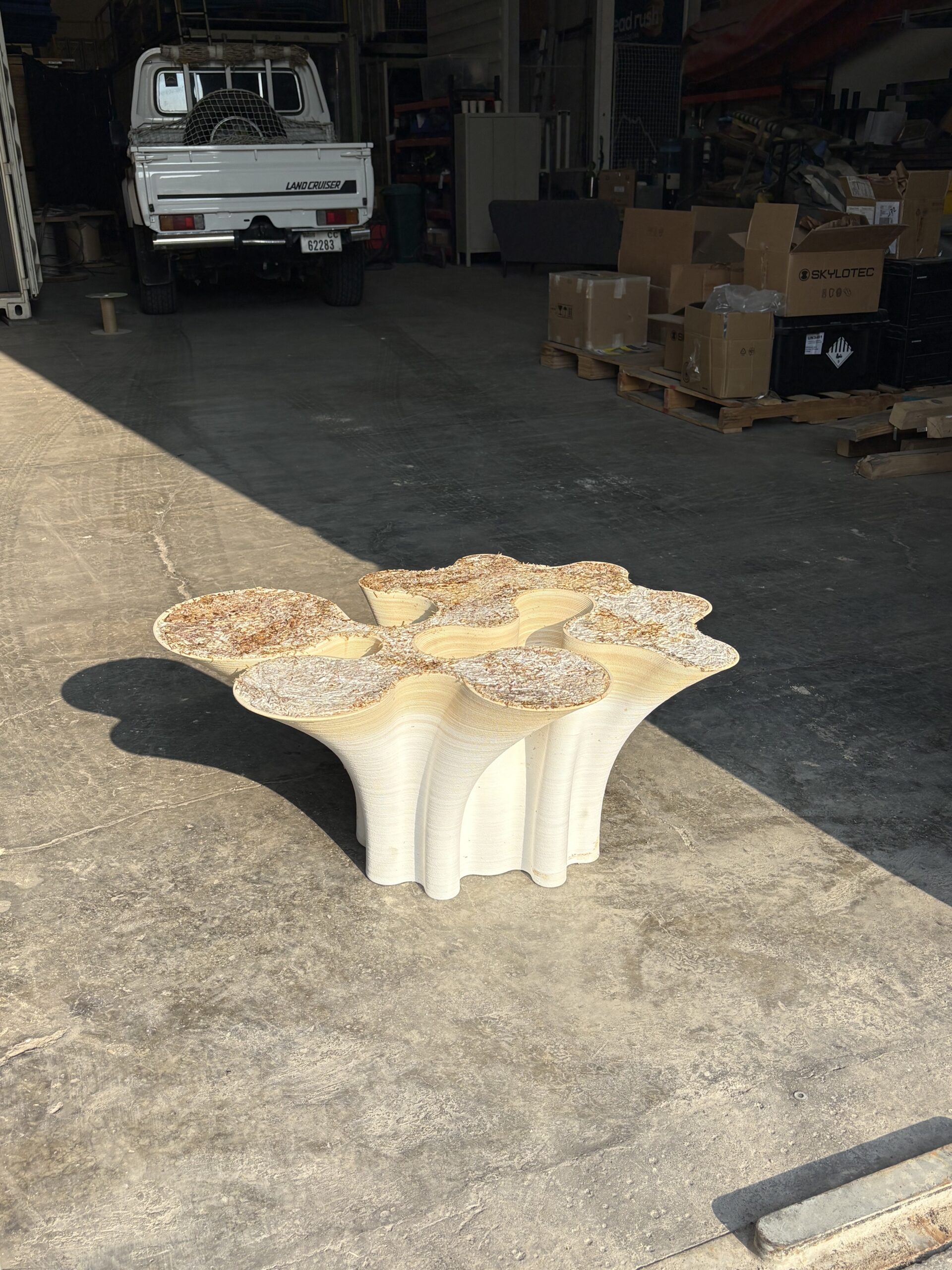
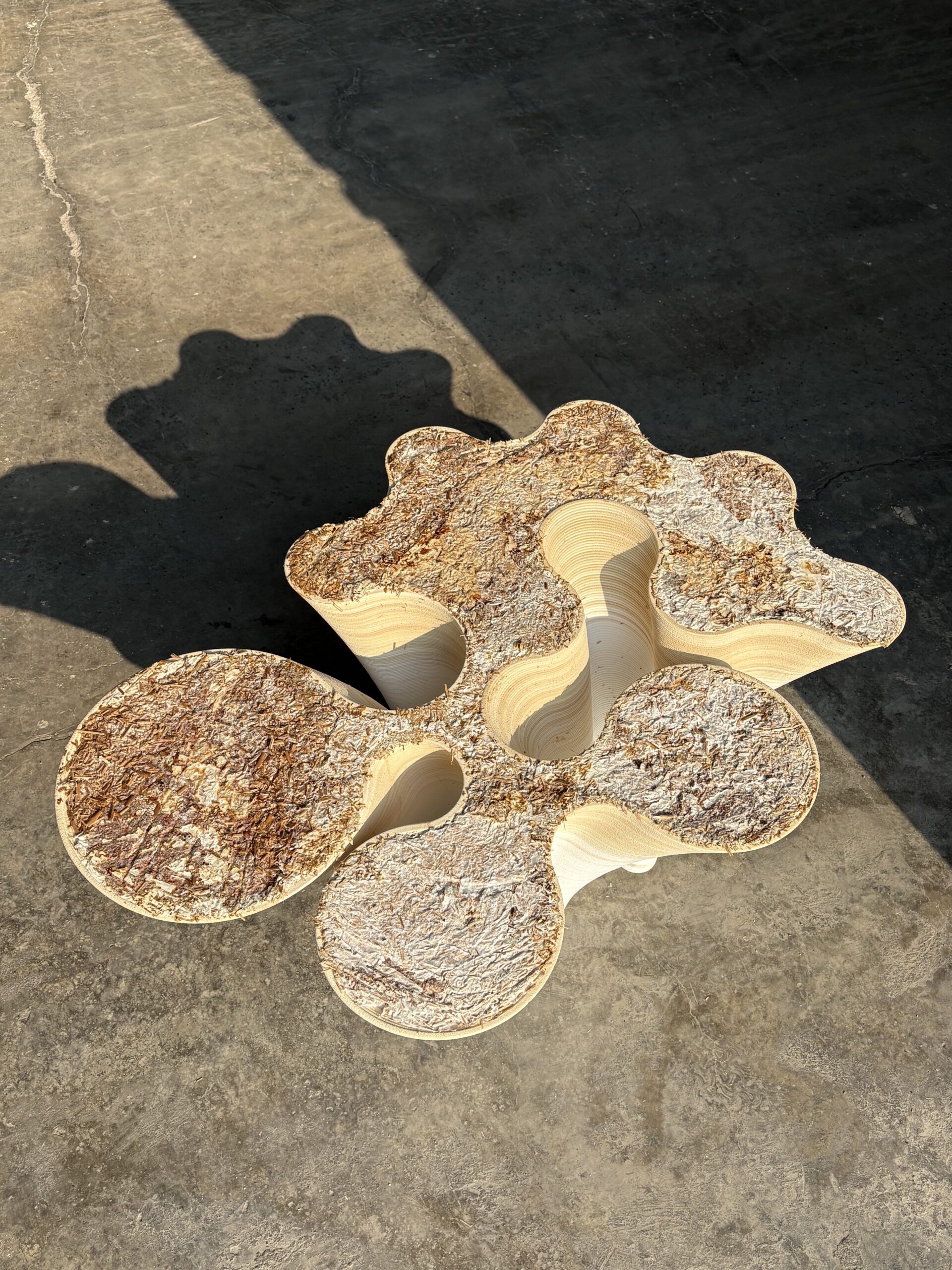

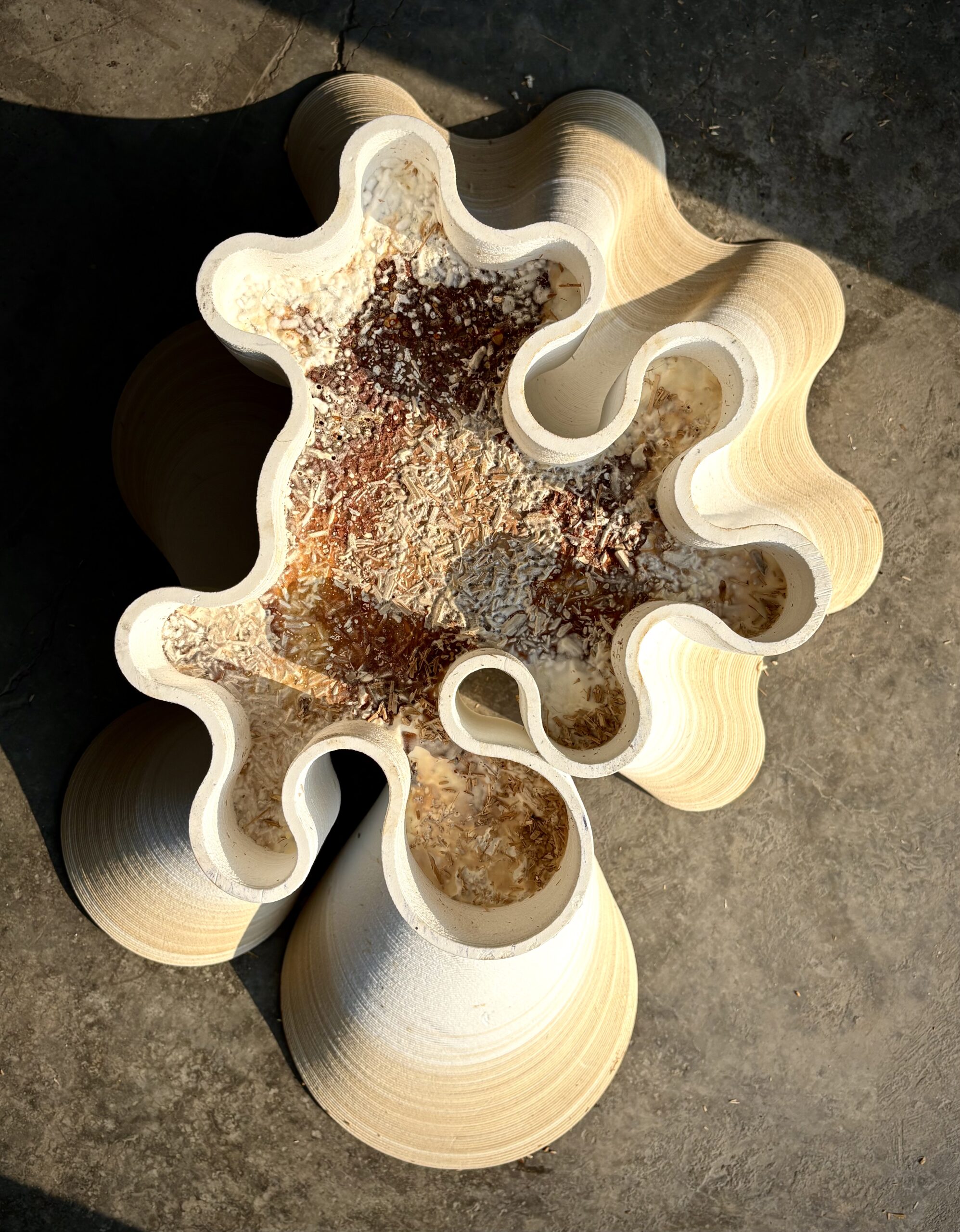
DESERT is an experimental coffee table by Nyxo in collaboration with Studio Cartier. The project explores how computational design, additive manufacturing, and biobased materials can come together in a single object. Inspired by the fossilised dunes of the Emirati desert, the table translates geological formations into a digitally produced form. Rather than functioning as a finished product, DESERT serves as a material and process study.
Lightweight Bioplastics In Additive Manufacturing
Nyxo produced the table using large-scale 3D printing with Lightweight PLA (LW-PLA). This material is a low-density, compostable bioplastic. During printing, LW-PLA expands through a controlled foaming process. Heat triggers a chemical reaction that increases the material’s volume and creates a cellular internal structure.
Designers can control this expansion by adjusting the printing temperature and extrusion speed. This control allows fine-tuning of weight, density, and surface texture. The process also reduces material use significantly. Compared to standard PLA, it can lower material consumption by up to 250%. These characteristics make LW-PLA relevant for sustainable furniture and interior applications.
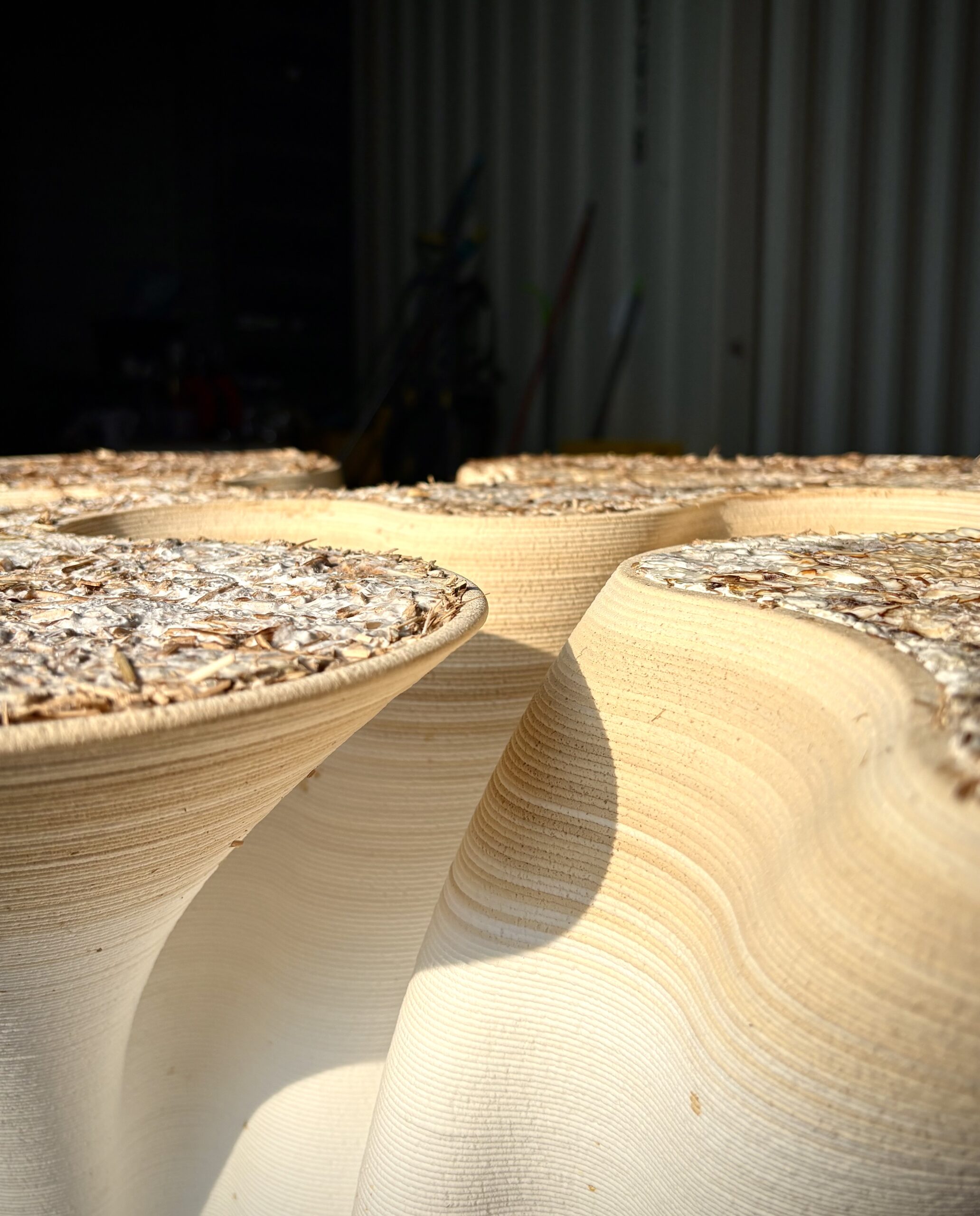
The foaming process creates a rough, matte surface. This texture recalls eroded sand and stone, showing how material behaviour can directly shape the visual outcome.
Algorithmic Geometry Inspired By Natural Growth
The project uses computational design to generate the table’s form. A differential growth algorithm creates a sequence of cyclic loops. These loops form a continuous chain of connected arcs. The system transitions between different geometries for the base and the tabletop.
This approach results in a fluid shape that balances structural logic and sculptural expression. Designers increasingly use such methods to explore non-standard geometries and optimise material distribution in both furniture and architectural elements.
Mycelium As A Functional Inner Layer
The designers introduced mycelium into selected internal cavities of the printed structure. The mycelium does not serve a decorative purpose. Instead, it acts as an internal reinforcement layer and helps reduce vibration and sound.
This hybrid approach investigates how living materials can work alongside digitally fabricated shells. It also points to future applications in furniture, acoustic elements, and interior architecture. The project reflects broader research into circular and regenerative material systems.
DESERT is presented as an ongoing research project. It highlights experimental approaches that combine computation, additive manufacturing, and biobased materials.
Source & photos: Studio Cartier

Comments