- This article is part of the following channel(s)
- Sense & Sensibility
Digital Fabrication And Metal Materials Shape Interactive Public Installations
Computational design and digital fabrication are transforming how architects and designers work with materials. These technologies allow designers to create structures made from thousands of customised components. As a result, buildings and installations can respond more precisely to site conditions, climate and user interaction.
San Francisco–based studio FUTUREFORMS, founded by Jason Kelly Johnson and Nataly Gattegno, explores this approach through digitally fabricated public installations. Their projects show how aluminium, stainless steel and perforated metal systems can shape complex structures while interacting with environmental forces such as light, heat and airflow.
Digitally Fabricated Metal Pavilion
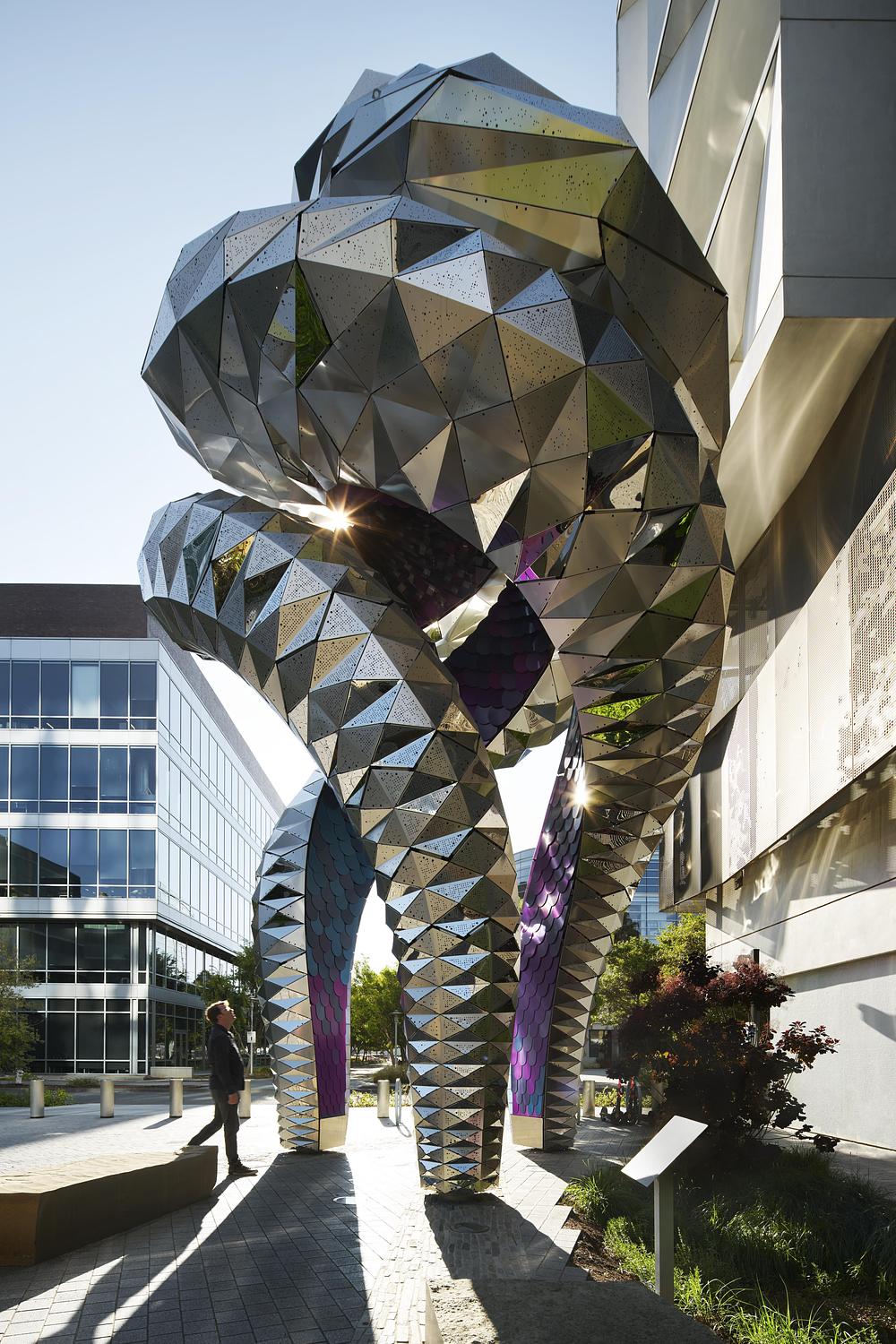
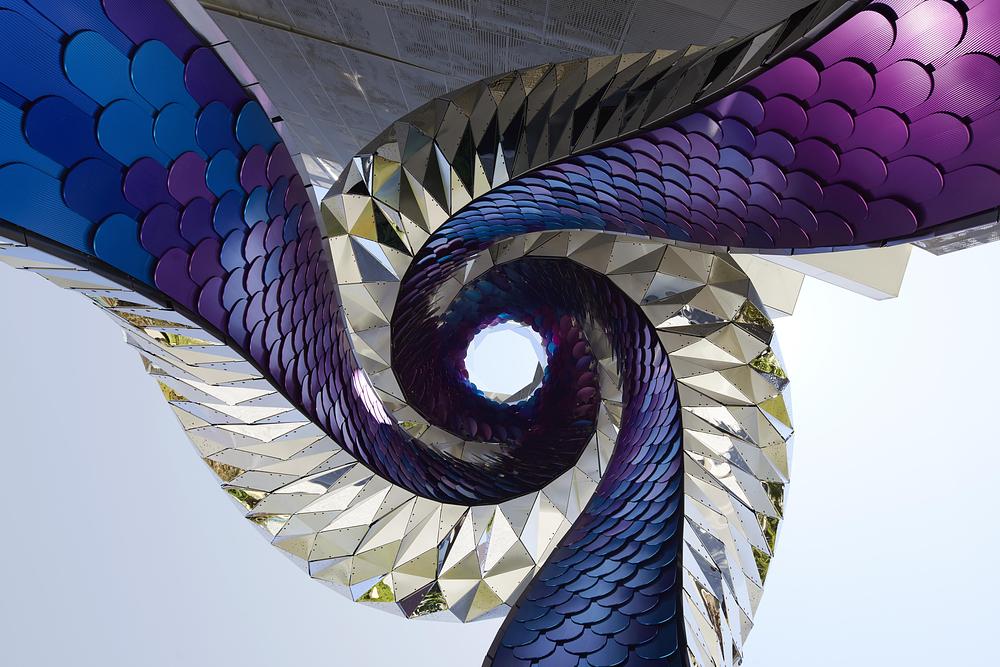
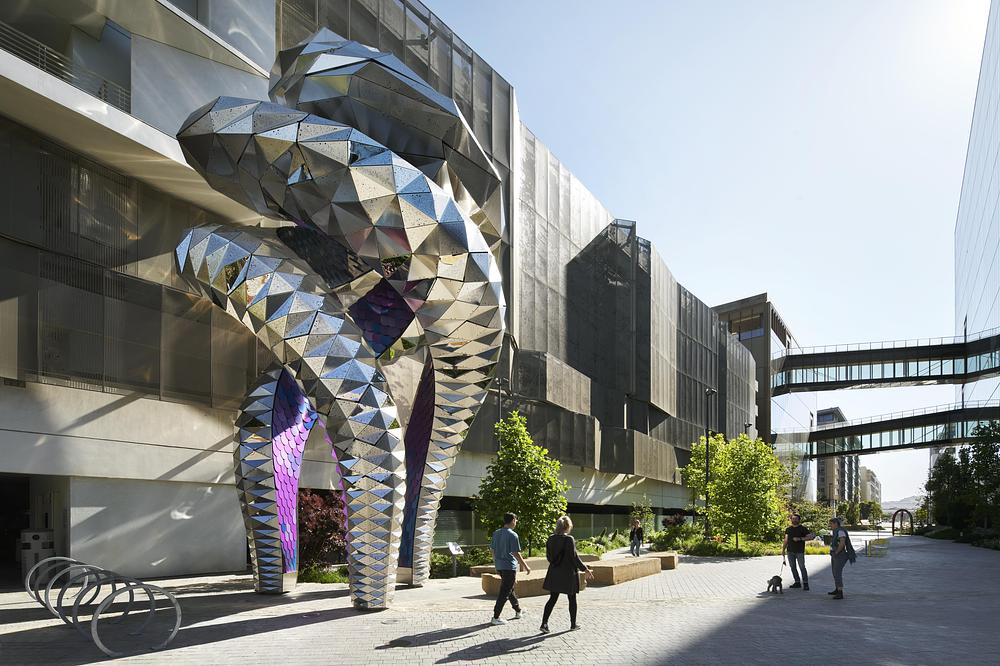
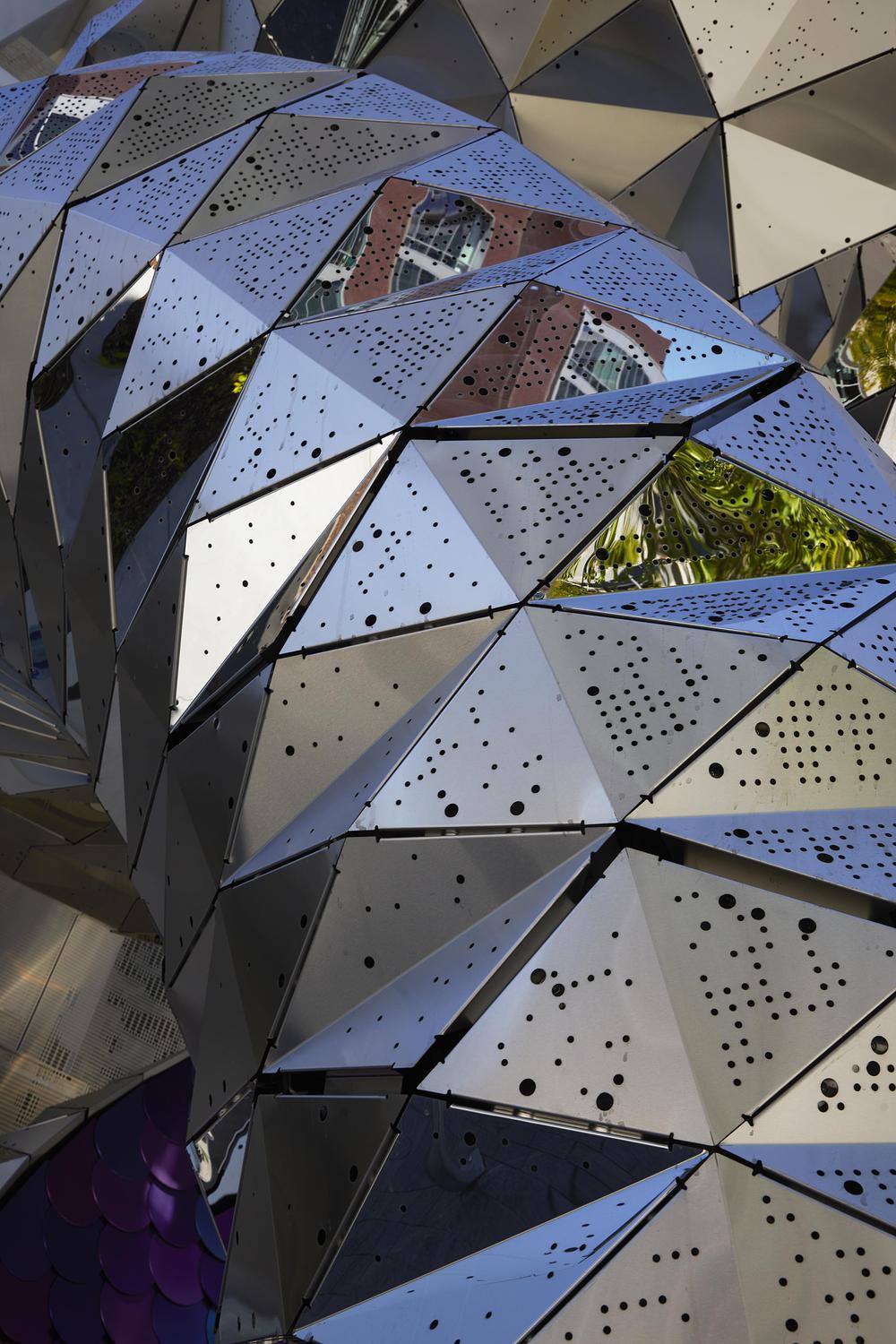
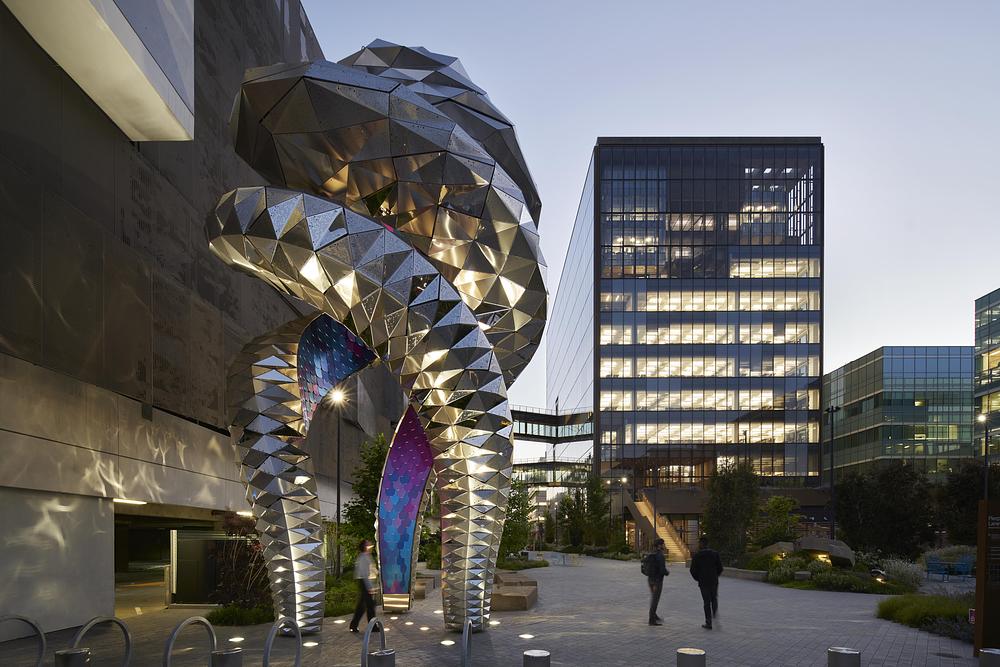
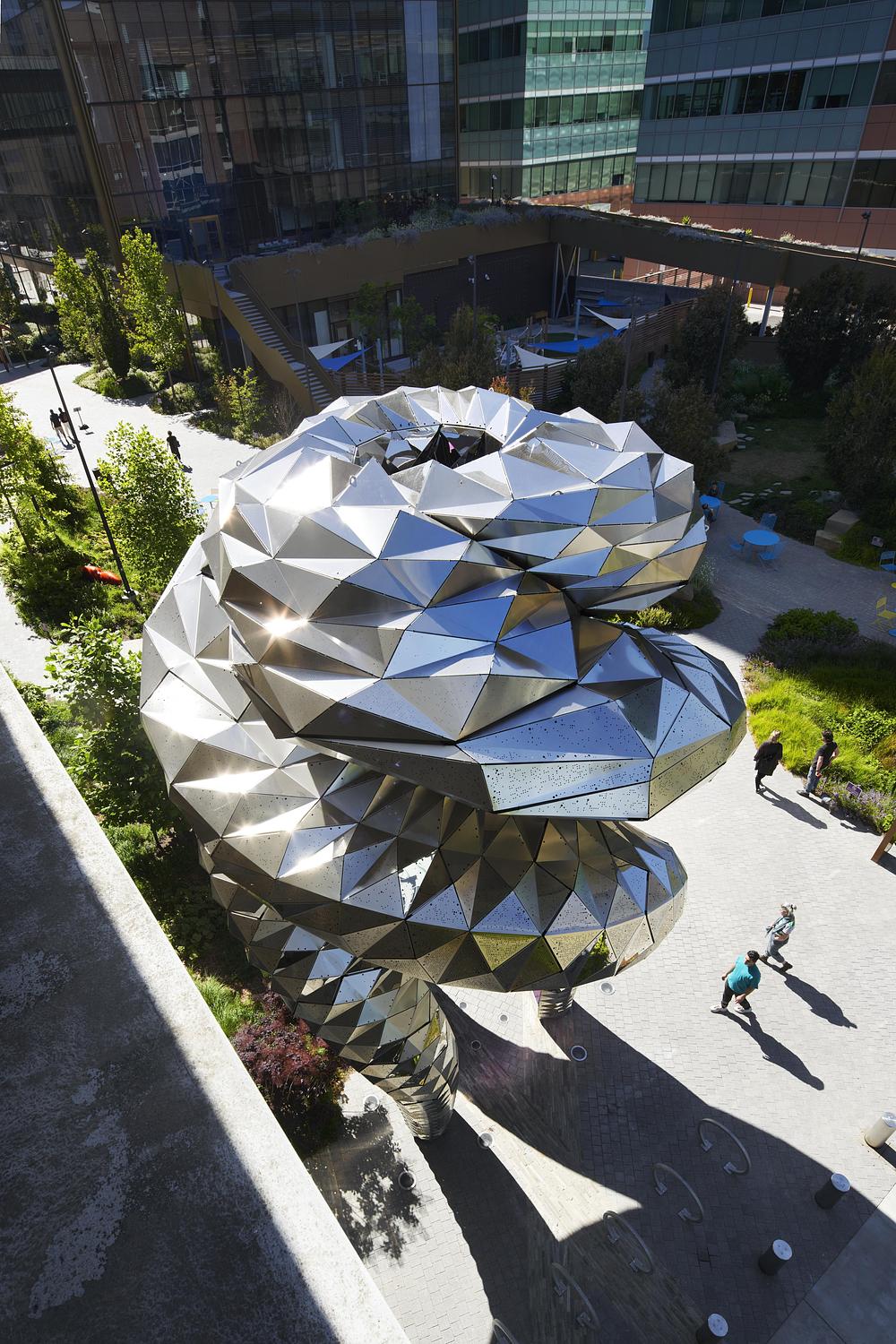
One recent installation, Orbital, stands in the entrance plaza of the OpenAI headquarters in Mission Bay, San Francisco. The pavilion consists of thousands of digitally fabricated aluminium and steel elements that form a complex geometric shell.
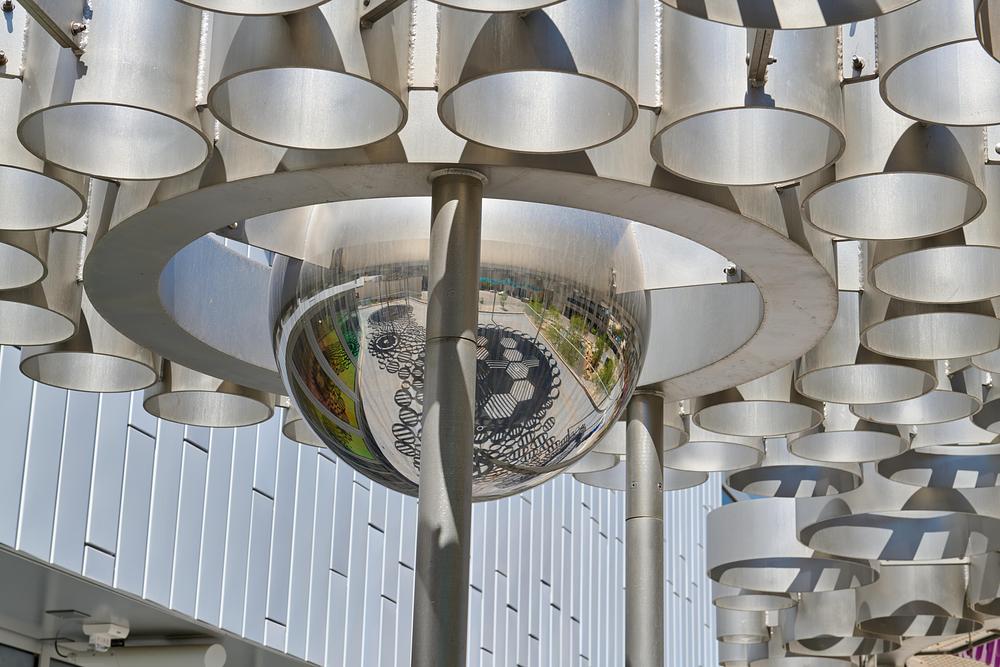
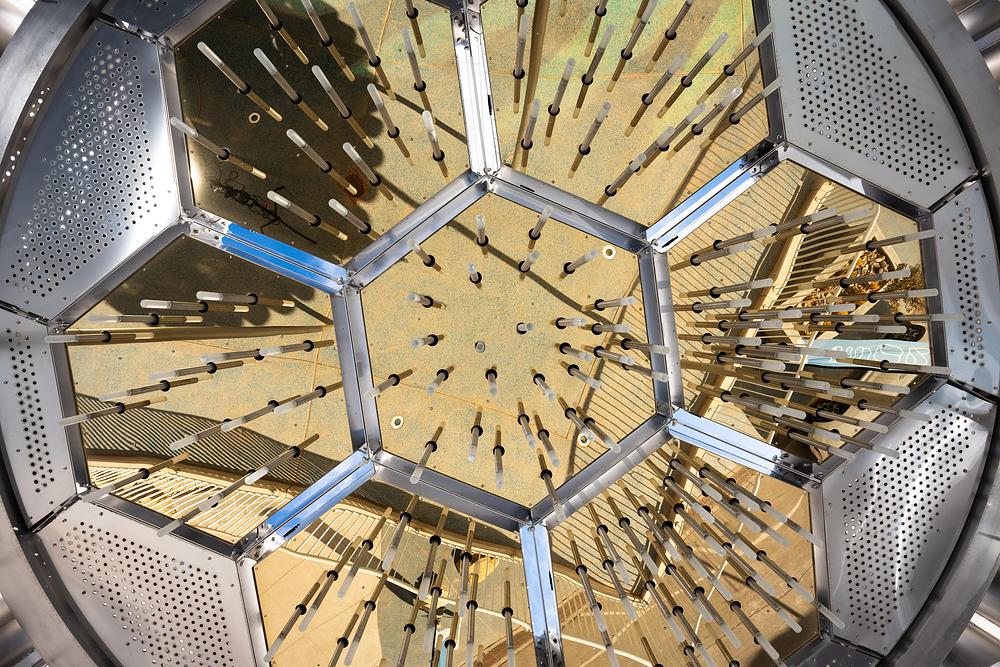
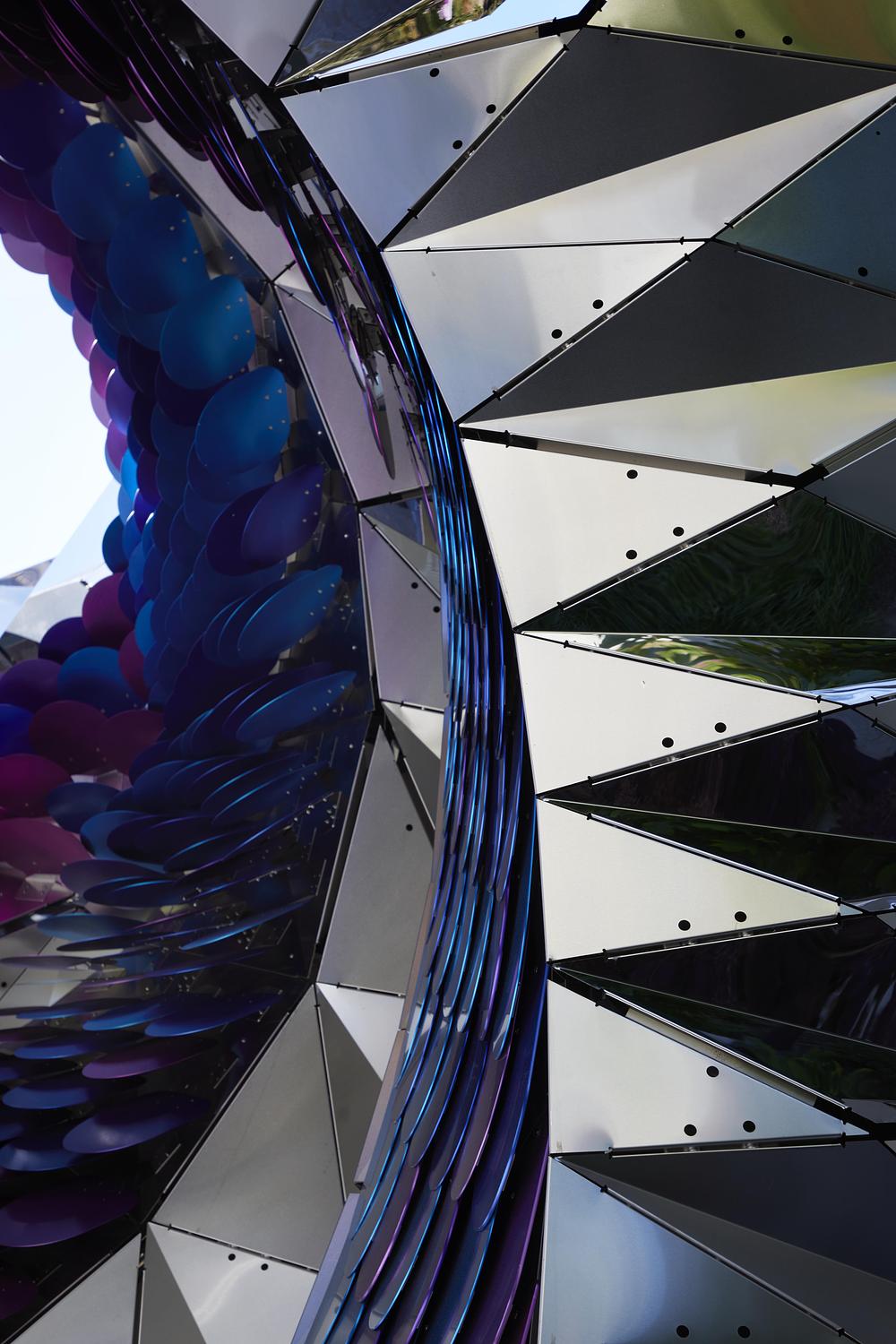
The exterior uses perforated stainless steel panels that reflect the surrounding cityscape. At the same time, the perforations allow controlled light to pass through the structure. This creates changing patterns of light and shadow throughout the day.
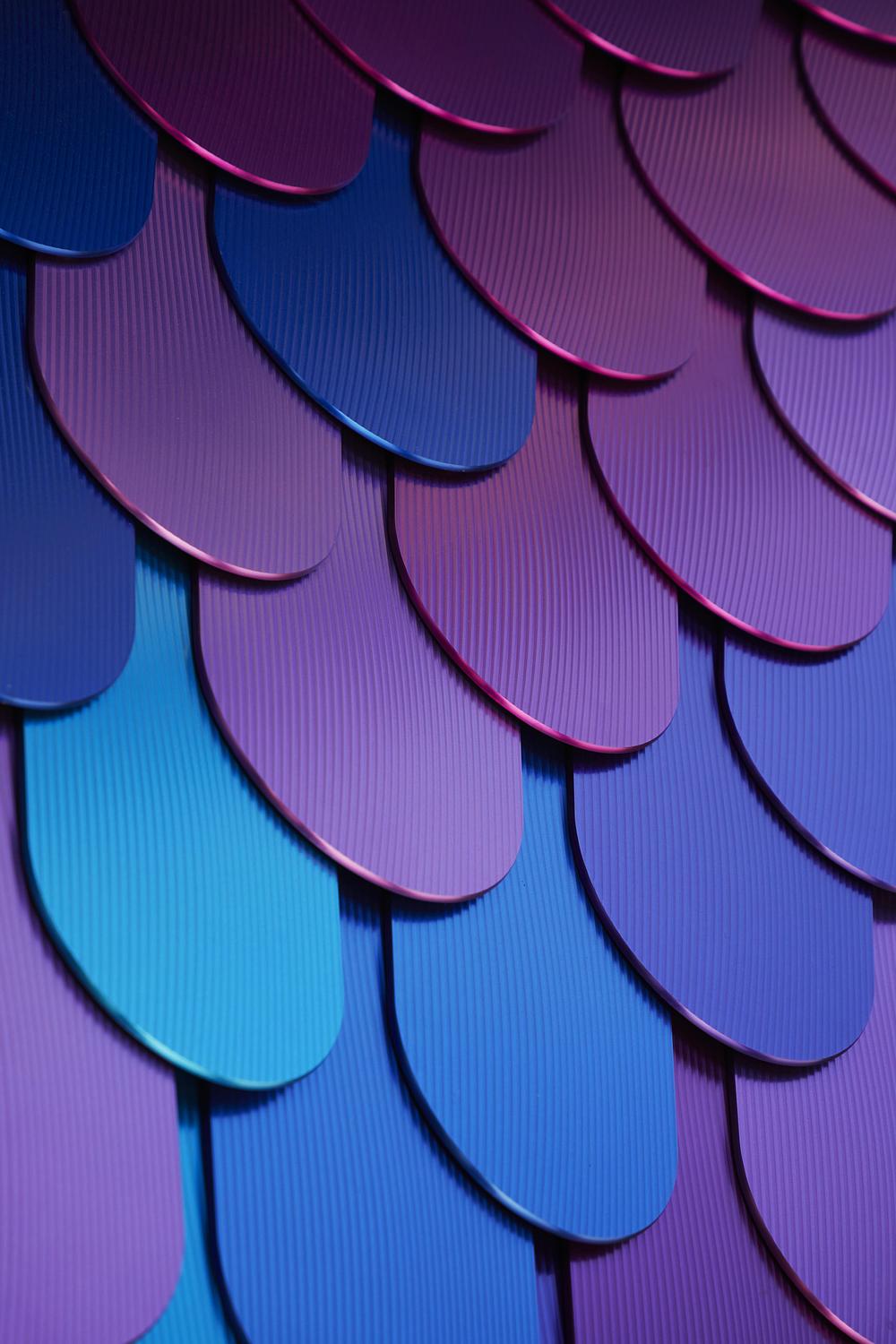
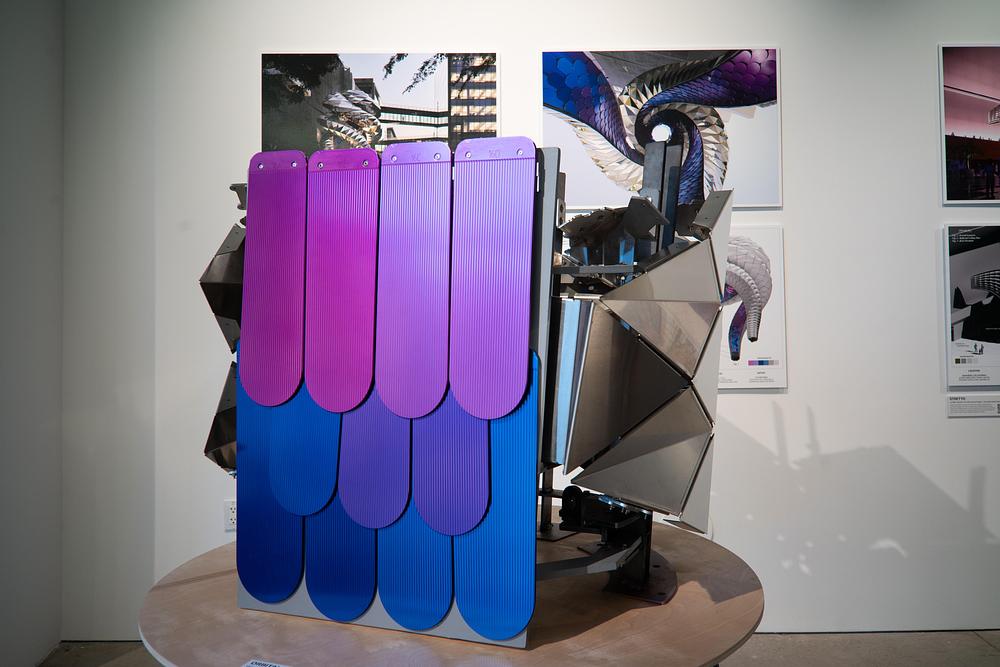
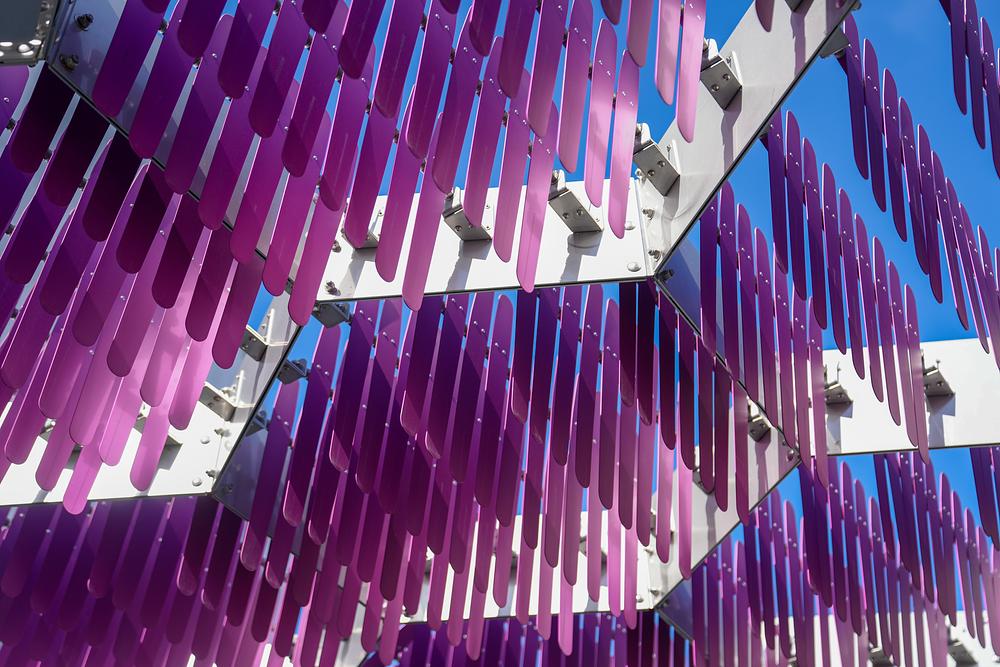
Inside the pavilion, the designers introduced a contrasting material layer. Colourful shingle-like modules create a textured interior surface that invites visitors to enter and explore the space. Consequently, the structure combines reflective metal surfaces with tactile materials to create different spatial experiences.
Climate-Responsive Metal Canopy
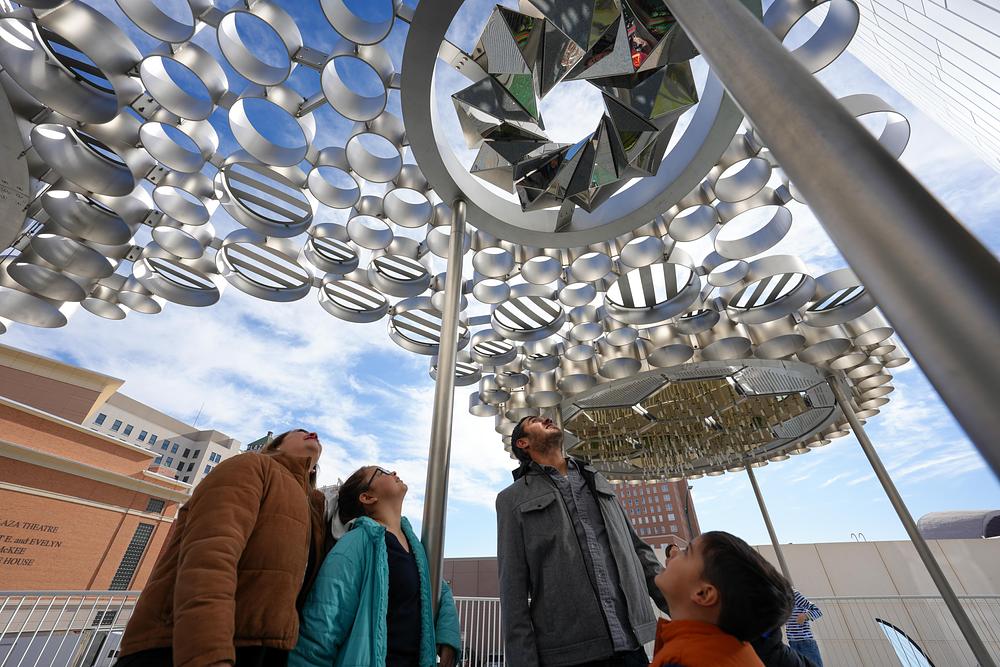
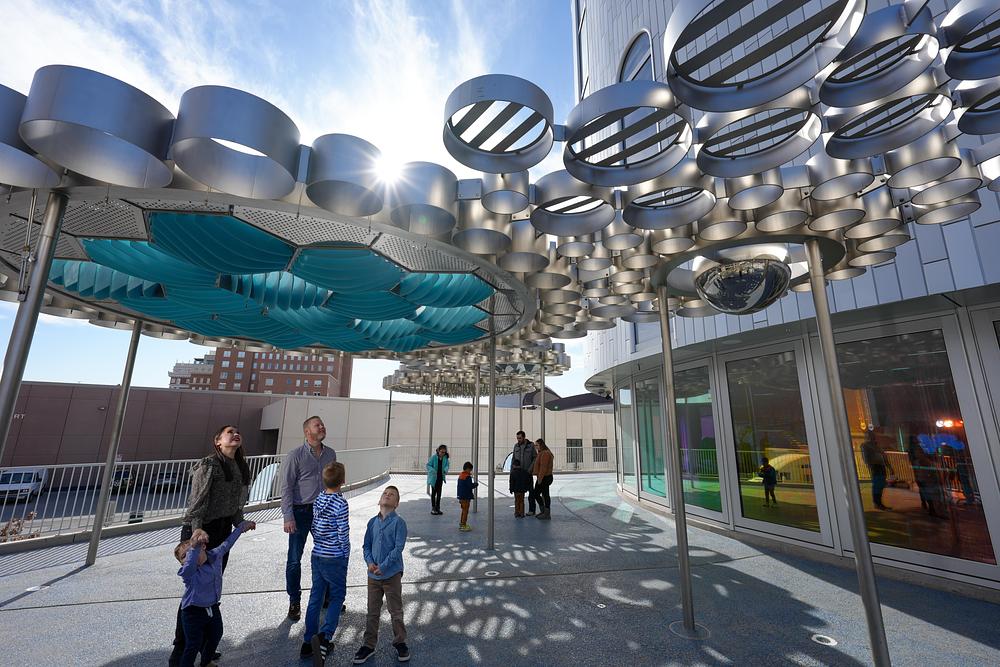
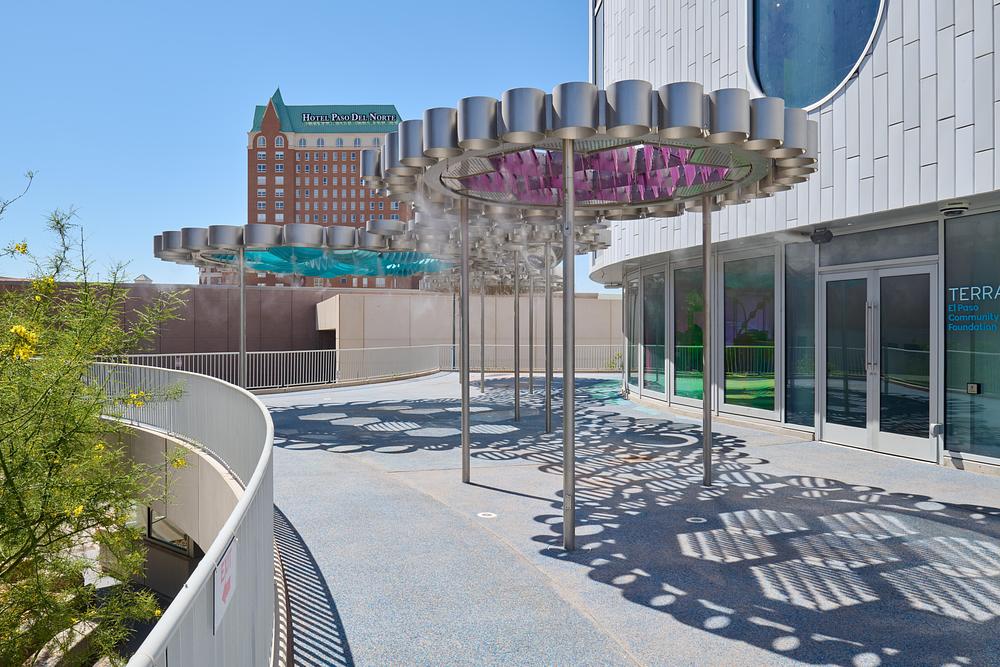
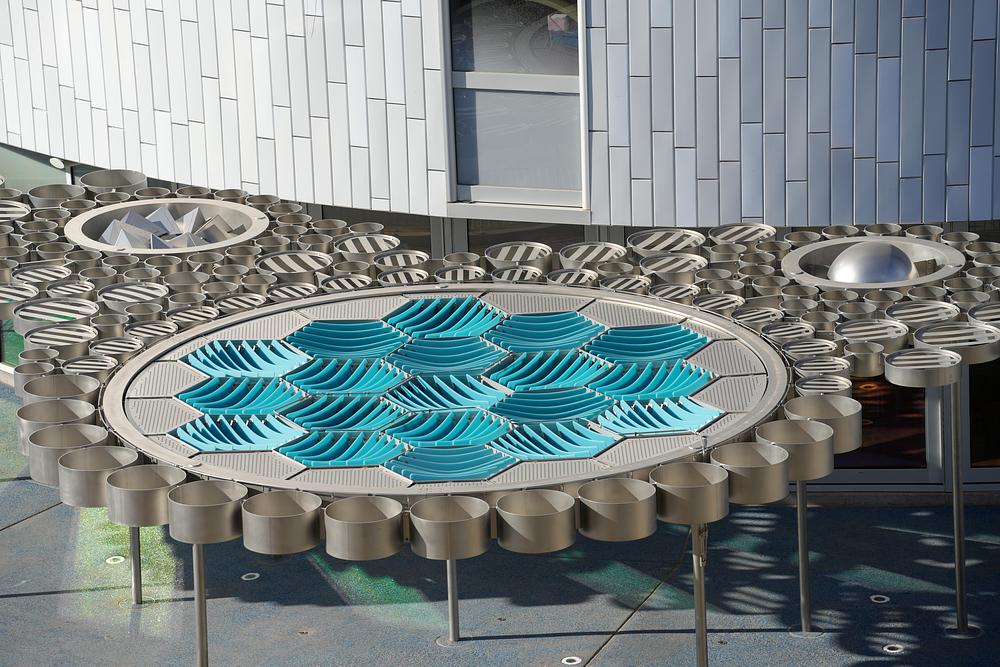
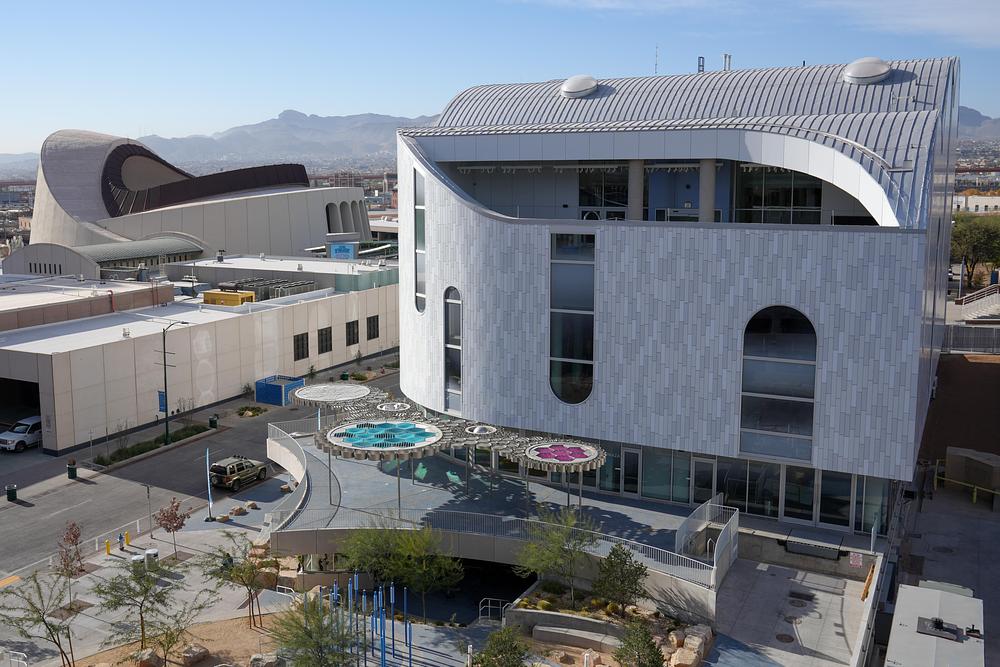
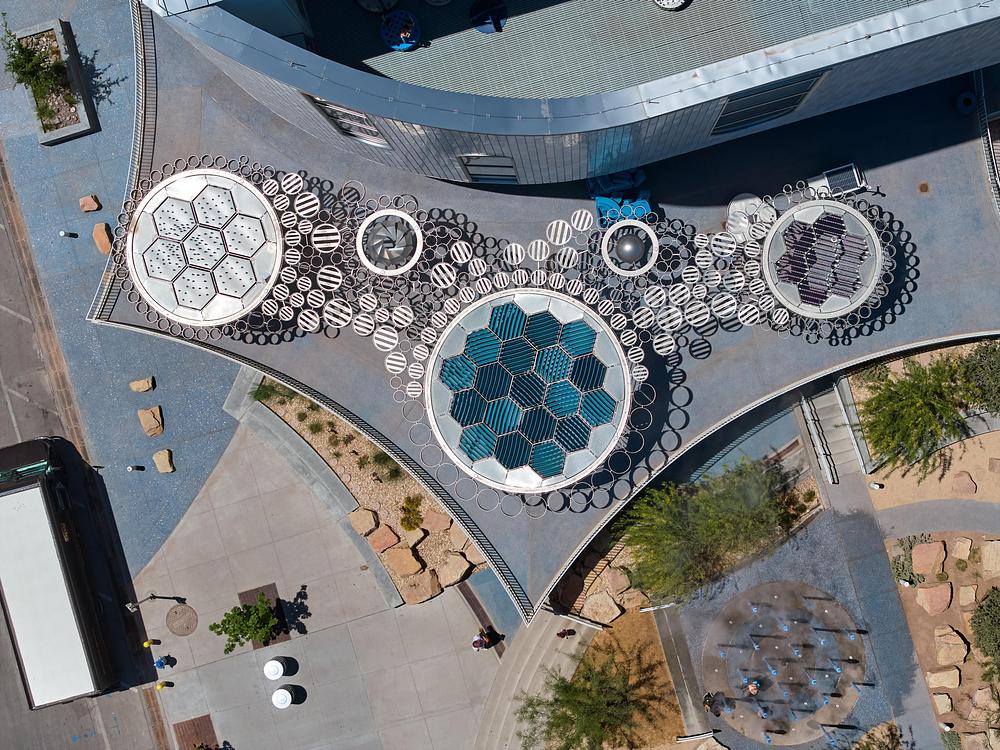
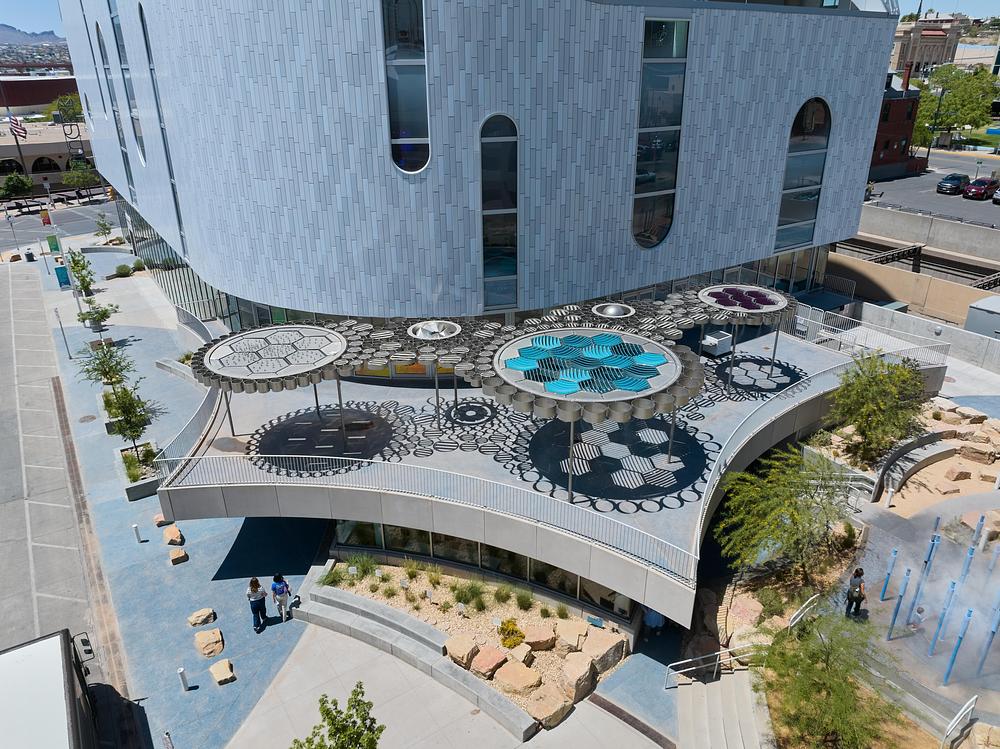
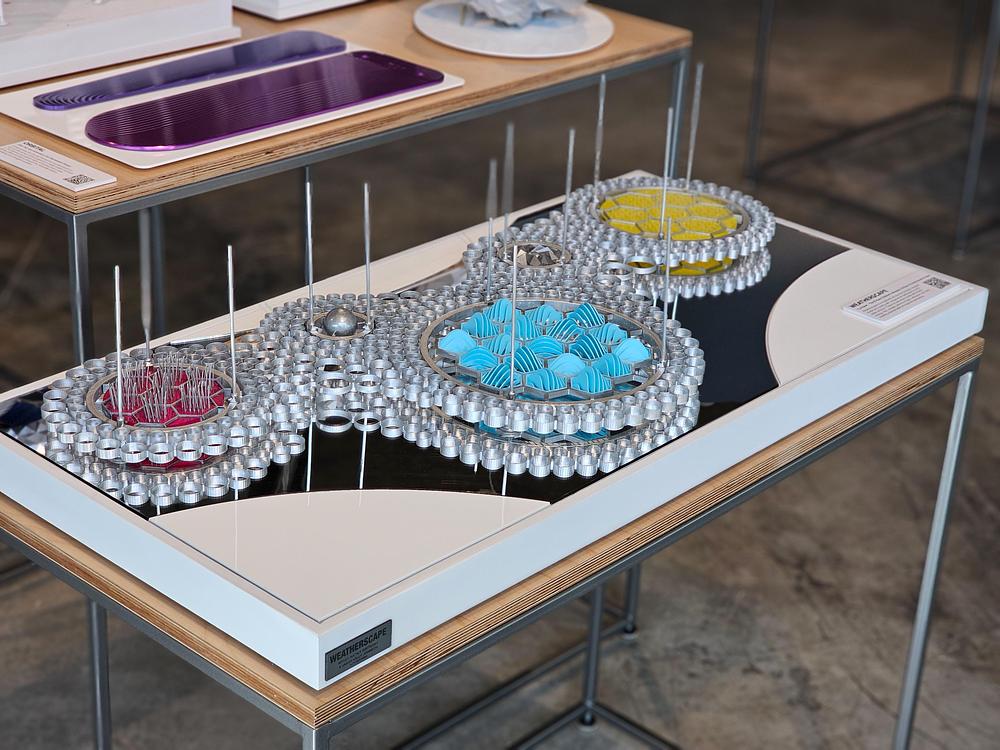
Another installation by FUTUREFORMS focuses on environmental performance. Weatherscape, a 70-by-40-foot sculptural canopy, stands on the terrace of the El Paso Children’s Museum in Texas.
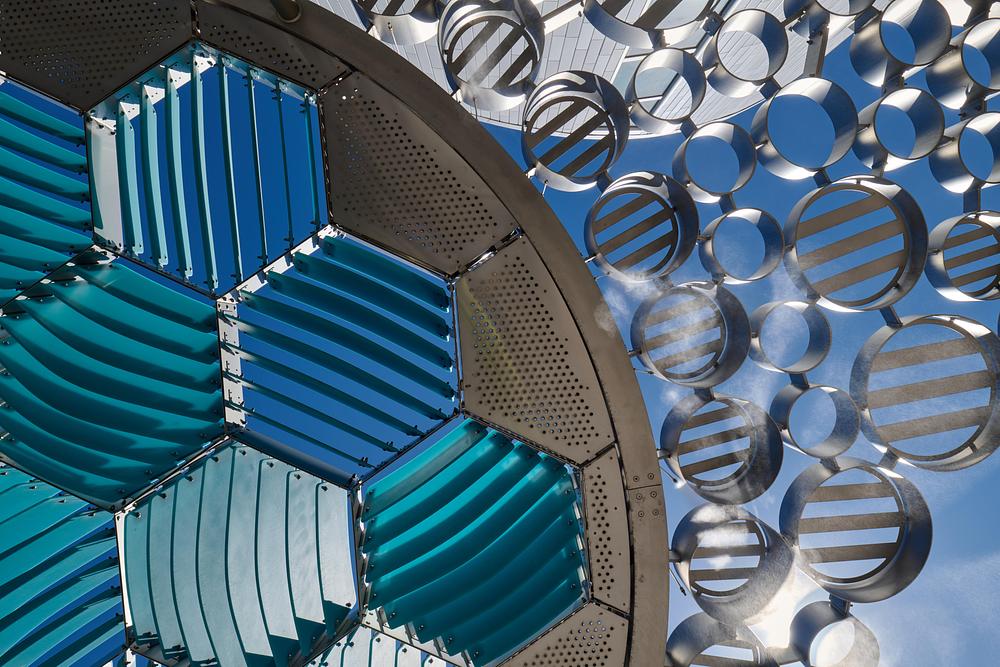
The canopy uses durable metal components designed for high solar exposure and strong temperature variations. These conditions are typical for the desert climate of El Paso. The perforated metal surfaces provide shade while still allowing airflow through the structure.
In addition, the canopy interacts with environmental forces. Wind moves through the perforations, while reflections shift across the metallic surfaces. Water and mist sometimes move across the structure, creating visible effects. Together, these elements form changing microclimates under the canopy.
Prototyping And Material Research
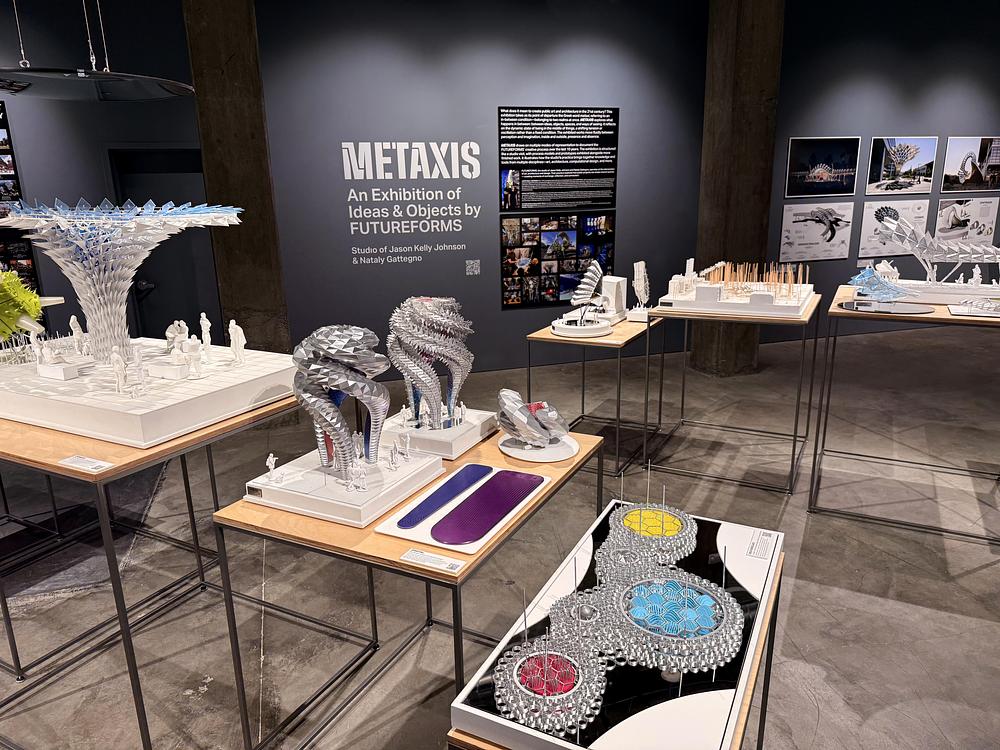
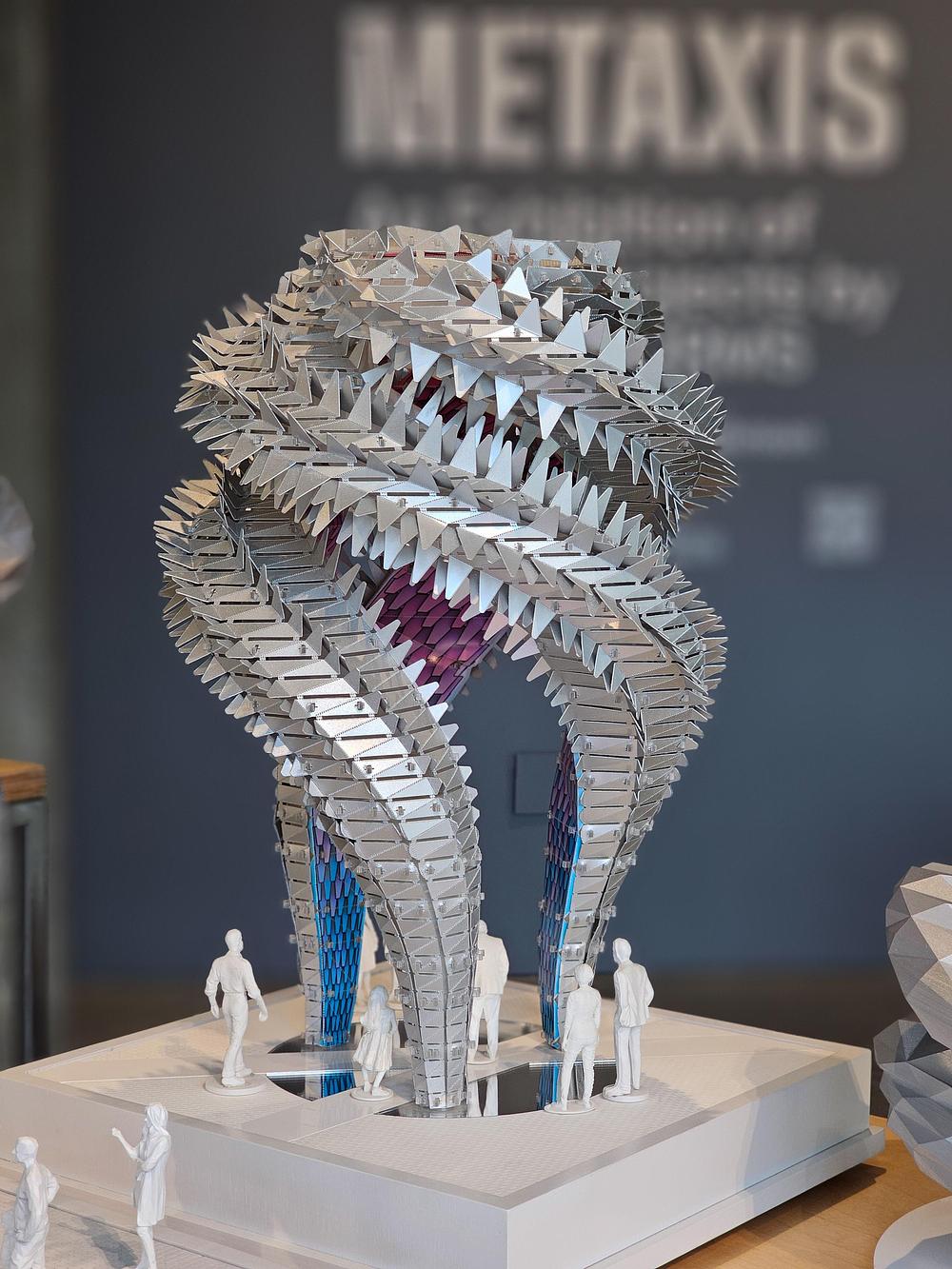
The design process behind these installations appears in the exhibition METAXIS: A Collection of Ideas and Objects at the California College of the Arts in San Francisco.
The exhibition presents more than twenty models, prototypes and 3D printed objects created between 2015 and 2025. These objects show how designers test geometry, materials and assembly strategies during the design process.
For example, physical prototypes help evaluate perforation patterns, structural behaviour and surface effects. In this way, digital modelling and material experimentation support each other.
Material Innovation Through Digital Craft
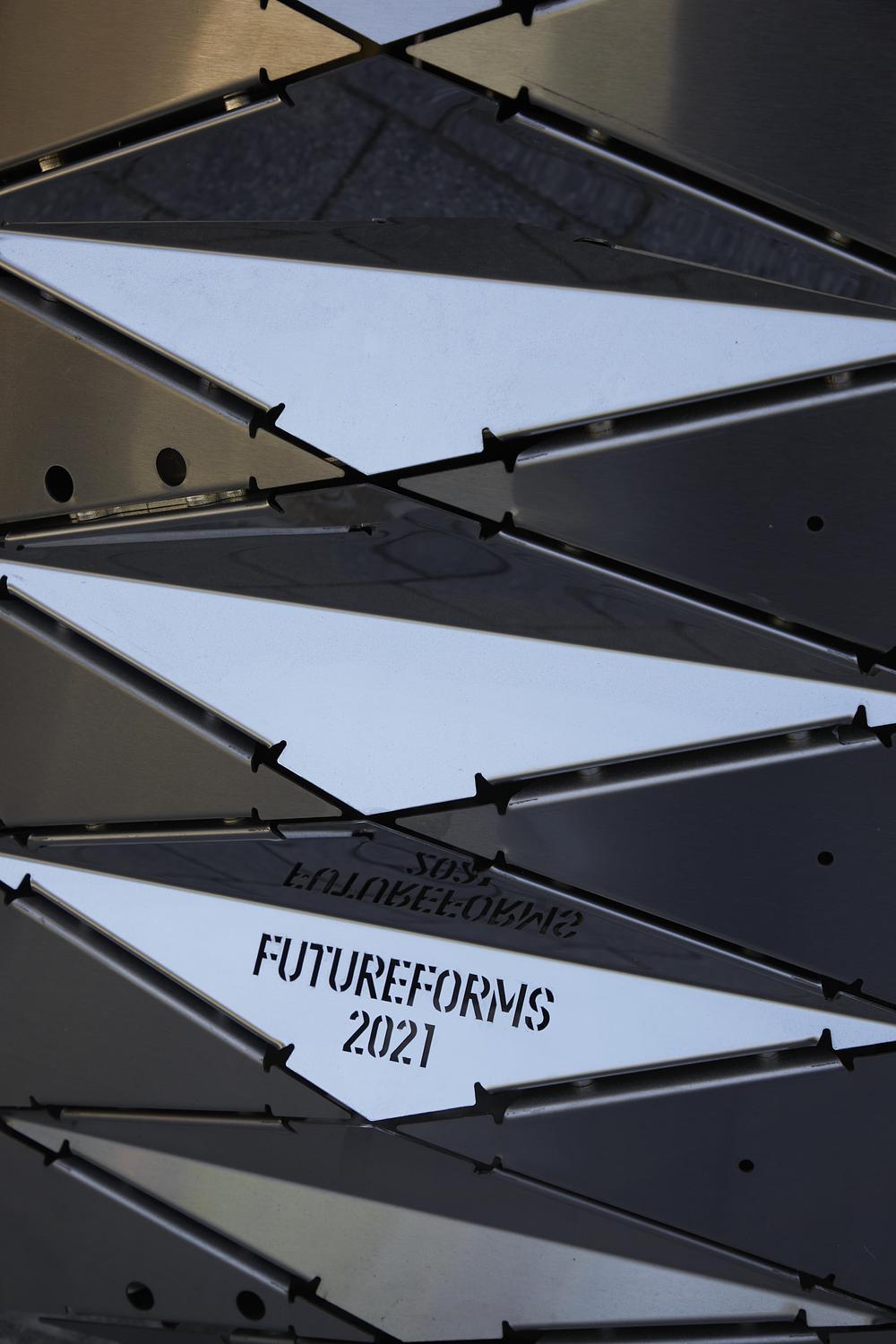
Projects such as Orbital and Weatherscape highlight how digital fabrication expands the possibilities of metal materials in architecture and landscape design. Customised aluminium and steel components allow designers to create complex geometries and responsive surfaces.
At the same time, perforated metal systems help regulate light, airflow and shade. Therefore, these material strategies can improve environmental performance while creating visually distinctive public installations.
Source: FUTUREFORMS / v2com newswire
Photos: Brian Wancho / Matthew Millman / Genaro Limon / Jared Elizares

Comments