Eco-Friendly CLT Pavilion Showcases Indonesia’s Potential for Timber Construction
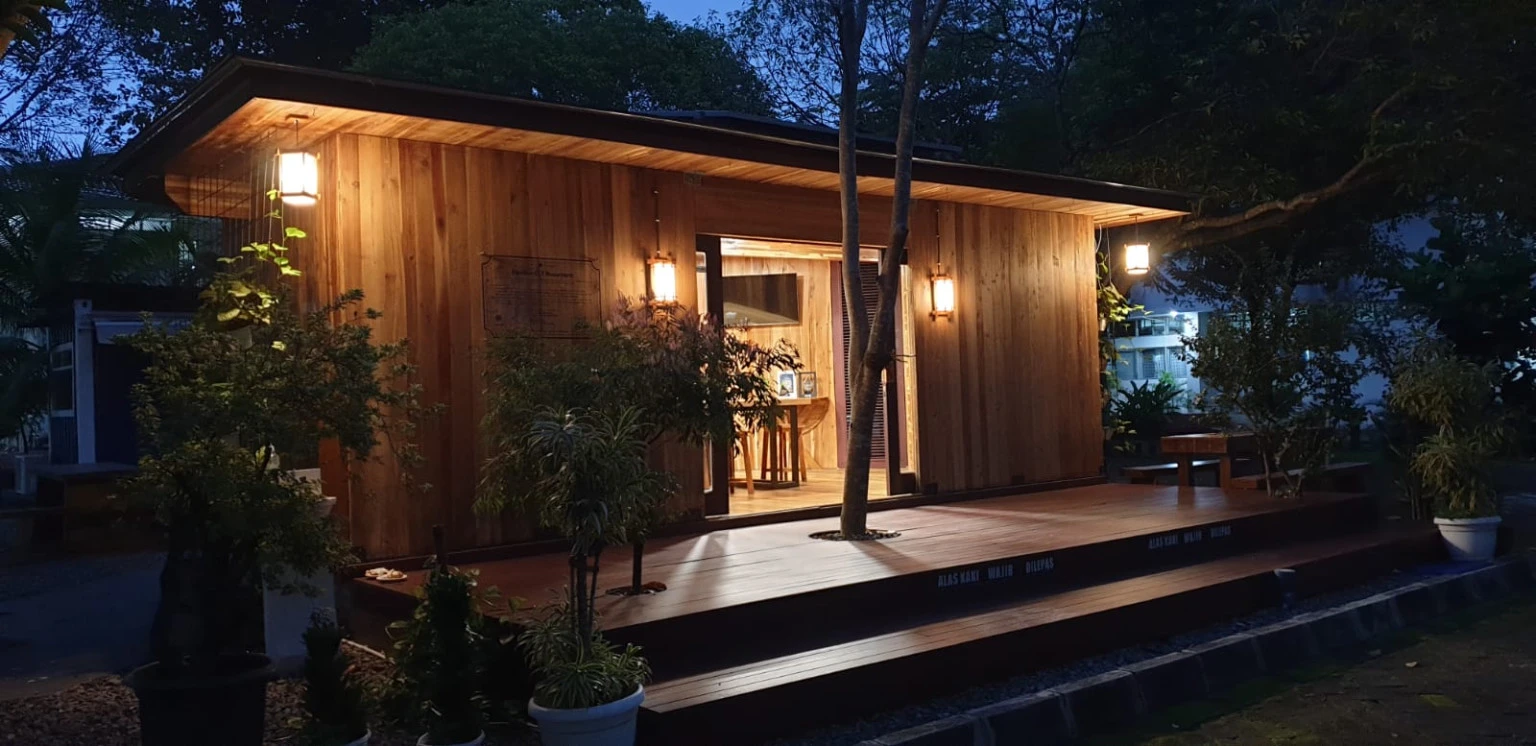
A research team from Universitas Gadjah Mada (UGM) in Indonesia has received the Best Greenship Innovation Award 2025 from the Green Building Council Indonesia (GBCI). The award recognises the CLT Nusantara Pavilion, an experimental wooden building that explores low-emission construction using locally sourced timber.
Led by Professor Ali Awaludin from UGM’s Faculty of Engineering, the project shows how biobased materials can support sustainable architecture in tropical climates. The pavilion uses acacia wood, a fast-growing tree species known for its strength and natural resistance to fungi. By sourcing timber locally, the project limits transport emissions and strengthens regional material chains.
CLT Adapted for Tropical Conditions
The pavilion applies cross-laminated timber (CLT), a technology widely used in Europe and North America. The research team adapted the system to suit Indonesia’s humid climate and available wood dimensions. Through reverse engineering, they developed new jointing solutions that work with slimmer acacia elements.
This approach demonstrates how designers can adapt timber technologies to local conditions, rather than applying imported systems without modification. For architects, the project offers valuable insights into climate-responsive timber engineering.
A Living Test Site for Sustainable Design
Located at UGM’s Manufacturing Park, the CLT Nusantara Pavilion functions as both a meeting space and a living laboratory. The building integrates solar panels, smart lighting, and an IoT-based garden system. Together, these features support the pavilion’s low-energy and near-zero-emission ambitions.
The project shows how material innovation, renewable energy and digital technology can come together in one compact architectural concept.
Educational Architecture with Circular Potential
The research team did not design the pavilion for large-scale housing. Instead, they see strong potential for educational and public buildings, such as schools and learning centres. According to Professor Awaludin, the building helps students understand sustainable materials through direct experience.
From a material perspective, the pavilion highlights timber’s ability to store carbon, absorb shocks and remain durable over time. With correct detailing and regular maintenance, wooden buildings can last for decades. This makes timber a strong candidate for circular construction models.
A Reference for Low-Carbon Building Futures
The international attention for the CLT Nusantara Pavilion confirms Indonesia’s growing role in sustainable timber construction. By combining local biobased materials with adapted CLT technology, the project offers a relevant reference for architects working in tropical and emerging markets.
The pavilion proves that timber innovation is not limited to Western contexts. With the right material choices and design strategies, wood can play a key role in a low-carbon built environment worldwide.
Source & photo: Universitas Gadjah Mada

Comments