Finland Advances Low-Carbon Timber Architecture For Therapeutic Care Facilities
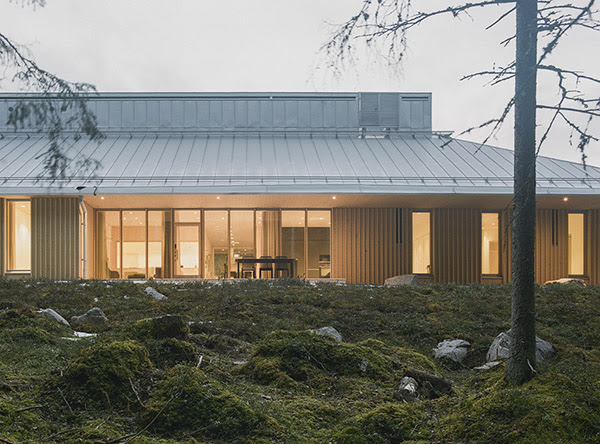
Lagmansgården is located on Finland’s west coast, within an existing pine forest landscape. The residential institution provides accommodation and education for young people who require intensive foster care and special needs support. The project combines therapeutic spatial planning with a construction strategy centred on timber and low-carbon material choices.
The Finnish Institute for Health and Welfare (THL) contributed to the development of the project as part of research into new models for residential care environments. In this context, the building explores how layout, landscape integration and material selection can influence daily use and long-term performance.
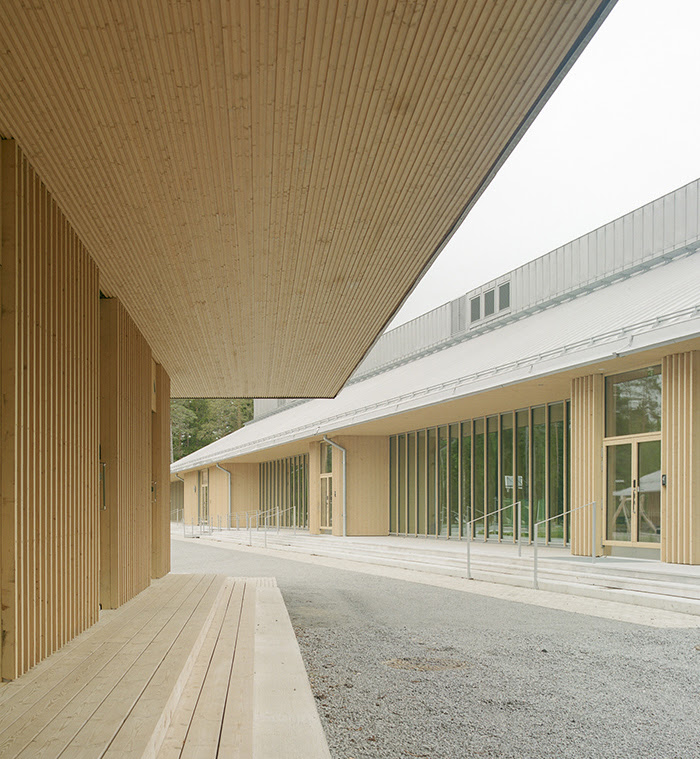
Anttinen Oiva Architects designed the complex to bring together residential, educational and administrative functions within a single site. The programme includes 20 accommodation rooms arranged across four units, as well as classrooms, recreational areas, staff facilities and a communal kitchen with dining hall. The buildings are positioned around a central courtyard that opens towards a nearby lake. This arrangement maintains views of the surrounding forest and supports access to outdoor areas.
Engineered Timber In Structure And Interior
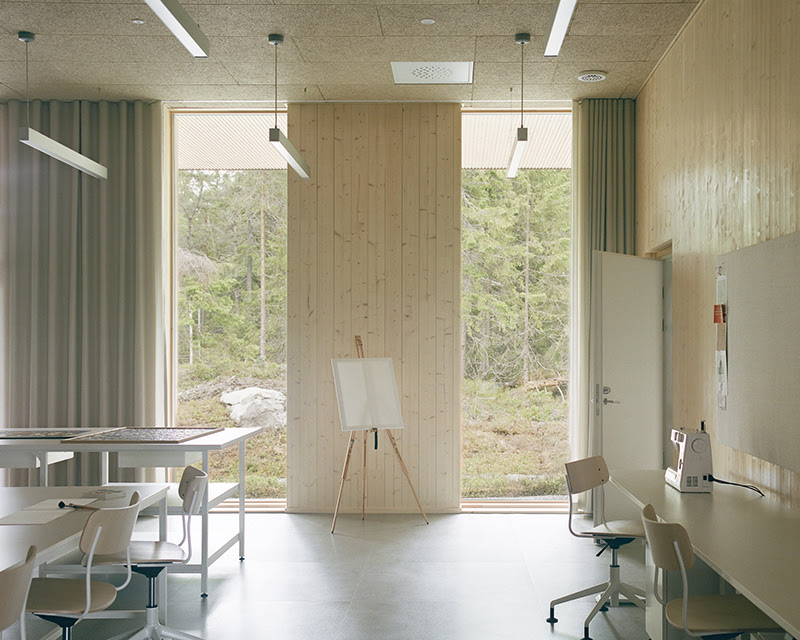
Timber forms the primary construction material. Cross-laminated timber (CLT) provides the main structural system, while plywood is used for visible interior surfaces. Compared with conventional concrete construction, engineered timber can lower embodied carbon and enable prefabricated building processes. According to Senate Properties, Lagmansgården represents its lowest-carbon construction project to date.
The architectural expression references regional Ostrobothnian building traditions. A single-storey layout and extended eaves define the horizontal form of the building. In addition, a light-coloured standing seam metal roof conceals technical installations and visually relates to the surrounding landscape.
Internally, exposed timber surfaces contribute to a consistent material palette. The interior design prioritises durability, adaptability and ease of maintenance. Colour selections reflect tones found in the forest setting.
Energy Systems And Lifecycle Considerations
Energy performance played a role in the project’s development. The building uses ground-source heating and includes an on-site solar power installation. These systems contribute to reduced operational emissions.
The design also emphasises long service life and straightforward technical solutions. As a result, the project addresses lifecycle performance alongside spatial organisation. Residential units combine private rooms with shared living areas, supporting both individual and communal use. Staff and residents participated in aspects of the planning process.
Timber Construction In Finnish Care Facility Design
Lagmansgården forms part of broader efforts in Finland to update the architectural model for child welfare and special-support educational facilities. The project illustrates how engineered timber, renewable energy systems and landscape integration can be applied within institutional building typologies.
For architects and interior designers working on healthcare, education or residential projects, Lagmansgården provides a case study in timber construction, biobased materials and low-carbon building strategies.
Source: Cision
Photos: Kalle Kouhia

Comments