Fish Skin Biofilm Offers Sustainable Alternative For Food Packaging
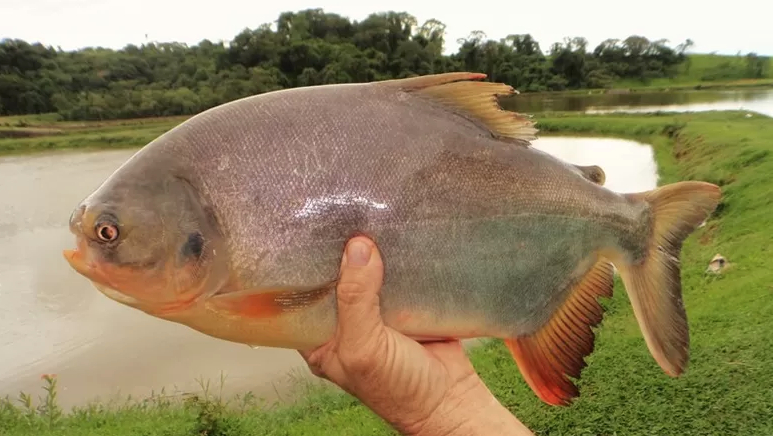
Researchers in Brazil have developed a biodegradable biofilm made from fish skin that could replace part of today’s plastic food packaging. The material, created by scientists at the University of São Paulo (USP) and EMBRAPA Pecuária Sudeste, uses tambatinga – an Amazonian fish species – as its raw material.
Turning Fish Waste Into Biobased Packaging
Tambatinga is a cross between the tambaqui and the pirapitinga. The species grows efficiently and plays an important role in Brazilian aquaculture. Its skin contains high levels of collagen, which makes it suitable for gelatin extraction.
Instead of discarding the skin as industrial waste, the researchers transform it into a biopolymer film. Because the fish comes from a tropical region, its skin may contain higher levels of certain amino acids. These compounds can improve the structure and performance of the gelatin.
The research team has worked for more than 25 years on biopolymer films made from proteins and polysaccharides. Their goal is clear: reduce the environmental impact of petroleum-based packaging materials.
Transparent, Flexible And UV-Blocking
The team first cleaned the fish skins and extracted gelatin using hot water and acetic acid. They then produced thin films using a controlled gelatin solution.
The resulting material is transparent, flexible and smooth. Tests show that the film has good mechanical strength and blocks ultraviolet (UV) light effectively. It also shows lower water vapour permeability than many other gelatin-based films described in scientific literature.
These properties make the material suitable for food packaging applications where protection, visibility and shelf life matter.
Current Limitations And Future Applications
The material still reacts strongly to moisture. For now, designers can use it mainly for dry food products such as nuts and seeds. Further research aims to improve its water resistance and expand its use. The team also sees potential in pharmaceutical and biomedical applications.
Beyond its technical performance, the project highlights an important sustainability strategy. It upgrades fish-processing waste into a renewable, biobased packaging material. This approach adds economic value to aquaculture while reducing reliance on fossil resources.
For packaging designers exploring circular and marine-based materials, fish skin biofilms represent an emerging direction in sustainable material innovation.
Source & photo: Agência FAPESP

Comments