Flight Into Shadow Explores Mycelium, Light And Climate-Responsive Design
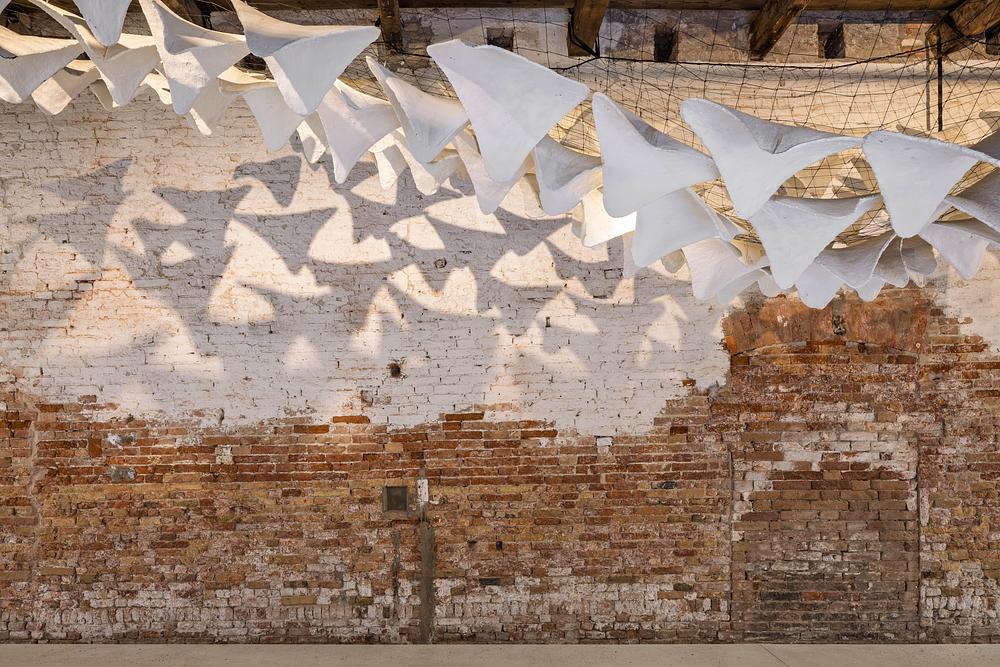
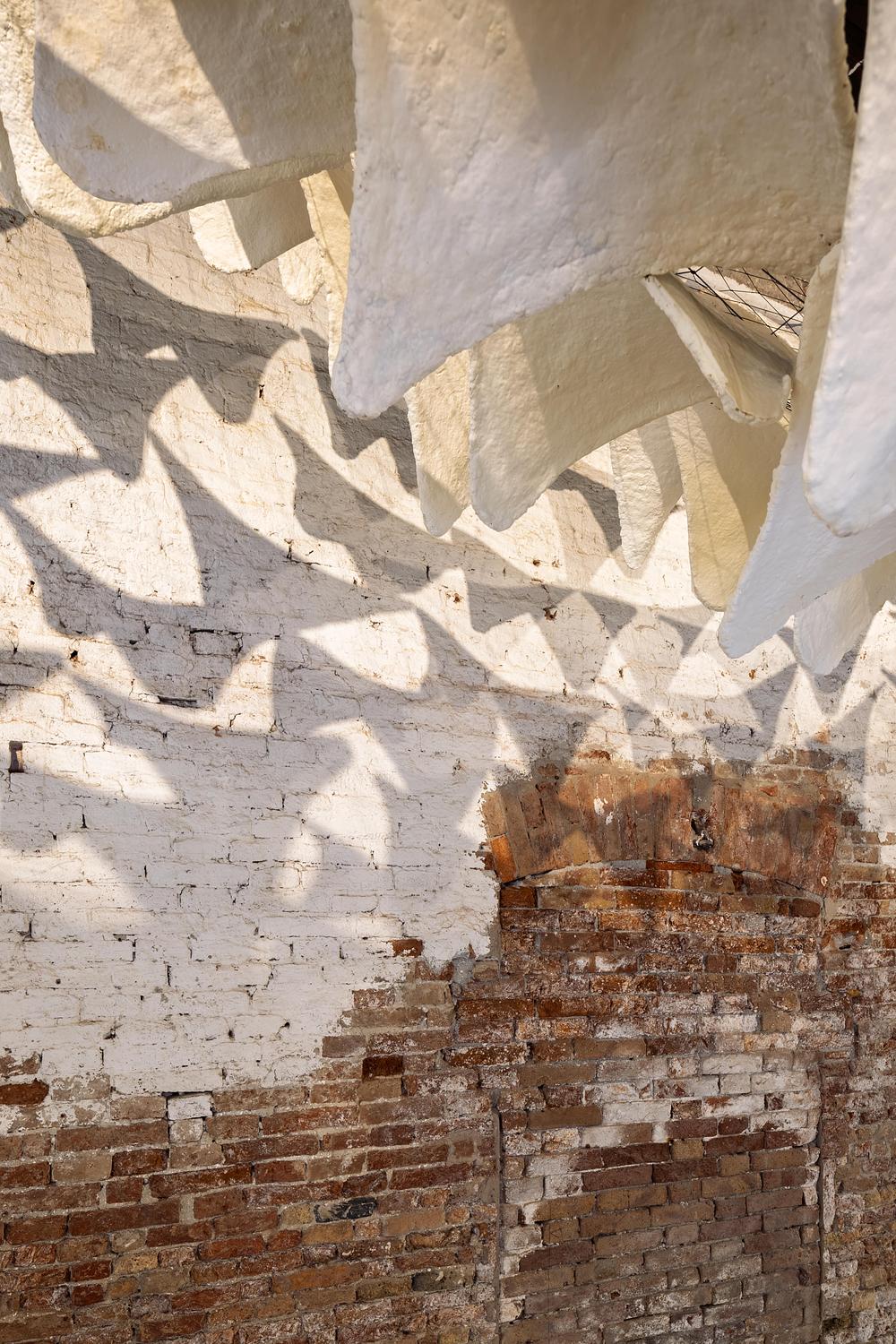
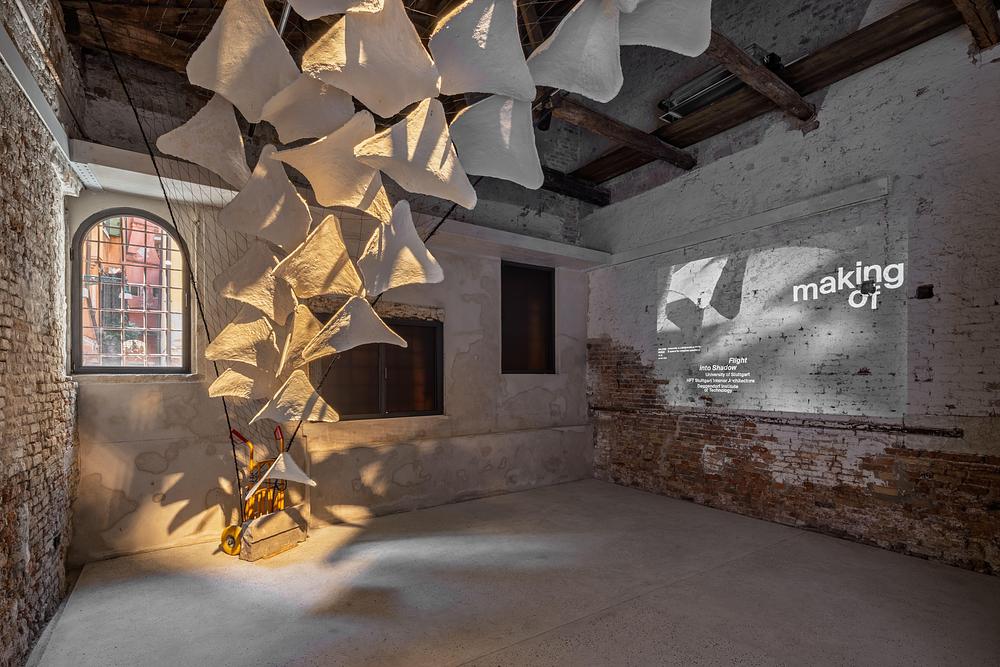
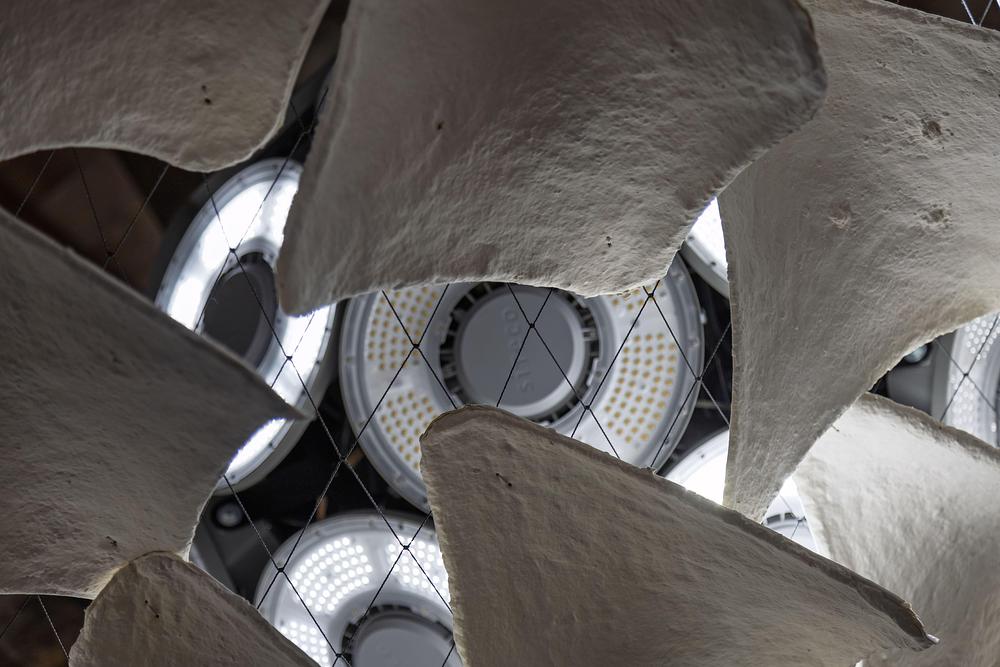
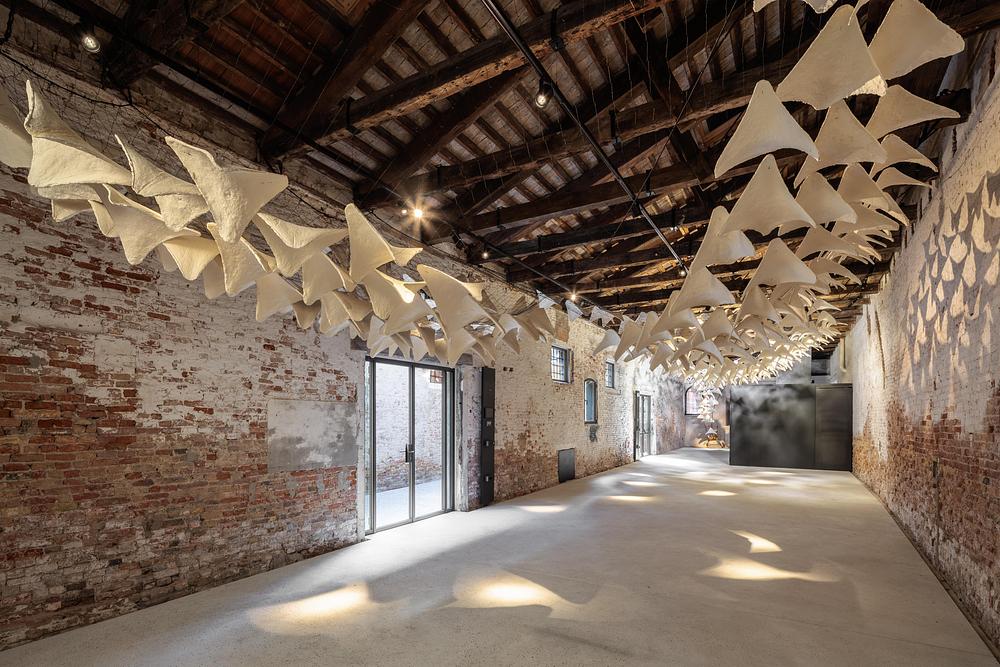
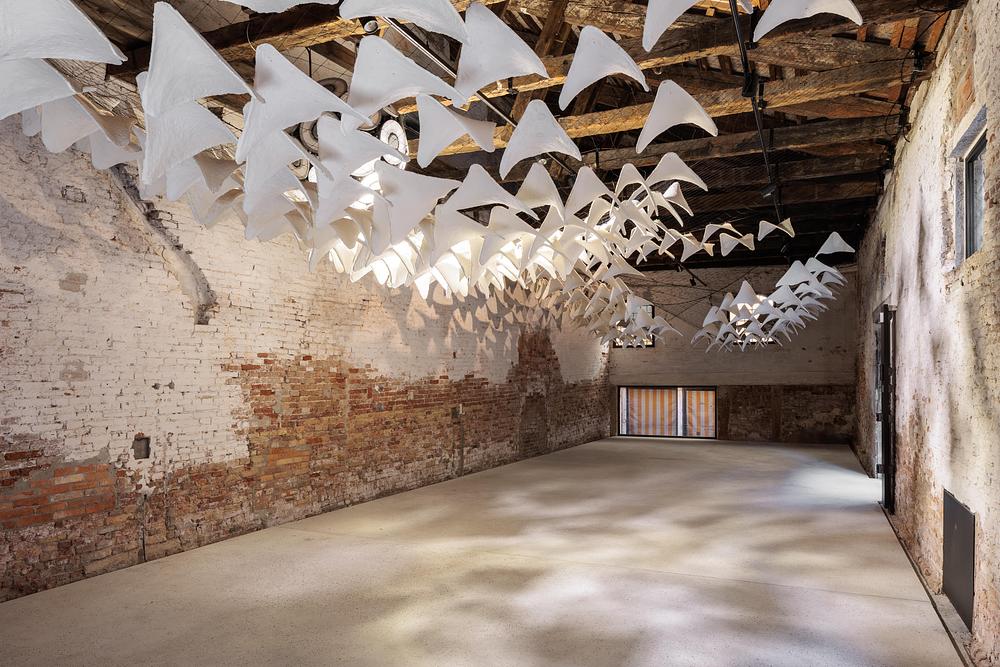
‘Flight Into Shadow’ is a research-based installation that studies how light and shadow influence thermal comfort and spatial perception in heat-stressed urban environments. Deggendorf Institute of Technology developed the project together with HFT Stuttgart and the University of Stuttgart (IBK2). The installation was presented during the Venice Architecture Biennale 2025 as part of the Keep Cool! – Workshop for Cool Cities programme.
The project creates a controlled indoor environment in which solar conditions are simulated. As a result, the researchers can study light intensity, shading and material behaviour without depending on outdoor weather. This setup allows for a clear analysis of how spatial design can influence comfort in warm conditions.
Mycelium As A Biobased Light-Filtering Material
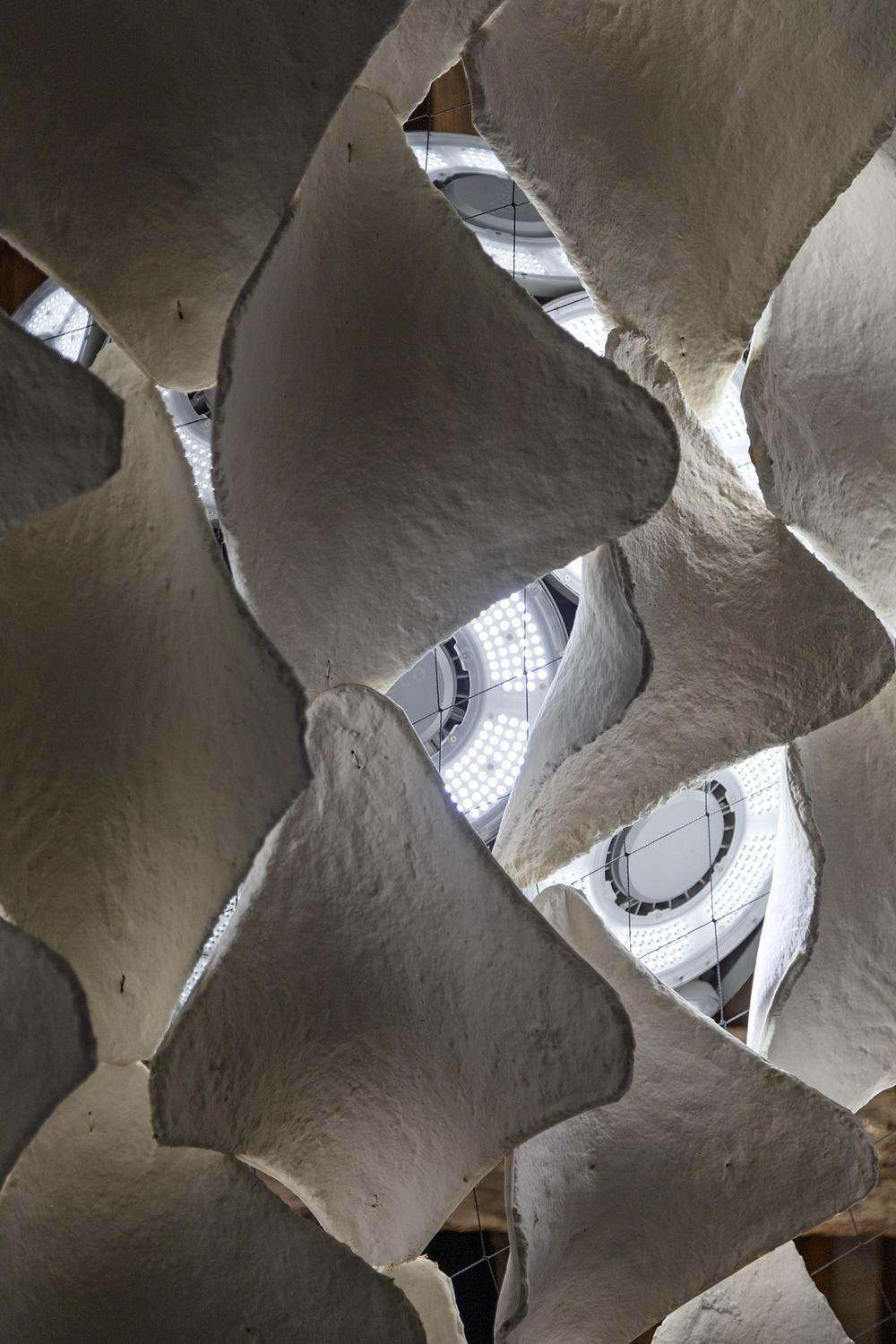
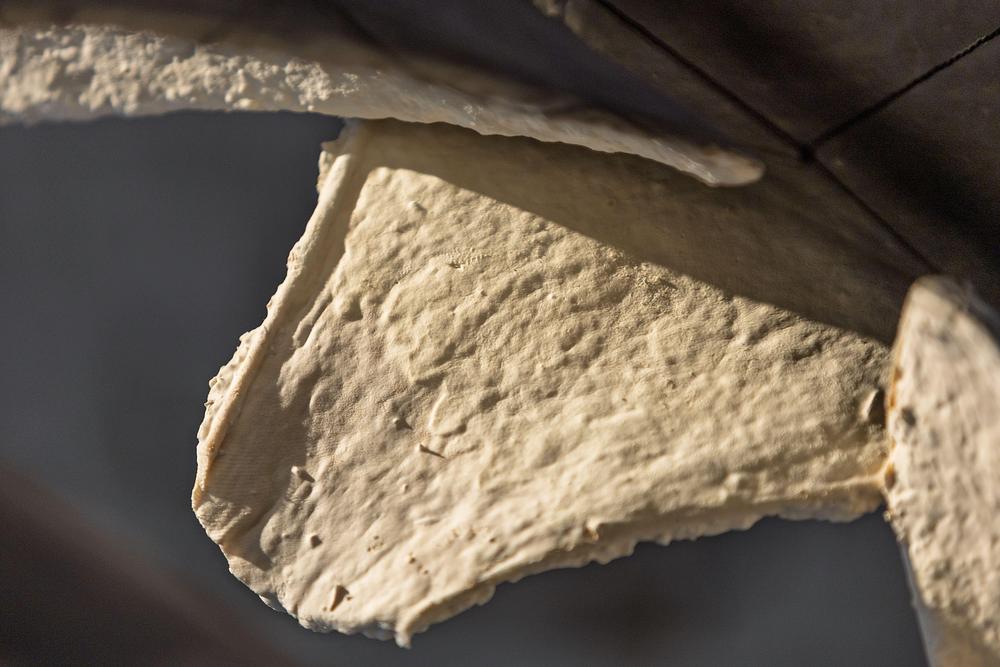
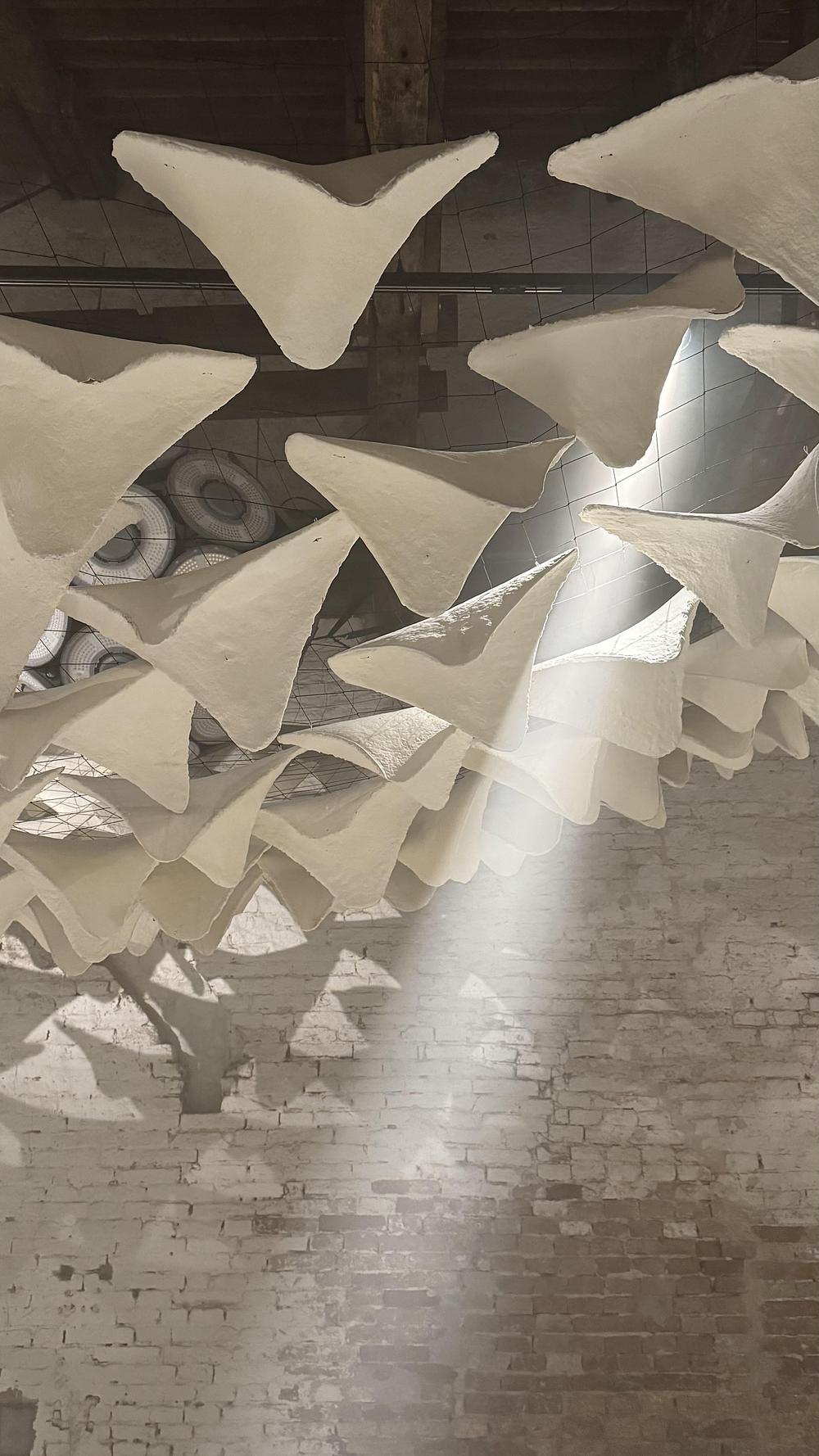
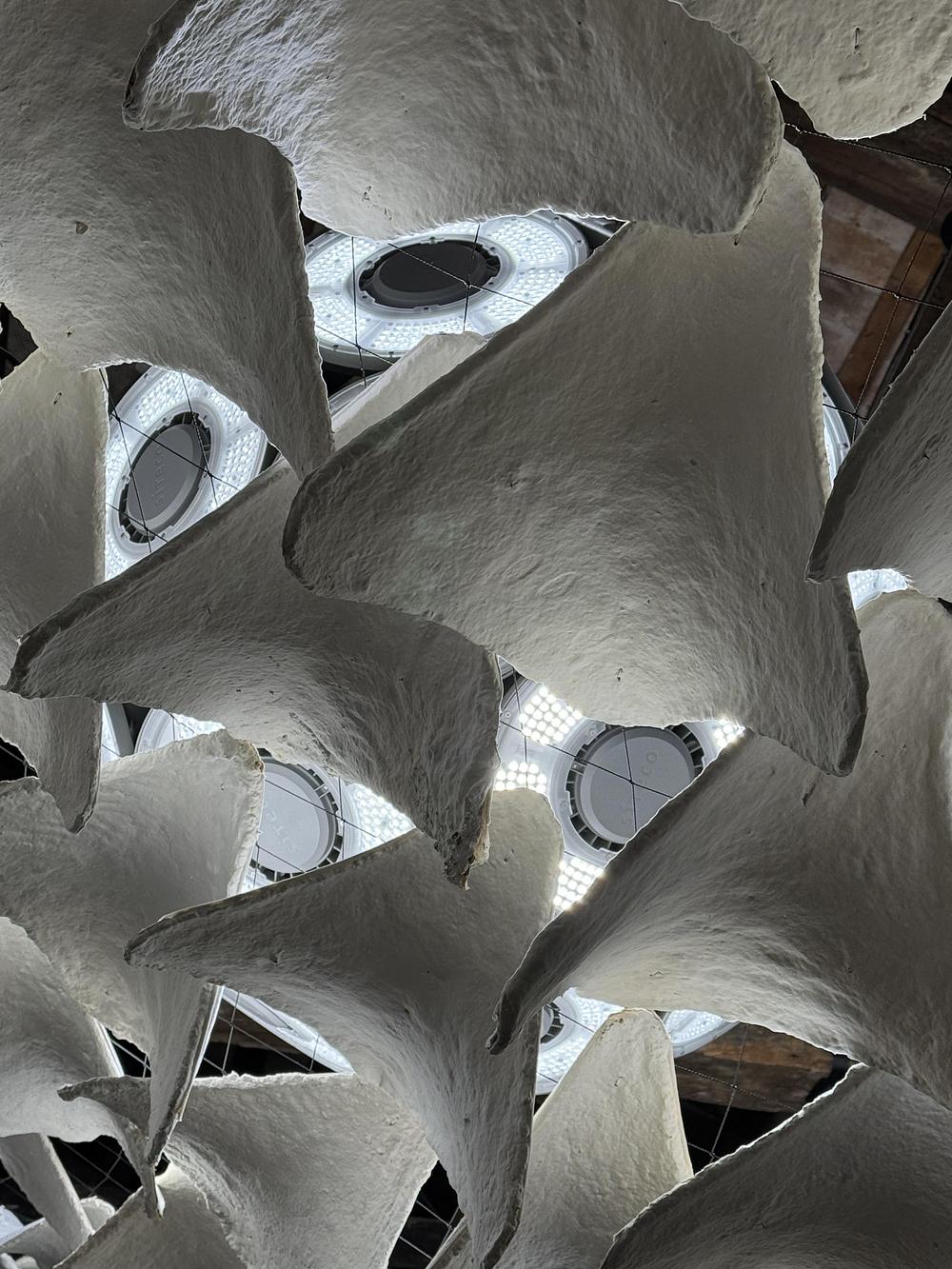
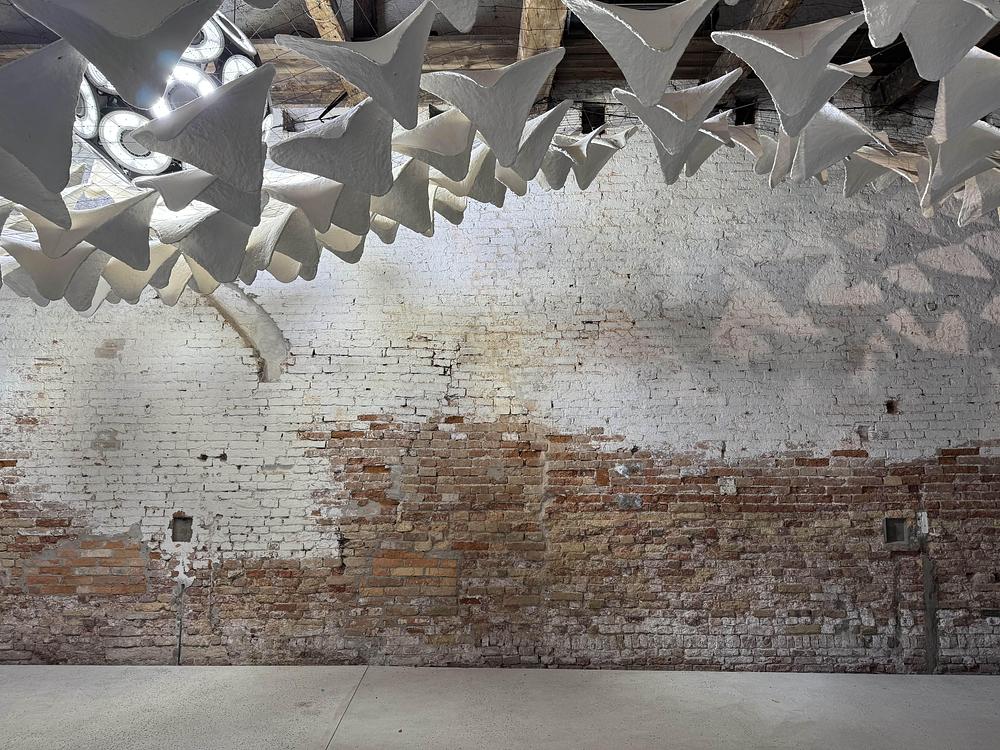
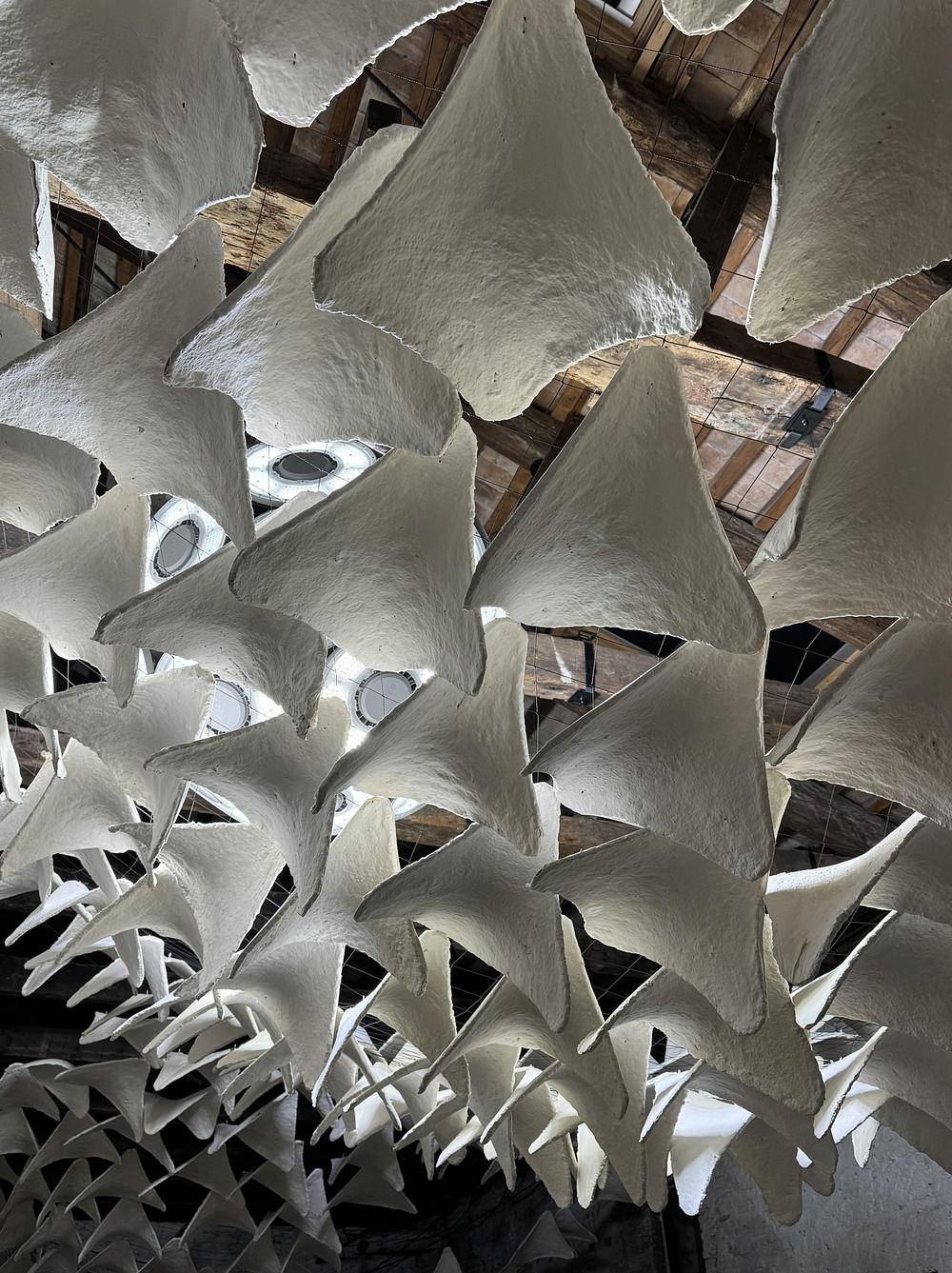
A key material innovation in Flight Into Shadow is the use of living mycelium structures. These biobased elements form lightweight canopies that filter and diffuse light. Instead of blocking light completely, the structures soften it and create gradual transitions between light and shadow.
Because mycelium grows with limited resources, it offers a low-impact alternative to conventional materials. In this project, the material does not function as a structural element. Instead, it acts as a spatial filter that shapes light distribution. This application shows how mycelium can support environmental performance while remaining renewable and biodegradable.
Translating Natural Light Effects Into Interior Space
The spatial concept draws inspiration from the Komorebi effect. This term describes sunlight passing through tree leaves. In Flight Into Shadow, the designers translate this natural phenomenon into an architectural setting.
At the centre of the installation stands an artificial sun made up of individually controlled luminaires. These luminaires generate changing light conditions throughout the space. Over time, brighter areas alternate with shaded zones. As visitors move through the installation, they experience how light modulation affects orientation, comfort and spatial awareness.
Design Approaches For Climate-Adaptive Spaces
Beyond its exhibition context, Flight Into Shadow contributes to research on climate-adaptive design. The project examines how shading, material choice and lighting control can support passive strategies for thermal comfort. Therefore, it highlights alternatives to energy-intensive cooling systems.
For architects, interior designers and landscape designers, the installation offers practical insights. It shows how biobased materials and controlled light environments can work together in future buildings and public spaces. In this context, shadow becomes a deliberate design element rather than a secondary effect. Through material and lighting choices, designers can actively shape more resilient and comfortable environments.
Source: Deggendorf Institute of Technology (via v2com)
Photos: Sabine Wiesend / Jacopo La Forgia

Comments