Geolectric: Low-Carbon Geopolymer Ceramics for Embedded Electronics


Designers across architecture, interiors and product development are looking for materials that support embedded electronics without relying on carbon-intensive plastics or high-fired ceramics. Geolectric, a research project by MIT’s Design Intelligence Lab, introduces geopolymers as a promising alternative. The material offers the tactile qualities of ceramics but requires far less energy to produce.
Geopolymers form when minerals such as aluminium silicate react with an alkaline solution. This process creates a strong, non-crystalline network. Unlike traditional ceramics, geopolymers cure at room temperature and do not need high-temperature kilns. This lowers carbon emissions and makes production possible with simple, low-energy equipment. Many formulations also use industrial by-products, which supports local sourcing and circular material flows.
Embedding Electronics During Fabrication
One of the key advantages of geopolymers is the ability to embed electronics as the material sets. Designers can place sensors, LEDs or wiring directly into the geopolymer components before they harden. This creates seamless objects without screws, seams or adhesives. It also improves durability by protecting electronics from moisture and impact.
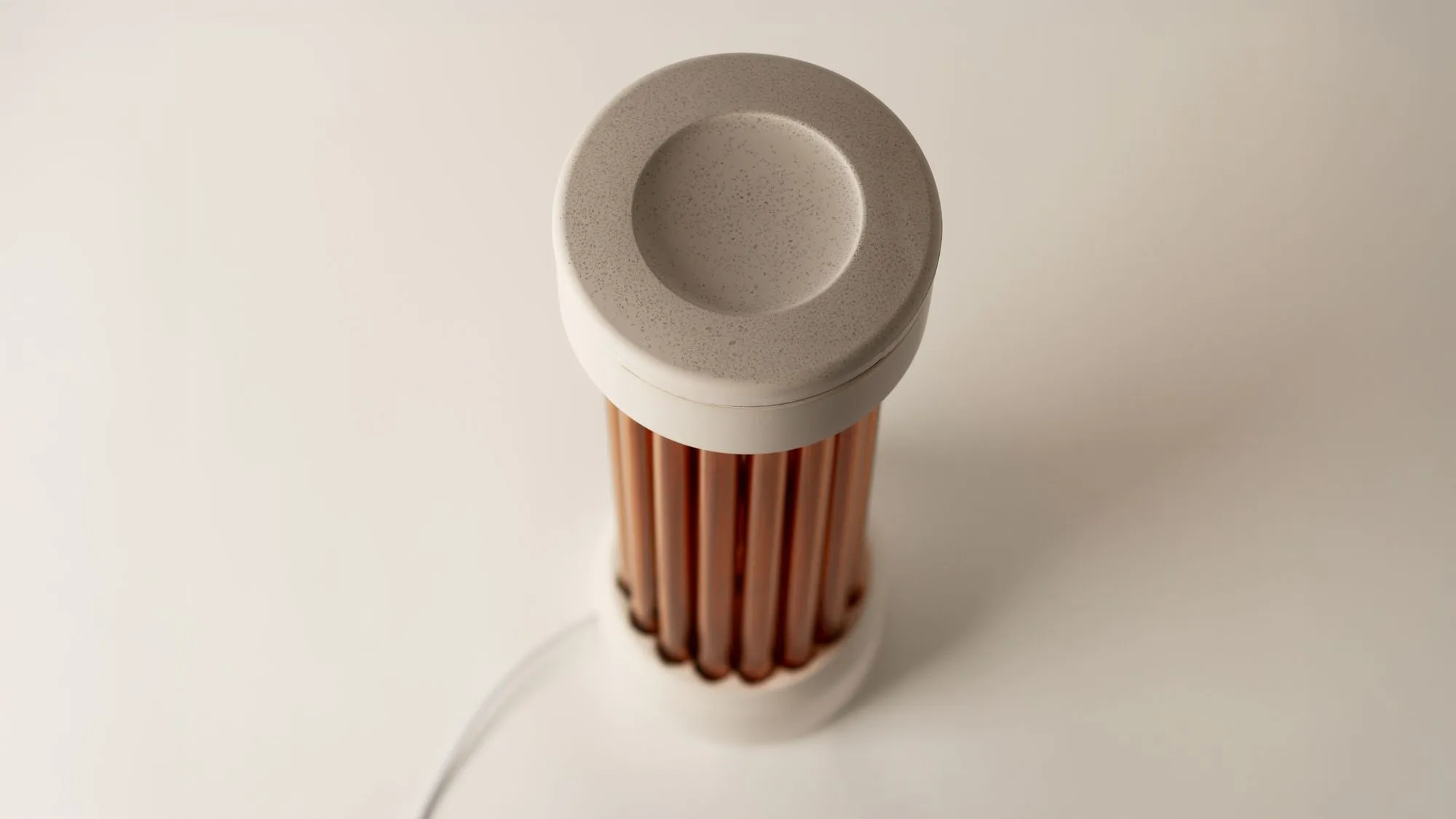
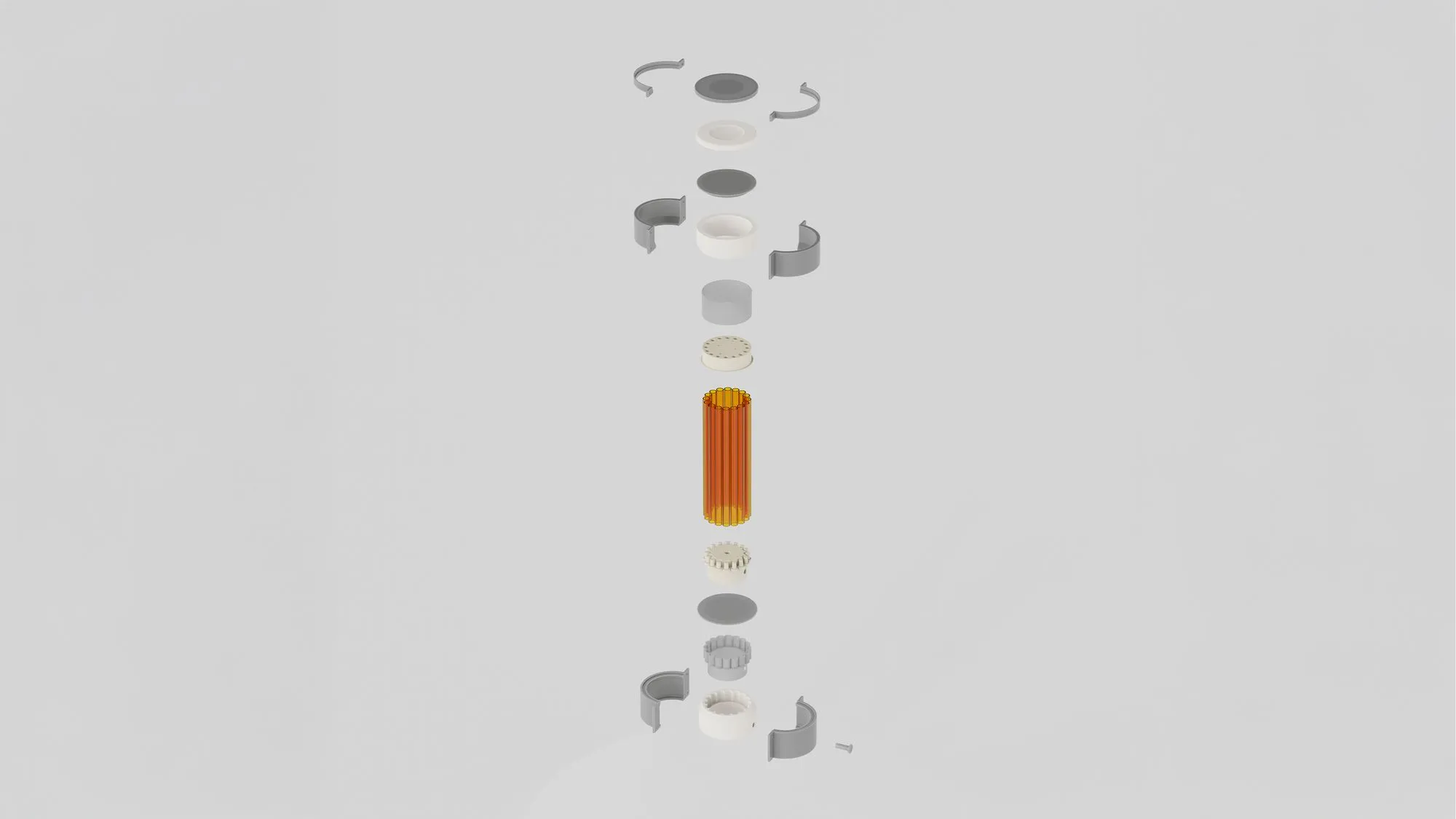
To demonstrate the potential, MIT developed the Geolectric Lantern. The lamp consists of two geopolymer parts connected by a ribbed glass tube. Sensors embedded in the upper section detect proximity and touch. As a hand moves closer, a ring of LEDs intensifies and lights up fully on contact. The design blends the warmth of ceramic-like materials with intuitive digital interaction.
New Applications Across Design Disciplines
Geopolymers open new opportunities for architects and interior designers. They can form interactive wall panels, smart surfaces and durable outdoor elements that hide and protect electronics. Product and interaction designers can create devices that feel more tactile and crafted than plastic housings. Automotive designers may also benefit from heat-resistant, impact-resistant components with integrated sensing. Even packaging designers could explore low-energy-cured protective casings for electronic products.
The material still needs wider industrial adoption, as production methods differ from concrete or ceramic manufacturing. However, its low-carbon processing, circular potential and compatibility with embedded electronics give geopolymers strong future promise. Geolectric hints at how ceramic-like materials may support the next generation of sustainable electronic products and smart environments.
Source: MIT / Dezeen

Comments