Integrating Electrical Functions into Components: Fraunhofer IWU Advances WEAM Technology
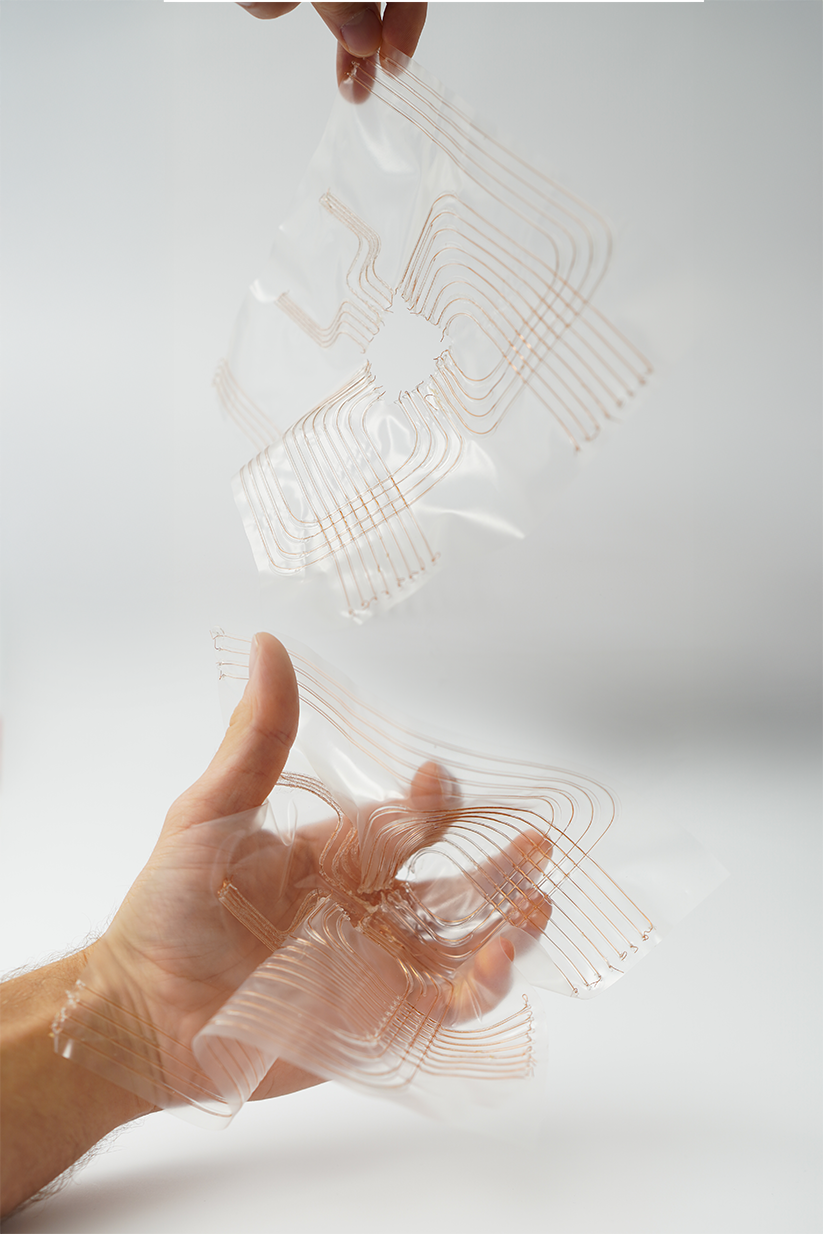
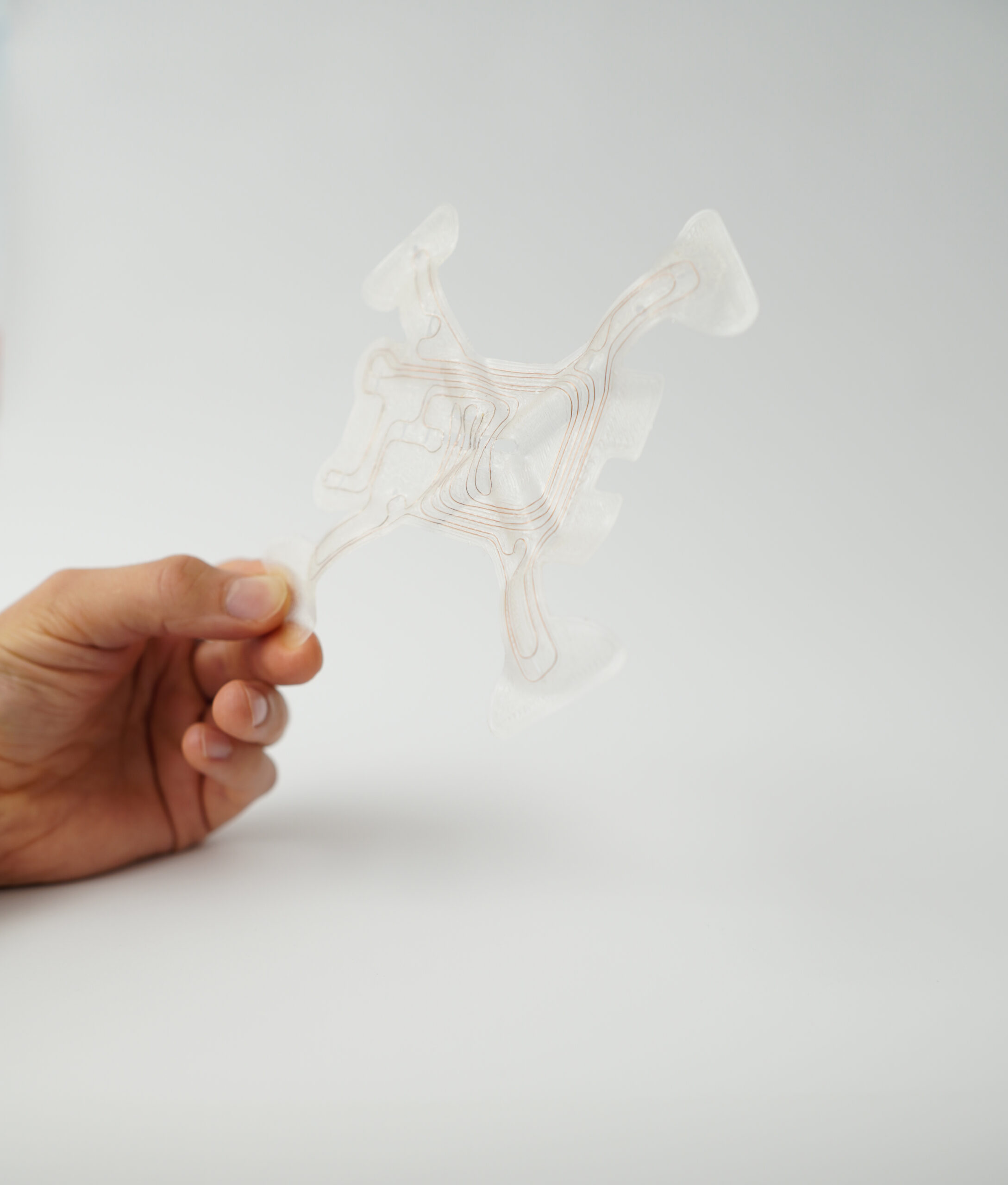

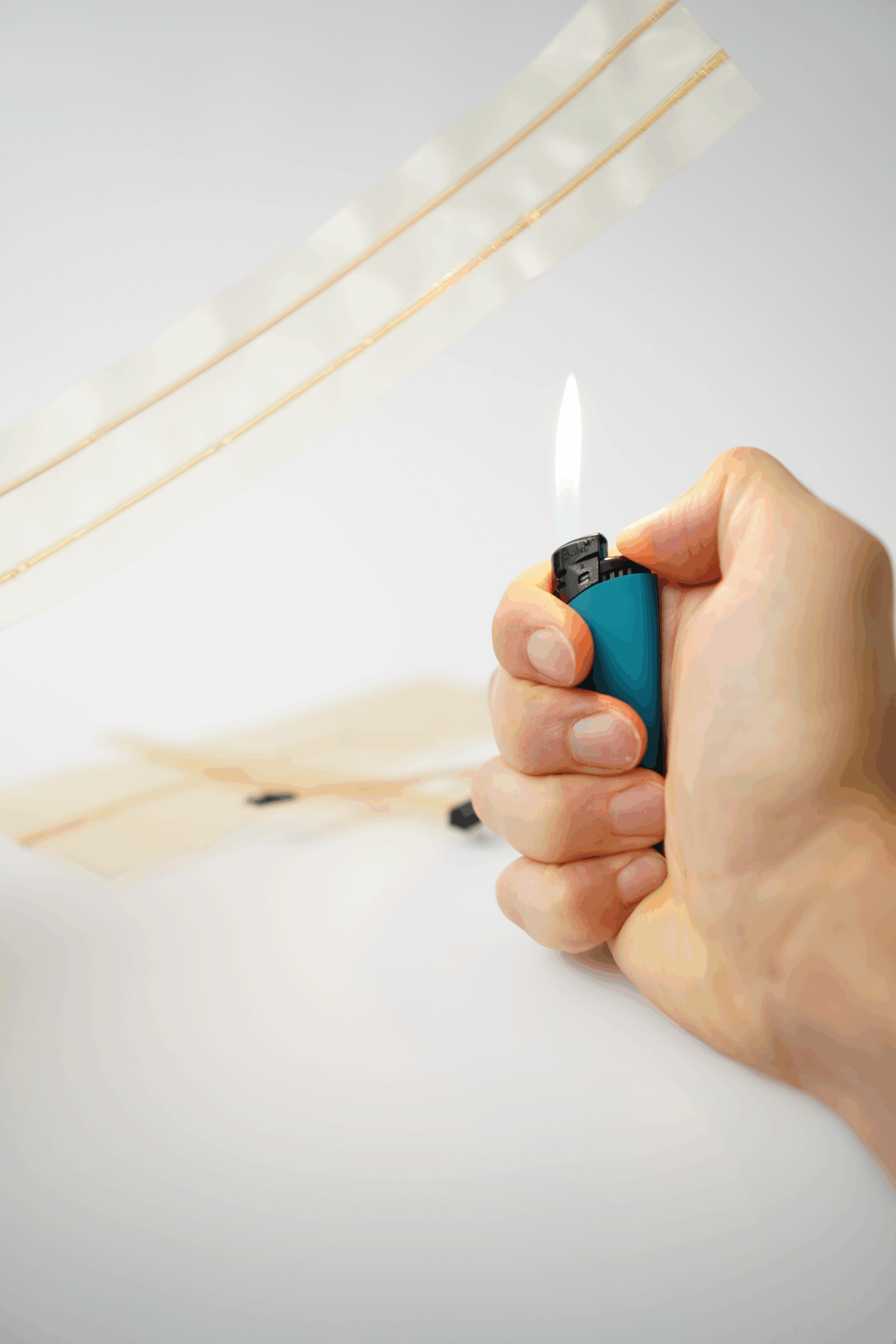
At Formnext 2025, the Fraunhofer Institute for Machine Tools and Forming Technology (IWU) showcased the newest version of its Wire Encapsulating Additive Manufacturing (WEAM) technology. WEAM prints continuous wires directly onto or into components. Because the wires use stable alloys and consistent conductor geometry, they offer reliable electrical performance. This gives designers a more robust alternative to paste-, ink- or powder-based printed electronics.
The method lets engineers choose the alloy, wire diameter and layout to control electrical behaviour. They can build in power lines, sensors, heating elements and coils, either on existing parts or inside new ones. At the event, Fraunhofer IWU demonstrated a series-ready printhead integrated into a commercial CR3D system.
Radome Heating and Surface Functions
One demonstration focused on heating systems for automotive radomes, which protect radar sensors. These parts must remain ice-free but still allow radio waves to pass through. Traditional heating foils limit the shape of the component. With WEAM, researchers printed heating wires onto a thin foil and shaped it afterwards without losing performance. This approach reduces material use and avoids delamination. It also offers higher energy efficiency, which is important for electric vehicles. Similar solutions can support drones, aircraft and sensor housings that operate in cold or harsh environments.
Flexible and Formable Printed Circuits
Fraunhofer IWU also presented flexible and stretchable printed circuits. The team printed conductor traces onto very thin thermoplastic polyurethane (TPU) films. These circuits can stretch and deform in three dimensions, while conventional flexible PCBs often fail under such conditions. TPU combines elasticity with durability, which makes the circuits useful for wearable devices, interior surfaces, and lightweight automotive components. Designers can laminate the films onto textiles, nonwovens, wood or composite materials, which expands the range of possible applications.
PFAS-Free High-Temperature Conductors
The institute introduced PFAS-free flexible conductors as well. These conductors resist temperatures up to 260°C. Conventional high-temperature circuits often rely on polyimide films that include fluorinated coatings. WEAM removes the need for such coatings by bonding the conductor with the same thermoplastic used in the substrate. The result is strong mechanical stability, lower material use and better recyclability. This makes the technology suitable for high-temperature zones in cars, aircraft and industrial machinery.
Functional Component Housings
Another demonstrator showed a drone housing that doubles as a printed circuit board. The team integrated coils, sensors and electromagnetic shielding directly into the housing. This reduces assembly steps and overall weight. It also allows more compact and efficient product layouts, which can benefit both consumer devices and industrial electronics.
Source & photos: Fraunhofer IWU

Comments