MaterialDistrict Utrecht 2026 presents NextNow: the latest material innovations for a future-proof built environment
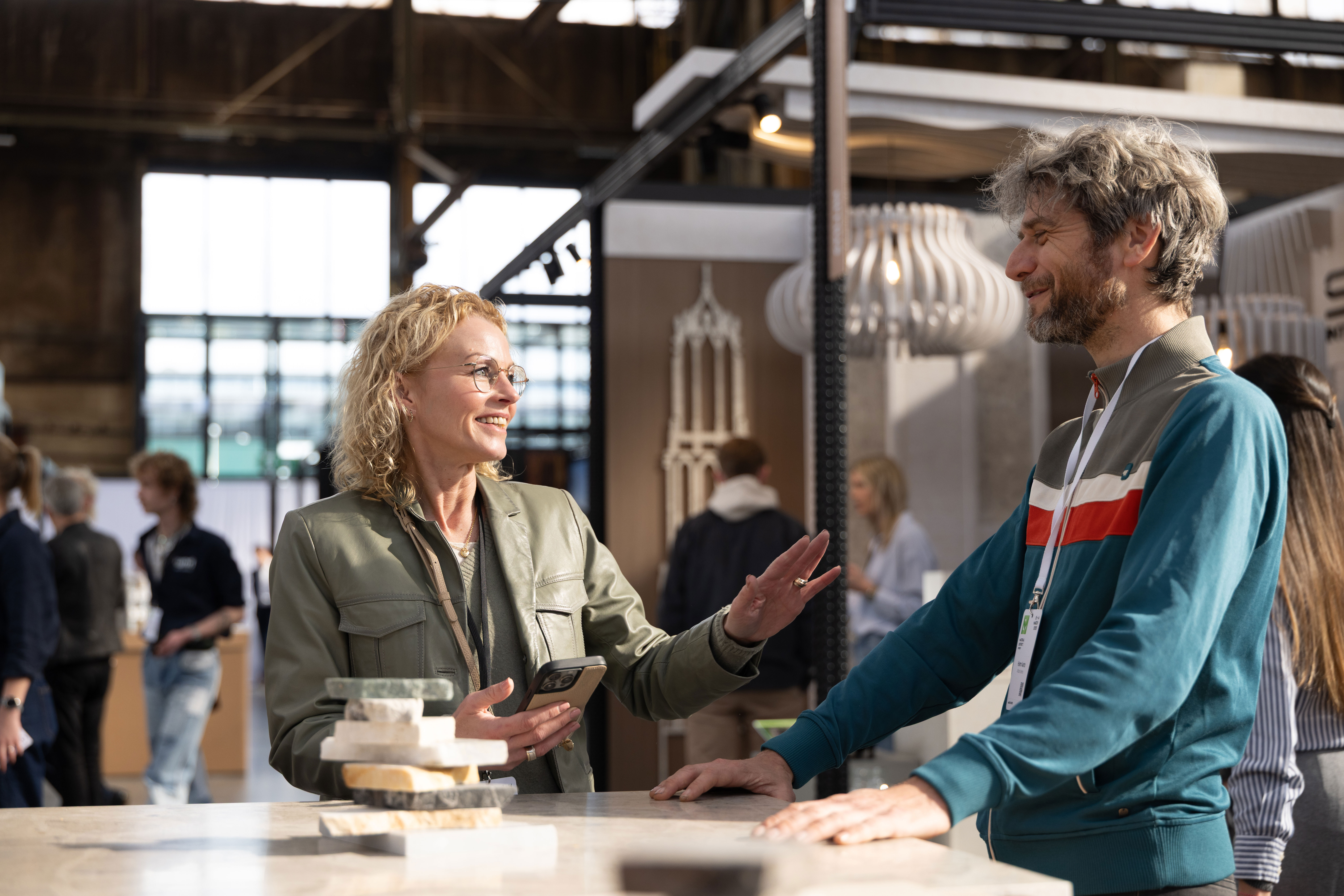
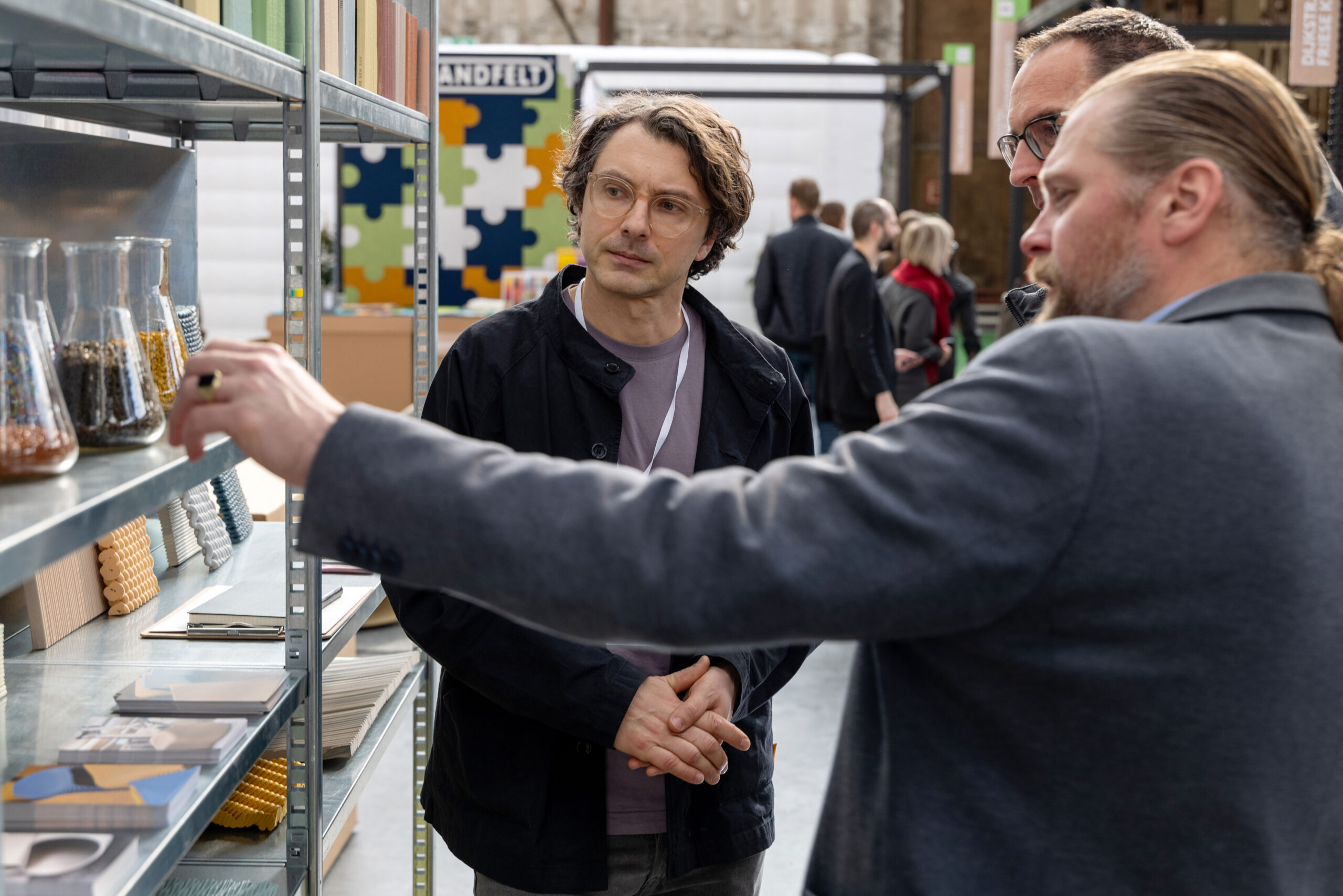

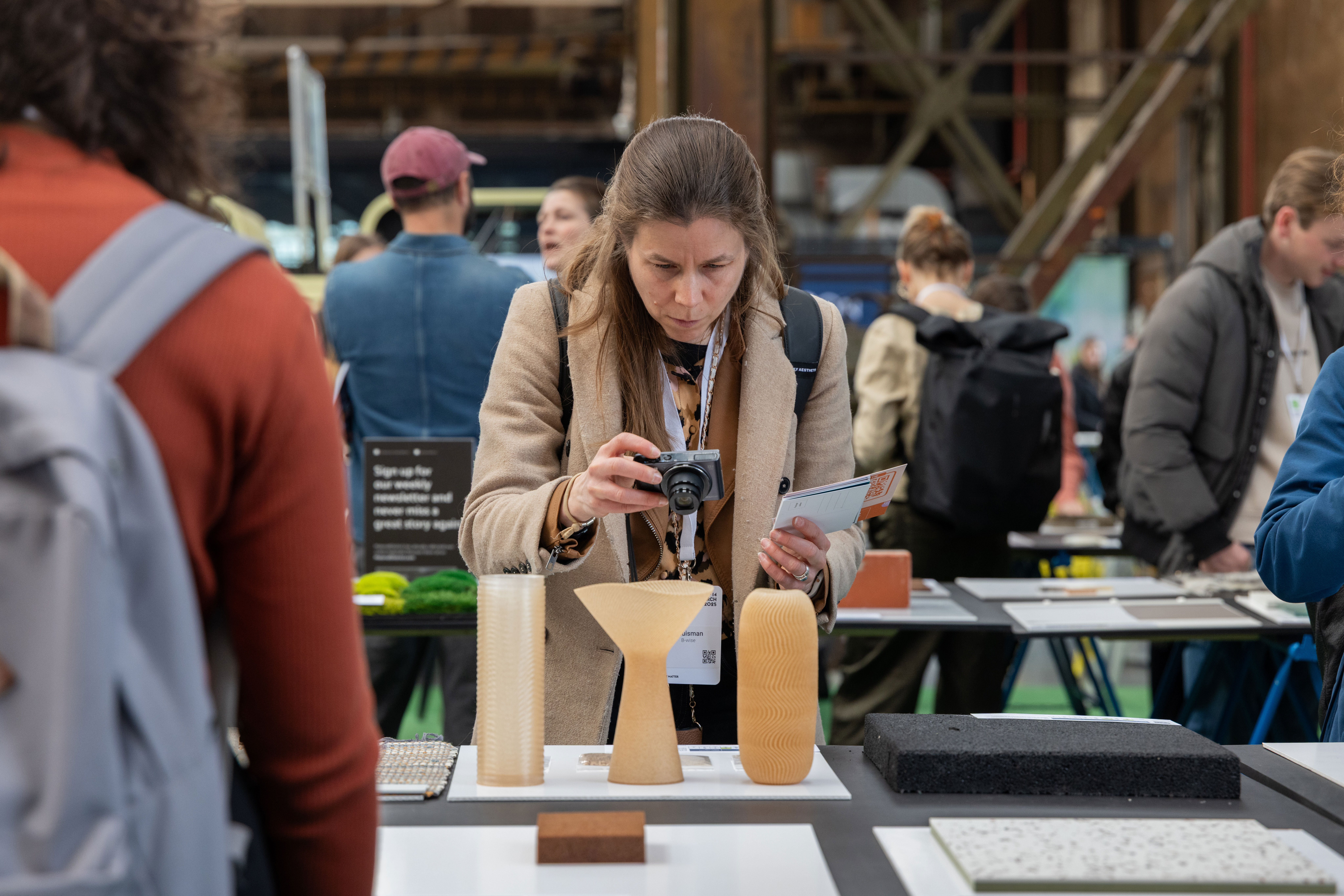
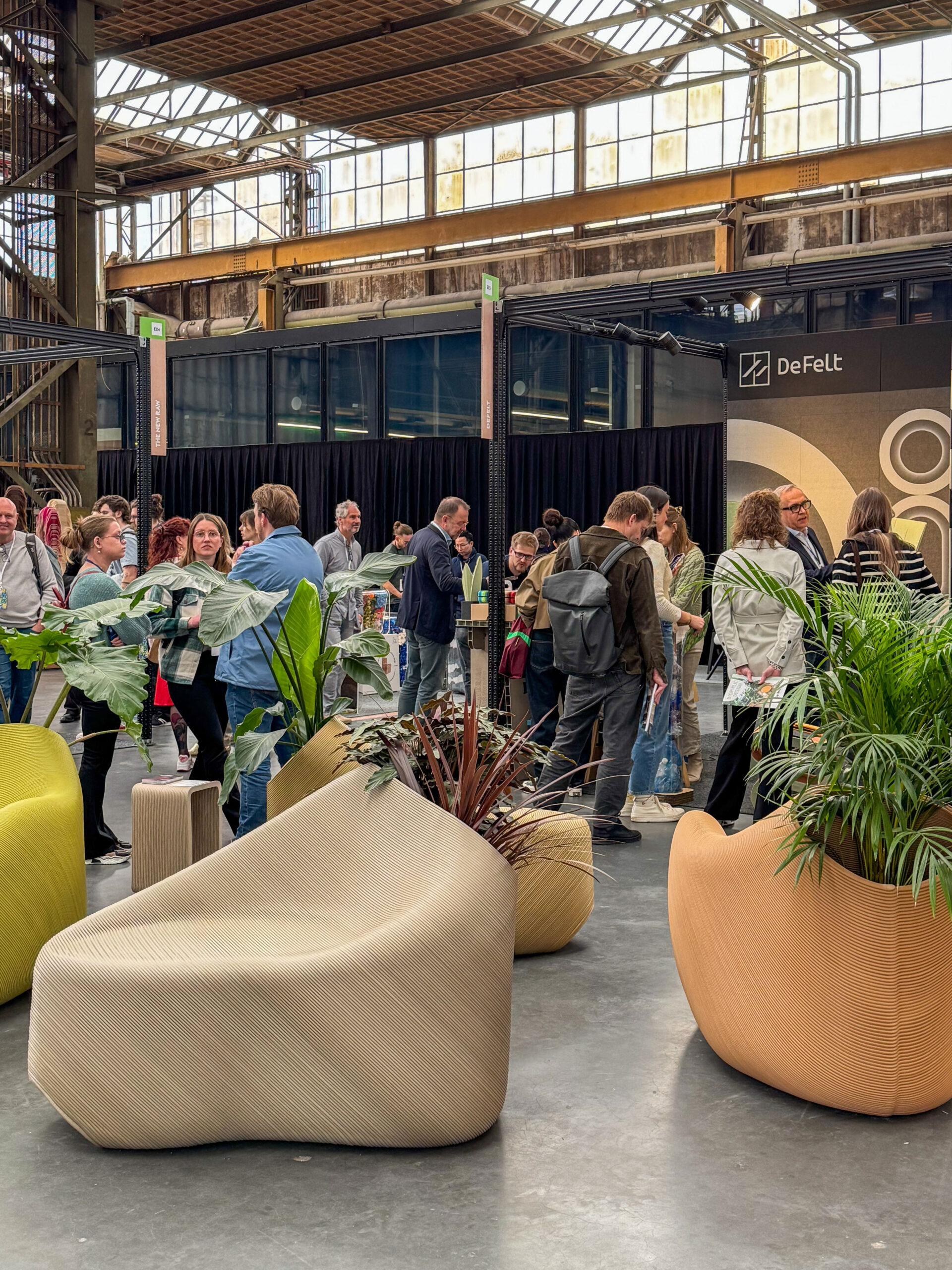
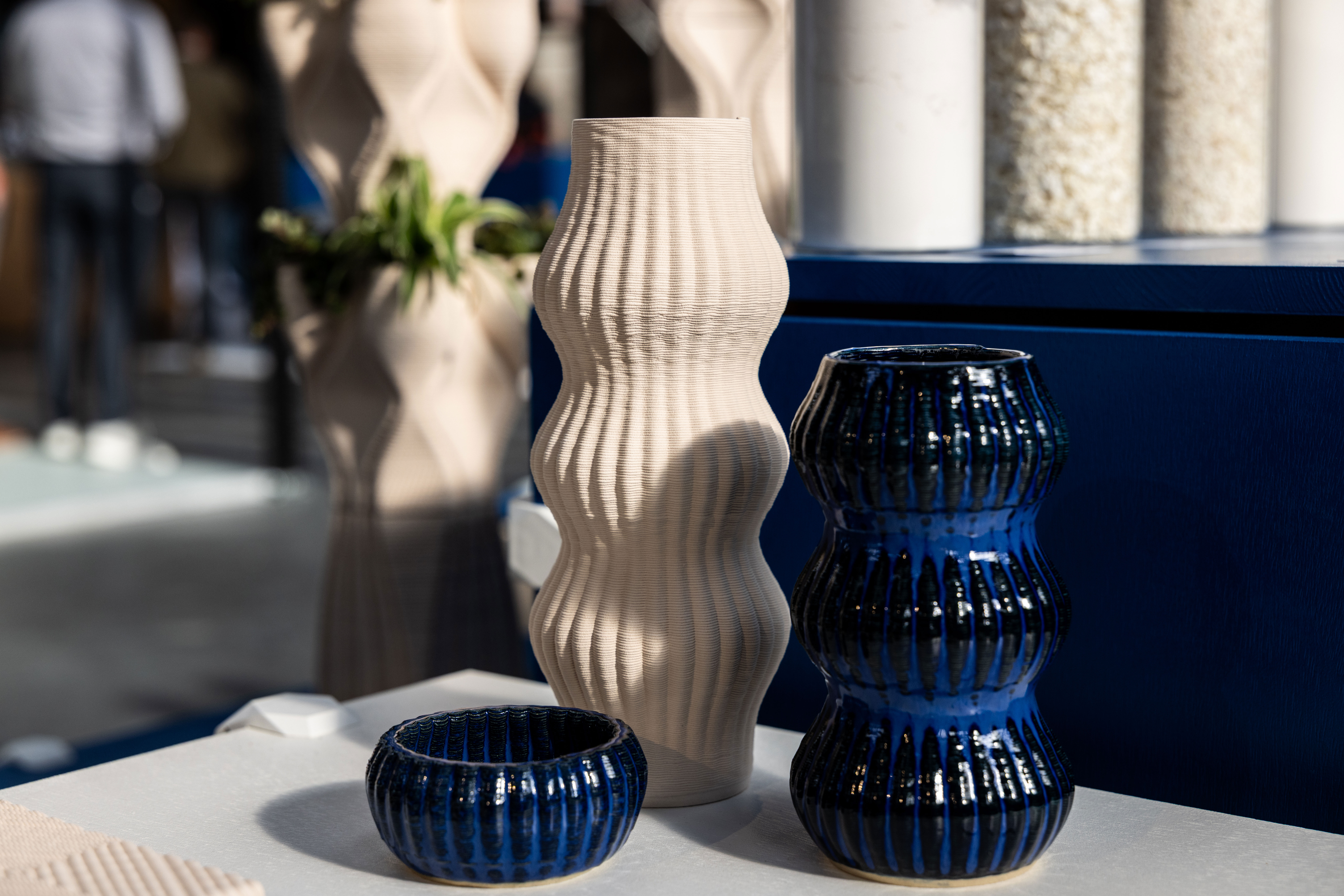
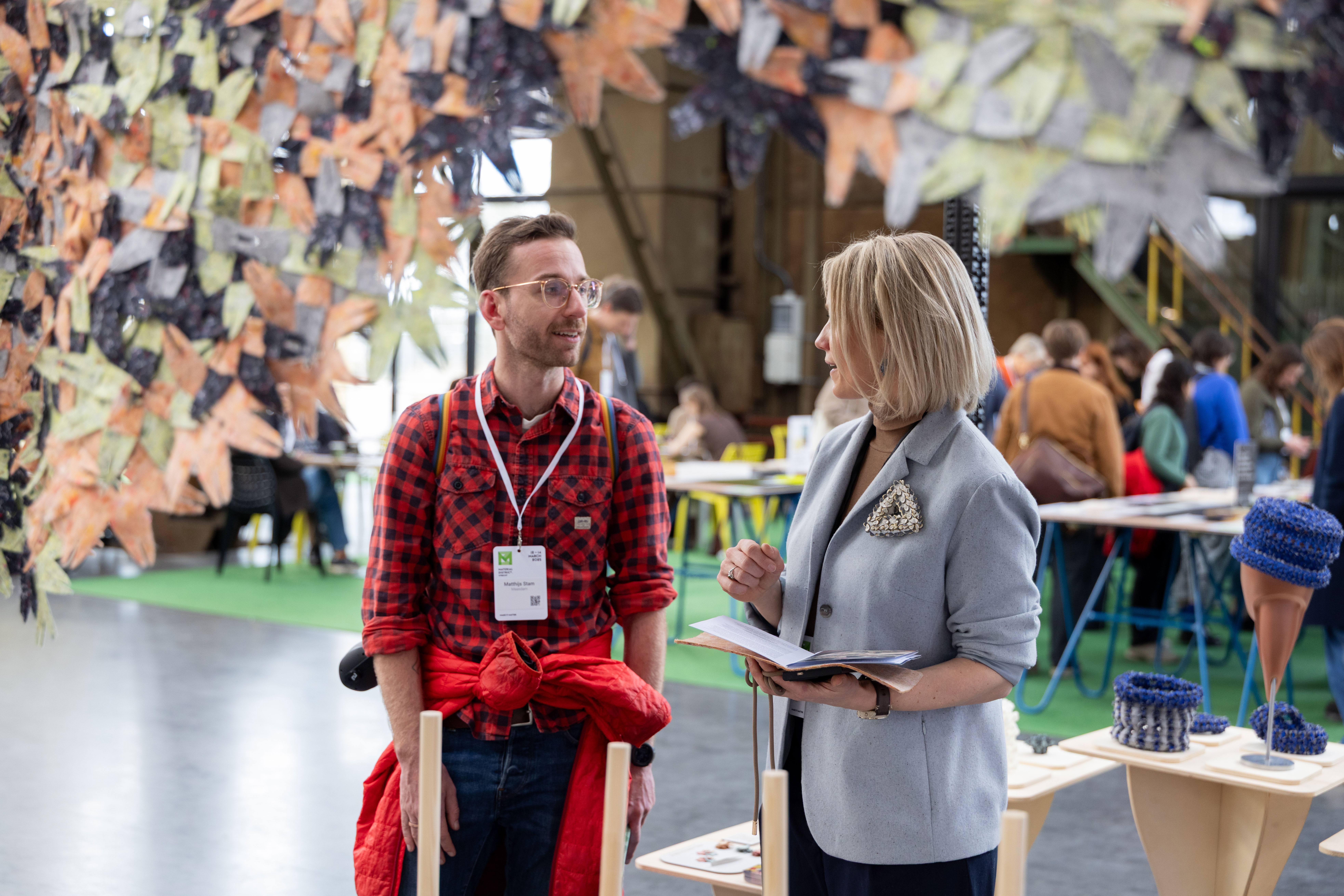
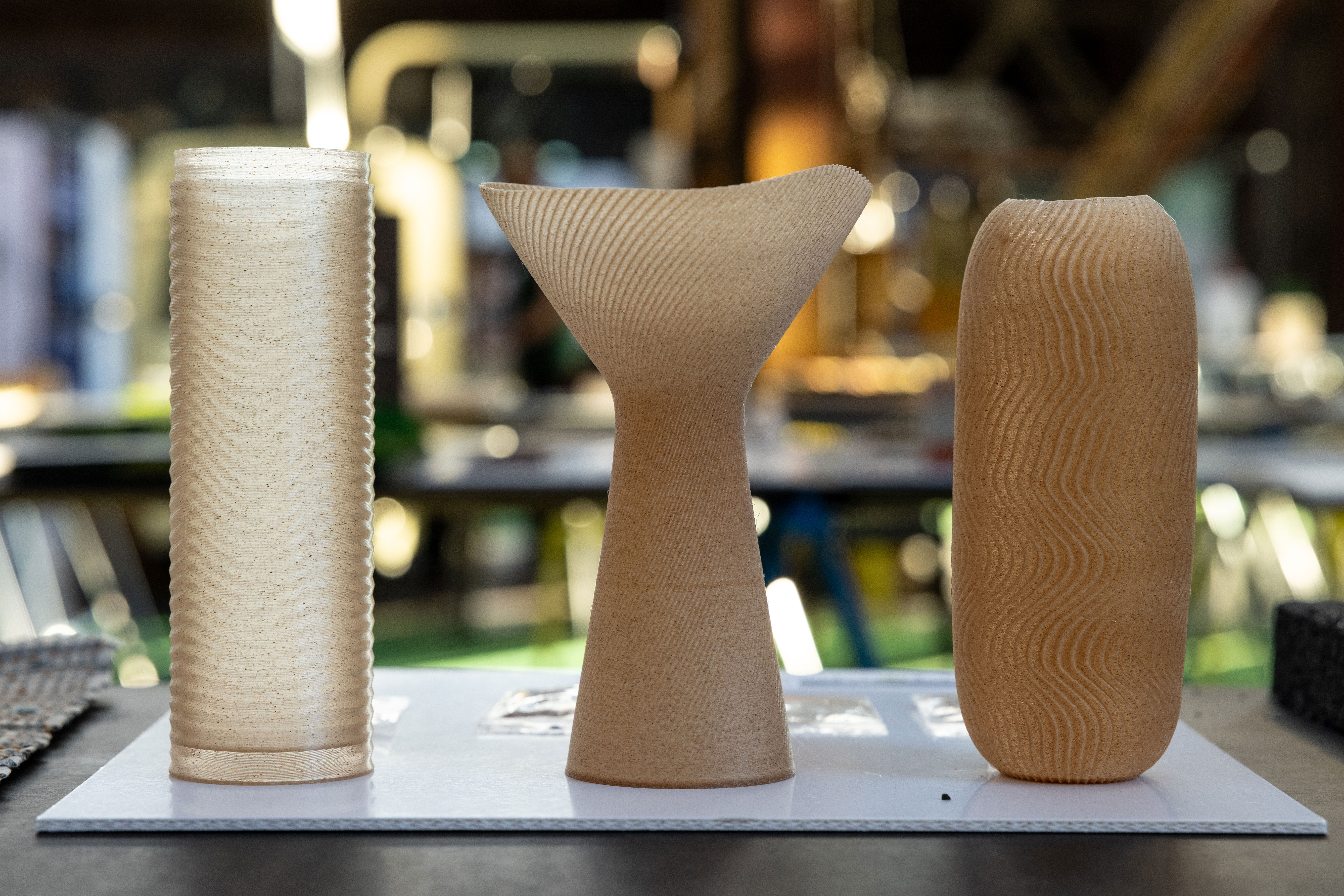
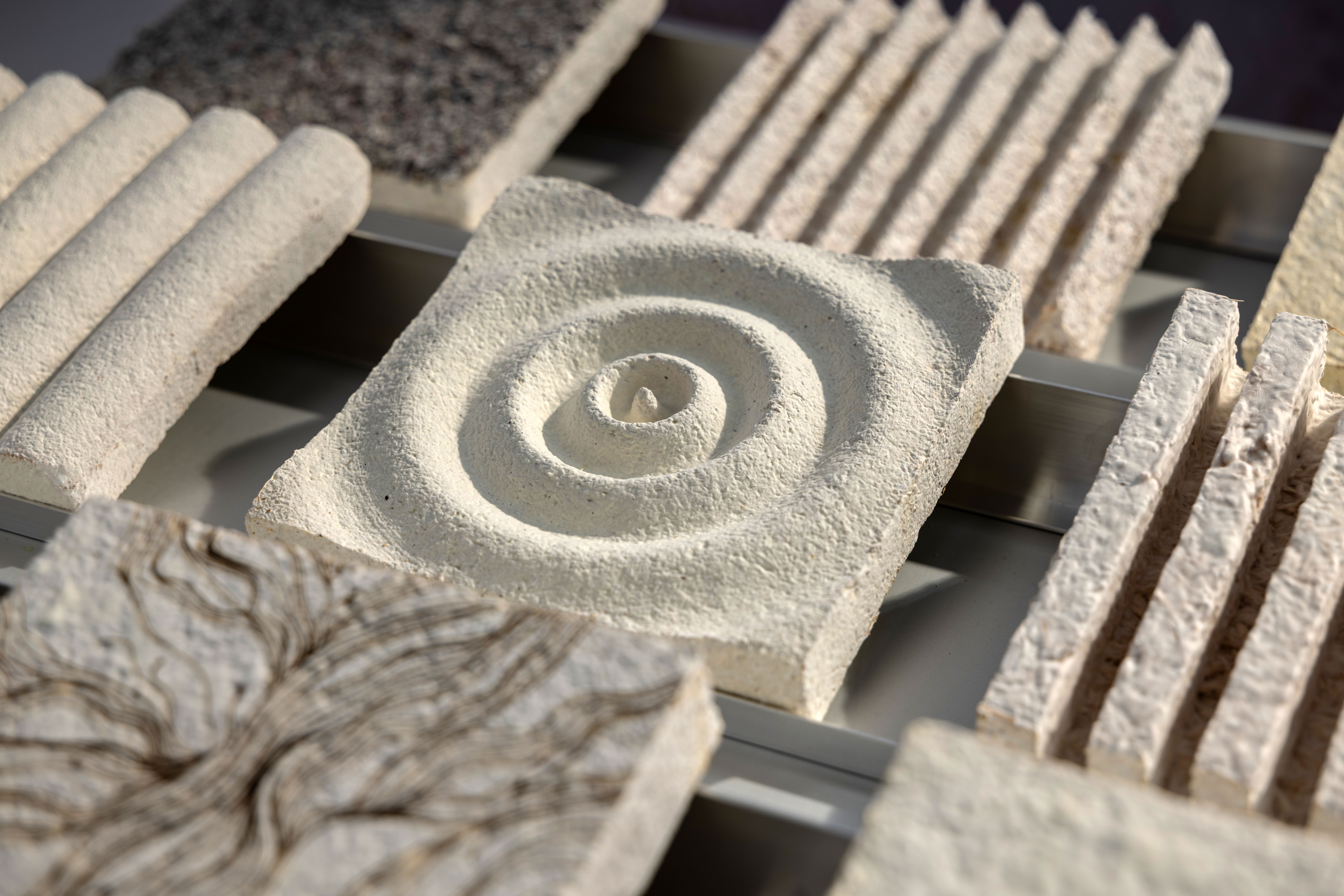
From 4 to 6 March 2026, the 19th edition of MaterialDistrict Utrecht will take place at the Werkspoorkathedraal in Utrecht. This year’s edition centres on NextNow: materials and solutions that are no longer future concepts, but already applicable today within architecture, interior design and the public realm.
With this focus, MaterialDistrict positions itself explicitly as a platform supporting designers in the transition towards a more sustainable built environment. The challenge today lies not so much in the lack of alternatives, but in their broader adoption. NextNow demonstrates that a mature generation of materials is already available for use in real projects — biobased, circular and with a demonstrably lower environmental impact.
This thematic line runs consistently throughout the exhibition floor, the materials exhibition and the lecture programme. Not to speculate about distant future scenarios, but to inspire designers, architects and clients with solutions that can make a difference now.
An international and content-driven mix of exhibitors
Alongside many returning participants, MaterialDistrict Utrecht 2026 will also present a notably strong group of new, international exhibitors. This further underlines the event’s role as a platform where innovative materials from both the Netherlands and abroad find their way into Dutch design practice.
One of the most striking participants is Front Materials (NL), known for their radical reinterpretation of ceramics and masonry. With products such as Skip Tile and WasteBasedBricks, Front demonstrates how industrial waste streams can be transformed into aesthetically refined, directly applicable building materials — with a significantly reduced CO₂ footprint and water consumption. Their work shows how circularity has moved beyond experimentation and is becoming part of serious construction projects.
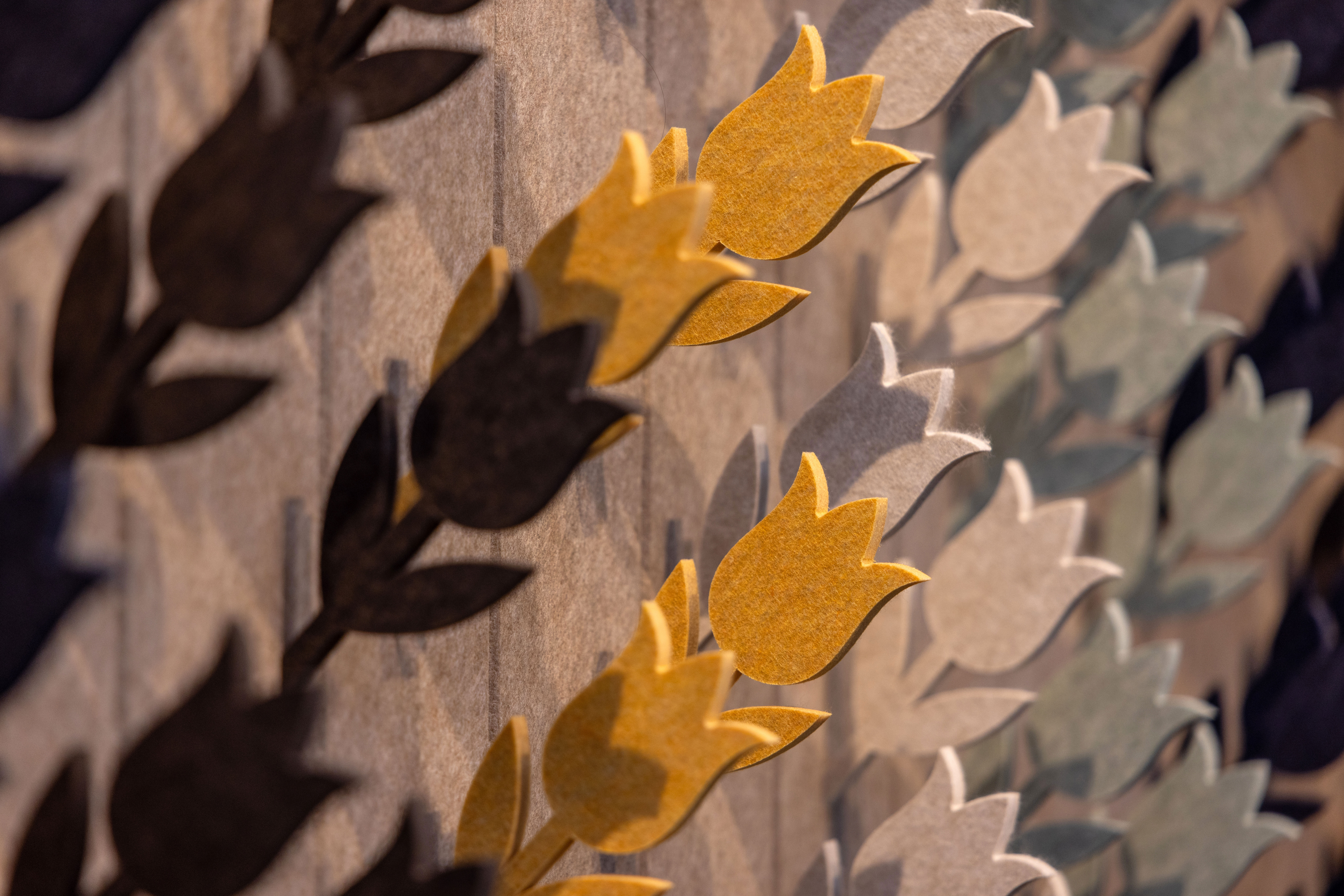
Internationally, this year’s line-up is exceptionally strong. From Thailand, Stelapop presents solid, colourful panel materials made from textile waste. Each panel consists largely of recycled textile fibres and combines expressive aesthetics with measurable environmental benefits. The material is suitable for furniture, walls and interior elements, illustrating how upcycling can lead to entirely new material typologies.
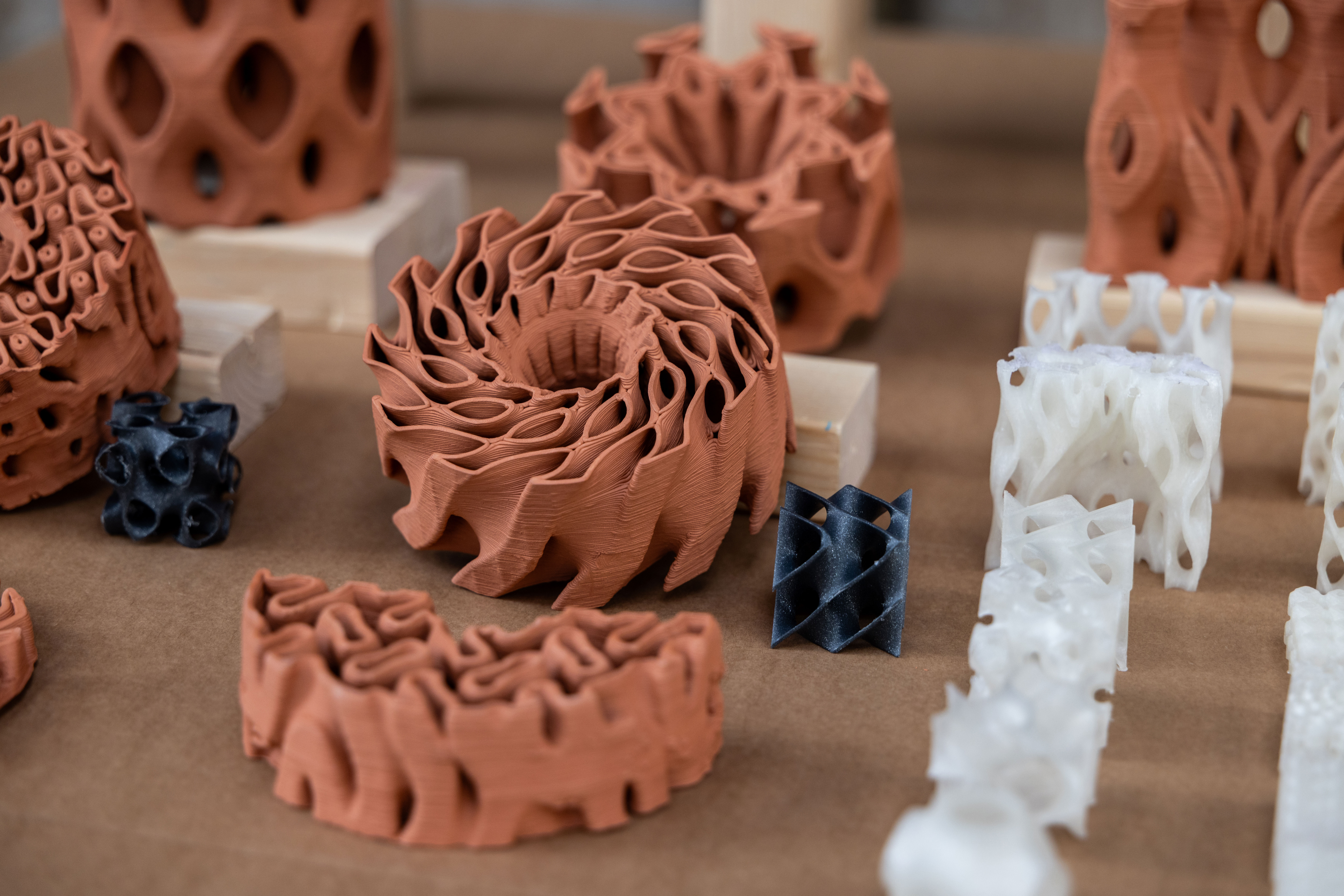
From Malta, Ambitious participates as a research and design platform that connects digital fabrication with craftsmanship and material research. Working at the intersection of 3D printing, ceramics and textiles, Ambitious explores how digital production can be not only more efficient, but also richer in content and sensory experience.
From the United Kingdom, Newmor Wallcoverings presents a strong narrative around local production, customisation and circular approaches to wall finishes. As one of Europe’s largest independent wallcovering manufacturers, Newmor demonstrates how traditional craftsmanship and contemporary sustainability ambitions can go hand in hand.
Together with many other exhibitors, MaterialDistrict Utrecht 2026 offers a broad and inspiring overview of materials that are not only innovative, but above all ready for application. Materials that align with the central theme NextNow: solutions that already exist — and are now finding their way into architecture, interiors and the built environment.
Lecture programme – publications, depth and new perspectives
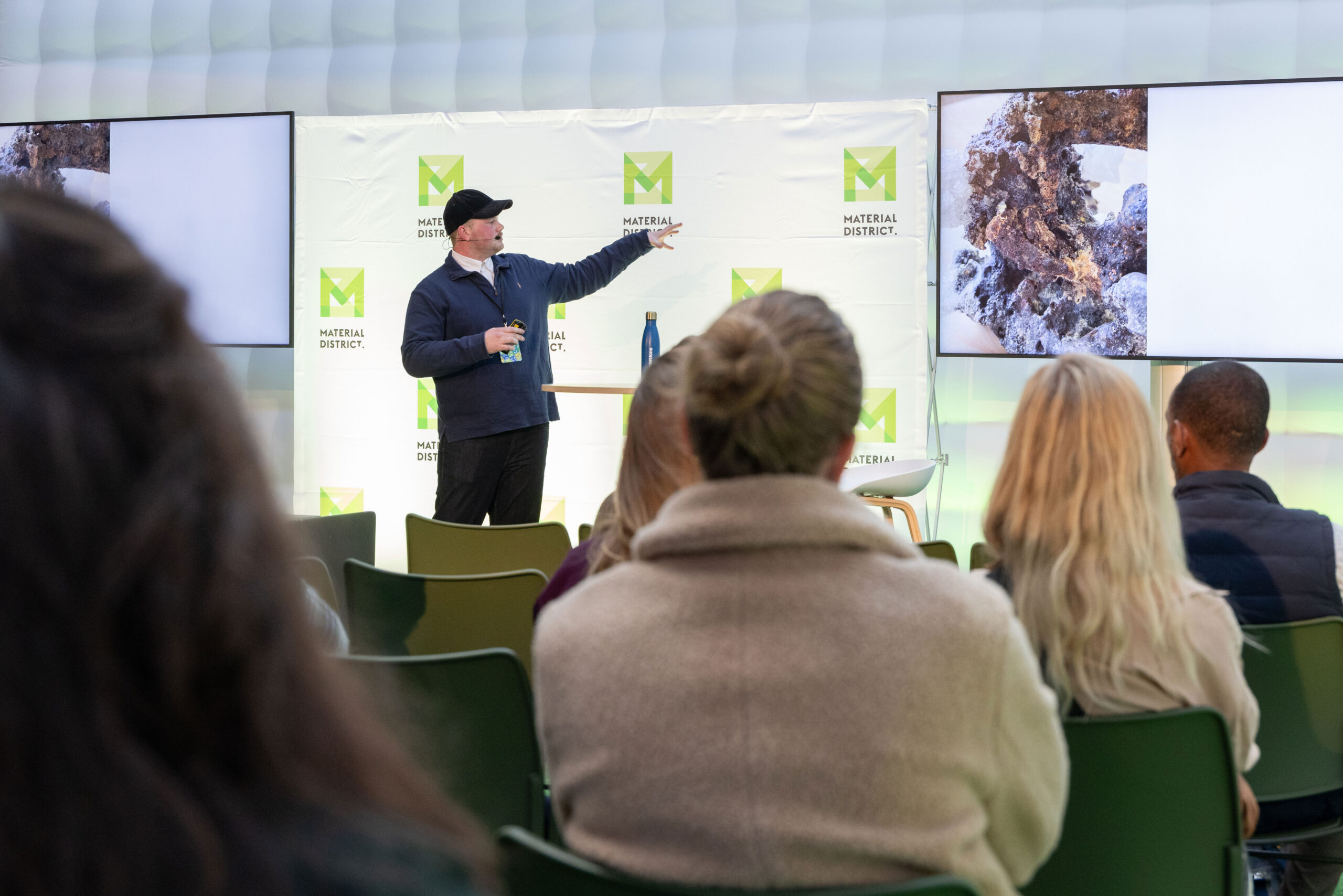

In addition to the exhibition floor, MaterialDistrict Utrecht 2026 offers an extensive content-driven programme across two theatres, spread over three days. The programme combines in-depth knowledge, reflection and new perspectives on materials and design.
Publications as an intellectual foundation
One of the theatres focuses on knowledge sharing, with a programme directly connected to MaterialDistrict’s publications. Around the recently published book The Timber Truth, a one-day programme will be organised under the title Tomorrow’s Timber Talks – The Timber Truth Sessions. Architects and experts will discuss the facts behind timber construction, critically addressing persistent assumptions through research and international case studies.
The programme is led by Pablo van der Lugt, author of The Timber Truth, and features contributions from, among others, Mei architecten & planners, Team V, RO&AD and Orange Architects. The sessions are designed as in-depth content for architects and align with professional development and continuing education within the field.
In addition, attention is given to biobased and recycled materials in the context of the development of the Biobased Materials Guide and the Recycled Materials Guide. Lectures and discussions explore the applicability of these materials and the role they play in a future-proof design practice. The content presented in the theatre directly connects with what visitors can see and experience on the exhibition floor and in the materials exhibition.
Experimentation, circularity and new voices
The second theatre offers space for experimentation and new perspectives. The Young Talent Programme, curated by Leonne Cuppen, presents a selection of recently graduated designers working with innovative materials, biobased applications and new production processes. Their work is shown both in the exhibition and in the theatre.
Under the title The Leather Lectures, moderated by Simone de Waart, the programme also focuses on leather as a circular material. These sessions explore the reuse of leather residual streams and examine how leather can be applied within sustainable strategies for architecture and interior design.
Across the programme, NextNow themes are further explored through talks and discussions on materials and solutions that are already applicable today. The full lecture programme will be announced in early February.
Live attraction – 3D furniture production on the exhibition floor
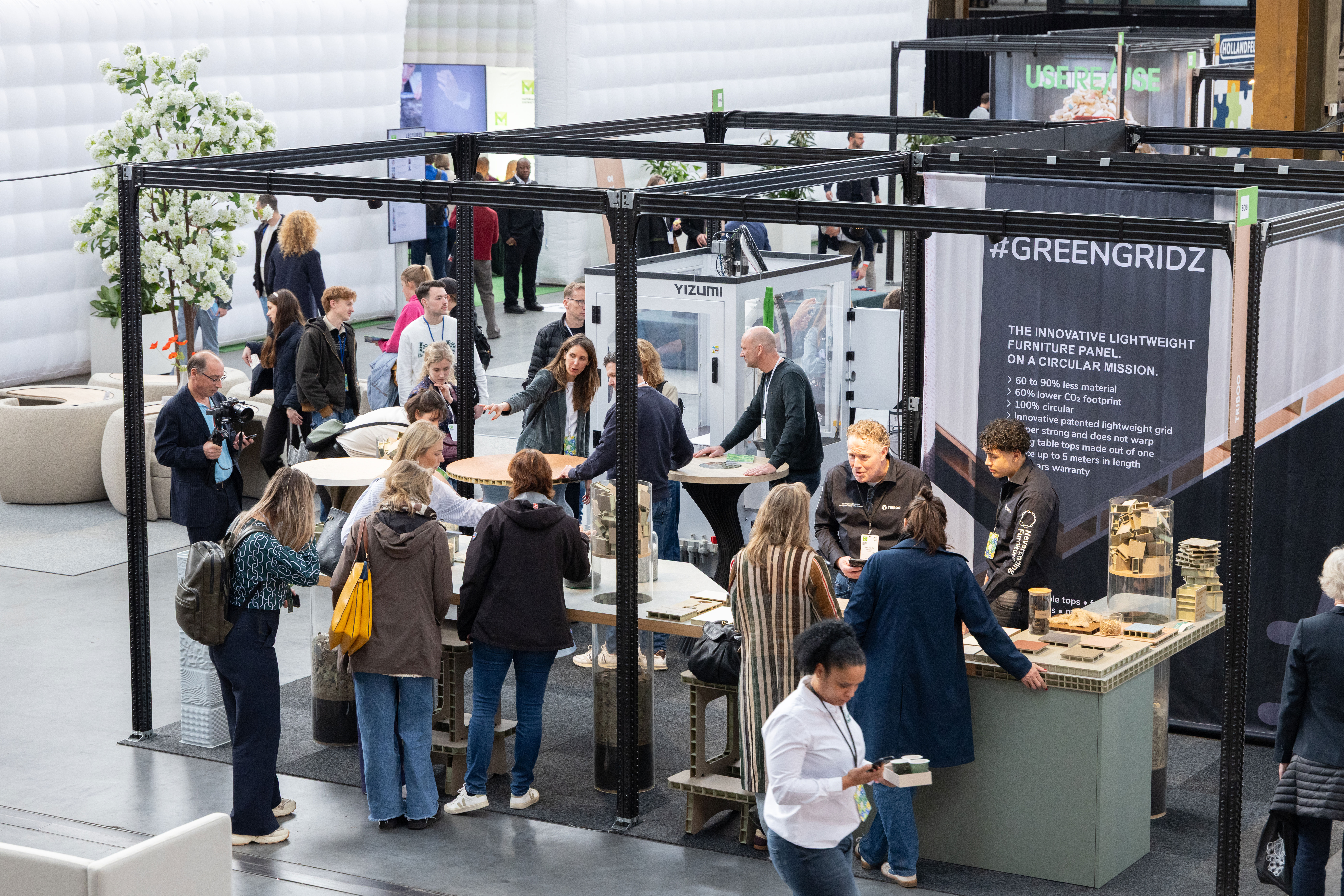
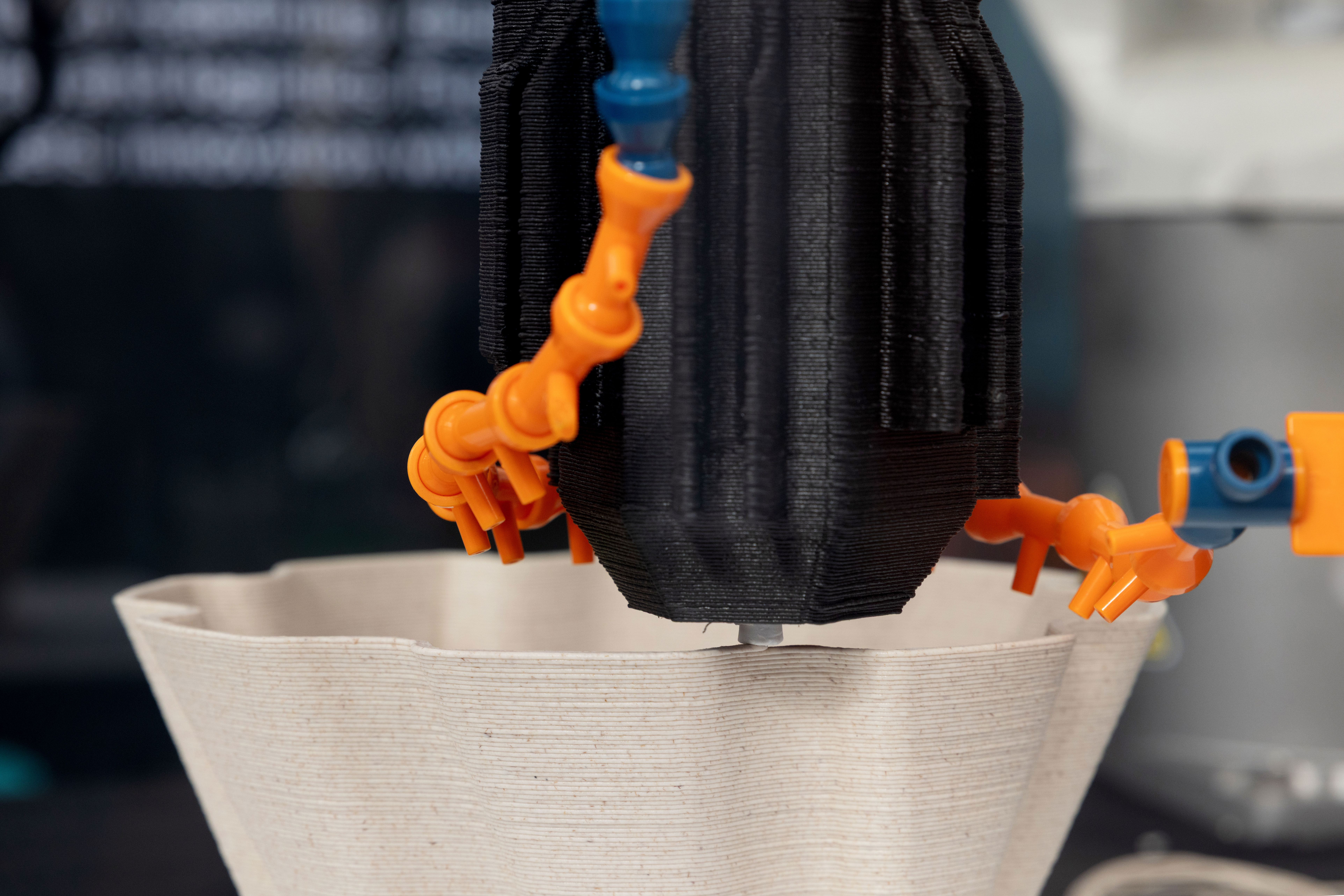
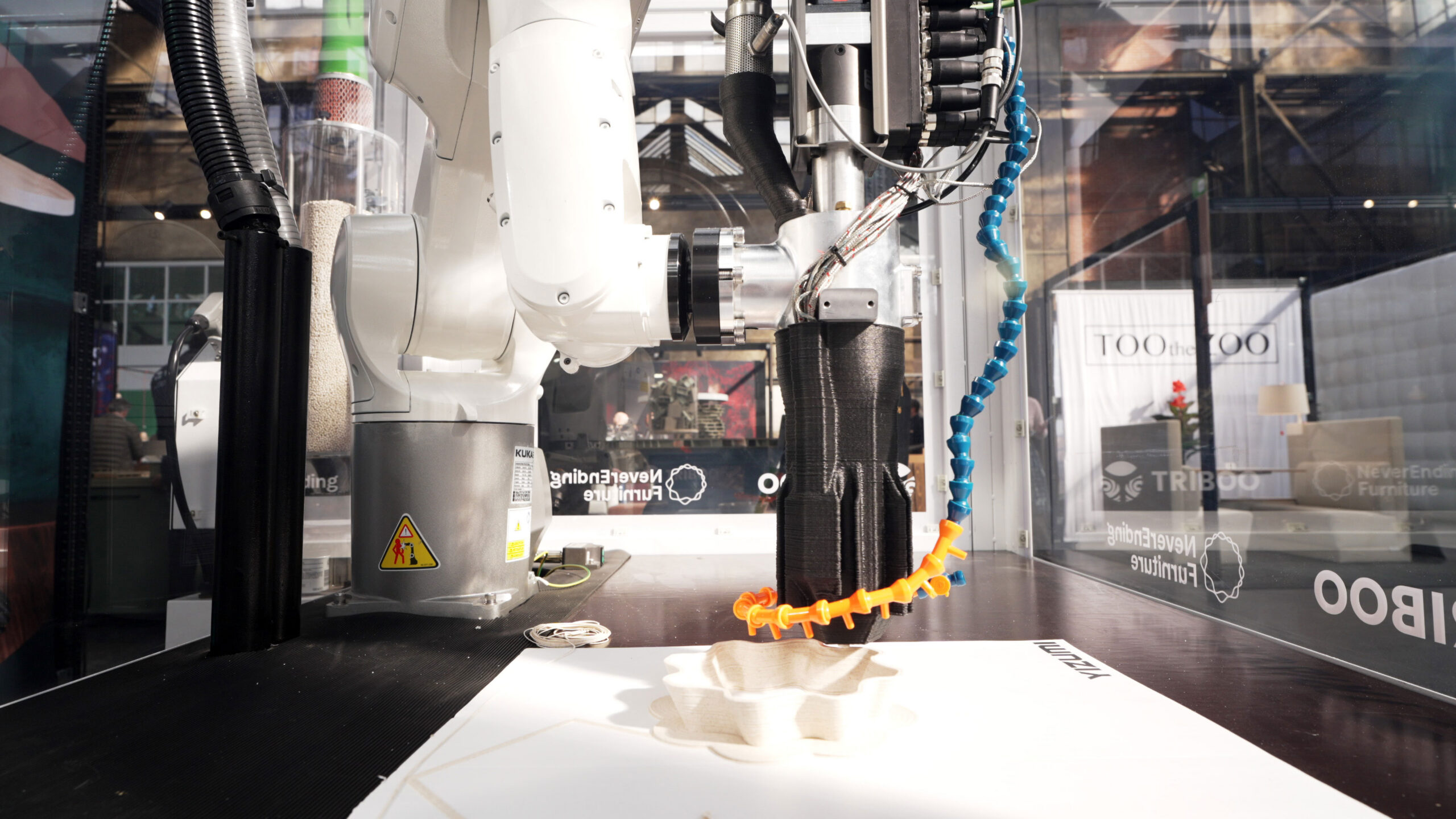
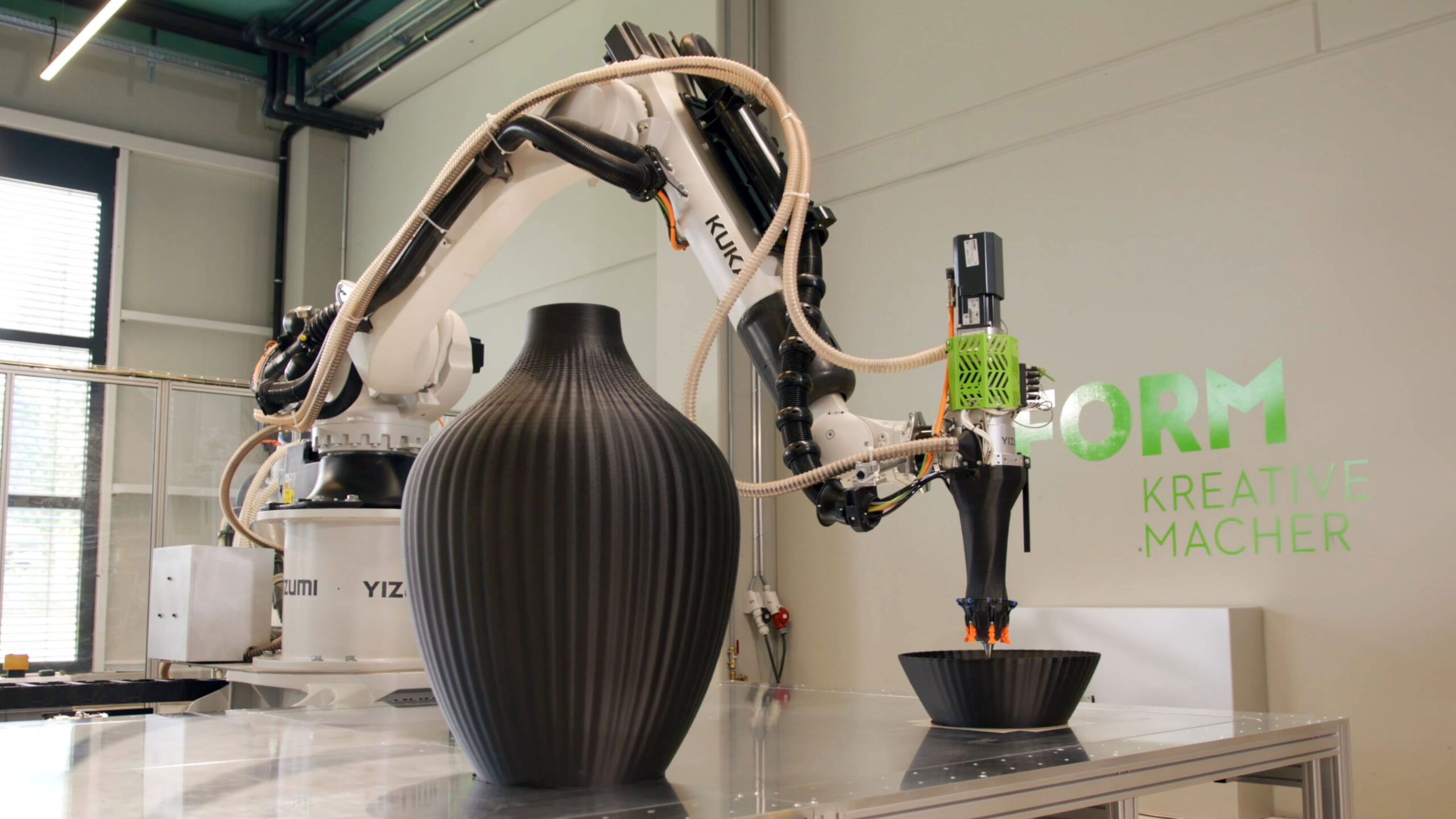
One of the most eye-catching elements of MaterialDistrict Utrecht 2026 is the live 3D furniture production on the exhibition floor. TRIBOO, in collaboration with technology partner YIZUMI, demonstrates how industrial 3D printing technology can be used for circular furniture production.
During the exhibition days, furniture is produced on site using recycled materials. Visitors can observe how digital designs are translated layer by layer into functional objects — without moulds, without stock and without traditional transport. The focus is not on the end product, but on the production process itself.
The installation illustrates how local production, digital distribution and material reuse come together as an alternative to the traditional furniture industry. The live 3D printing robot thus forms a tangible example of the NextNow theme: sustainable production methods that are no longer experimental, but already operational today.
For designers, architects and clients, this offers a rare opportunity to see a circular production system in action, within the broader context of material choices and design practice.
The materials exhibition: material as a starting point
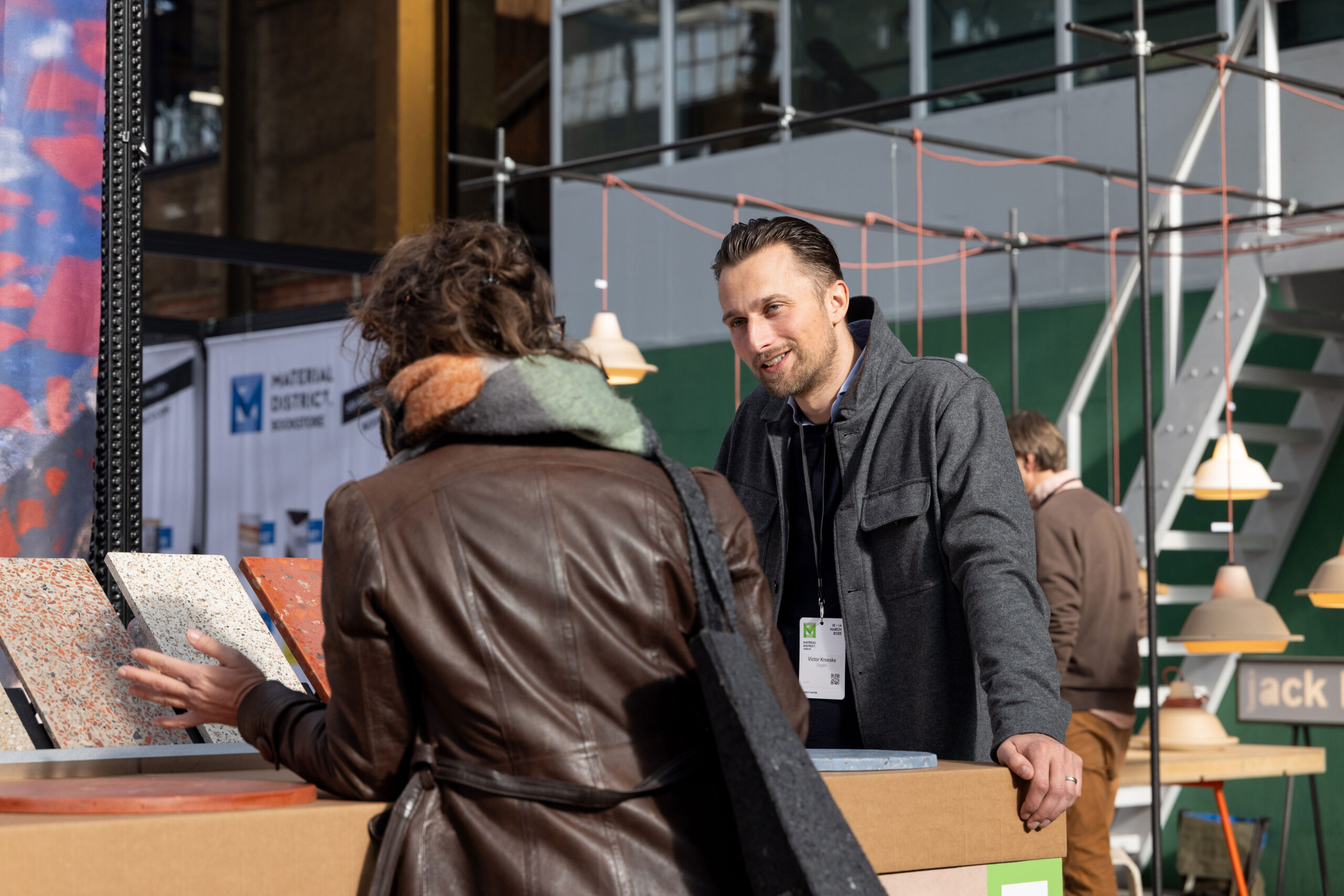
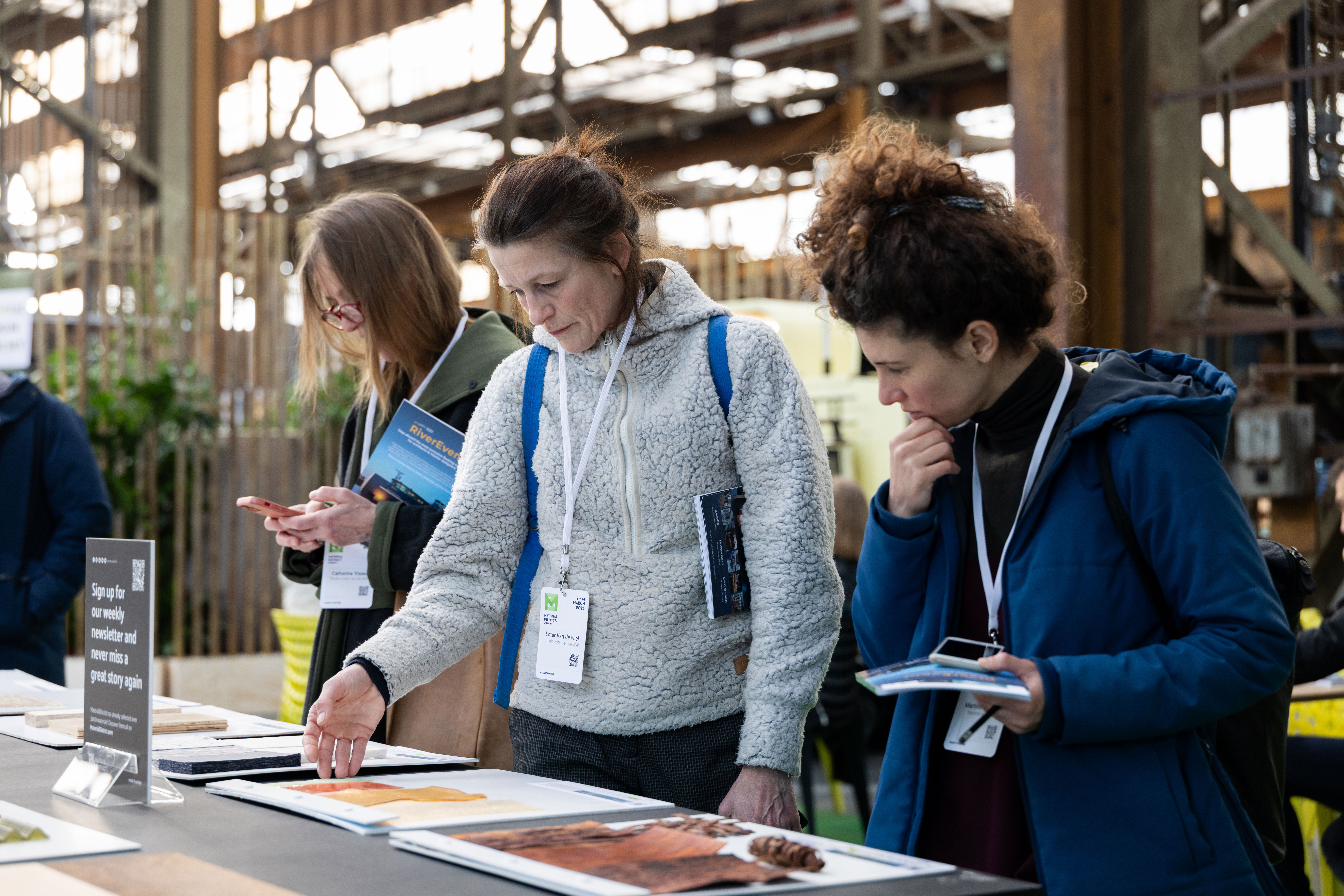
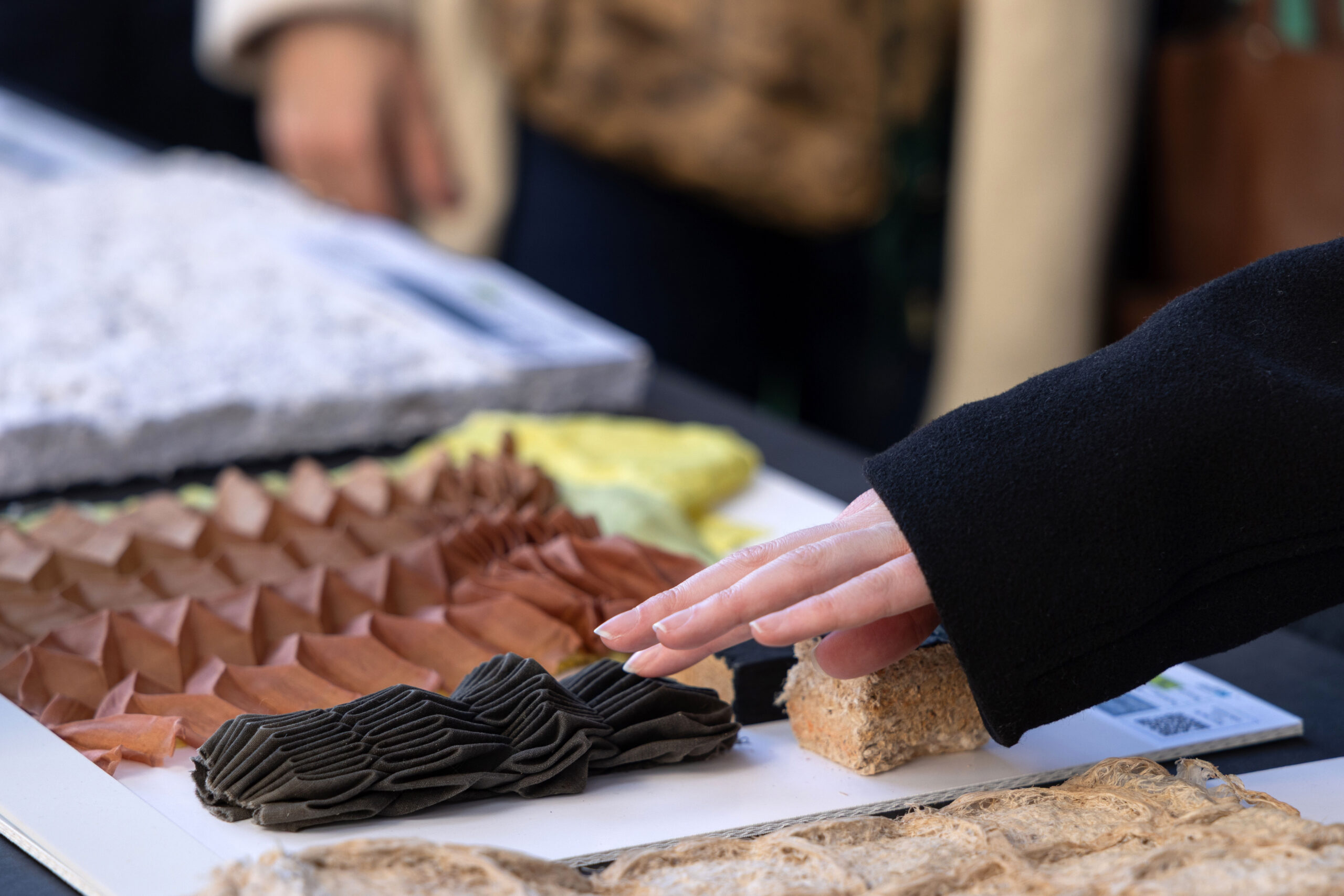
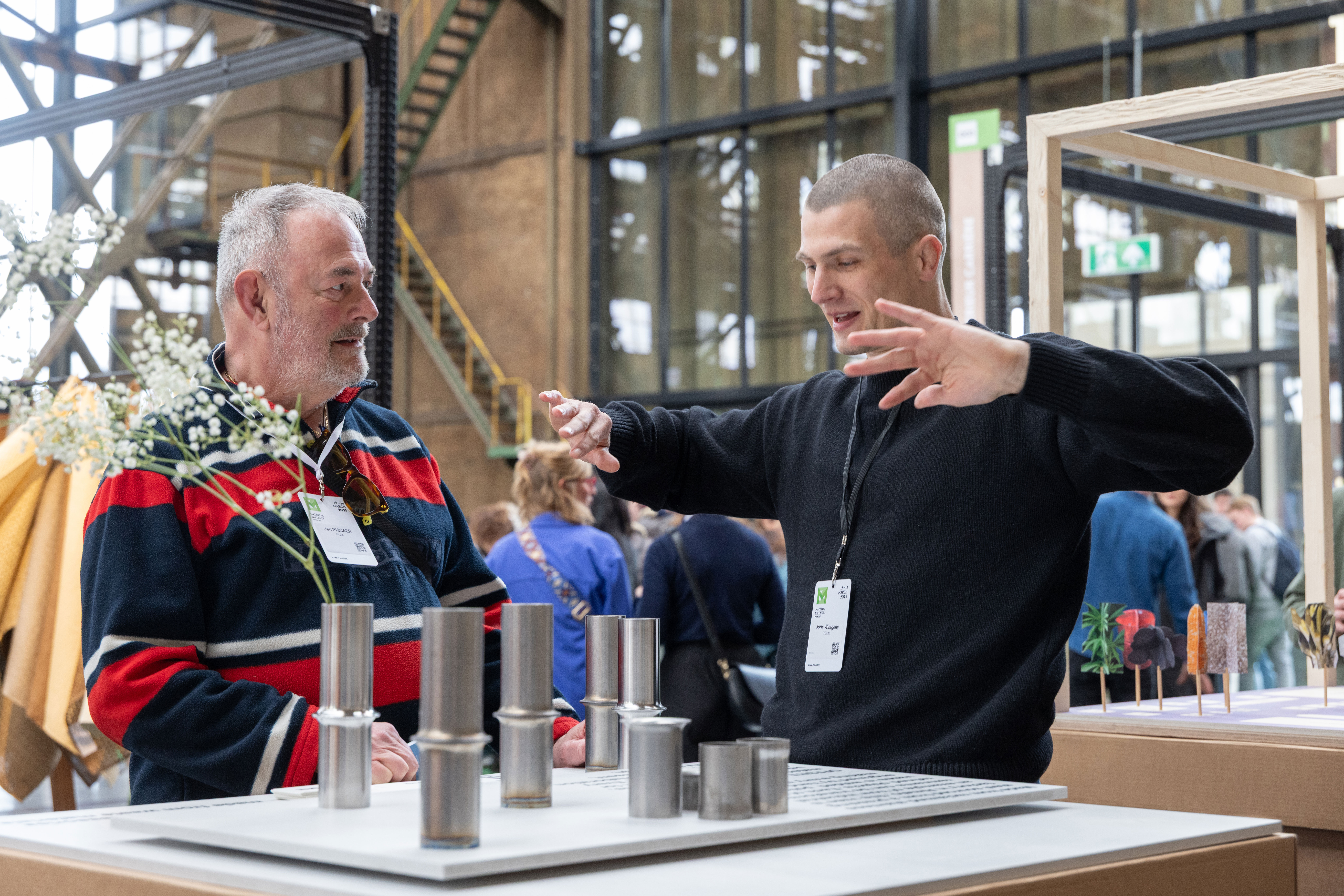
A core and essential component of MaterialDistrict Utrecht is the materials exhibition. In this exhibition, the focus is not on companies or brands, but on the material itself. Visitors encounter a carefully curated selection of physical material samples that invite observation, touch and reflection on origin, production process and application.
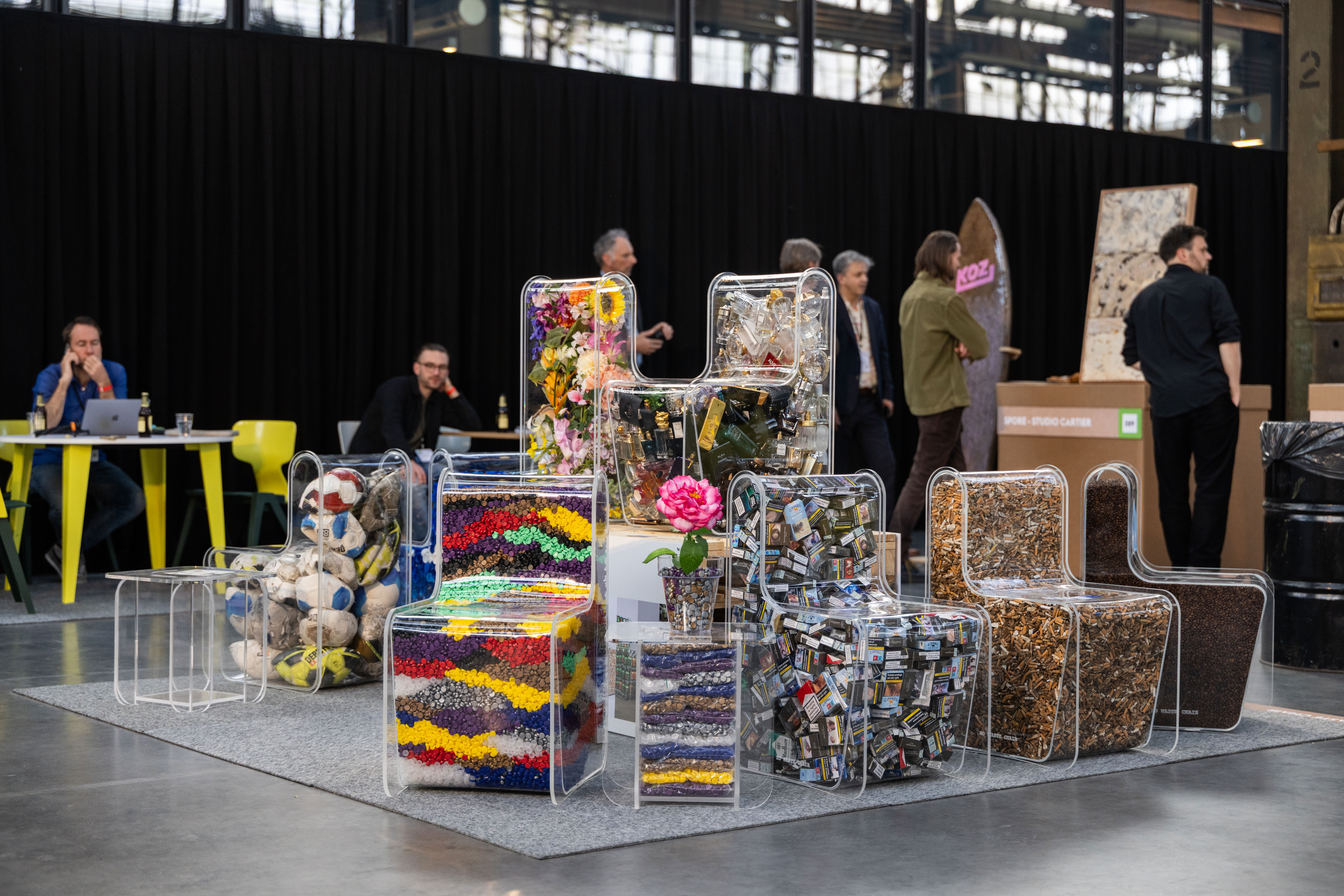

The exhibition brings together materials that open up new perspectives on sustainability and material use, such as bacterially grown textiles, circularly tanned leather without harmful chemicals, materials derived from residual streams, and new biobased alternatives replacing traditional raw materials. These are not prototypes or distant future concepts, but materials situated at the intersection of research, design and application.
What distinguishes the materials exhibition is its emphasis on story and context. Each material is part of a broader development — from biofabrication and regenerative production to the reuse of waste streams and local resources. The exhibition shows how designers and makers worldwide are exploring new ways for materials to emerge, grow or transform, often inspired by natural processes.
The materials are presented as conceptual frameworks for designers. Not to enforce immediate product choices, but to open up discussion about what materials can be, where they come from and what impact they have on people and the environment. In this way, the materials exhibition forms an in-depth exploration of the central NextNow theme: materials and ideas that already exist today and are now finding their way into design practice.
Visiting
MaterialDistrict Utrecht 2026 takes place from 4 to 6 March at the Werkspoorkathedraal in Utrecht. With 150 exhibitors, the new NextNow programme and a broad range of activities, the event offers a comprehensive overview of material innovations for architecture, interior design, construction and policy.
For more information and tickets, visit:
utrecht.materialdistrict.com
Opening hours
- Wednesday 4 March: 10:00–18:00
- Thursday 5 March: 10:00–18:00
- Friday 6 March: 10:00–17:00
Photos: Viorica Cernica / Sjoerd Reitsma / Triboo

Comments