Neo-Textura: Transforming Textile Waste into Circular Interior Systems

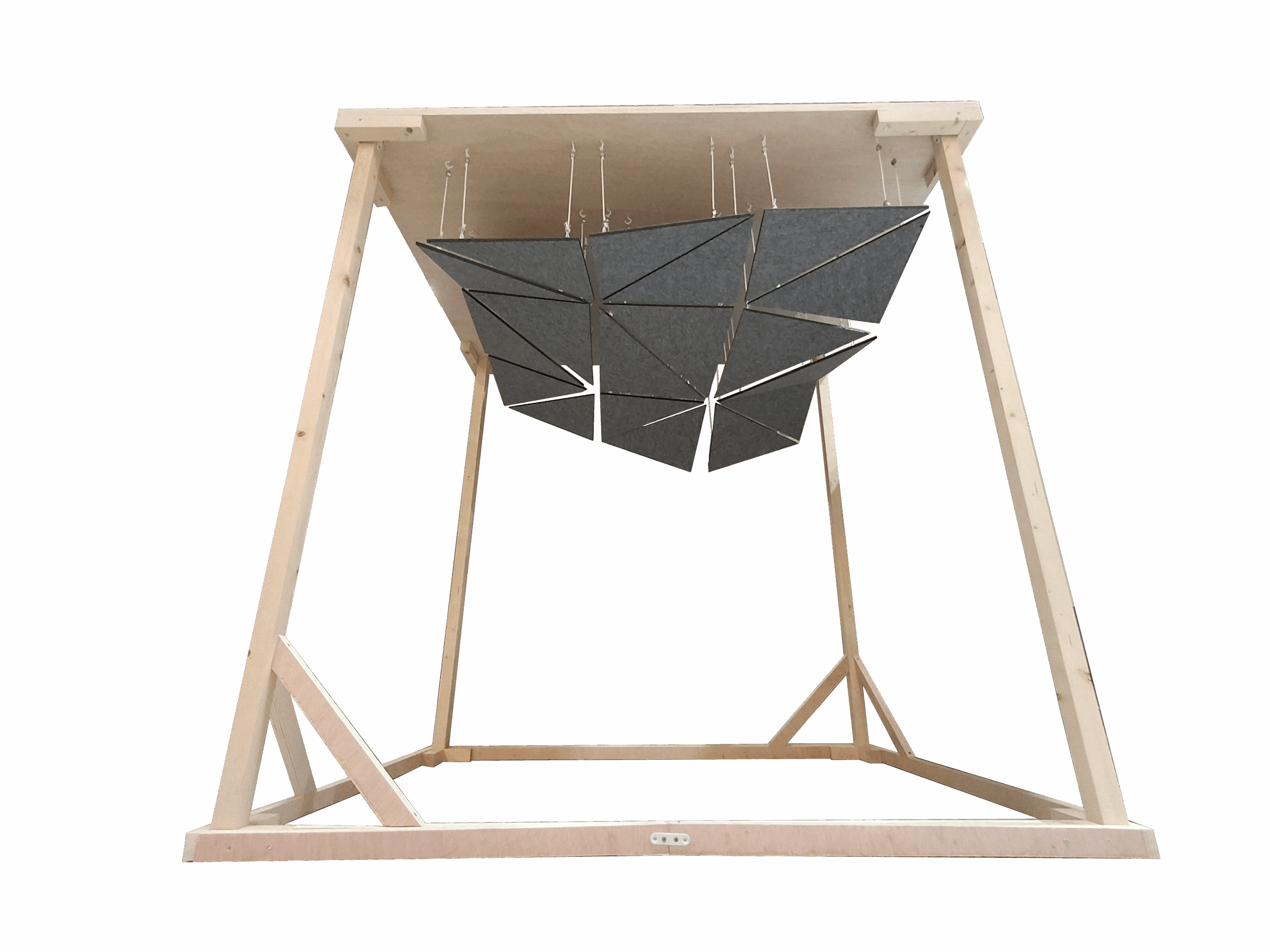

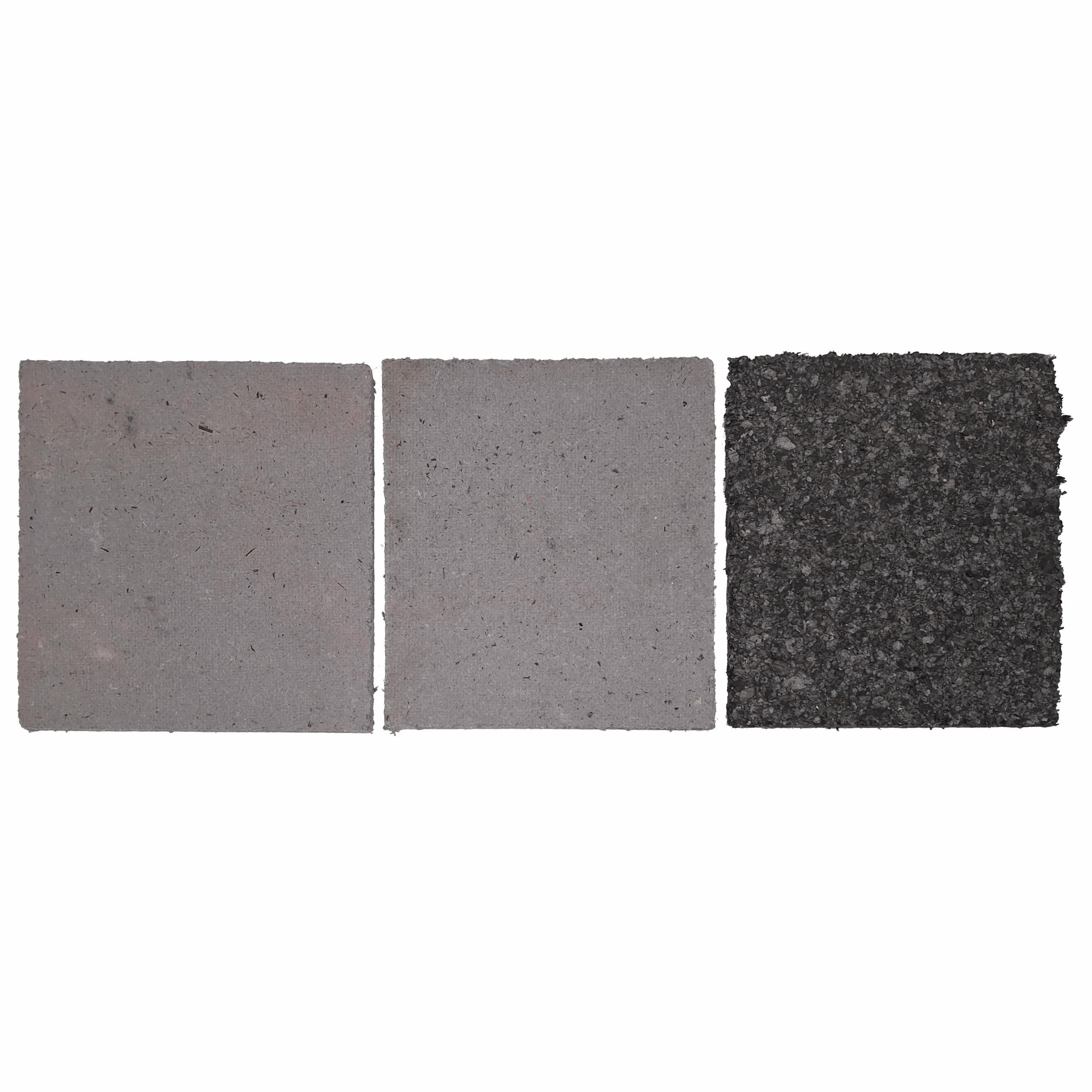


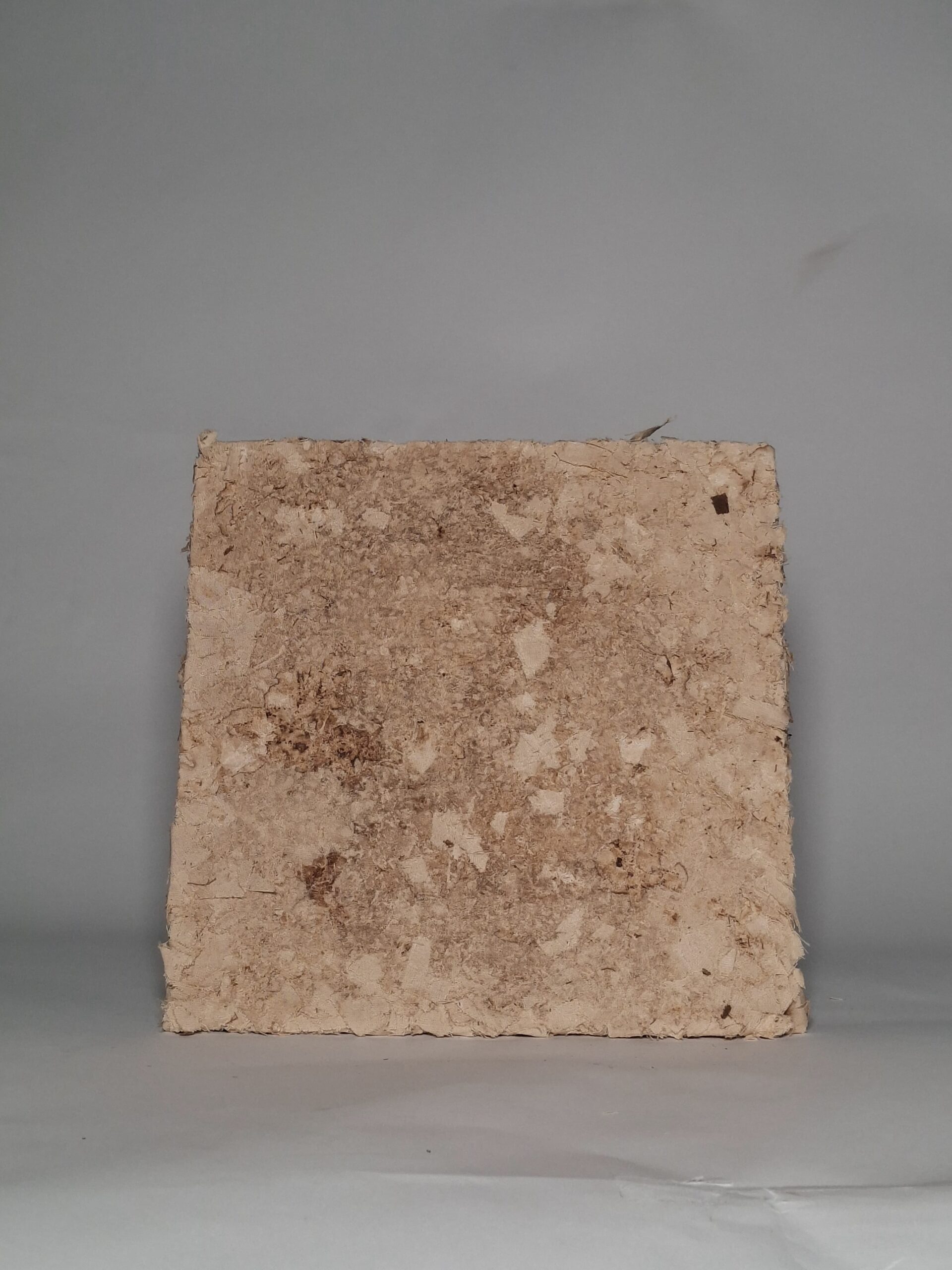
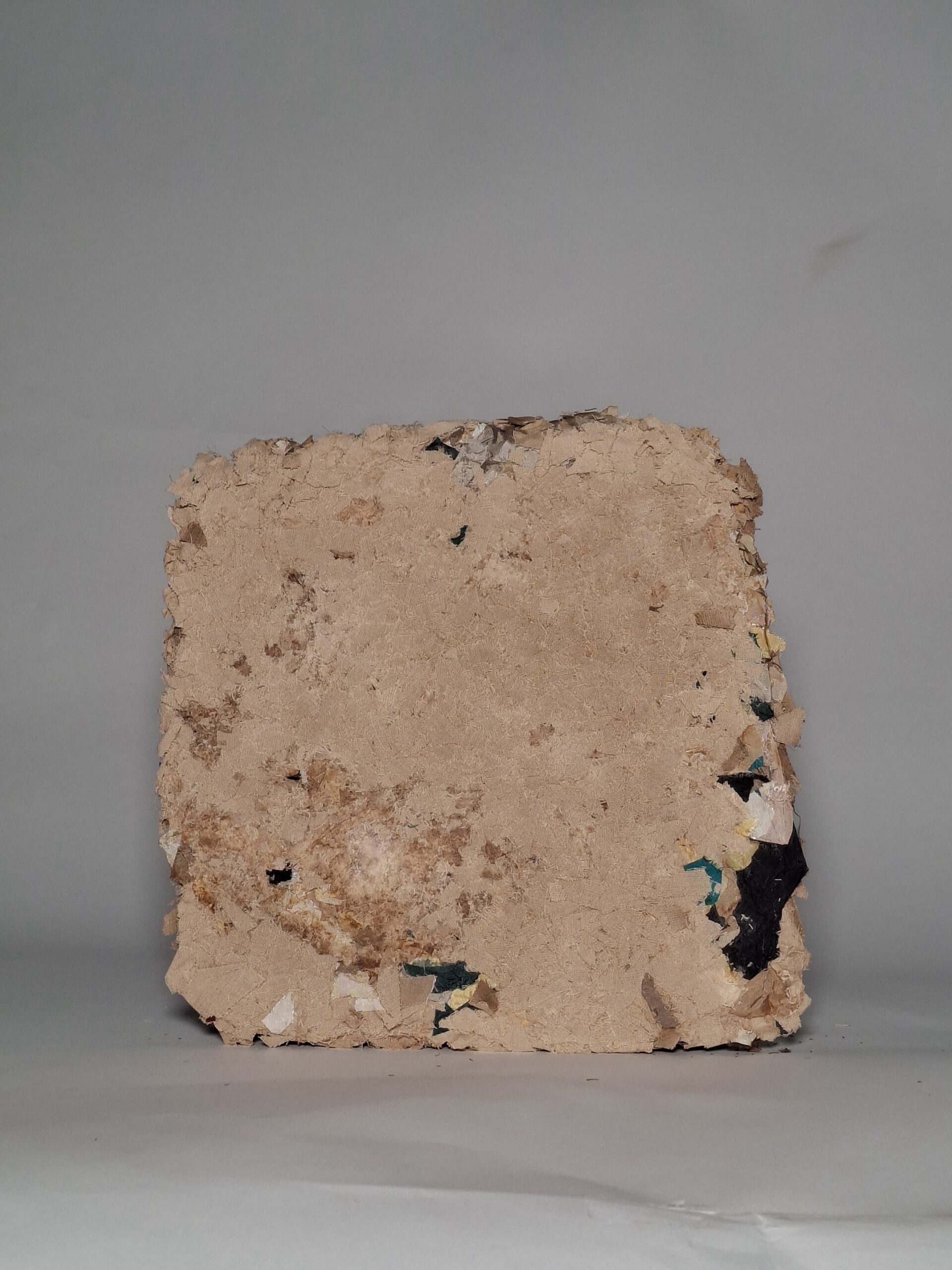

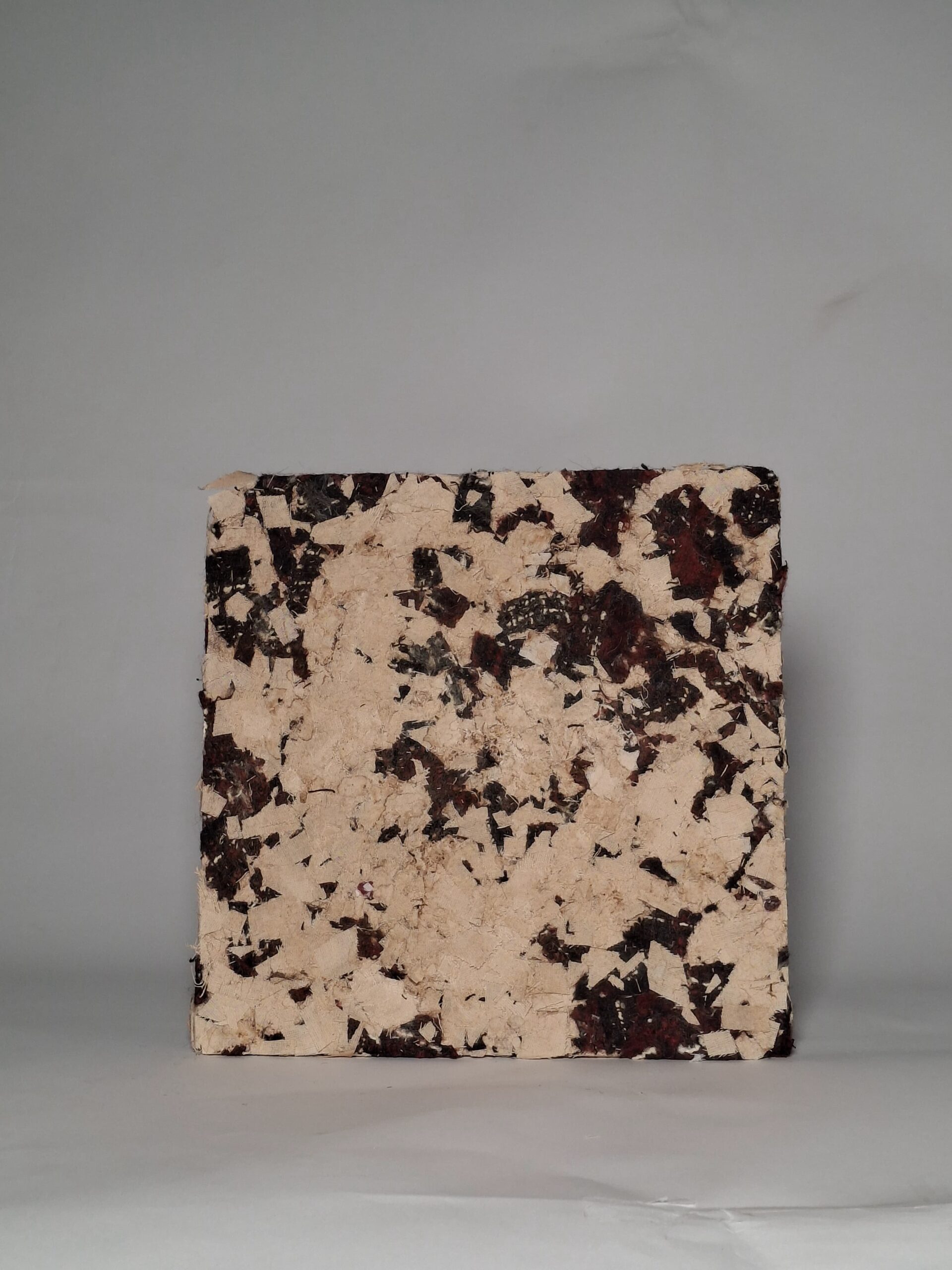
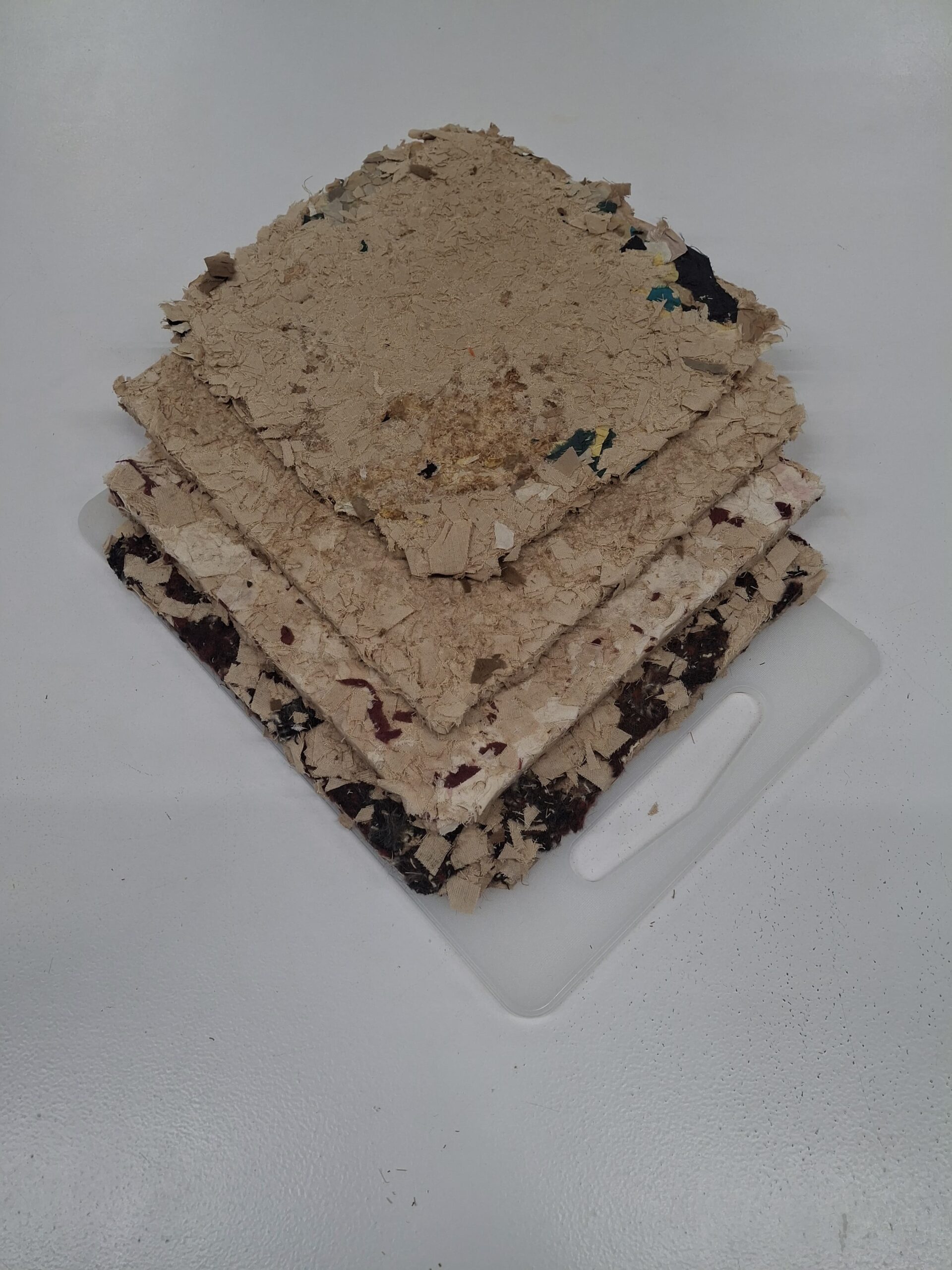

The fashion industry produces more than 92 million tonnes of textile waste each year, most of which ends up in landfill. At the same time, the interiors and construction sector faces material shortages, rising costs, and a heavy carbon footprint. To tackle both challenges, designer Lais Ioanna Margiori created Neo-Textura at the Institute for Advanced Architecture of Catalonia (IAAC). The project turns discarded textiles into sustainable furnishing systems for interiors.
Self-binding cellulose panels
Neo-Textura proves that cotton-rich garments can become composite panels without synthetic binders. Heat and pressure activate the cellulose fibres so that they bind together naturally. As a result, the panels are lightweight, durable, and insulating. They also absorb sound, reduce noise, and weigh less than conventional alternatives. These qualities make them suitable for furniture, partitions, and acoustic elements in interior design.
Parametric design and adaptability
In addition, the project explores how the panels can form part of modular interior systems. Prototyped at 1:1 scale, the panels were tested in different layouts and functions. Inspired by garment stitching, the panels connect with rope or joints. This method ensures stability while also allowing flexibility. As a result, interiors can adapt to different heights, geometries, and uses.
Collaboration and circularity
Neo-Textura was developed with Finsa, specialists in industrial wood, and Zelfo Technology, experts in cellulose composites. Textile waste came from Roba Amiga, a recycling initiative in Barcelona. Thanks to this collaboration, the project shows how industry and design research can work together to turn waste into resources.
Towards a circular interior future
By treating textile waste as a raw material, Neo-Textura provides an alternative to resource-heavy panels that rely on chemical binders. The project demonstrates how biobased composites and parametric design can lead to interiors that are adaptable, sustainable, and responsive to human needs.
Source & images: Lais Ioanna Margiori

Comments