Netherlands Installs First Synthetic Turf Pitch Made With Recycled Materials
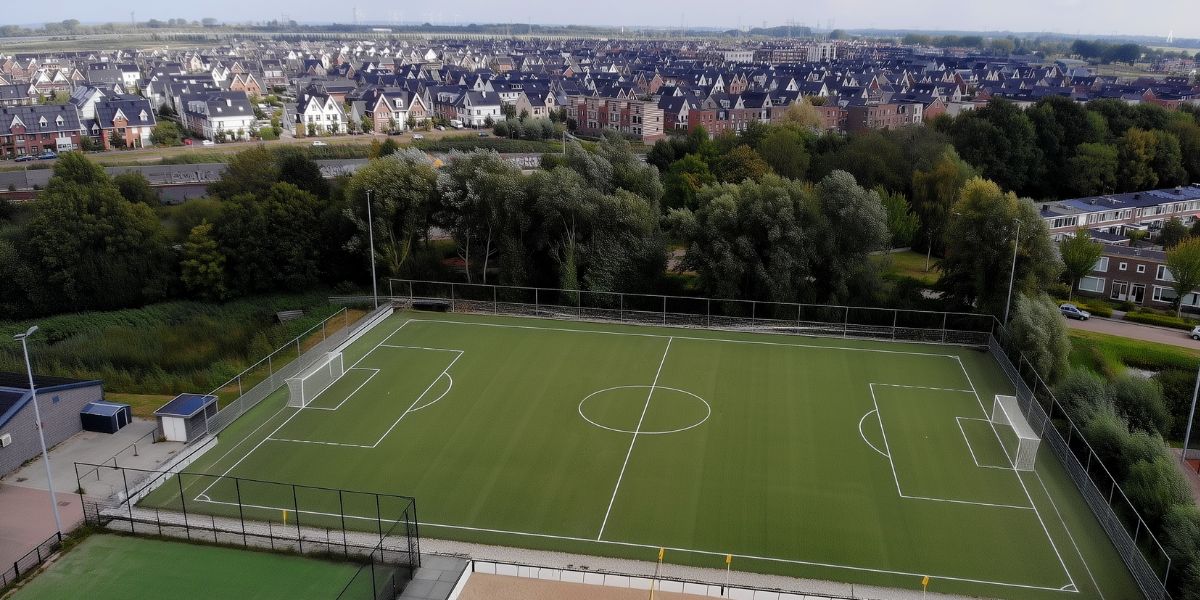
A new synthetic turf football pitch using recycled and biobased materials has been installed at amateur football club FC Weesp in the Netherlands. The Municipality of Amsterdam commissioned the project as a pilot, with support from the European Union. The aim was to test whether a synthetic pitch could meet professional playing standards while using fewer virgin materials and lowering environmental impact.
The project is relevant for landscape architects, architects and urban designers working on sports facilities and public outdoor spaces. It also offers insight for designers interested in circular material systems.
Recycled and Biobased Materials in Practice
The pitch uses recycled materials from end-of-life synthetic turf systems in several layers of its construction. These materials appear in the turf yarns, the backing layer and the shockpads. By reusing components from old pitches, the system supports a circular approach to material use in sports infrastructure.
Instead of standard rubber infill, the pitch uses cork granulate as a performance infill. Cork is a renewable, biobased material that provides shock absorption and improves playing comfort. Recycled sand stabilises the surface and replaces conventional virgin materials. Together, these choices reduce dependence on fossil-based inputs.
Measured Environmental Impact
Independent life-cycle assessments show that the turf system reduces carbon emissions by 43.4% per square metre compared to a conventional 3G synthetic pitch. The project contributes to wider European goals to increase plastic recyclability and reduce emissions linked to material production.
For designers and public authorities, the project shows how environmental impact can be measured and included in the design of long-lasting outdoor facilities.
Performance and Safety Standards
Despite its use of recycled and alternative materials, the pitch meets all KNVB requirements for competitive football. Tests confirm compliance with standards for ball roll, shock absorption and durability. This allows the field to host official matches, training sessions and community sports activities.
The pitch is located at Sportpark Papelaan and serves FC Weesp’s first team as well as youth and amateur teams across different age groups.
Relevance for Design Practice
As cities place greater emphasis on circularity, this project demonstrates how recycled plastics and biobased materials can function in large-scale outdoor applications. For landscape and architectural projects that include sports and recreational spaces, synthetic turf systems are becoming material solutions that support circular design strategies rather than purely technical surfaces.
Source & photo: EMEA Synthetic Turf Council (ESTC)

Comments