Octopus-Inspired Material Enables Dynamic Colour And Texture Changes
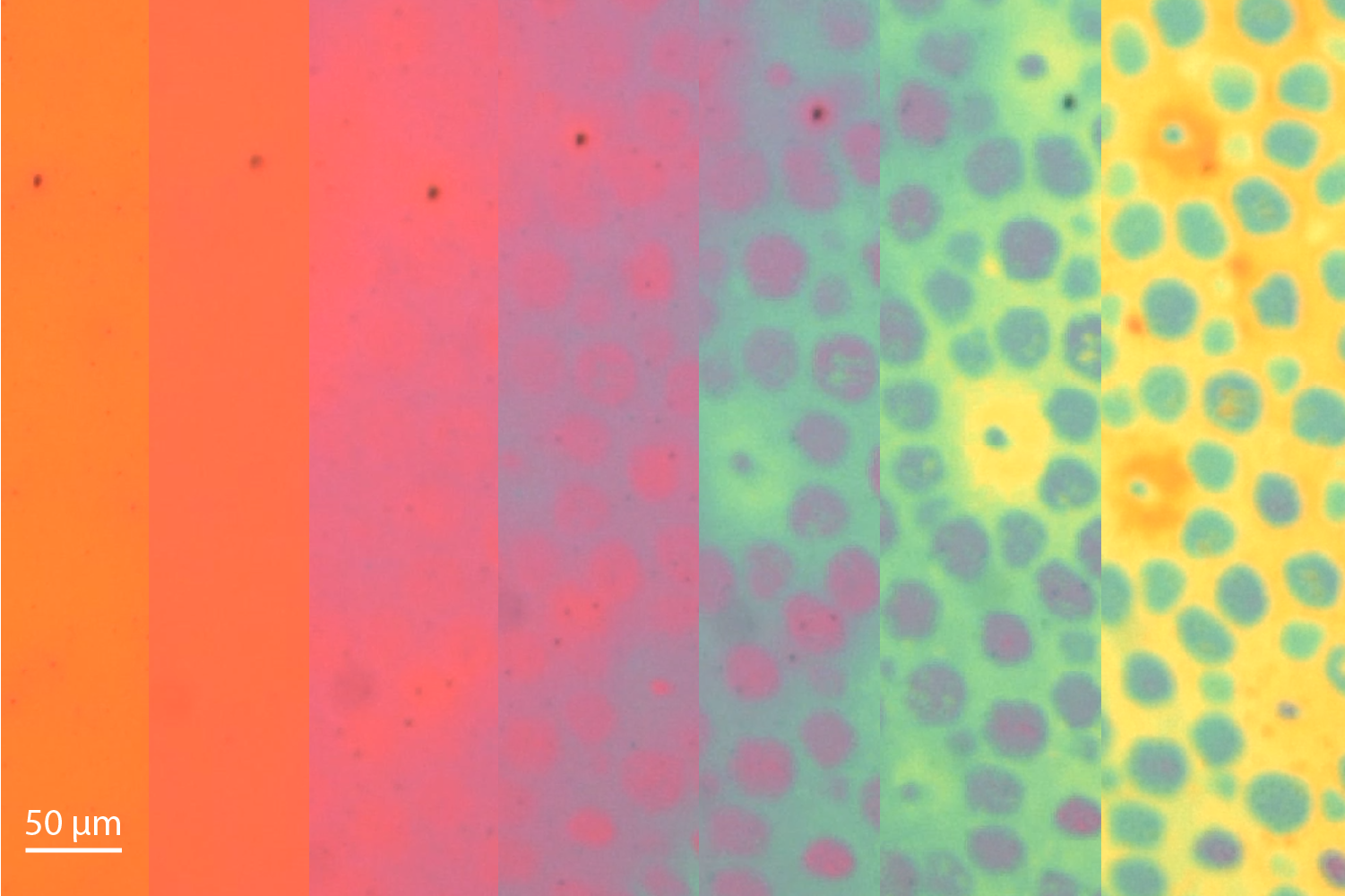
Researchers at Stanford University have developed a soft, flexible material that can rapidly change both colour and surface texture. Inspired by the adaptive skin of octopuses and cuttlefish, the material forms detailed patterns within seconds, at a scale finer than a human hair. For designers working with experimental and smart materials, this innovation points to a new generation of responsive surfaces.
The research, published in Nature, focuses on a swellable polymer film. When exposed to water, the film expands in controlled ways, changing how it looks and feels. This allows colour and texture to shift at the same time, without adding pigments or mechanical components.
Precision At The Micro Scale
The key breakthrough lies in combining a water-absorbing polymer with electron-beam lithography, a technique normally used in chip manufacturing. By exposing selected areas of the polymer to an electron beam, the researchers control how much each area swells. The programmed patterns remain invisible while the material is dry and only appear once water is added.
In its dry state, the film stays completely flat and stable. When activated, the surface rises into fine textures and reliefs. Designers can reverse the process by removing the water with an alcohol-based solvent. This makes the material reusable and suitable for repeated transformations.
Colour Without Pigments
Instead of relying on dyes, the material generates colour through structure. Thin metal layers create optical cavities that reflect specific wavelengths of light. As the polymer swells and changes thickness, different colours appear across the surface.
This approach offers clear sustainability benefits. Structural colour avoids the use of chemical pigments, some of which are difficult to recycle or harmful to the environment. For product, fashion, and textile designers, this opens up new possibilities for low-impact colouration and expressive surface finishes.
Opportunities For Design And Innovation
Although still in the research phase, the material has clear potential for design-led applications. In fashion and product design, it could enable garments, accessories, or wearables that respond to moisture, touch, or changing environments. In interiors, the technology could support adaptive wall panels, tactile surfaces, or interactive installations.
The research team is also exploring automated control systems that use computer vision and AI. These systems could allow surfaces to adjust themselves in real time. Beyond aesthetics, controlled texture changes may also affect grip and friction, which is relevant for soft robotics and haptic design.
As interest grows in smart, biobased, and responsive materials, this octopus-inspired development highlights how material behaviour itself can become a design feature, rather than a fixed constraint.
Source & photo: Stanford University

Comments