Painting With Light: MIT’s MorphoChrome Enables Programmable Structural Colour
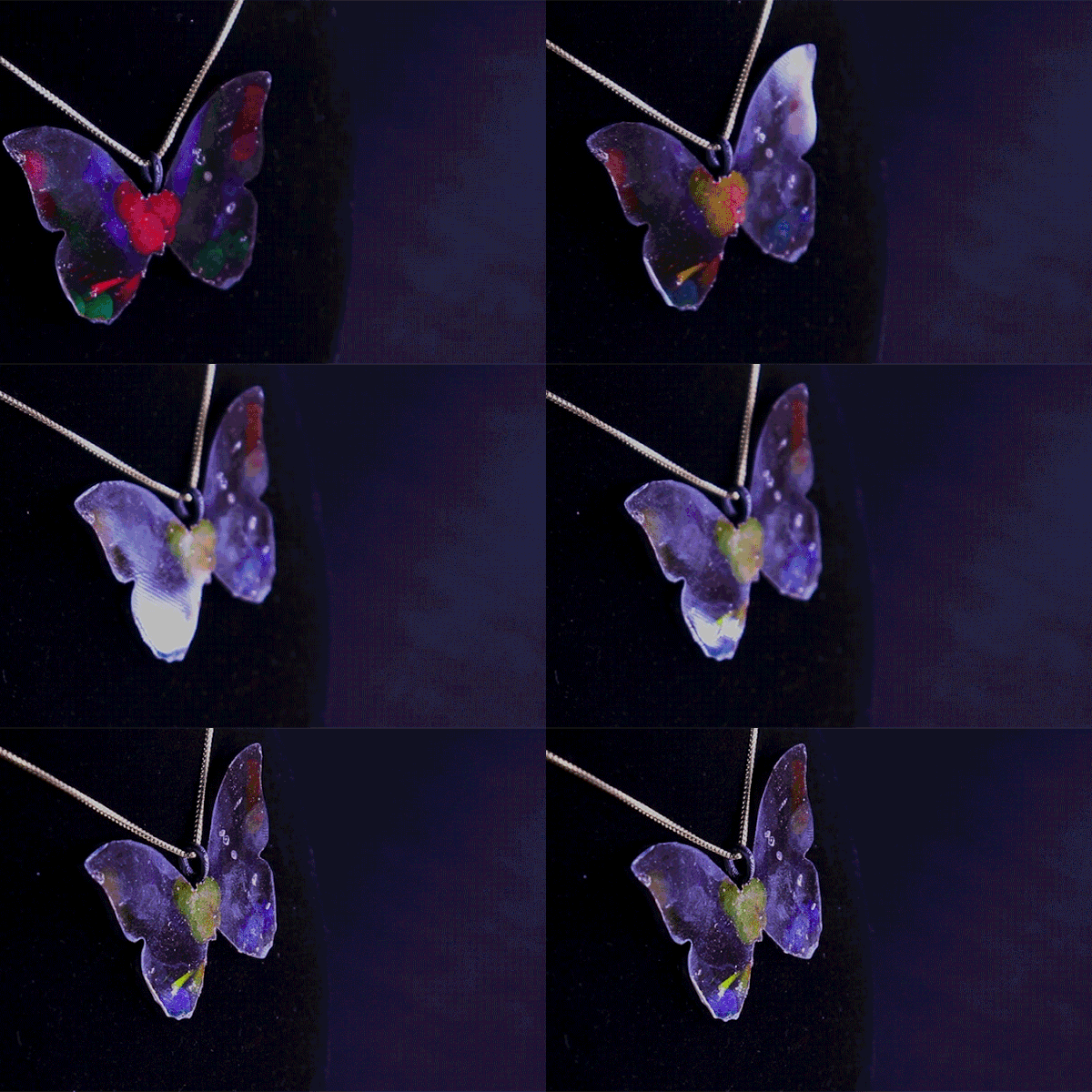
Researchers at the Massachusetts Institute of Technology (MIT) have developed MorphoChrome, a new fabrication system that allows designers to apply iridescent, colour-changing effects to everyday objects. Instead of using pigments or dyes, the system relies on structural colour, a phenomenon widely found in nature. The project introduces a new way to create expressive surfaces while reducing dependence on traditional colouring methods.
Structural Colour Inspired by Nature
Structural colour occurs when microscopic surface structures reflect light in specific ways. As a result, colours shift depending on the viewing angle and light conditions. This effect is visible in butterfly wings, peacock feathers and gemstones such as opal.
Until now, producing such effects required complex laboratory techniques. Therefore, designers often relied on ready-made materials, such as feathers or coated films. MorphoChrome changes this by offering a controlled and customisable process that can be used outside the lab.
A Digital Tool for Material Expression
MorphoChrome combines design software with a handheld optical device. Designers select colours digitally using a colour wheel. These colours are then translated into controlled red, green and blue laser light.
The laser light exposes a holographic photopolymer film, which acts as the material canvas. After exposure, the film is transferred onto an object using a thin epoxy resin layer and a short UV curing process. Finally, the protective backing is removed, revealing a shimmering, colour-shifting surface.
Because the process works on rigid and flexible substrates, it is suitable for accessories, consumer products, interior objects and experimental surface finishes.
Relevance for Sustainable Design
Importantly, MorphoChrome offers opportunities for more sustainable material strategies. Structural colour does not rely on chemical pigments, which can fade or degrade over time. Instead, colour is created through surface structure, resulting in long-lasting visual effects.
Moreover, the films are lightweight and require only thin material layers. This can help reduce material use while extending product lifespans. For designers focused on circularity, this opens new directions for durable and low-impact surface design.
Demonstrations include jewellery with gemstone-like finishes and sports gloves that change colour based on grip angle. Meanwhile, future research aims to expand the colour range and explore fully reprogrammable holographic films.
A New Design Space for Materials
According to the MIT research team, MorphoChrome bridges digital design and material fabrication. It gives designers direct control over complex optical effects in real time. As the technology develops further, it may support adaptive interiors, smart products and anti-counterfeiting applications.
Ultimately, MorphoChrome shows how material innovation can redefine aesthetics, function and sustainability across multiple design disciplines.
Source & image: MIT

Comments