Recycled Compact Discs Used as Light-Responsive Architectural Surfaces
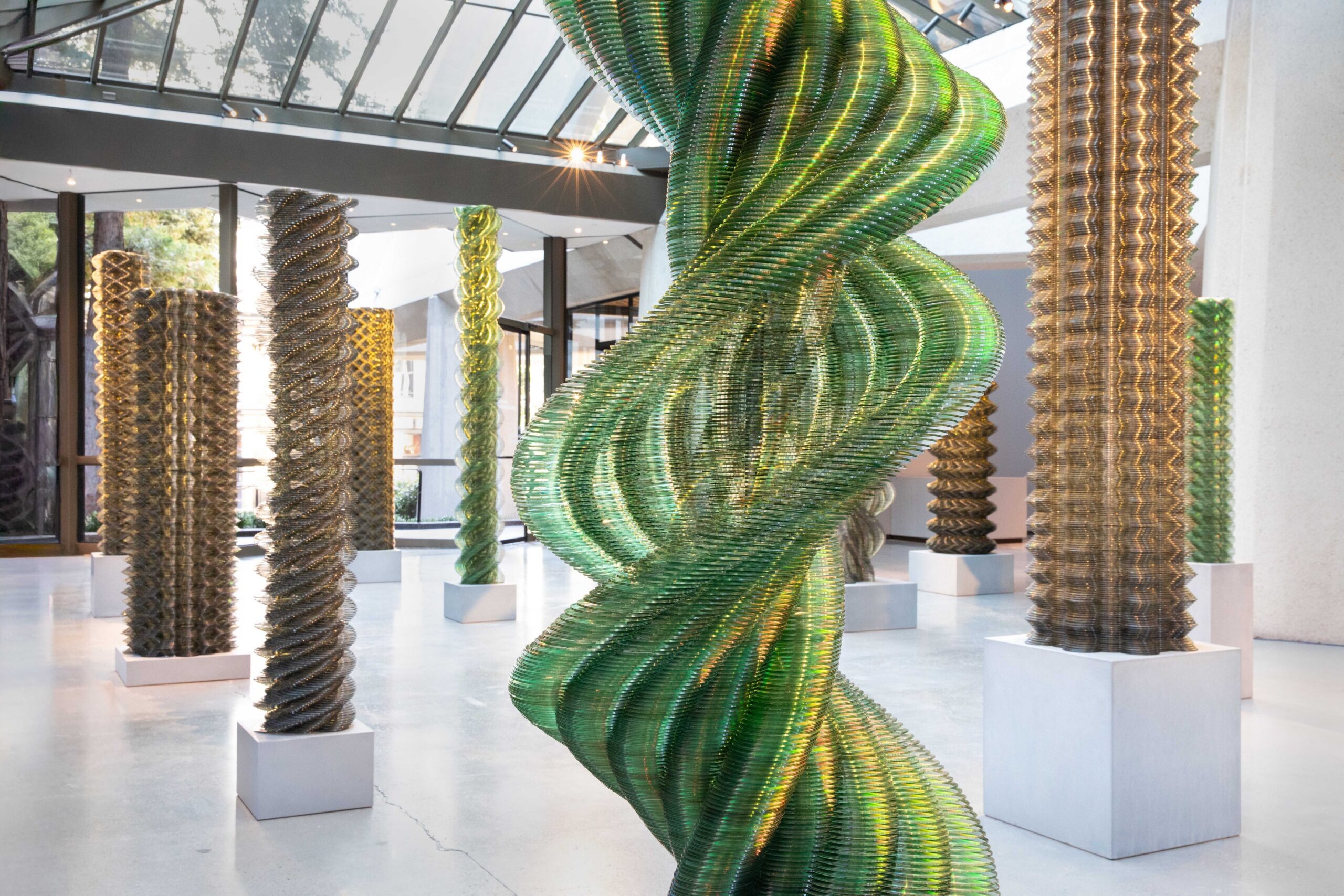
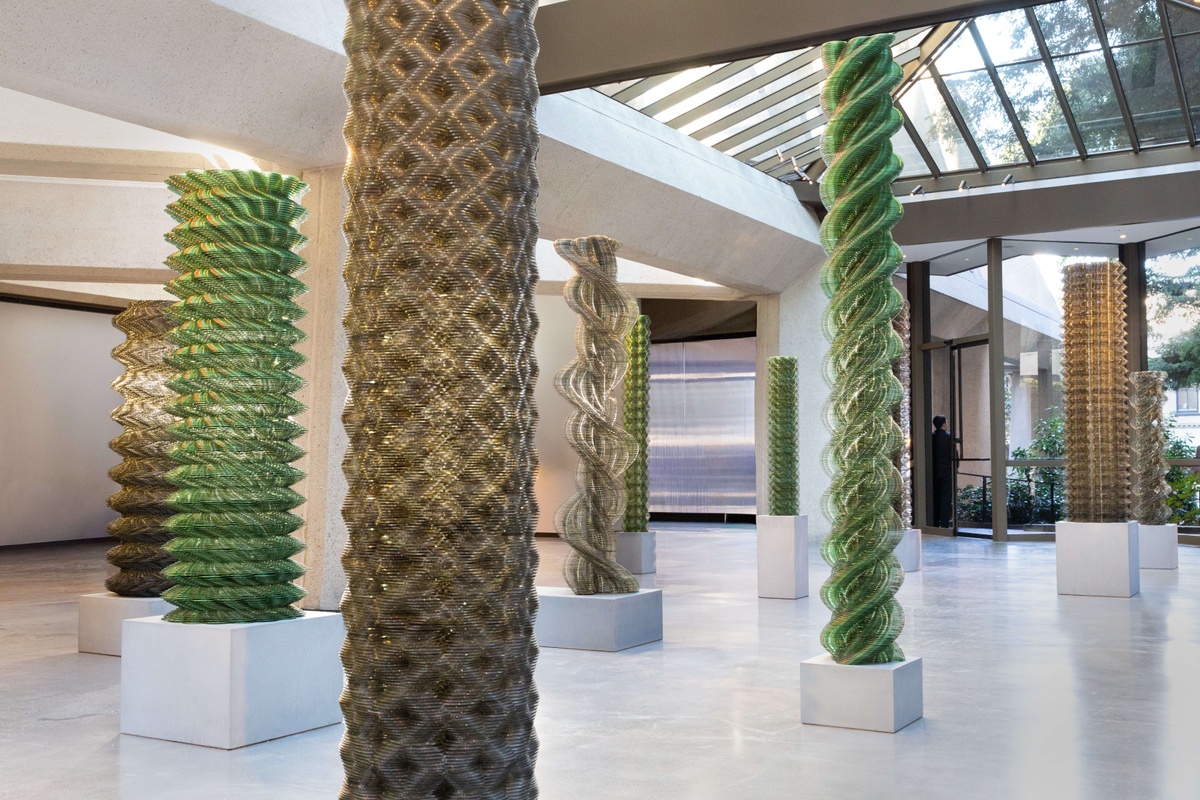
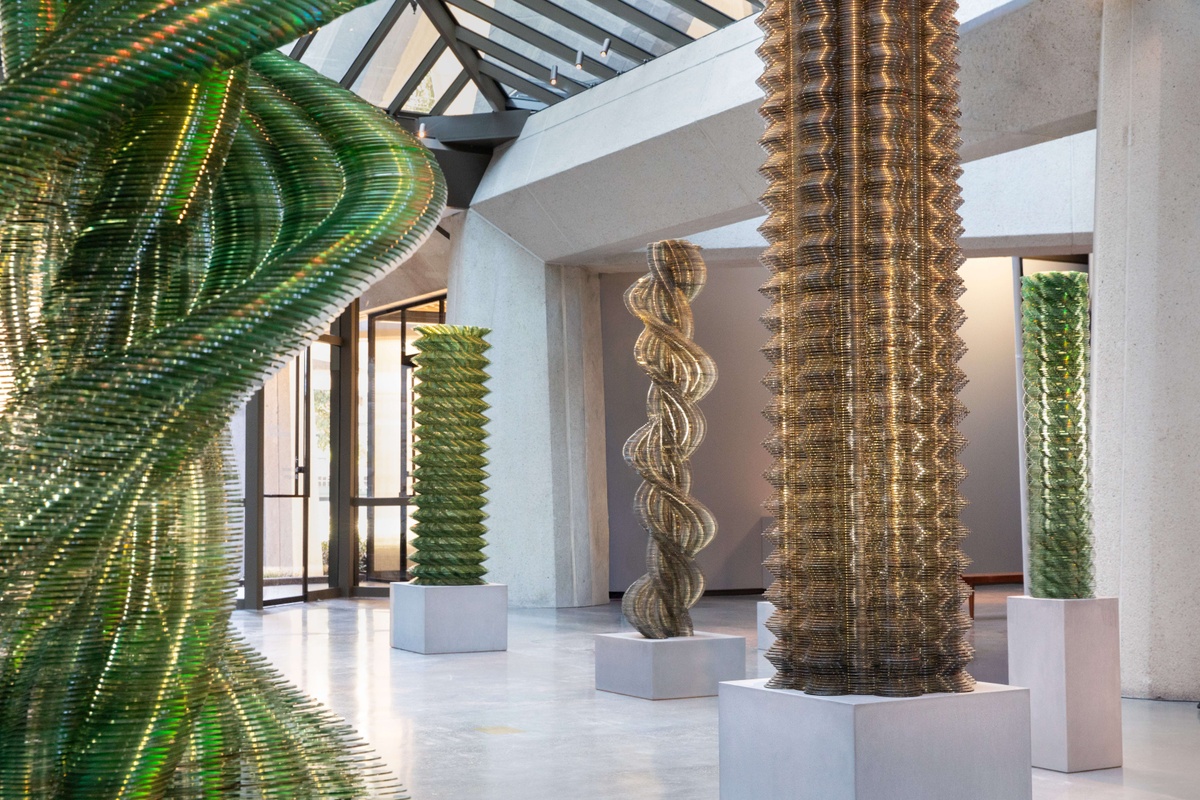
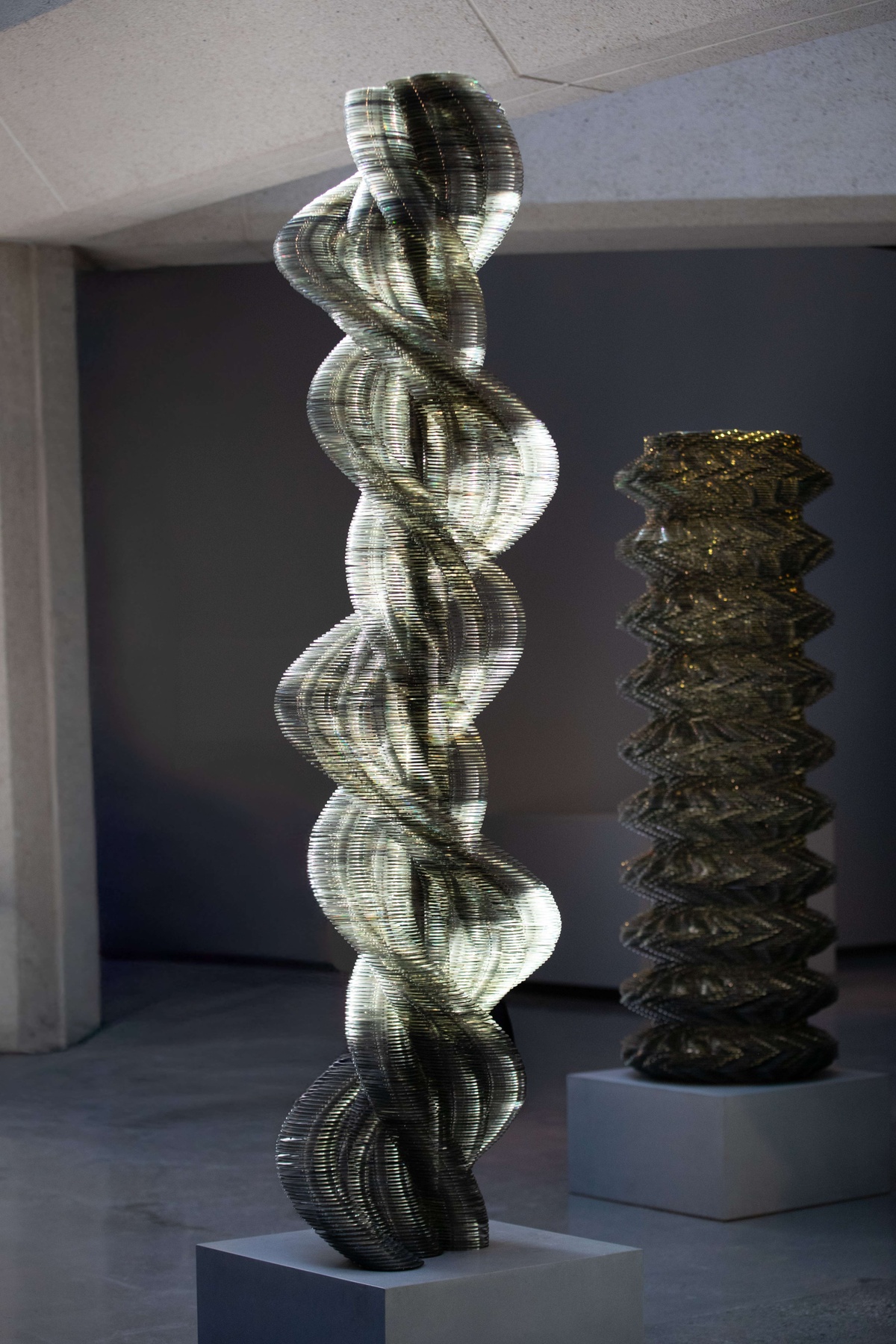
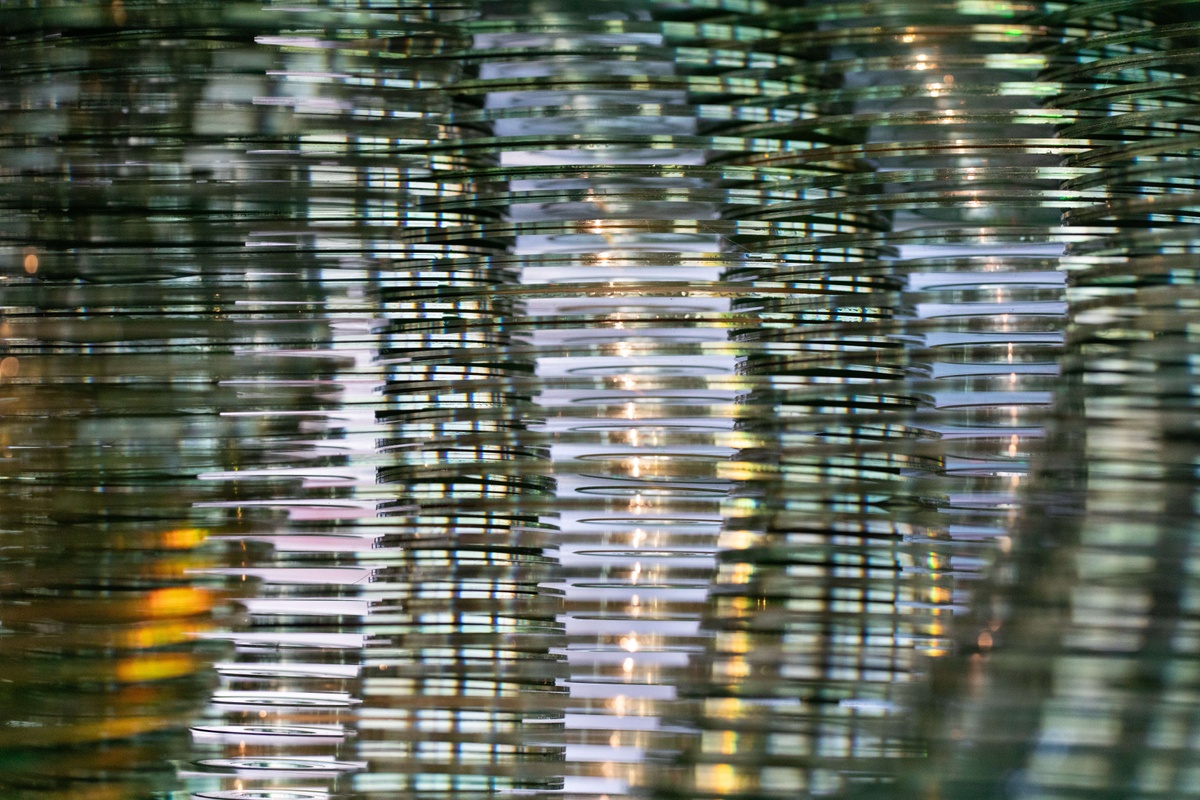
The exhibition Stratagems by US-based artist Tara Donovan explores how large quantities of identical waste materials can form new spatial systems. The works consist entirely of thousands of discarded compact discs, a post-consumer plastic product that has largely lost its original function.
By repeating and stacking the CDs, Donovan transforms a familiar object into a continuous surface. Individual discs become part of a larger material system. Their original identity fades, while new visual and spatial qualities emerge. This approach reflects design research methods that focus on structure, repetition and material behaviour rather than material composition.
Optical Performance and Environmental Interaction
Compact discs have a highly reflective and iridescent surface. When used at scale, this property creates strong optical effects. The assembled surfaces respond directly to daylight, artificial lighting and changing weather conditions. As a result, colour, brightness and depth shift throughout the day.
The installation is located in the glass Annex gallery at the Transamerica Pyramid Center in San Francisco. The reflective CD surfaces interact with the surrounding architecture and urban context. Reflections of light, sky and movement continuously alter the appearance of the work. This demonstrates how reused materials can respond actively to environmental conditions without added technology.
For architects and interior designers, the project highlights the potential of recycled plastics for light-responsive façades, interior partitions and surface applications. The work shows how optical performance can come from material choice and configuration alone.
Circular Use of a Single Waste Material
From a circular design perspective, Stratagems focuses on direct material reuse. The project avoids shredding, melting or chemical processing. Instead, it relies on mechanical assembly and repetition. This reduces energy use and preserves the original material value.
The use of a single material type also supports easier disassembly and future reuse. The absence of complex composites aligns with current design strategies that aim to simplify material systems and improve recyclability. The work demonstrates that visual and spatial complexity does not require material complexity.
The exhibition is on display from 17 January to 31 July 2026 at Institute of Contemporary Art San Francisco.
Source: Institute of Contemporary Art San Francisco (ICA SF)
Photos: Nicholas Lea Bruno

Comments