Recycled Lava As A Material Innovation For Lighting Design



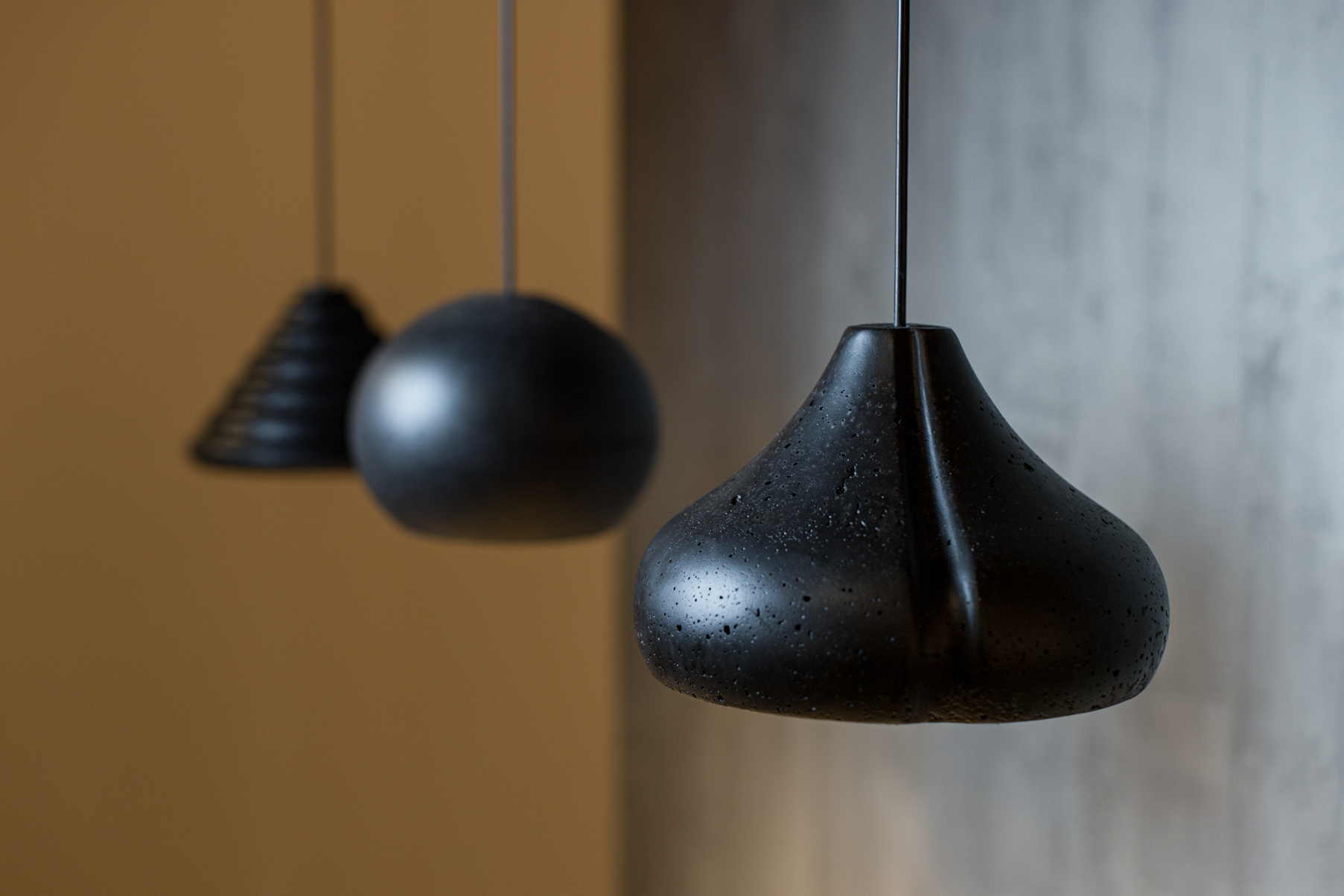

Italian lighting manufacturer Foscarini presents Alicudi, Filicudi and Panarea, a series of suspension lamps made from recycled lava stone. Designed by Alberto and Francesco Meda, the collection explores how residual material from volcanic stone processing can be repurposed into functional lighting products.
The lamps are produced using surplus fragments created during the cutting of lavic stone. Instead of relying on newly extracted raw materials, the designers focus on reusing waste streams generated by existing stone-processing activities. This approach aligns with broader developments in sustainable product design, where material efficiency and reuse play an increasingly important role.
Material Development And Production Process
Lava stone differs from materials such as marble in that it is not quarried. After volcanic eruptions, magma cools and becomes part of the natural terrain, forming blocks that can later be processed. During this process, a significant amount of stone chips and fragments remains unused. Foscarini, in collaboration with Ranieri, developed a patented technique to recycle this material into thin yet strong panels.
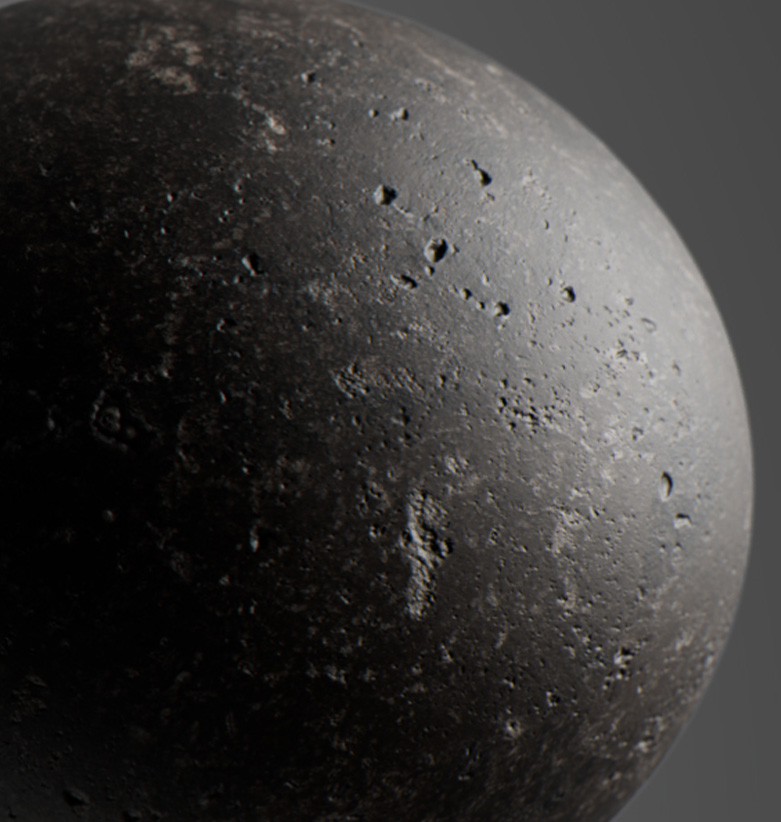
The recycled lava panels used for Alicudi, Filicudi and Panarea have a thickness of approximately 8 to 10 millimetres. Despite their reduced thickness, they retain the structural qualities and visual characteristics of natural lava. The surfaces are marked by porosity and small craters, directly reflecting the geological origin of the material.
Industrial Production With An Artisanal Character
Although the lamps are produced industrially, the manufacturing process includes a significant manual component. Each piece is finished by hand, resulting in subtle variations in texture and surface pattern. As a result, every lamp is visually distinct, while still meeting the requirements of serial production.
The forms of the three models are deliberately restrained, allowing the material itself to define the visual identity of the lamps. Their names refer to the Aeolian Islands, reinforcing the connection between the product and its volcanic source material.
Relevance For Architecture And Interior Design
For architects and interior designers, the collection demonstrates how recycled mineral materials can be applied in interior lighting without compromising technical performance. The lamps offer a tactile and natural surface quality that contrasts with more uniform industrial finishes often used in contemporary interiors.
From a material perspective, the project illustrates how waste from heavy industries such as stone processing can be integrated into refined design applications. It contributes to ongoing discussions around circularity, local material sourcing and the use of residual materials within the built environment.
Source & photos: Foscarini

Comments