- This article is part of the following channel(s)
- Biobased
Sustainable Bio-Rubber From Birch Bark: A Low-Carbon Alternative for Design Industries
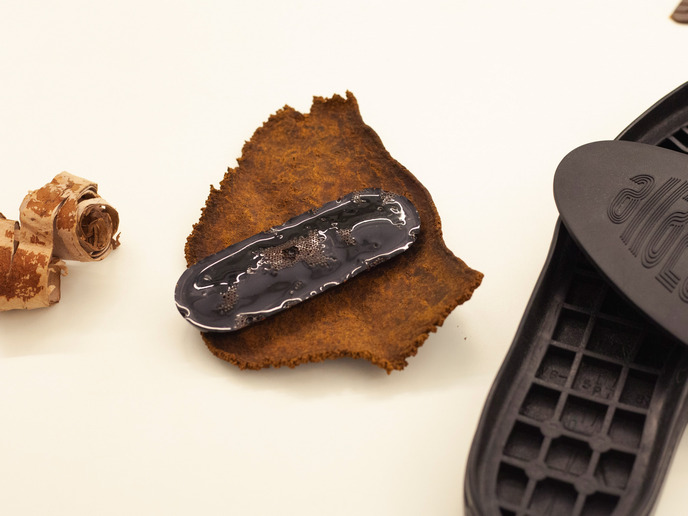
Rubber remains an essential material for footwear, product and mobility design. However, most rubber still comes from fossil-based sources or tropical plantations, both of which raise concerns around emissions, deforestation and supply security. A European innovation is now introducing a different approach: high-performance rubber made from birch bark, a forestry by-product that is widely available across Europe.
Developed through the EU-supported NORDIC BIO-RUBBER project and commercialised by Swedish company Reselo, this material offers designers a bio-based alternative without compromising technical performance.
Turning Birch Bark Waste Into Functional Rubber
Reselo Rubber uses birch bark sourced from the pulp, paper and plywood industries. Today, this bark is largely burned for energy. Reselo instead upgrades the material through an efficient biorefinery process and converts it into a fully bio-based elastomer.
The resulting rubber is 100% fossil-free and contains 100% biogenic carbon, verified through third-party testing. When produced at scale, it can achieve up to 90% lower CO₂ emissions compared to conventional fossil-based rubber. For designers and manufacturers, this means a significant reduction in material footprint without redesigning products from scratch.
Designed For Seamless Industrial Integration
A key advantage of Reselo Rubber lies in its compatibility with existing production infrastructure. The material works as a drop-in solution for standard rubber compounding and processing methods. This allows brands to adopt the material quickly and reduce the carbon footprint of components such as outsoles, tyres or technical rubber parts.
In footwear applications, the material contributes to hardness, slip resistance and tear strength, while maintaining comfort and durability. Reselo also offers tailored material recipes, enabling brands to adjust texture, flexibility and tone to match specific design and performance requirements.
Circular Sourcing And Non-Toxic Performance
From a sustainability perspective, Reselo Rubber aligns strongly with circular design principles. It transforms a low-value forestry by-product into a high-performance material, supporting better resource efficiency and reducing waste. The birch bark is sourced from FSC-certified forests, contributing to responsible forest management and biodiversity protection.
In addition, independent testing confirms that the material is non-toxic to terrestrial plants, reinforcing its suitability for responsible product development.
A Material Platform For Collaborative Innovation
Reselo positions its birch bark rubber as part of a broader material platform built on collaboration. By working closely with footwear and mobility brands, the company continues to develop new applications and refine performance. Beyond soles and tyres, the technology also generates additional material fractions with future potential for other non-energy uses.
As pressure grows for genuine sustainability in material choices, birch bark rubber demonstrates how biobased innovation, circular sourcing and industrial performance can come together in one scalable solution.
Source: CORDIS / Reselo
Photo: Emelie Isaksen

Comments