The EcoWal: Amsterdam’s Living Quay Wall for a Greener City
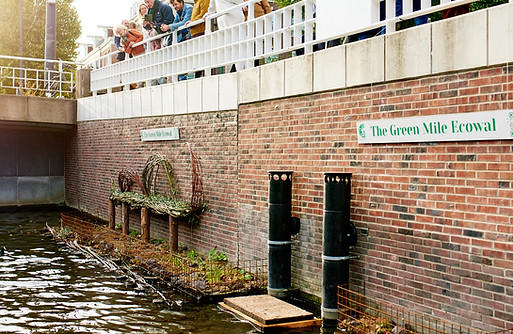
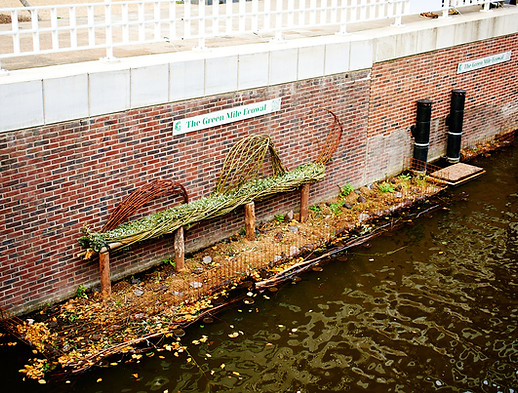
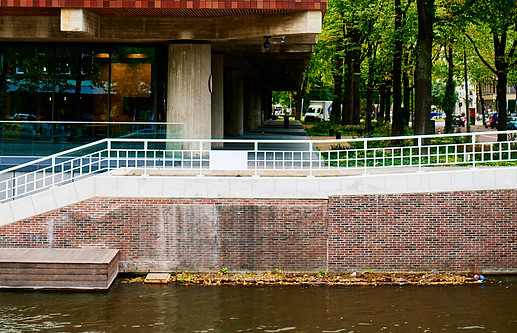
To celebrate Amsterdam’s 750th anniversary, The Green Mile Foundation has given the city a remarkable gift: the EcoWal. This green quay wall, located along the Singelgracht, transforms existing infrastructure into a living ecosystem. Inspired by a successful project in Utrecht, the EcoWal shows how cities can adapt to nature instead of working against it. It supports biodiversity, cleans the water, and creates new habitats for plants and animals both above and below the surface.
A Layered Design that Brings Life Back to the City
The EcoWal includes two connected layers that work together to improve the urban environment. Below the surface, recycled lava stones are placed against the quay wall, creating hiding places for fish and aquatic species. Between these stones, bundles of branches provide safe areas for fish to lay eggs. At the same time, wooden posts help mussels and other organisms to attach and grow naturally.
Above the waterline, the wall turns into a vertical garden filled with native plants. They grow in mats made from coconut fibre and untreated wool from Drenthe heath sheep. These natural materials help the plants take root and purify the water. As a result, the once hard quay surface becomes a living, green façade. Over time, it attracts insects such as bees and dragonflies, bringing colour and life back to the city centre.
Material Innovation for Circular and Biobased Design
The EcoWal proves that biobased and circular materials can play a vital role in urban renewal. By combining recycled stones with renewable fibres like wool and coconut, the project reduces environmental impact. In addition, it gives a second life to local sheep wool, a material that is often discarded. This design approach demonstrates how smart material choices can reconnect cities with natural systems while promoting circularity.
Towards Nature-Inclusive and Climate-Resilient Cities
More than forty metres of EcoWals have already been installed near De Nederlandsche Bank and along the pedestrian boulevard between the Heineken Experience and the Rijksmuseum. The project is a partnership between The Green Mile Foundation, the City of Amsterdam, and the regional water authority. Together, they monitor how the design affects biodiversity and water quality.
According to Ruth van Dijken, director of The Green Mile, “The EcoWal shows how we can green the city on existing foundations—by adding rather than removing.” Her statement highlights how innovative design and material use can transform grey infrastructure into thriving ecosystems. Consequently, the EcoWal offers a model for sustainable, nature-inclusive, and climate-adaptive urban design.
Source: The Green Mile / Duurzaam Ondernemen
Photos: The Green Mile

Comments