Tiffany Façade Beijing Showcases Sculptural Glass and Recycled Design
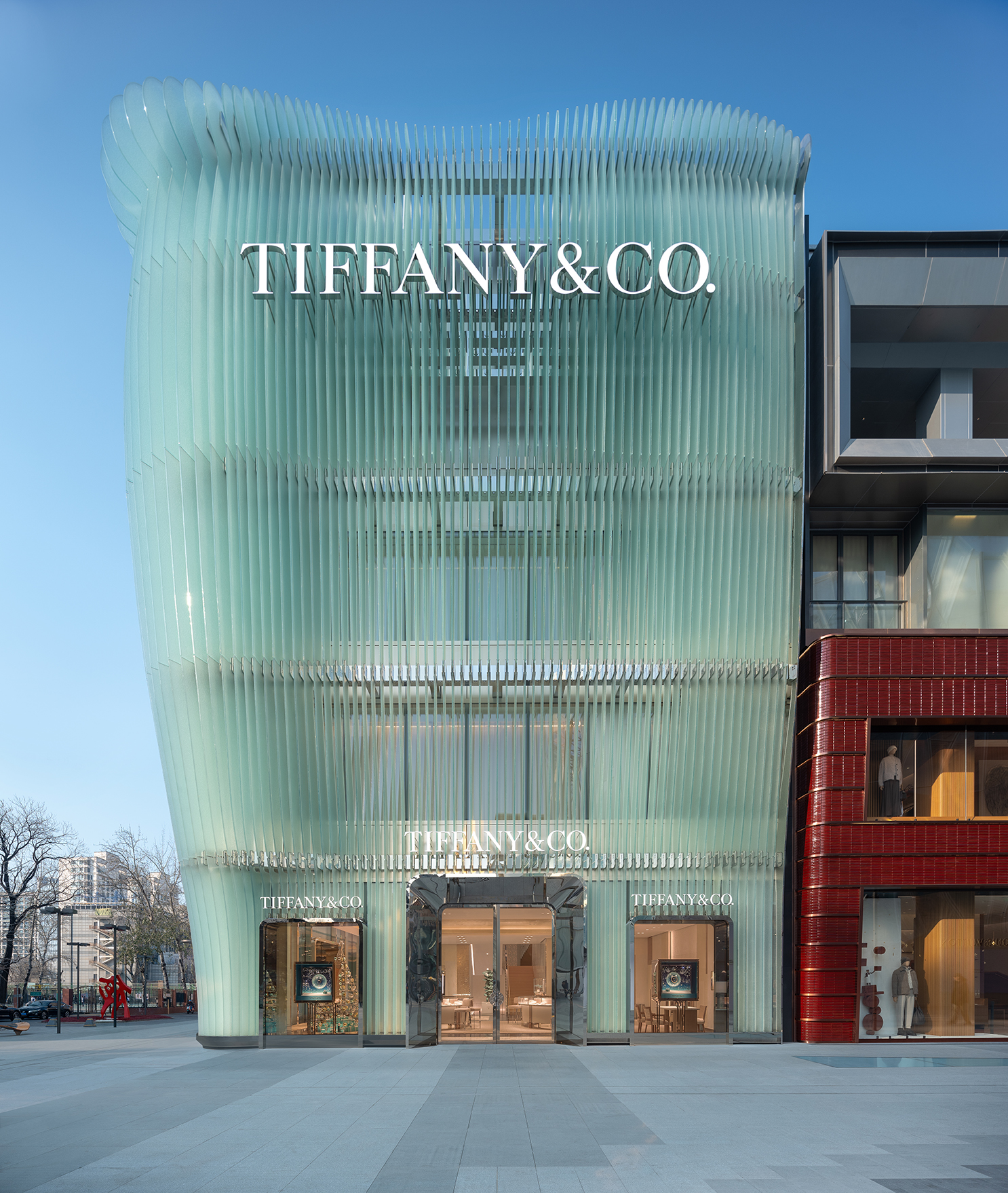
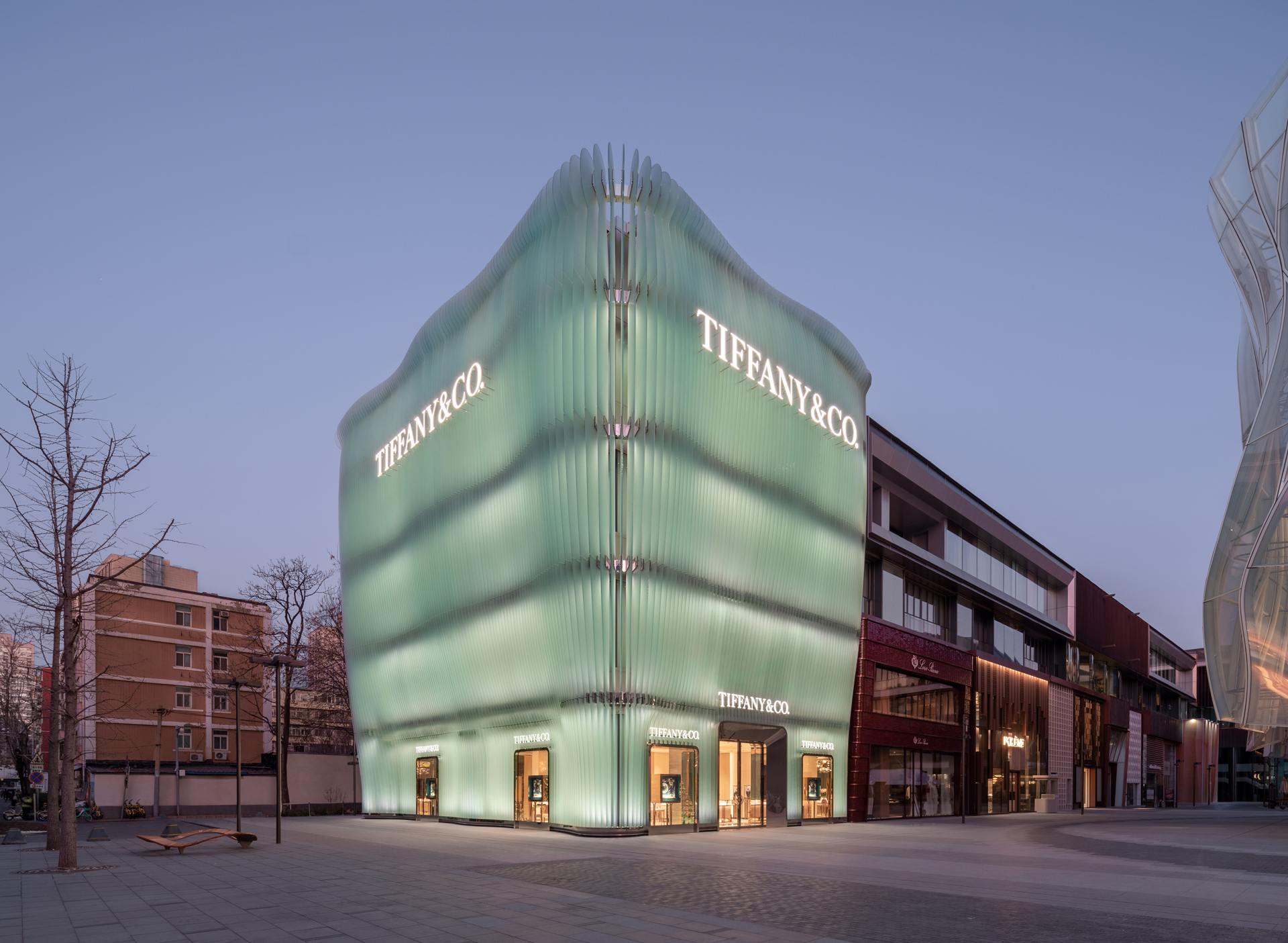
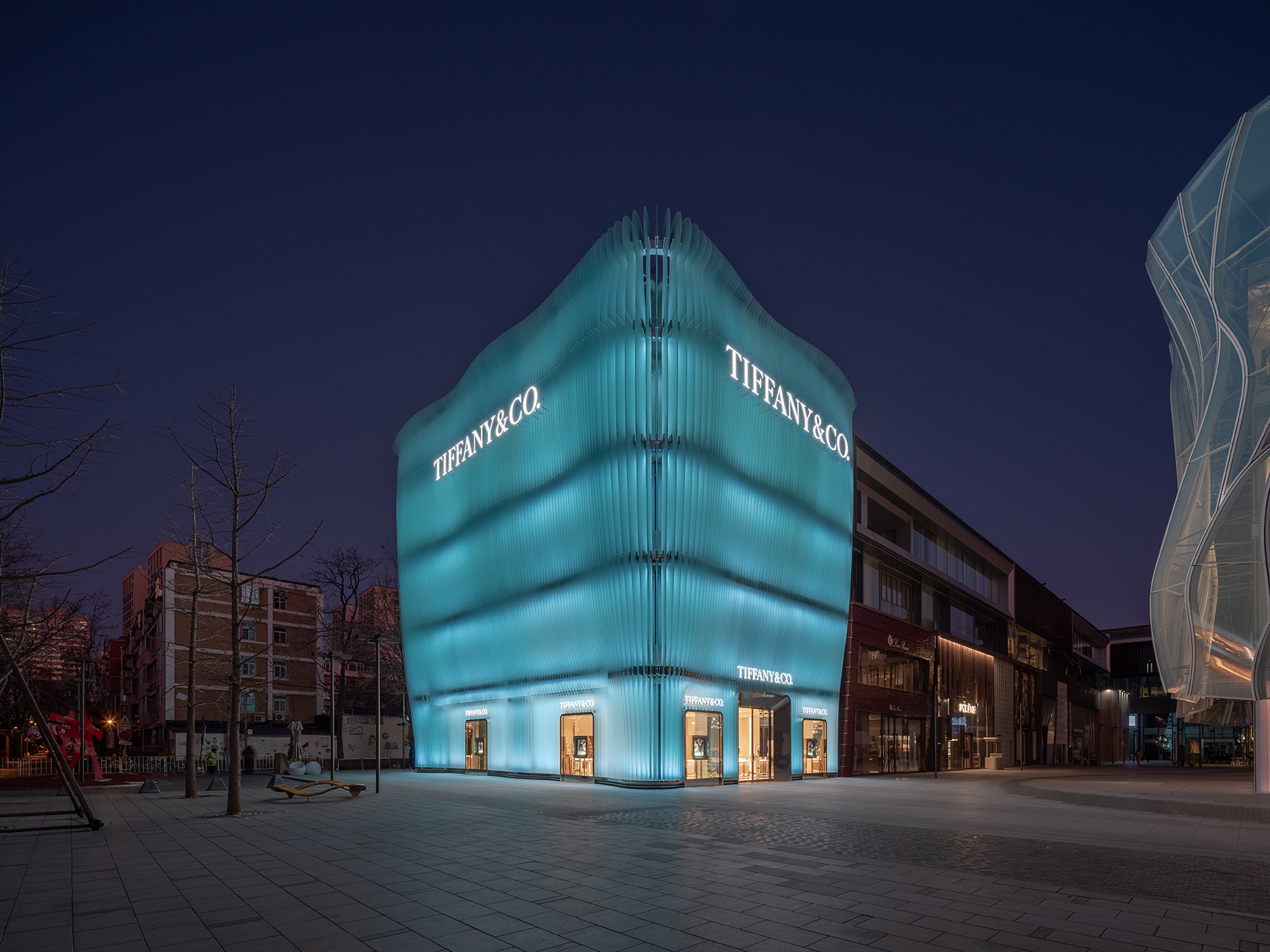
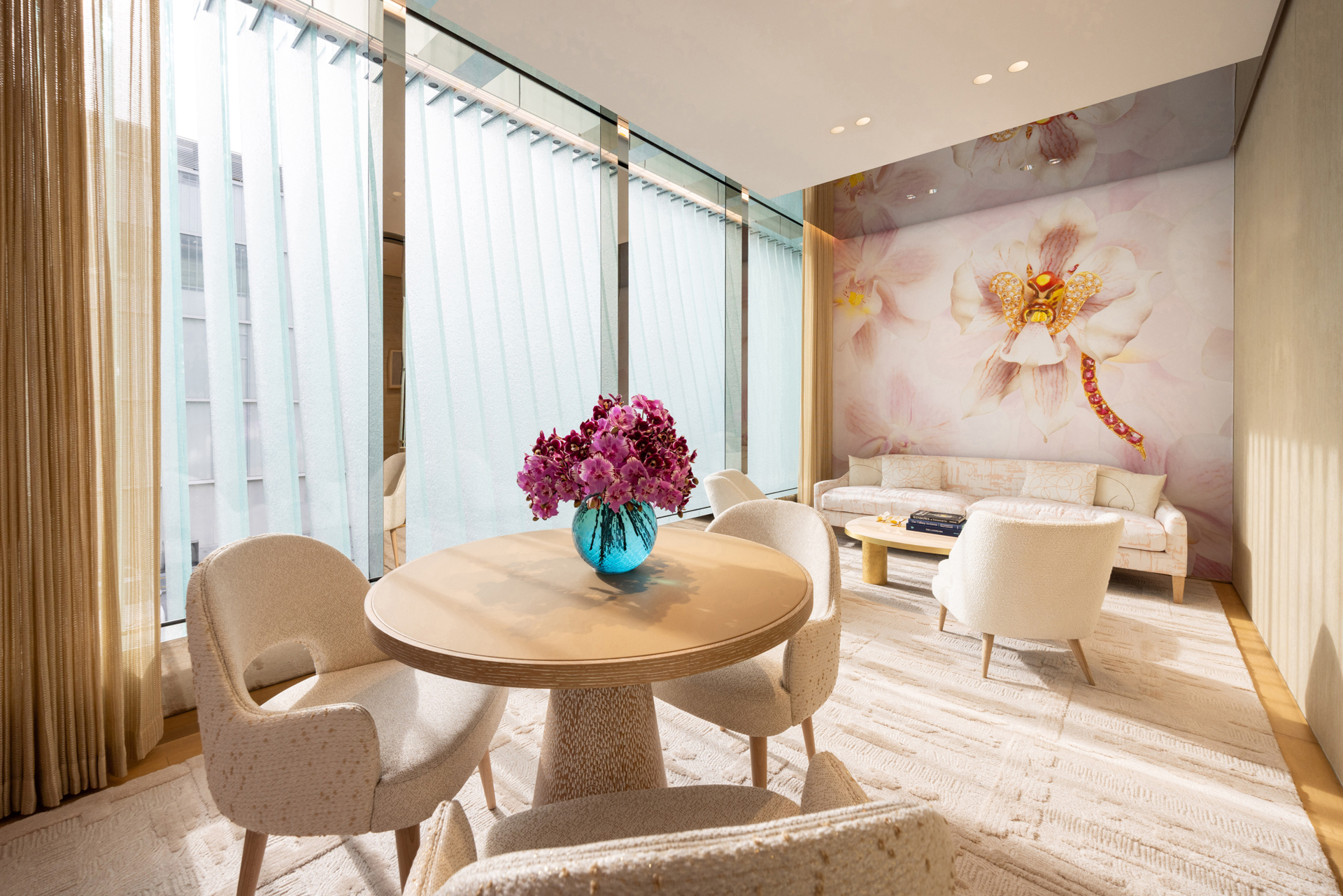
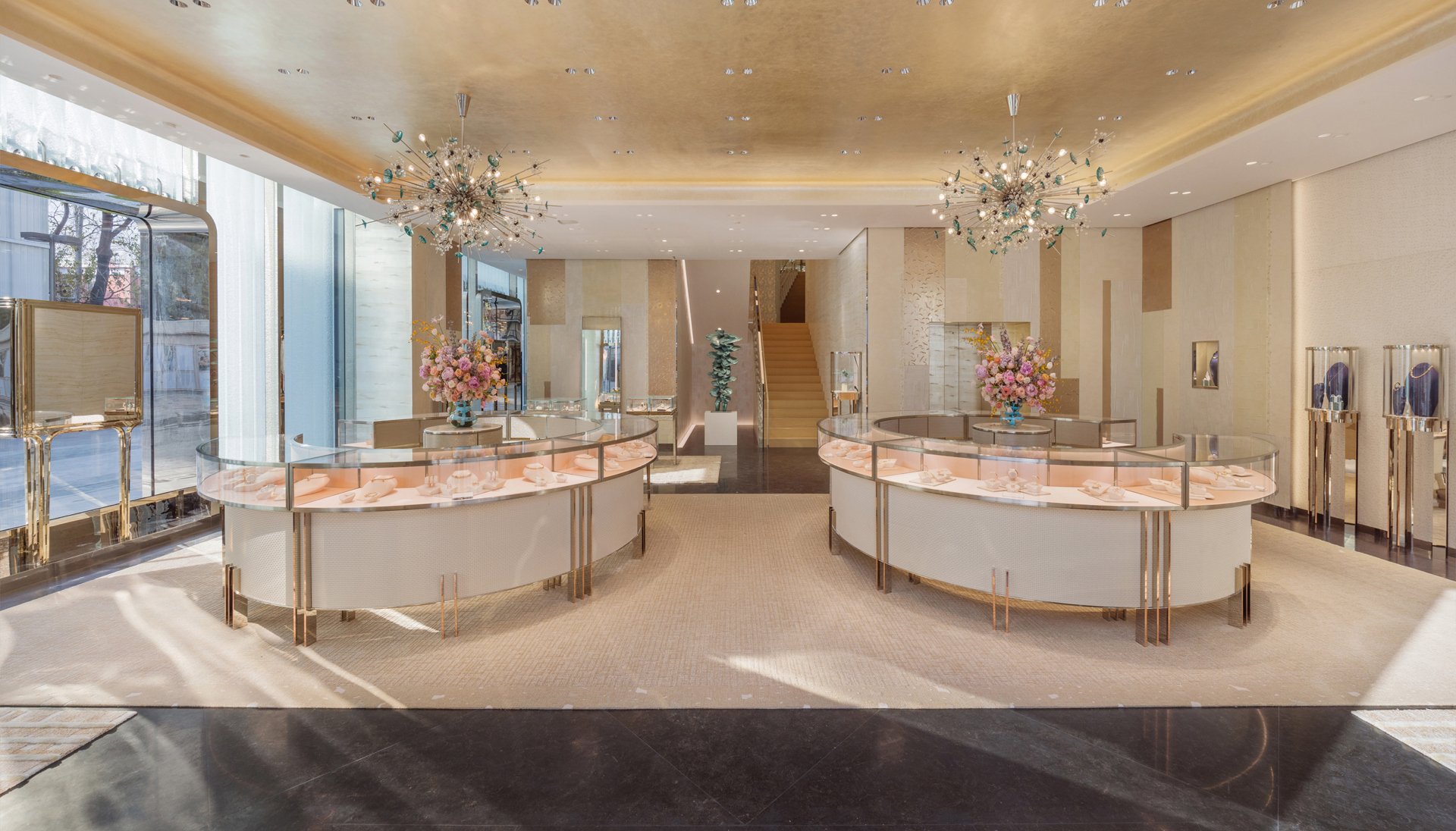
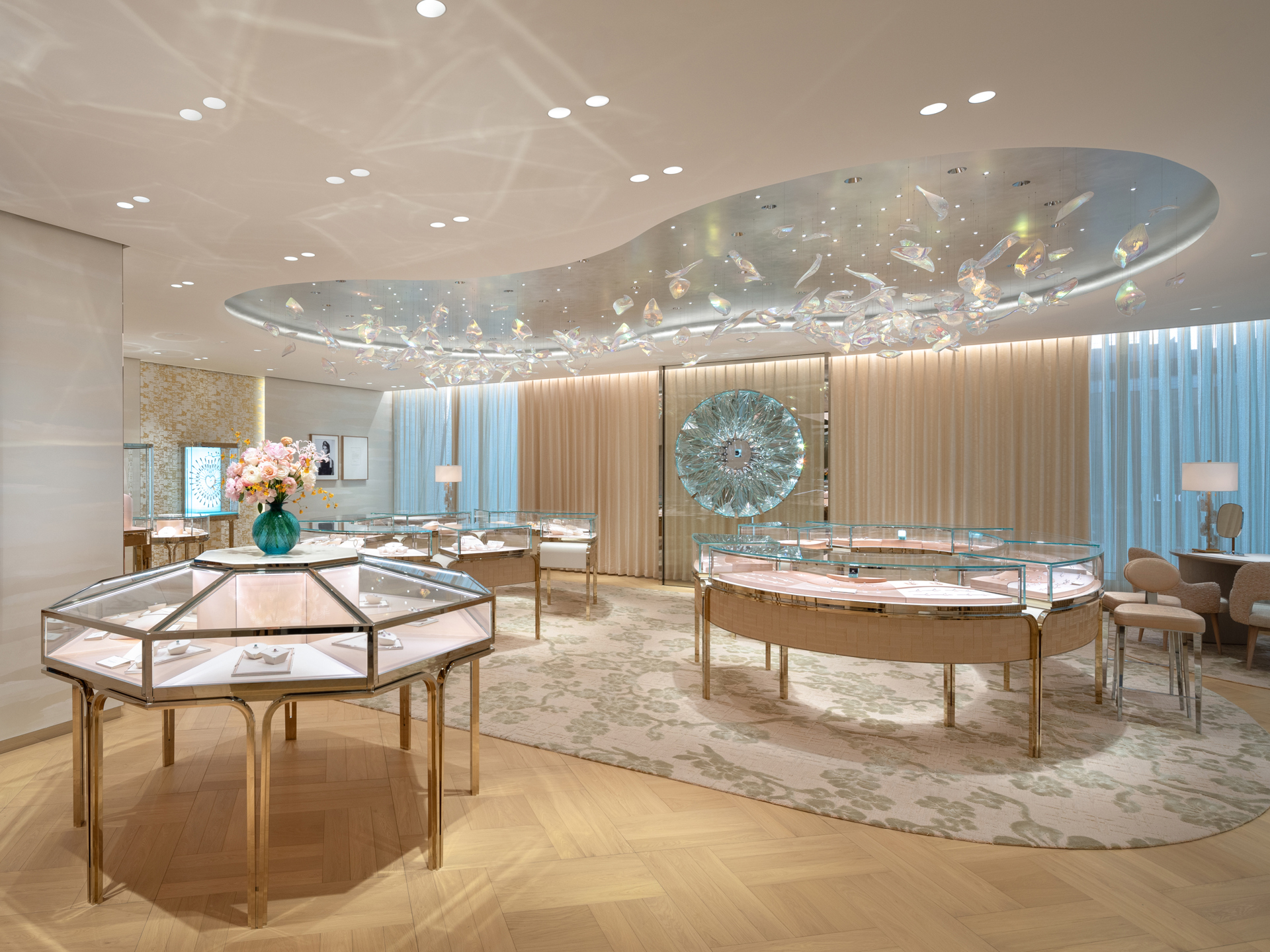
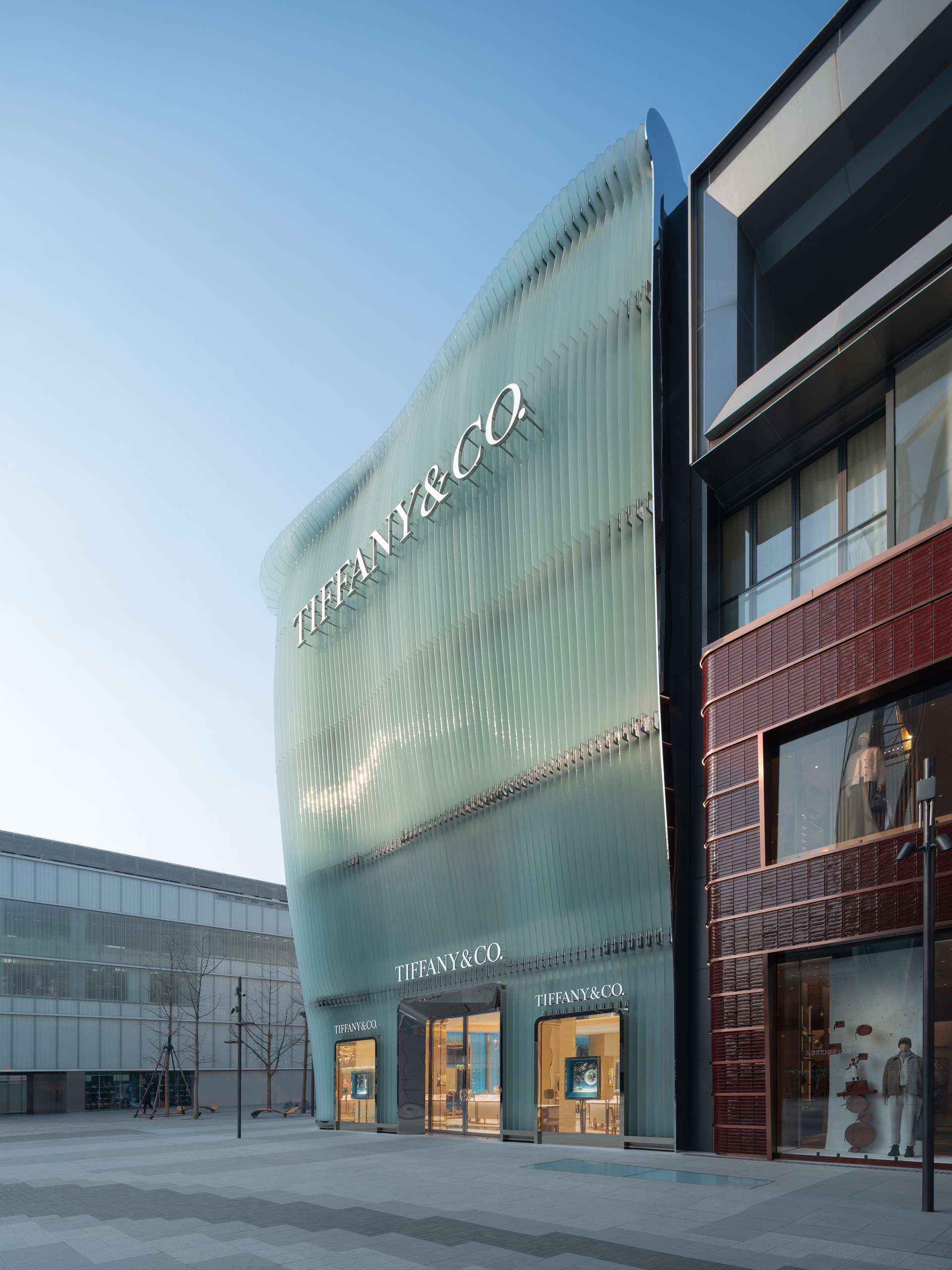
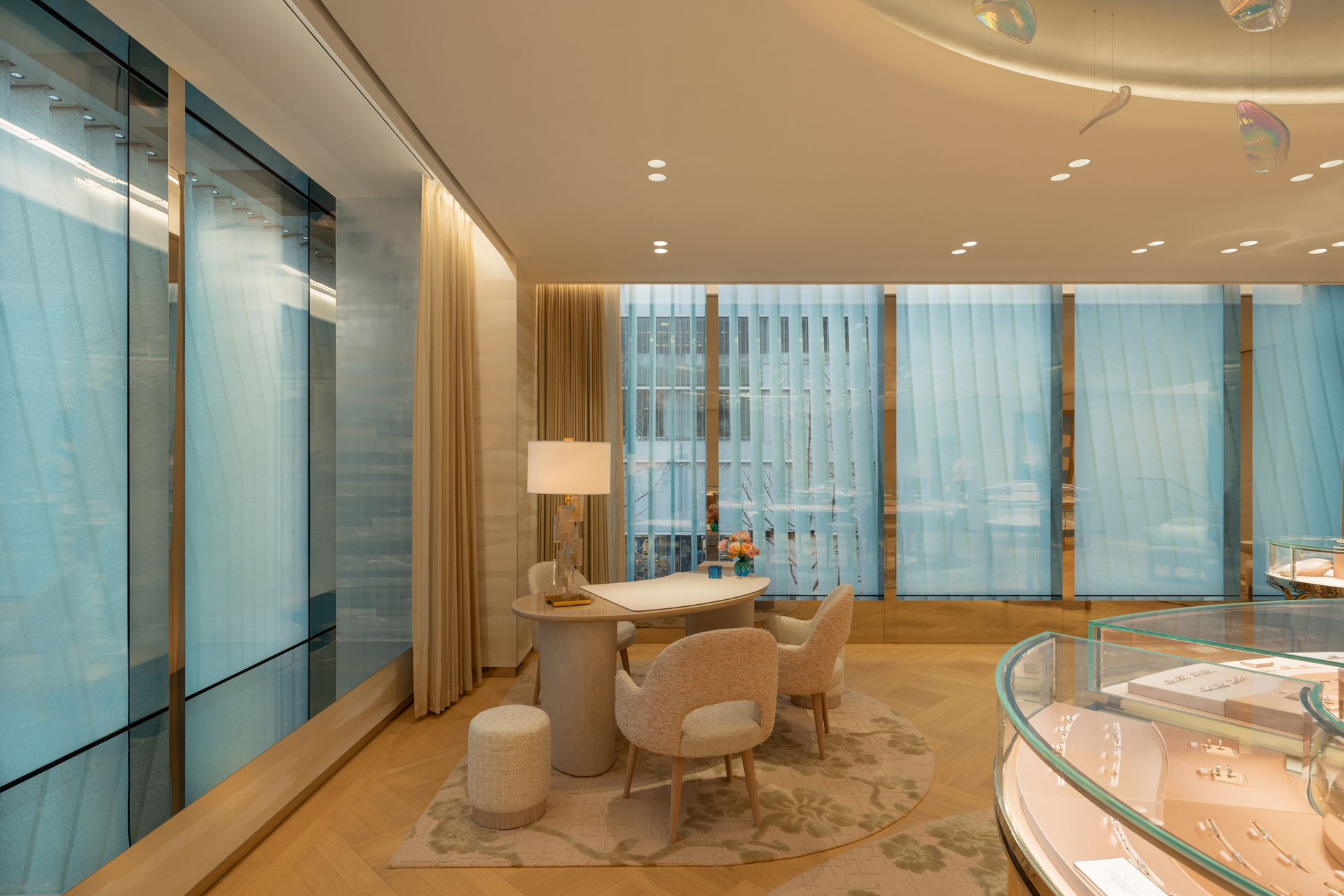
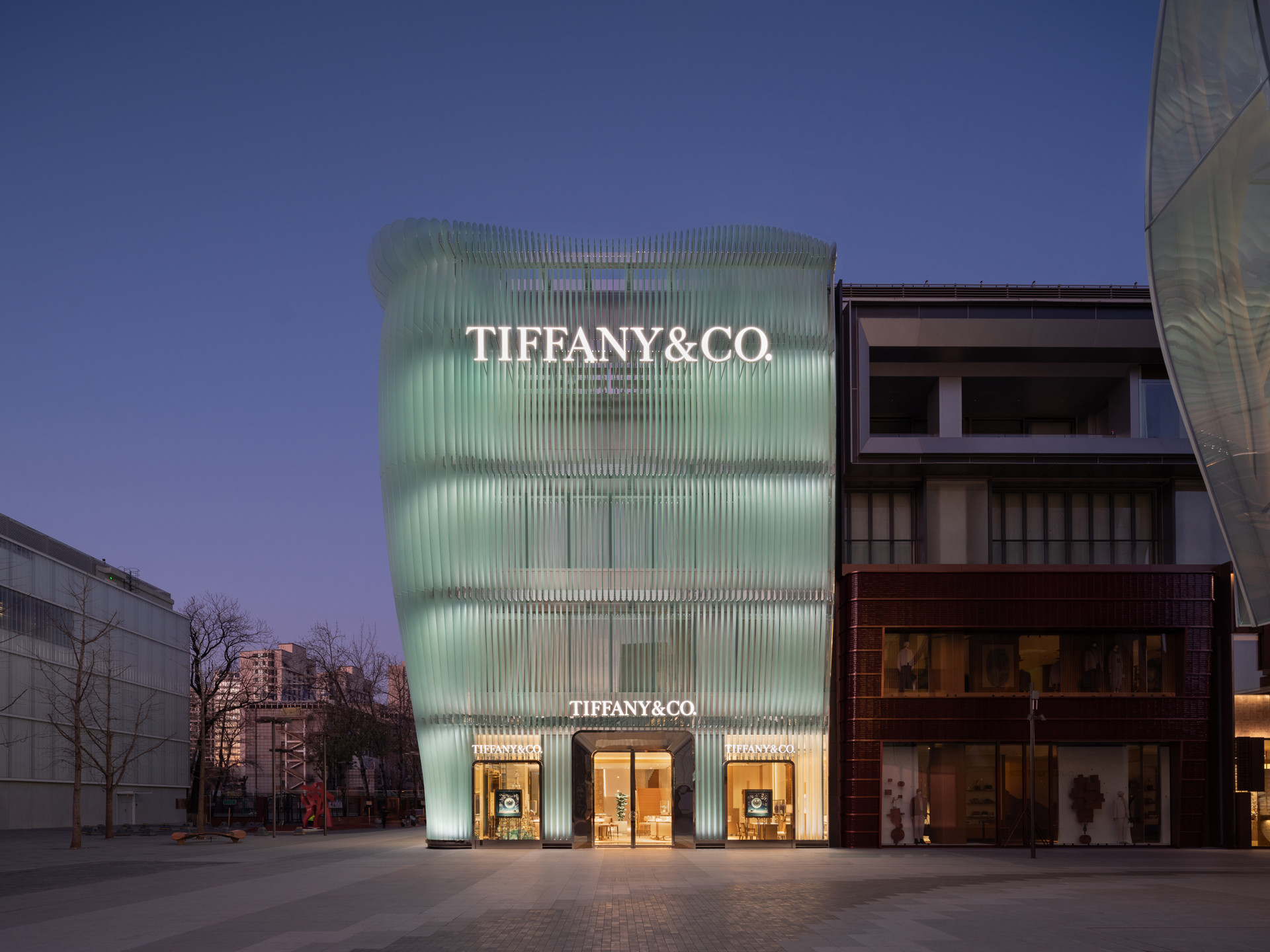
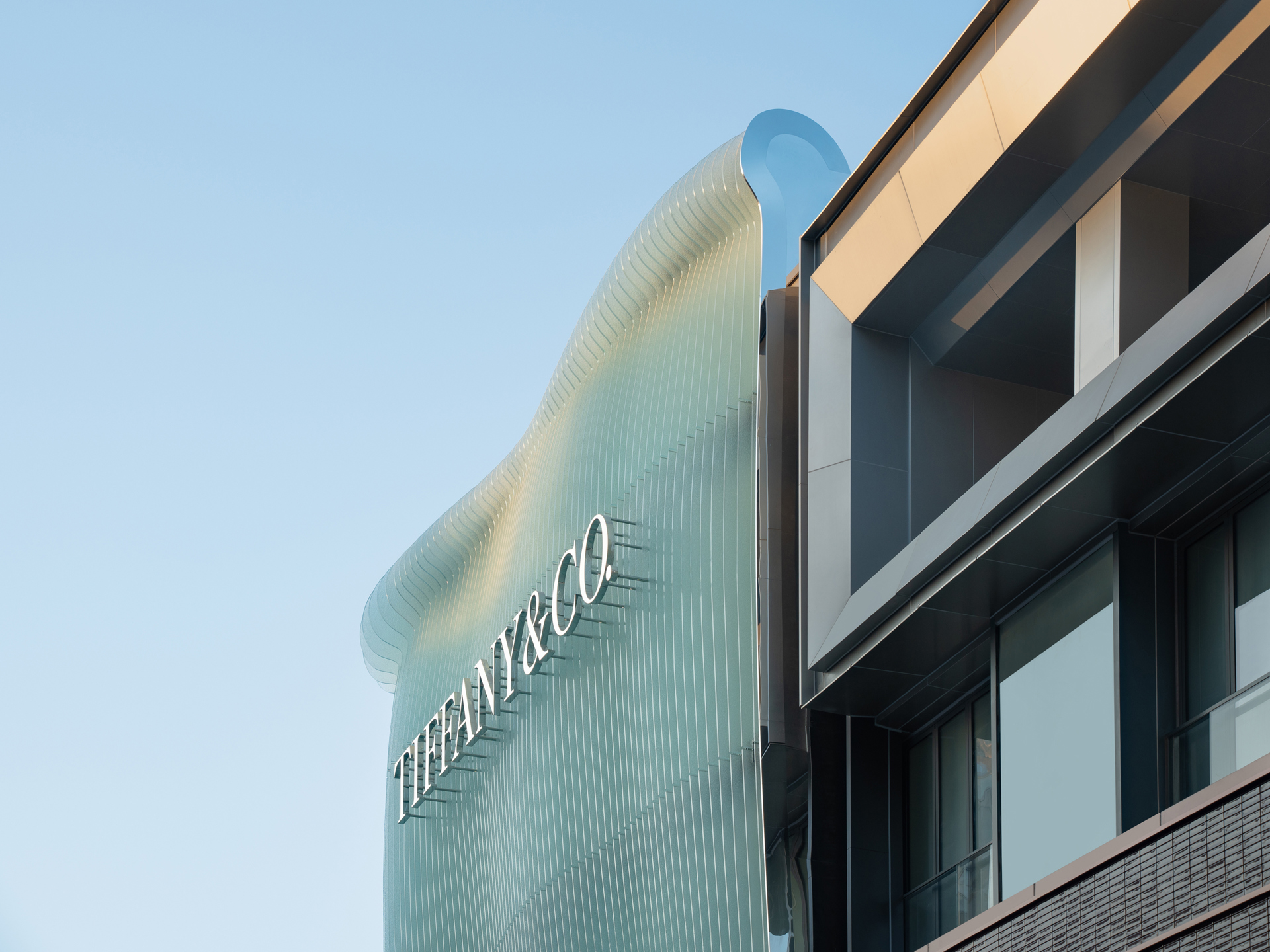
The Tiffany & Co. flagship store in Beijing’s Taikoo Li Sanlitun district features a façade made up of vertically arranged glass fins. Designed by MVRDV, the project is part of an ongoing series of façade concepts for the brand. The design focuses on geometry, light interaction and material reuse within a high-end retail setting.
Design Reference Translated into Architecture
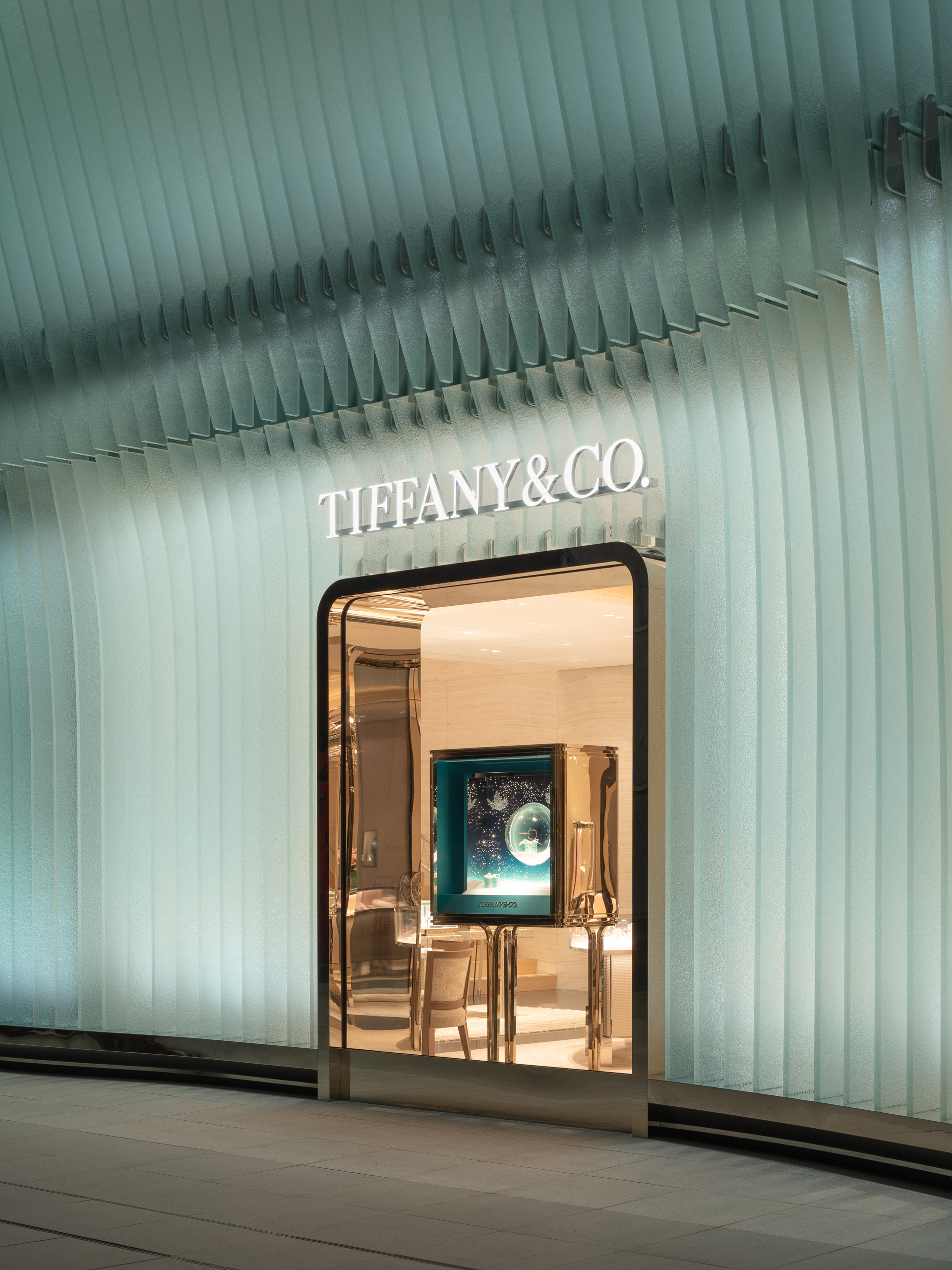
The façade geometry takes inspiration from jewellery design, specifically the Bone Cuff by Elsa Peretti. MVRDV translated this reference into elongated glass fins with softly rounded edges. As a result, the façade appears fluid rather than rigid. The fins extend across the full four-storey height of the building and respond to the building’s visible position at a busy urban crossroads.
Moreover, the curved geometry creates a layered surface. When viewed from different angles, the façade changes in appearance due to light, reflection and transparency.
Recycled Glass as a Façade Material
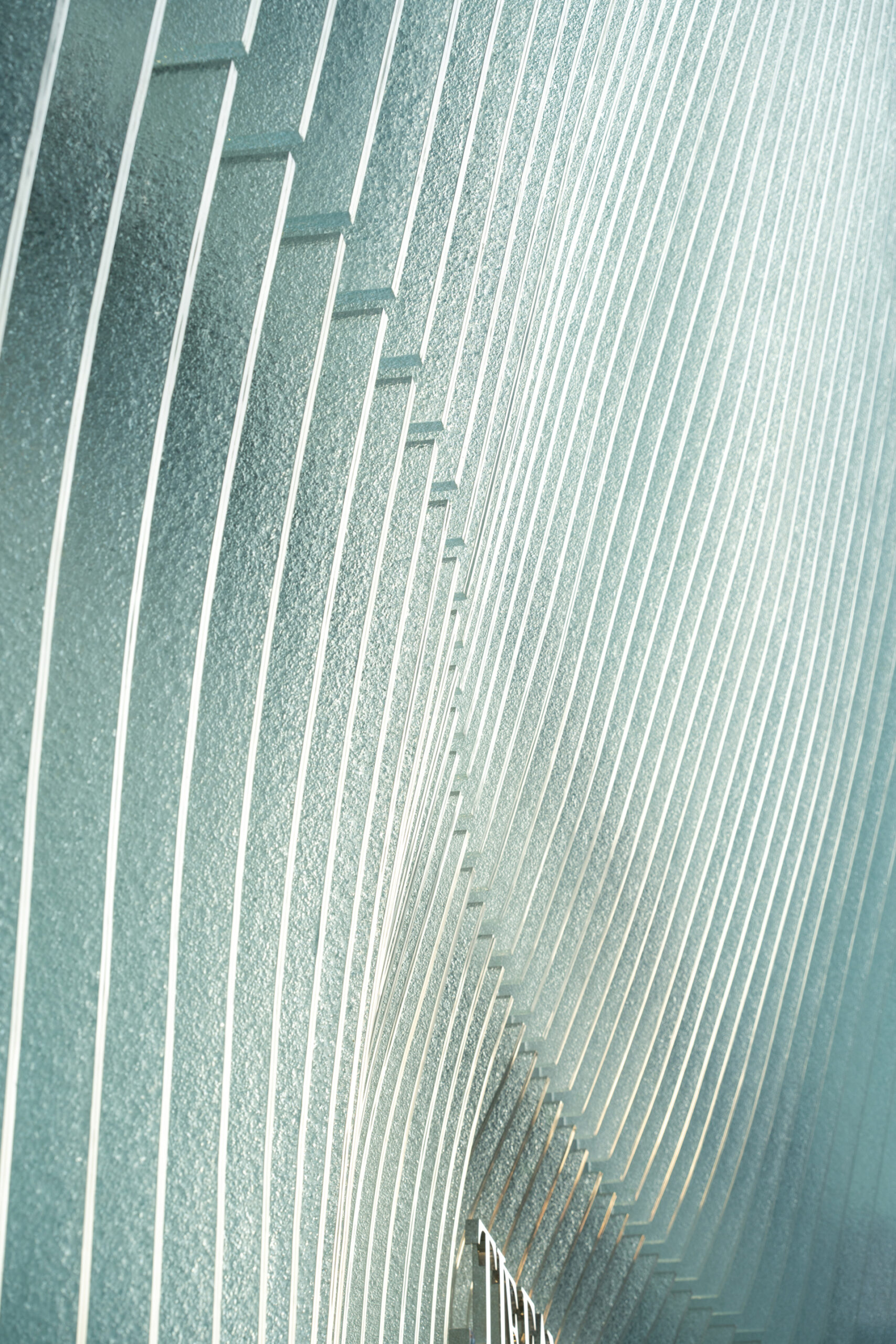
The façade consists of translucent, textured glass fins made from responsibly recycled glass. The manufacturer produced the glass locally, which helped reduce transport-related emissions. In addition, the glass texture diffuses daylight and limits direct glare.
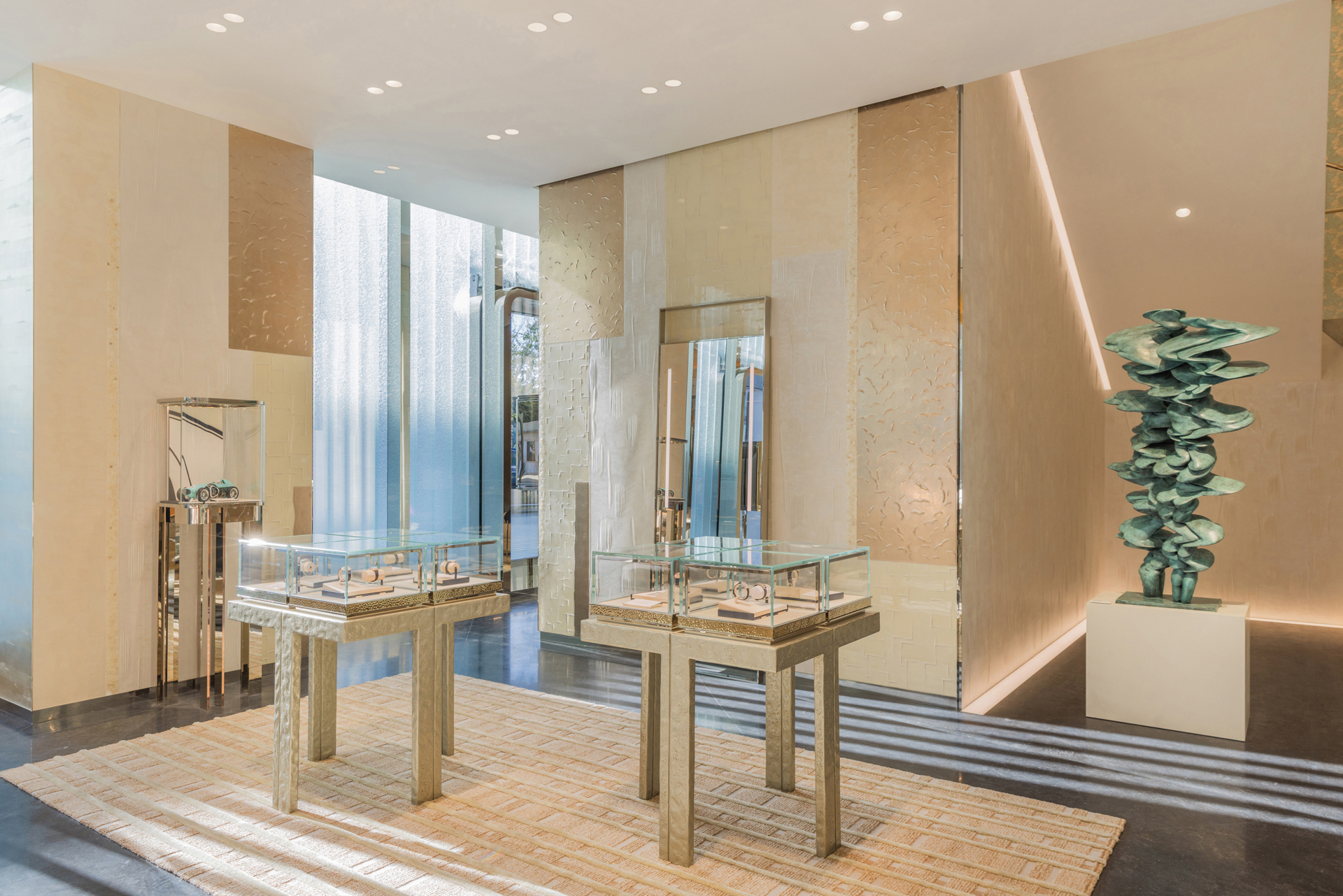
The spacing between the vertical fins allows controlled views from the street into the retail interior. At the same time, the façade maintains a clear separation between public space and the store interior. Therefore, the design balances openness with privacy.
Integrated Lighting Strategy
The glass has a natural blue tint. At night, integrated lighting highlights this colour without overpowering the façade. Instead of adding external fixtures, the designers integrated the lighting modules into the custom mounting brackets. As a result, technical elements remain largely invisible.
Meanwhile, the lighting enhances the depth of the façade and supports a consistent night-time appearance. The material qualities of the glass remain clearly legible, both during the day and after dark.
Designed for Disassembly and Reuse
The façade system is fully demountable. The glass fins and their supporting brackets can be removed without damage. This makes reuse or recycling possible at the end of the façade’s lifespan. Consequently, the project reflects circular design principles that are increasingly relevant in contemporary architecture.
Overall, the project shows how glass façades can combine expressive form with practical considerations such as material sourcing, modular construction and end-of-life planning. For architects and designers working with façade systems and circular materials, the project offers a relevant built reference.
Source & photos: MVRDV

Comments