Timber River Pavilion Explores Microarchitecture in the Italian Landscape
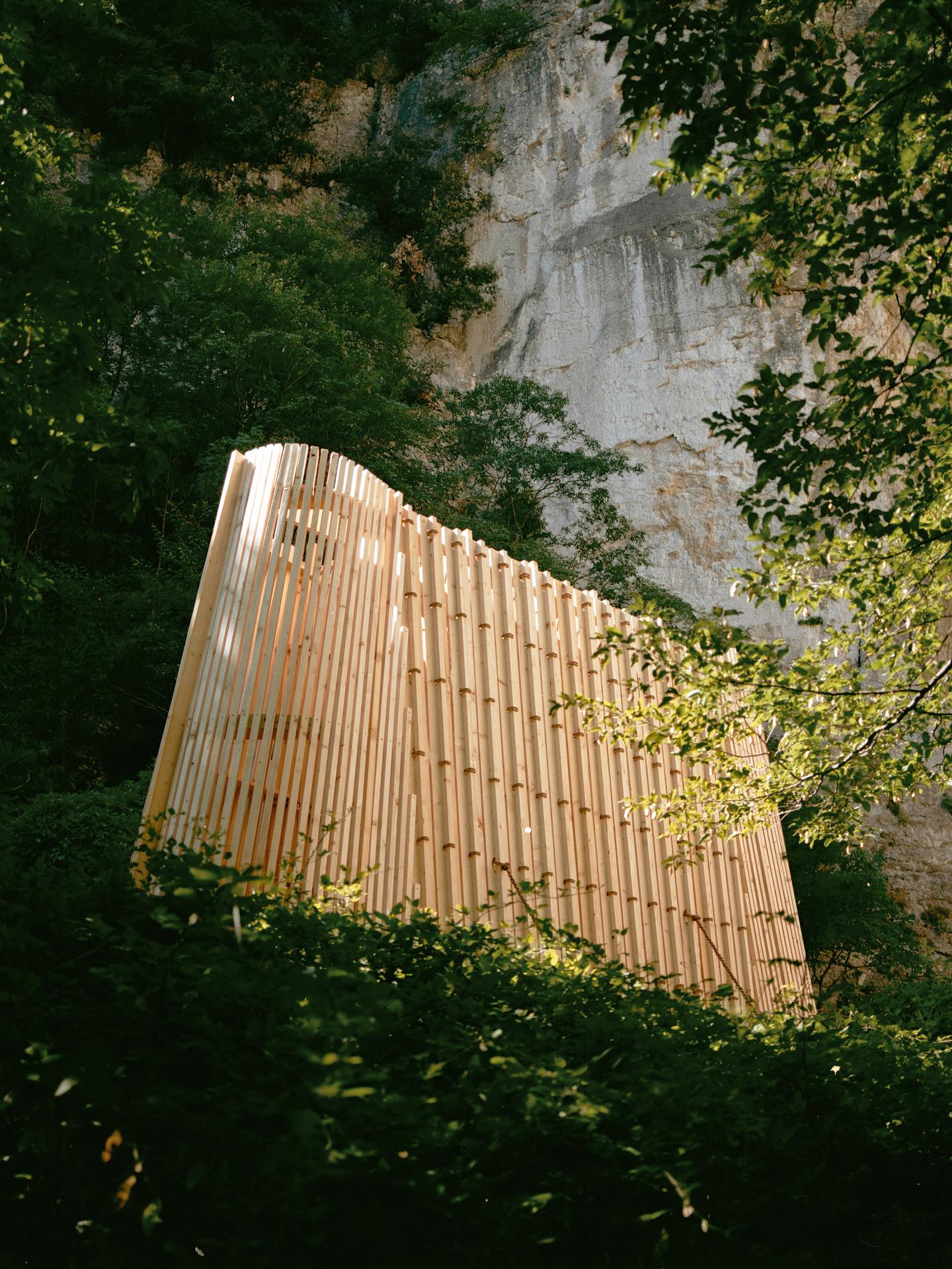
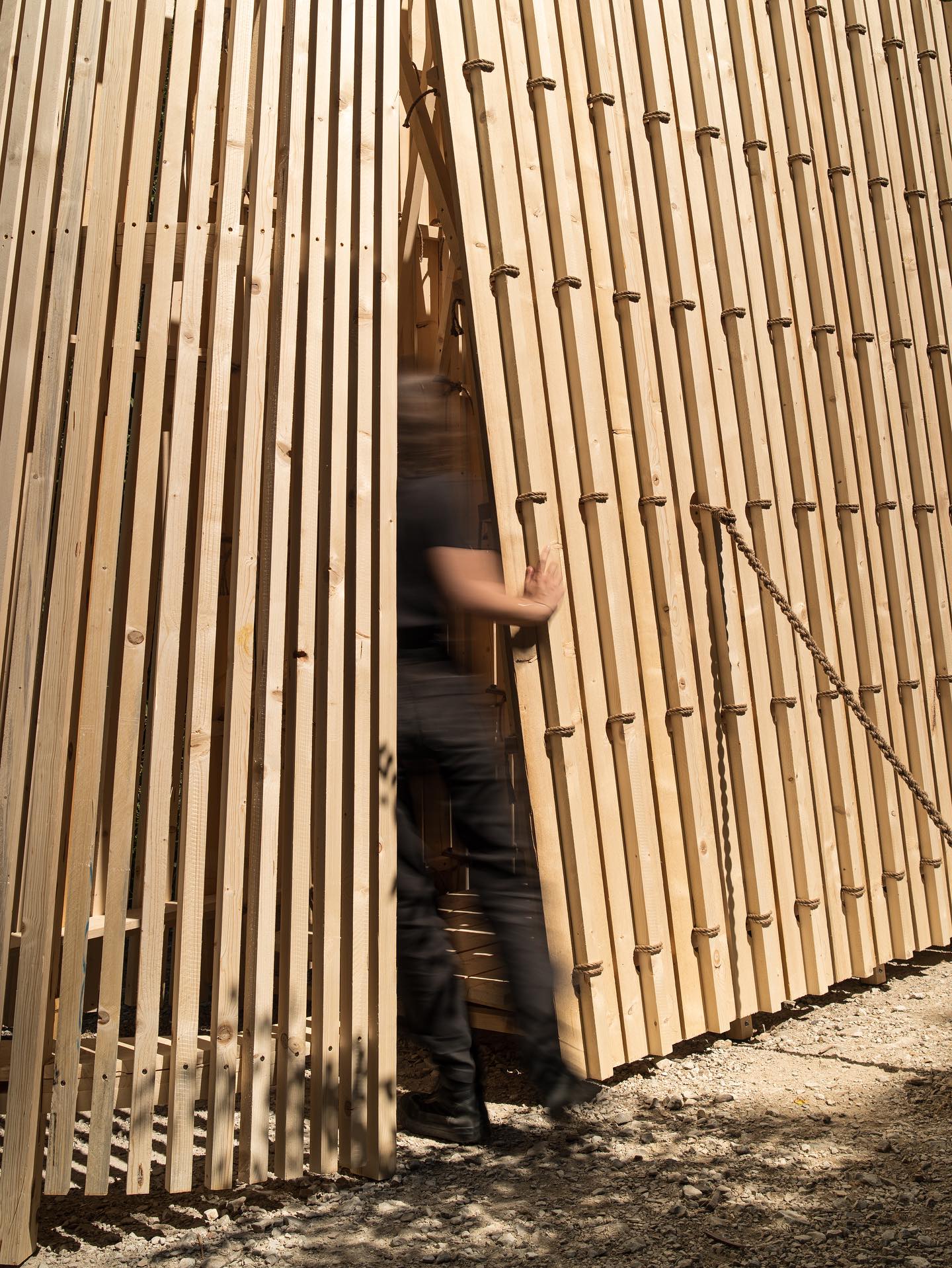
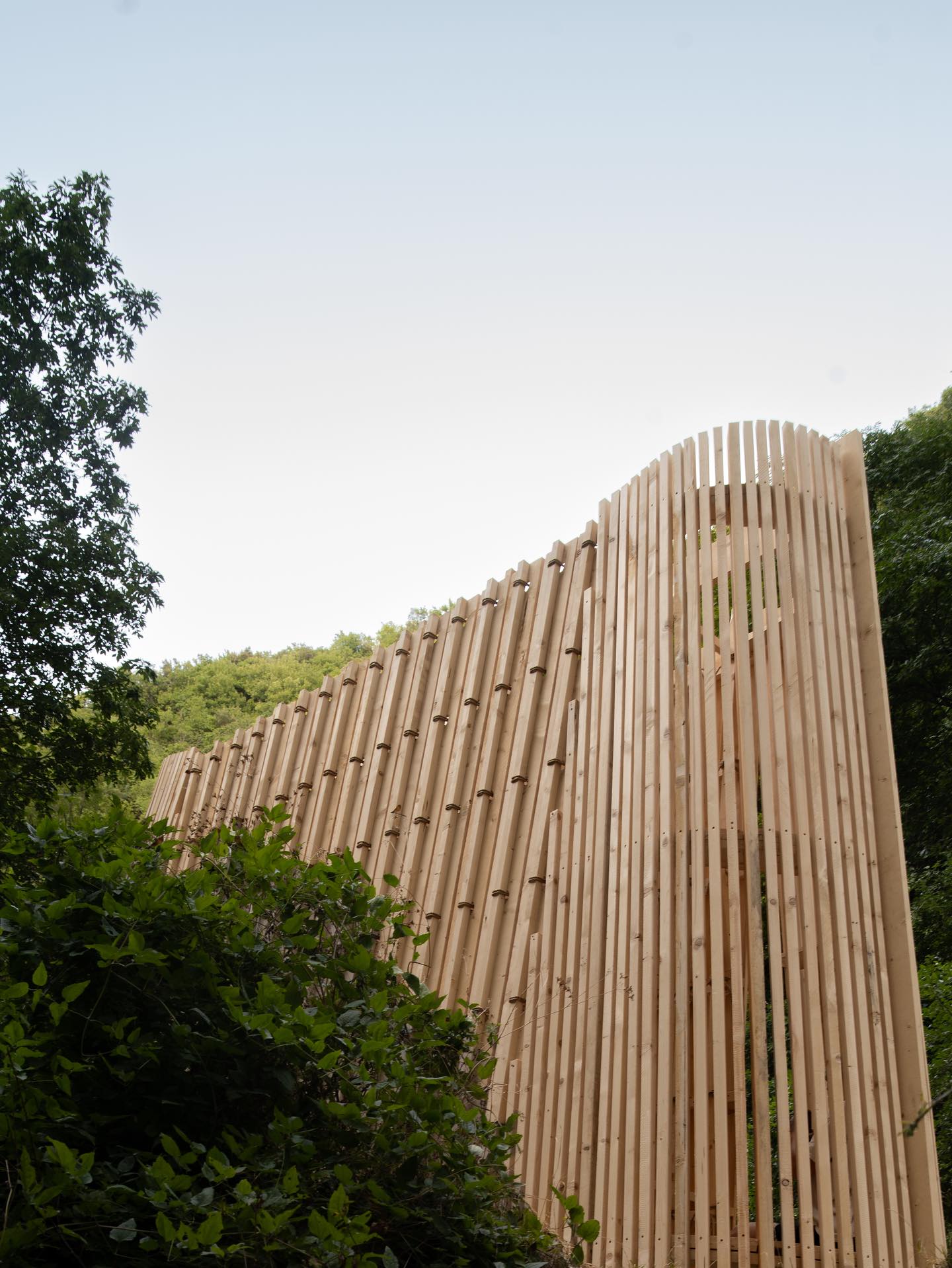
La Barca is a small timber pavilion located along a hiking trail near Piobbico, in the Le Marche region of Italy. Architects Marina Poli, Clément Molinier and Philippe Paumelle designed and built the project as the winning installation of the 2025 Festival di Microarchitettura. The pavilion forms a temporary architectural intervention and sits at Le Porte del Vitoschio, where it crosses an existing mountain path.
At the point where the structure meets the trail, a narrow opening allows visitors to enter the pavilion. From there, the space unfolds as a covered passage that remains open to the sky. Although the pavilion does not serve a specific function, it introduces a moment of enclosure and pause along the route.
Clear Geometry and Spatial Layout
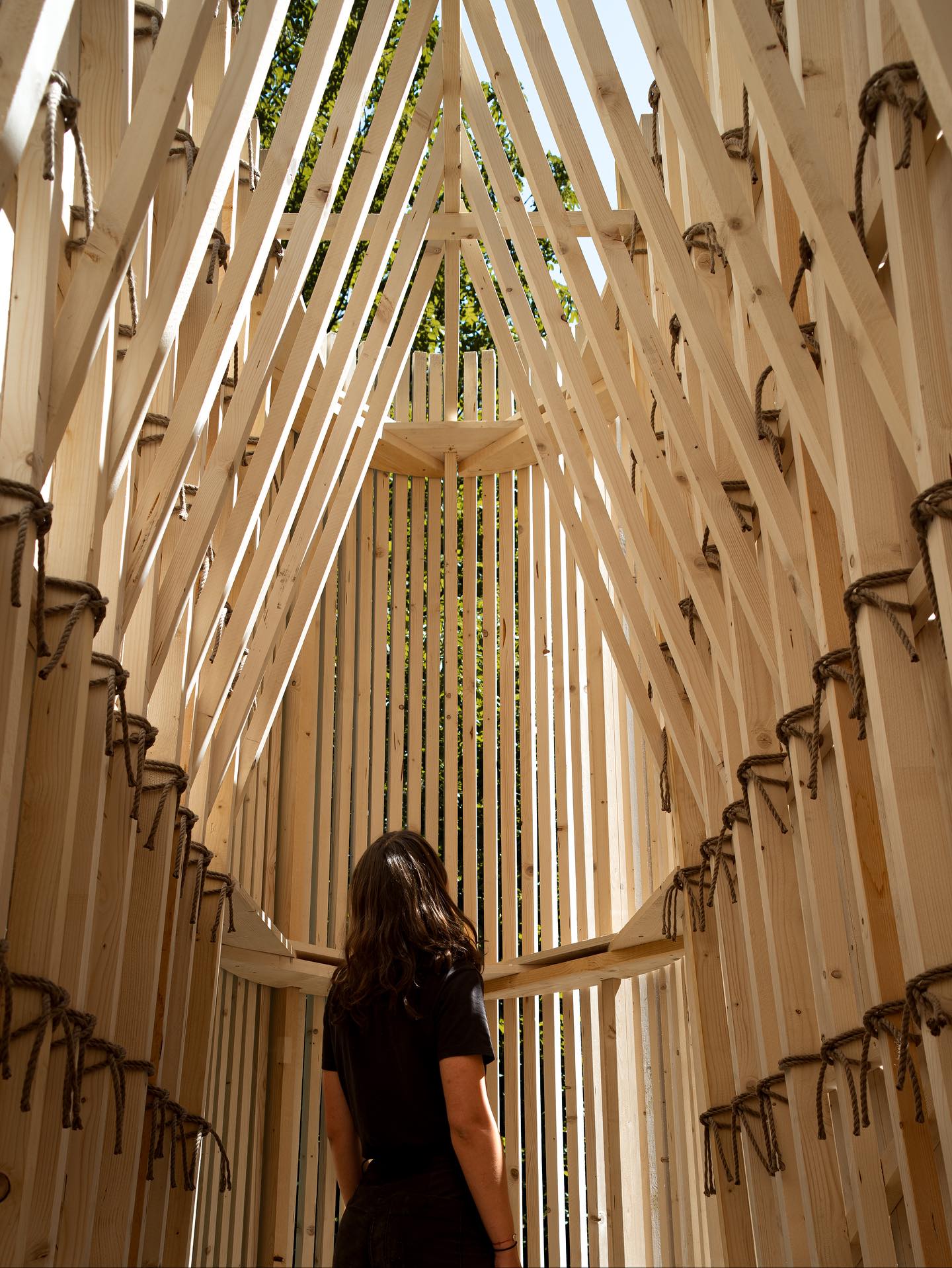
The pavilion takes its overall shape from the geometry of an overturned boat. This reference guides both the exterior form and the internal organisation of the structure. As a result, the elongated volume follows the direction of the hiking path and directs movement through a central corridor.
Inside, a continuous timber keel runs along the length of the pavilion and organises the floor structure. Six timber porticoes define the main passage, while curved timber sections close the volume at both ends. Meanwhile, an opening along the roof brings daylight into the interior and maintains a visual connection with the surrounding cliffs and vegetation.
Lightweight Timber Construction
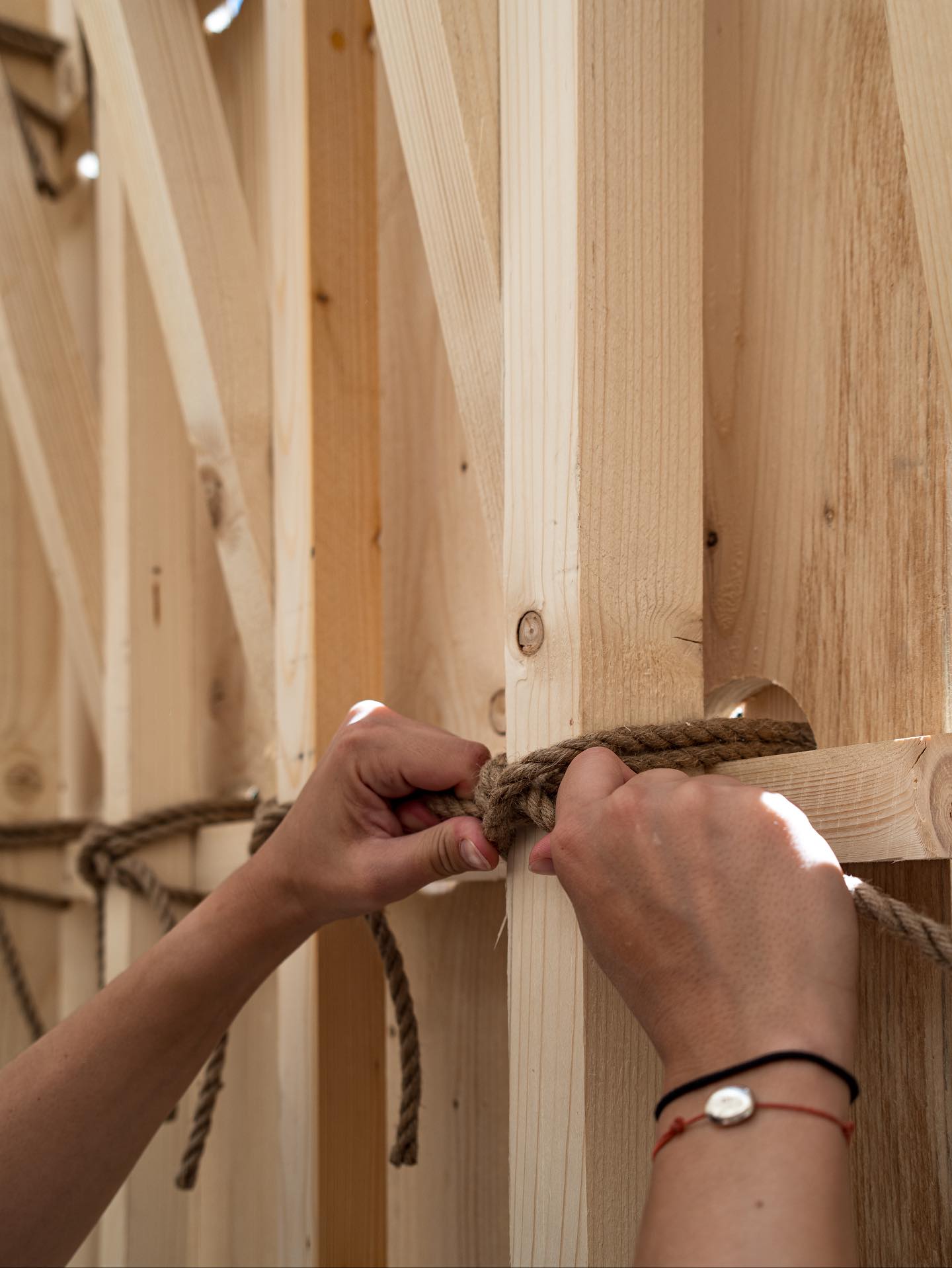
The architects constructed the pavilion entirely from timber elements. They cut the structural ribs from wooden boards and assembled them into a layered sandwich construction, which keeps the structure lightweight. In addition, timber planks form the walls and floor, with joints and connections left visible to clearly express how the pavilion was built.
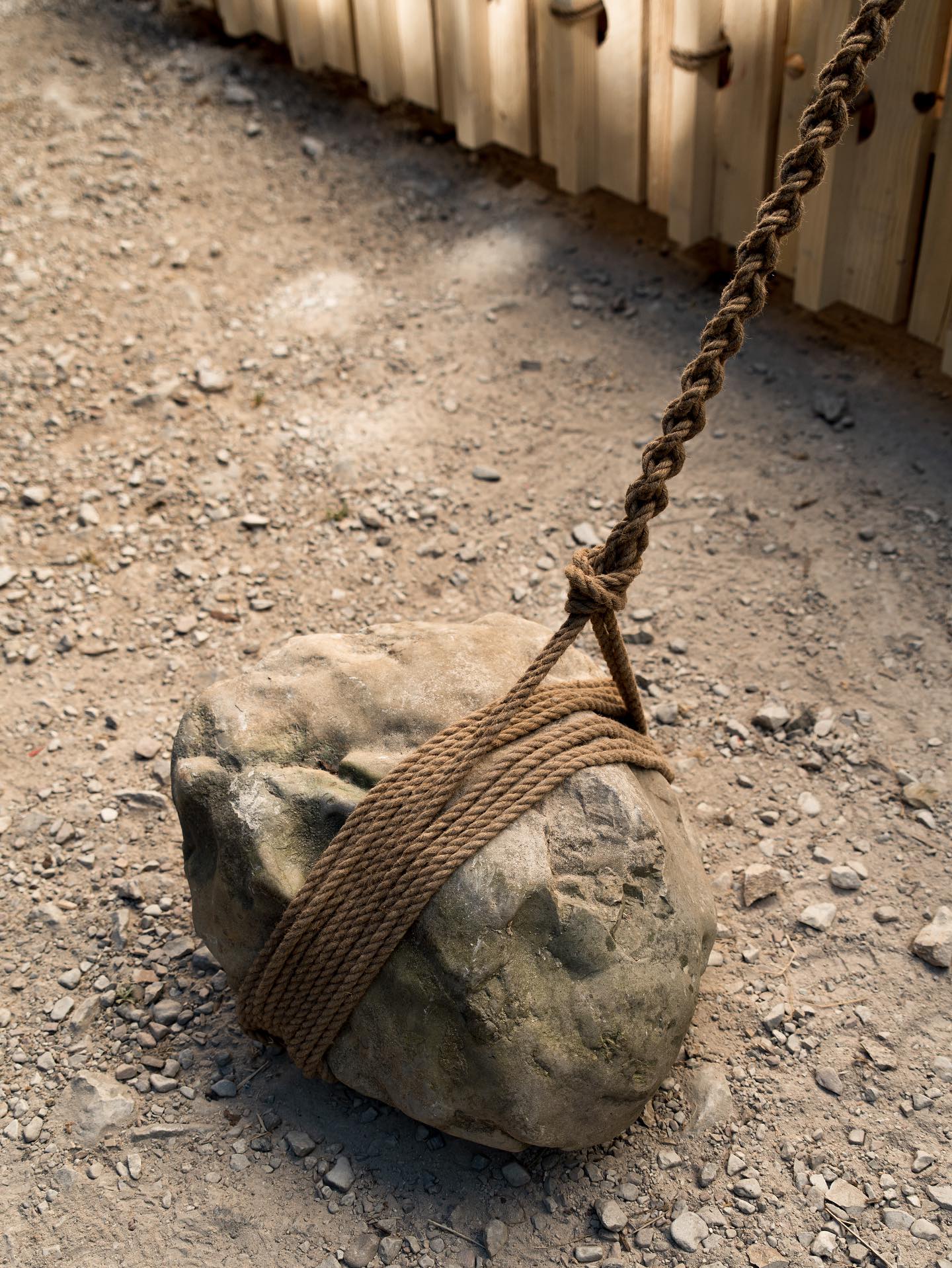
Rather than using permanent foundations, the designers stabilised the pavilion with four locally sourced stones. These stones act as ballast and provide stability, while one stone anchors the tapered end of the structure. Consequently, the pavilion touches the ground lightly and requires minimal intervention in the landscape.
Temporary Architecture in a Natural Setting
The designers developed La Barca as a temporary installation for the festival. Through this project, they demonstrate how small-scale architecture can rely on simple construction methods, limited material use and reversible building techniques.
For architects and landscape designers, the pavilion offers a reference for timber-based microarchitecture in natural environments. It shows how form, structure and material can define space without the need for permanent or heavy construction.
Source: Designboom / Marina Poli / Clément Molinier
Photos: Clément Molinier

Comments