Turning Desert Sand Into a Viable Building Material
Concrete is one of the most widely used materials in the built environment. Only water is consumed in larger quantities worldwide. Each year, global cement production exceeds four billion tonnes, contributing to roughly eight per cent of global CO₂ emissions. Alongside these emissions, the construction industry faces another growing challenge: a shortage of suitable sand.
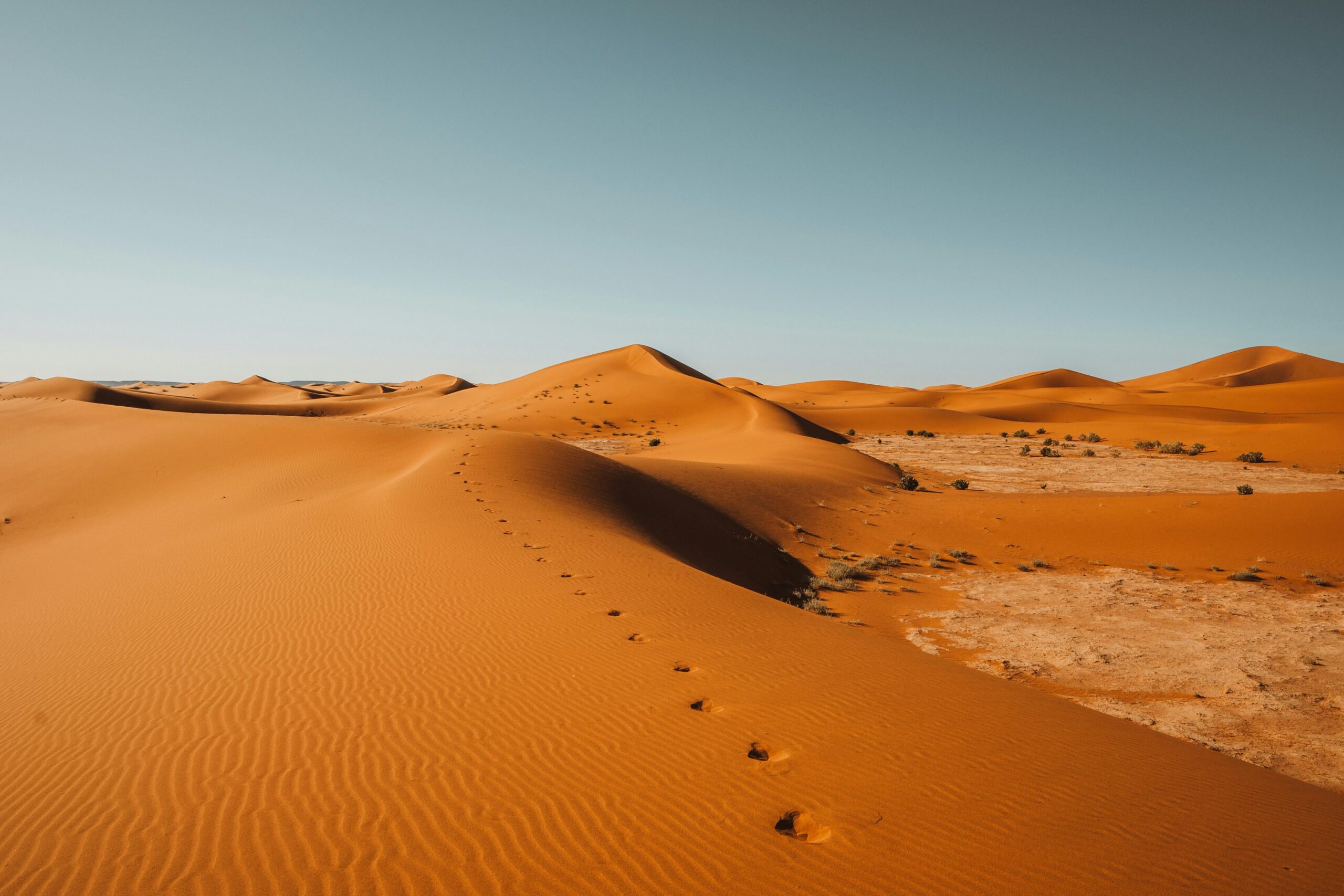
Concrete does not work with just any sand. Builders need grains of a specific size and shape, which usually come from crushed rock or riverbeds. Large-scale sand extraction damages ecosystems, alters landscapes, and disrupts water systems. At the same time, vast deserts hold enormous amounts of sand that remain unused because the grains are too fine for conventional concrete. Researchers are now asking whether this so-called useless sand can become a valuable resource.
A New Approach: Botanical Sand Concrete
Researchers from the Norwegian University of Science and Technology (NTNU) and the University of Tokyo have developed a prototype material called botanical sand concrete. The material combines desert sand with small amounts of plant-based additives, mainly finely ground wood. Instead of using cement, the researchers press the mixture under heat to create a solid, dense material.
Ren Wei, postdoctoral researcher at NTNU, explains that desert sand normally fails as a concrete ingredient because it does not bind well. The team explored a different approach by changing both the binder and the production process. Through extensive laboratory testing, they adjusted temperature, pressure, pressing time, and mixing ratios. They also compared desert sand with other fine aggregates.
The results show that desert sand performs well within this new system. The pressed material reaches strength levels suitable for non-structural applications.
Applications for the Built Environment
The researchers see strong potential for using botanical sand concrete in paving stones, pavements, and walkways. This makes the material especially relevant for architects and landscape architects working on public space, infrastructure, and outdoor environments. Interior designers and product designers may also find opportunities in tiles or modular elements.
By replacing conventional aggregates and reducing cement use, the material could lower environmental impact significantly. It also offers a way to use local resources more effectively, especially in arid regions.
Reducing Environmental Impact Through Local Use
The production process is relatively simple and does not rely on complex industrial infrastructure. This means the material could be produced close to where the sand is found. According to the researchers, local use is essential. Transporting desert sand across continents would cancel out many of the environmental benefits.
Further research will focus on durability and performance in different climates, including cold conditions. For now, the team expects indoor or sheltered applications to be the most realistic next step.
From Global Paradox to Local Resource
Botanical sand concrete challenges a long-standing contradiction in construction. While mountains are quarried and rivers are depleted, deserts remain full of unused material. This research suggests a different future, where biobased binders and locally available sand support more circular and responsible building practices.
Source: NTNU & SINTEF
Photo: Stijn Dijkstra

Comments