Turning Sawdust Into Fire-Resistant, Circular Building Materials
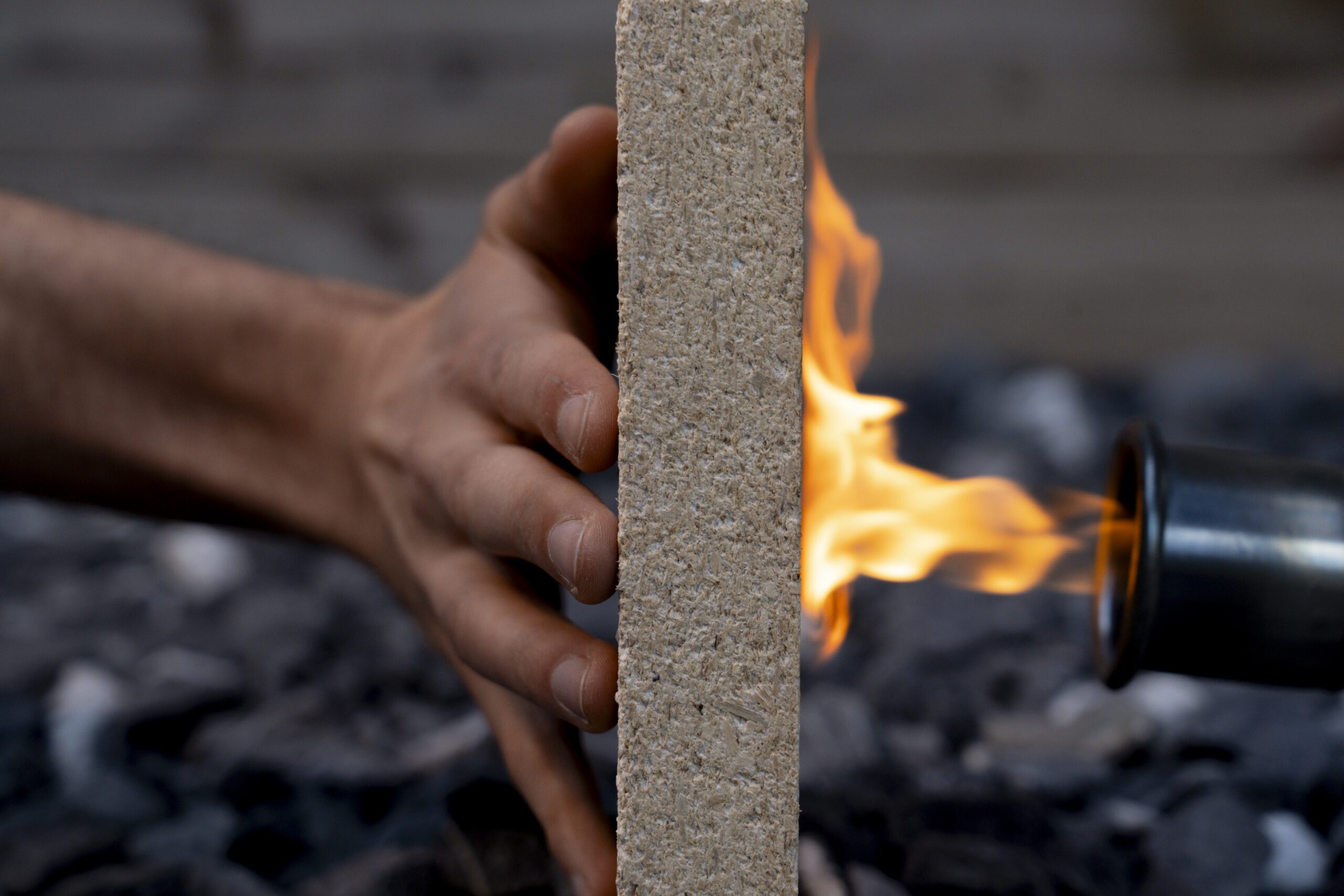


Each year, industries generate millions of tonnes of sawdust, and most of it is burned for energy. This process releases stored carbon back into the atmosphere. Researchers at ETH Zurich and Empa now propose a more sustainable alternative. They convert sawdust into a fire-resistant, recyclable composite material for construction and interiors.
The team combines sawdust with struvite, a mineral known for its fire-retardant properties. Using an enzyme derived from watermelon seeds, they control how struvite crystallises. This allows the mineral to bind effectively with the wood particles. The process forms solid panels at low temperatures, which reduces energy use compared to conventional materials.
Fire Safety Without Heavy Cement
The new composite offers strong fire resistance and suits interior partitions and fittings. When exposed to heat, struvite releases water vapour and ammonia. These gases absorb heat and slow combustion. At the same time, they reduce oxygen levels, which limits flame spread.
Tests show that the material ignites much later than untreated wood. It also forms a protective char layer that improves fire performance. Early estimates suggest it can reach similar fire ratings to cement-bonded particleboards. Unlike conventional boards, which contain 60–70% cement, this material uses only about 40% mineral binder. This makes it lighter and less carbon-intensive, which benefits low-impact building design.
Designed for Circularity
The material’s full recyclability sets it apart from many existing composites. After use, manufacturers can break down the panels mechanically and heat them at low temperatures. This process separates the components. They can recover the sawdust and reuse the mineral binder.
This closed-loop system supports circular construction and reduces waste. The mineral component can also serve as a slow-release fertiliser, which creates additional value beyond the building sector.
Scaling Challenges and Future Potential
Cost remains the main challenge, especially the price of struvite. However, wastewater treatment plants produce large amounts of this mineral as a by-product. Researchers aim to use these streams as a more affordable and sustainable source.
For architects and designers, this innovation reflects a broader shift. Low-value waste streams can become high-performance, circular materials. By combining fire safety, low weight, and recyclability, this composite could support more sustainable interior and building systems in the near future.
Source: ETH Zurich News
Photos: Dan Vivas Glaser / Lorenza Maddalena / Maximilian Ritter / Ronny Kuersteiner

Comments