ADVERTORIAL -
QbiQ – Explore Qollect
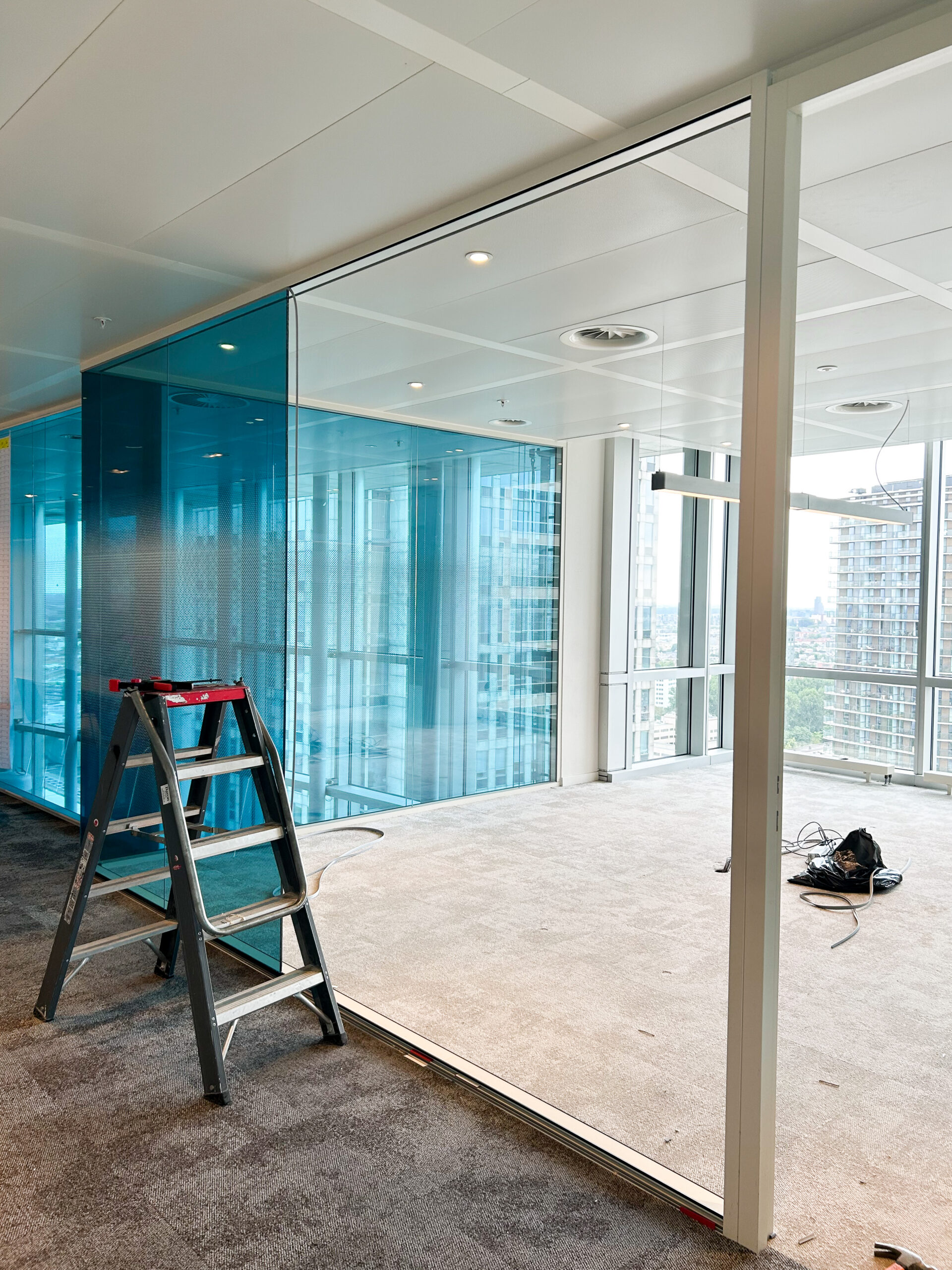
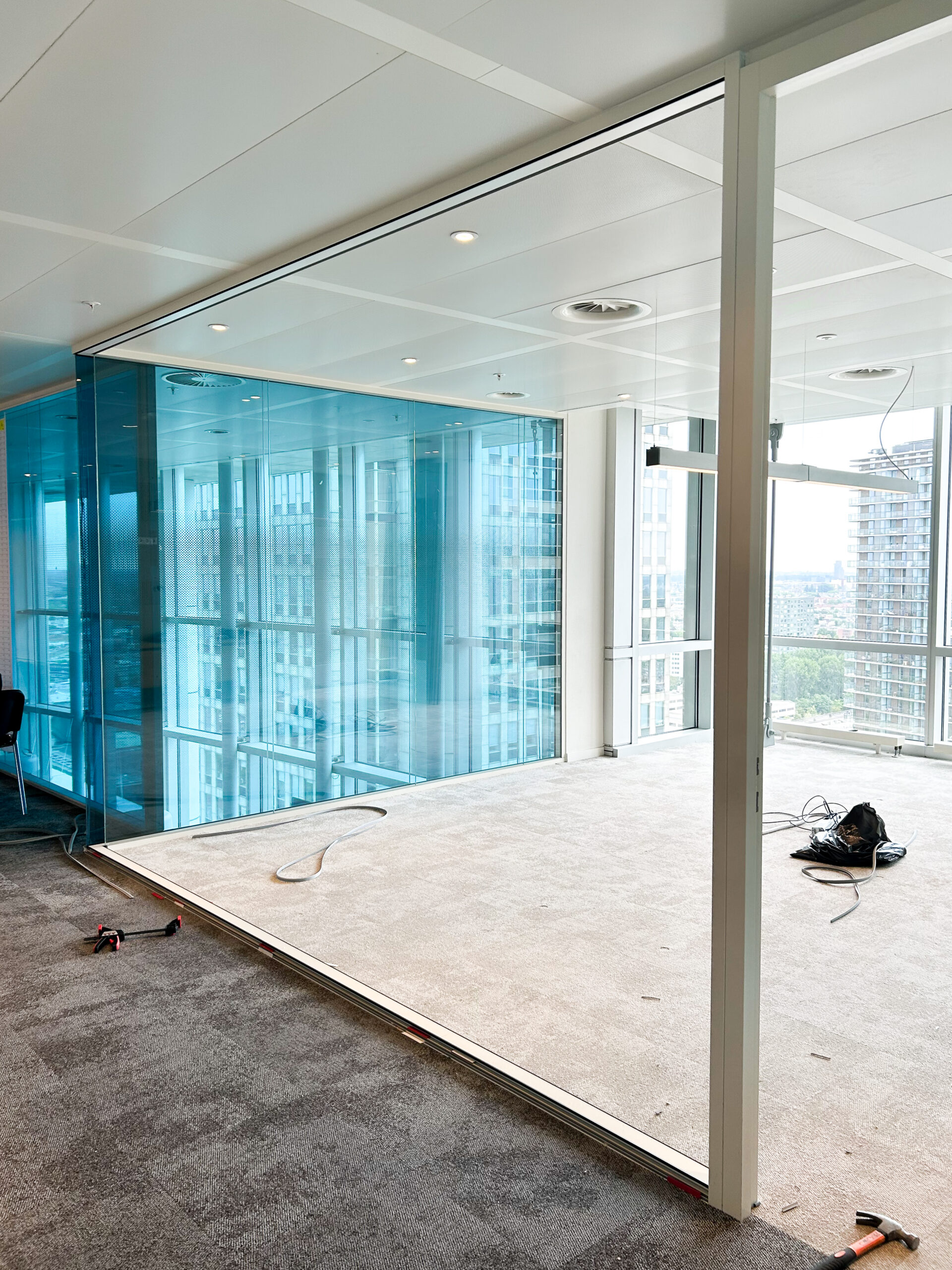
The Qollect programme has been set up by QbiQ to reuse as many components of existing partitions as possible. The programme investigates and optimises the one-to-one reuse of glass, solid wall partitions, profiles and doors. The value of these materials is high and reuse in new or renovated working environments is evident. Due to the high quality of the components, compromising on quality, performance and/or aesthetics is not an issue.
The aim is to minimise the carbon footprint and make a positive contribution to the environmental impact of projects. This is achieved by extending the lifespan of QbiQ wall partitions and doors through three pillars in the Qollect programme:
Nothing wasted, everything reused
The first pillar focuses on the one-to-one reuse of partitions and doors. New opportunities for existing materials. QbiQ’s concepts are entirely modular. Thanks to the coordinated dimensions for glass and solid partitions, door frames and doors, different wall types can easily be combined with one another.
When the layout of a building or office changes, the concepts can easily be adapted, as each component can be disconnected. This offers the advantage of flexibility. There is no need to completely remove the partitions and doors and produce new ones.
Reusing existing partitions and doors creates a sustainable solution that reduces the production of new elements. This directly contributes to lower CO₂ emissions. Reuse results in lower renovation costs and supports green, sustainable guidelines.
Reusing architectural elements significantly reduces the demand for raw materials, energy-intensive production processes and waste generation. It is not only cost-efficient, but also one of the most direct ways to apply circular principles in the construction sector.
Renovate. Renew. Reinvent.
Even when wall partitions and doors cannot be reused one-to-one, QbiQ sees this as an opportunity. By choosing to refurbish partitions or components instead of using new materials, there is room for innovation, efficiency and a lower environmental impact.
Every dismantling and reinstallation is carried out with care. The components are assessed, labelled and transported carefully so that they can be processed and reassembled safely and effectively. QbiQ engineers and technicians ensure that every valuable component is retained and have well-considered solutions to ensure that the partitions perform as well as new in the next project.
QbiQ consults with the parties involved about the use of components in a new project. Circularity is important, and striving to extend the life of materials for system walls and minimise the carbon footprint is a joint effort across the construction industry.
Responsible separation, sustainable results
QbiQ partitions and doors can be completely dismantled and each component can be carefully separated, making the wall partitions highly recyclable. From the start, specific steps have been taken to reduce environmental impact. This commitment was and remains necessary to maintain the Cradle to Cradle® Silver certification.
QbiQ continues to raise the bar by carefully separating and collecting materials. In close collaboration with recycling partners, as much material as possible is strategically allocated to new and improved materials for the wall systems.
A concrete result of this upcycle strategy is the recently introduced and unique return programme for laminated glass. The residual flow of laminated glass consists of both post-consumer glass modules, which are not suitable for reuse, and pre-consumer cutting waste from QbiQ’s own production process.
QbiQ is the first party to ensure that its glass waste is returned to the original glass manufacturer. This glass waste plays an essential role in the production of low-carbon glass.
The production of low-carbon glass focuses on sustainably sourced raw materials and the highest possible proportion of recycled content, combined with the use of green energy during the production process and the most efficient transport. This process is referred to as upcycling.
Low-carbon glass consists of more than 50% recycled glass while offering the same aesthetic appearance and technical performance as traditional glass. Thanks to optimised processes, this type of glass has 40% lower CO₂ emissions than traditional glass. Environmental Product Declarations (EPDs) for these products are available.
The use of low-carbon glass demonstrably contributes to improved environmental performance in future projects.
QbiQ is also open to discussing the use of fossil-free steel and low-carbon aluminium in the built environment.