Circular Coastal Infrastructure Using Dredged Sediment At Port Of Esbjerg
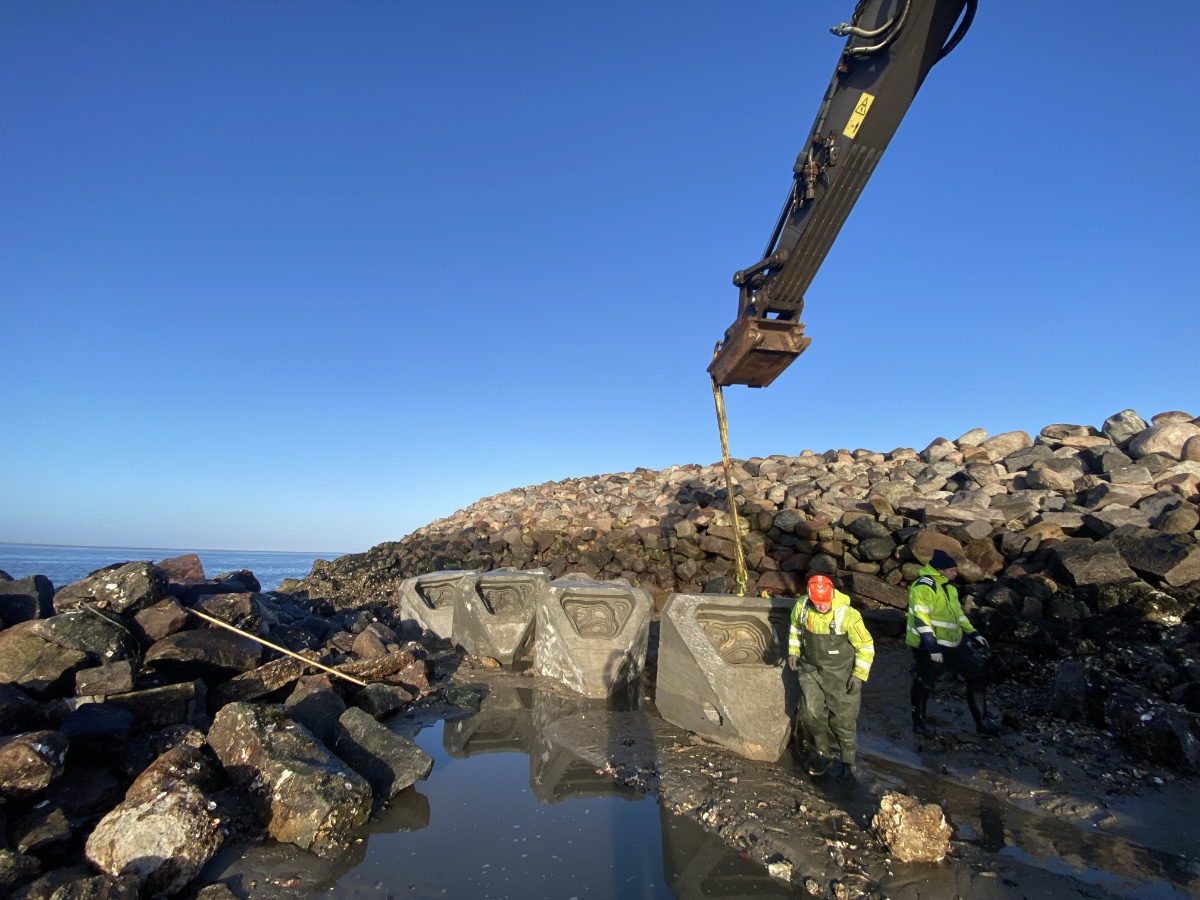
At the Port of Esbjerg in Denmark, a new infrastructure project shows how circular materials and ecological design can work together. In collaboration with ECOncrete, the port reuses dredged sediment to create concrete elements for coastal protection. At the same time, the project supports marine biodiversity.
Turning Dredged Sediment Into A Resource
Ports regularly dredge sediment to maintain safe waterways. This material often goes to waste. In Esbjerg, the port uses clay-rich sediment as a partial replacement for cement in concrete Coastalock units.
This approach lowers the carbon footprint of the material. Cement production generates high CO₂ emissions, so reducing its use has a direct impact. The project also relies on local materials and labour, which shortens supply chains and strengthens circular construction practices.
Concrete Designed For Marine Life
ECOncrete enhances the concrete with a bio-receptive additive and a specially designed surface texture. These features help marine organisms such as algae, mussels and barnacles attach and grow.
Over time, this biological layer improves biodiversity and protects the concrete from erosion in saltwater. As a result, the material can last longer in demanding marine conditions.
From Pilot To Large-Scale Application
The first Coastalock units are already in place at the Nordsøkaj. Researchers are monitoring how marine life develops on and around the structures. This data will support further optimisation.
In the next phase, the port will install hundreds of units. These elements will become a permanent part of the port’s infrastructure.
Integrating Climate And Ecology In Design
Coastal infrastructure must respond to climate change, rising sea levels and stricter environmental demands. This project shows how designers and engineers can address these challenges together.
By combining circular material use with biodiversity enhancement, the Esbjerg project offers a new model for marine infrastructure. It demonstrates how functional structures can also support ecosystem restoration.
For architects, landscape architects and infrastructure designers, this approach highlights the potential of material innovation at scale. It shows how construction can move beyond reducing impact to actively improving environmental conditions.
Source & photos: ECOncrete

Comments