Recycled Paper Waste Forms Living Papercrete Installation
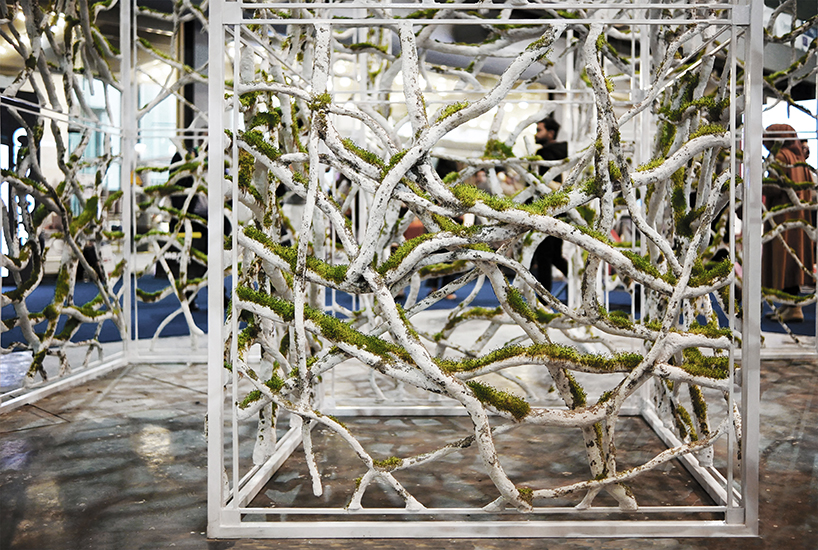
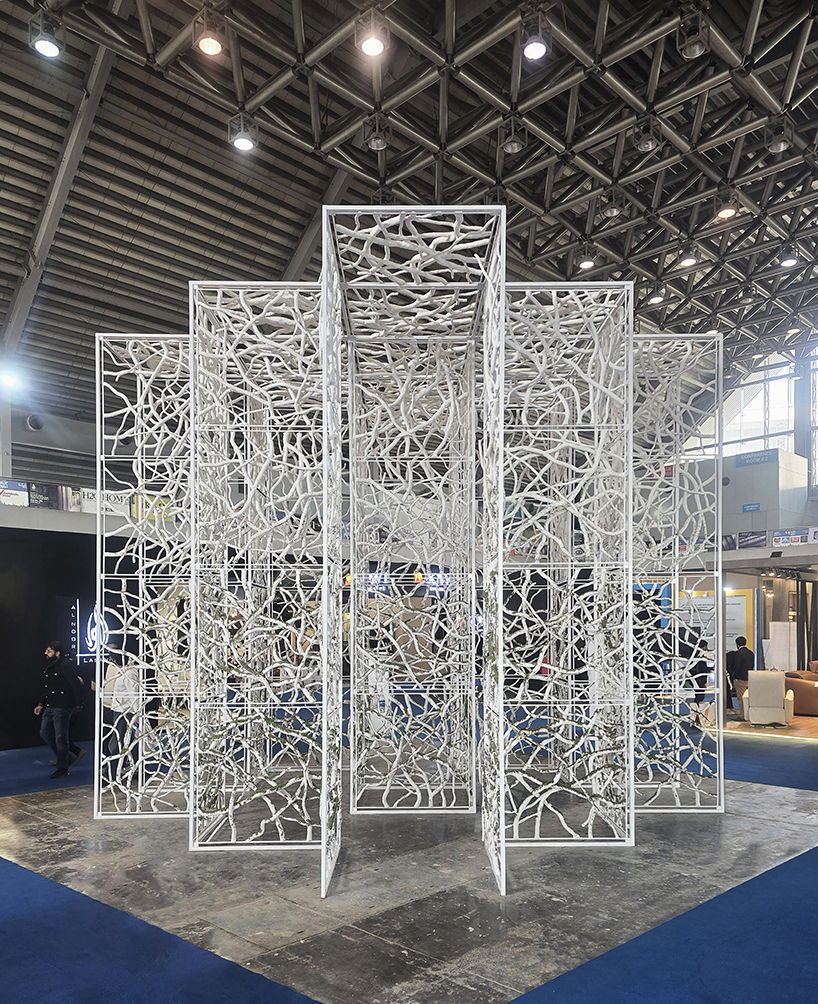
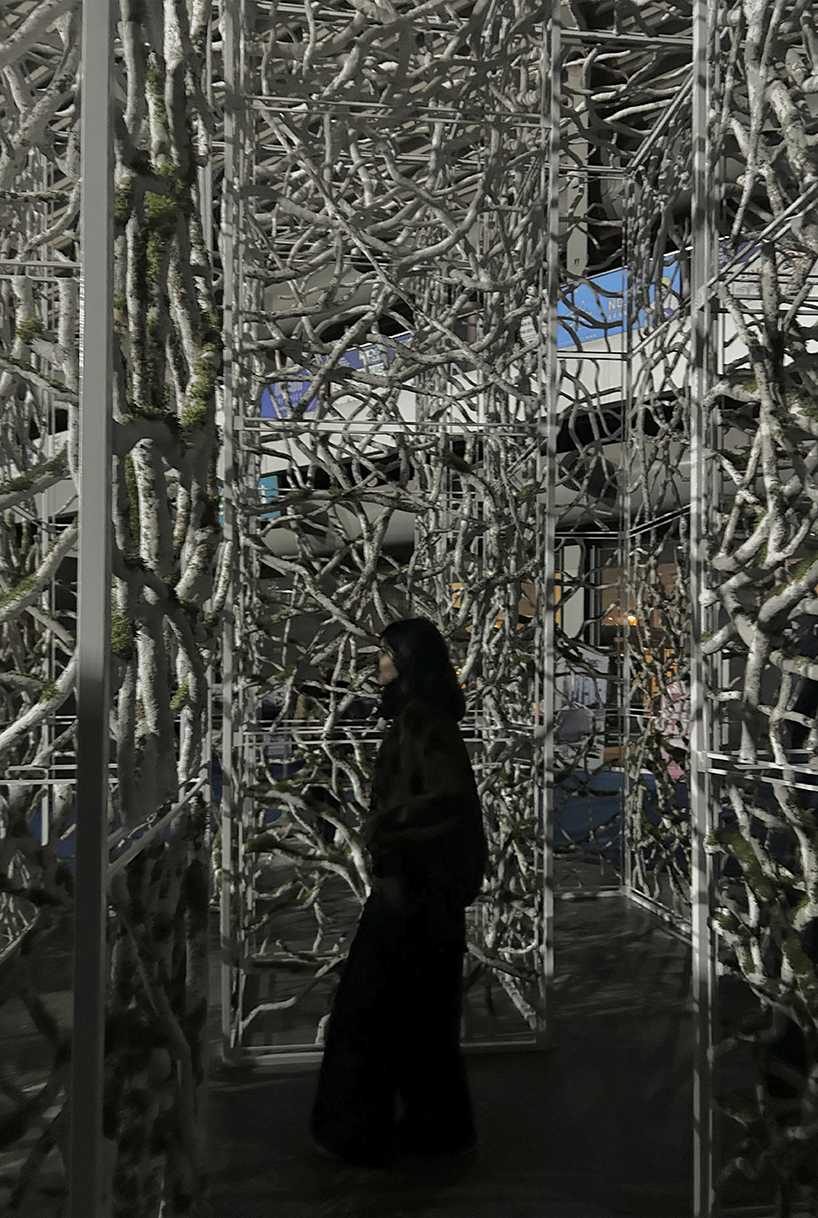
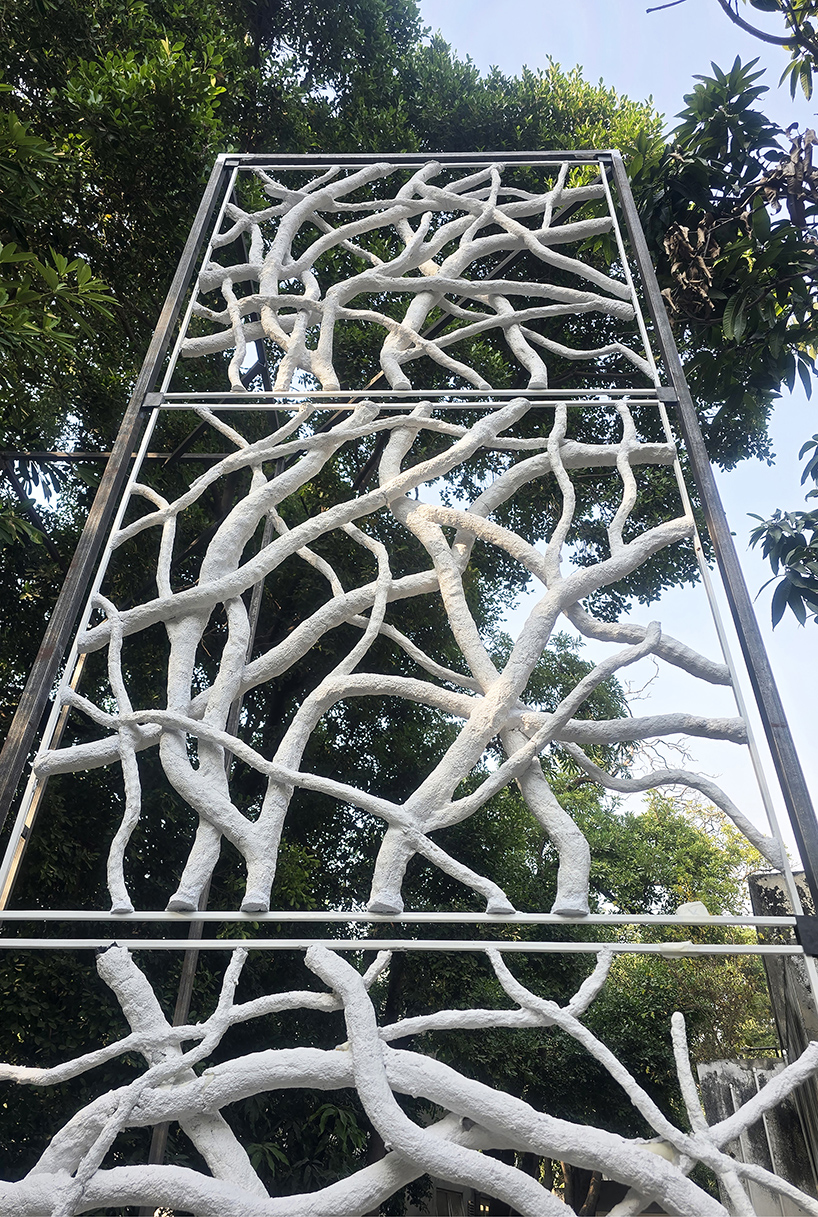
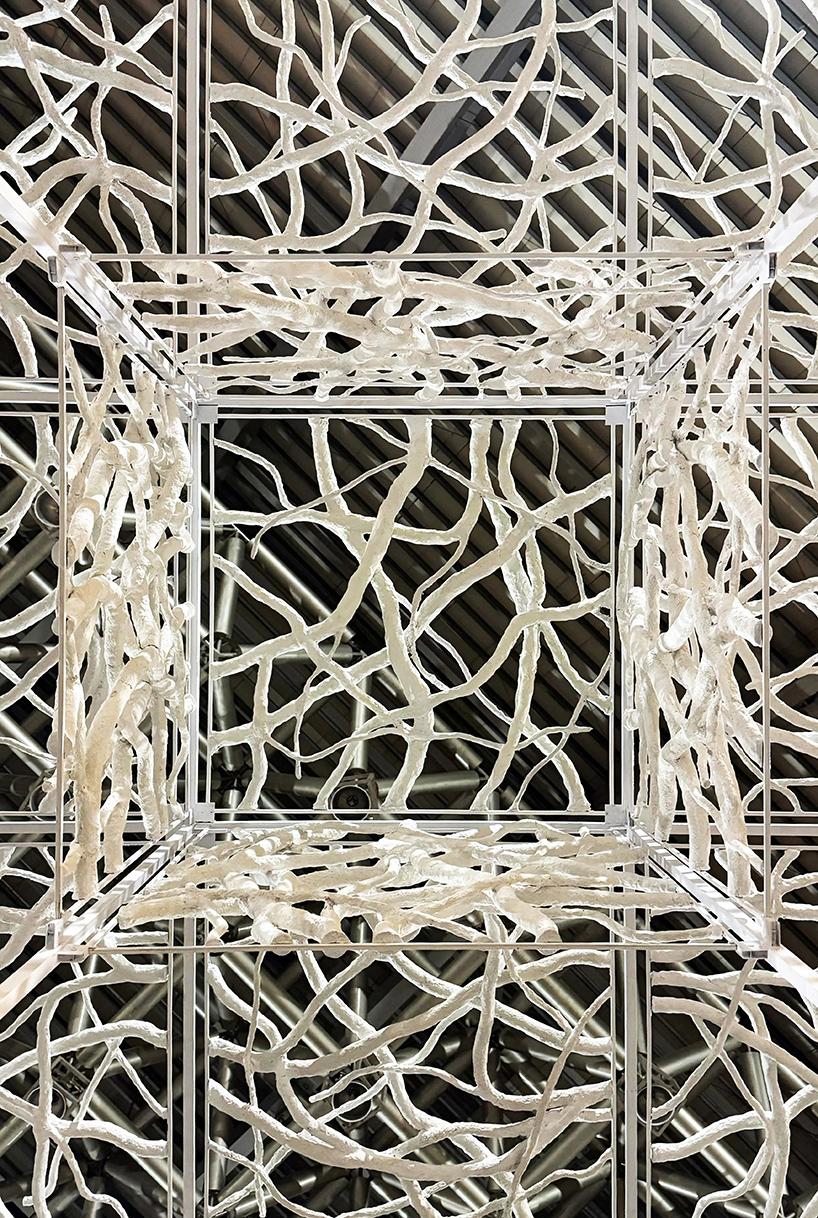
Morphosis by designer Raza Zahid is an experimental installation that explores the structural and ecological potential of recycled paper waste. By transforming discarded paper into papercrete—a lightweight composite material—the project demonstrates how low-value waste streams can become spatial building elements with both functional and environmental relevance.
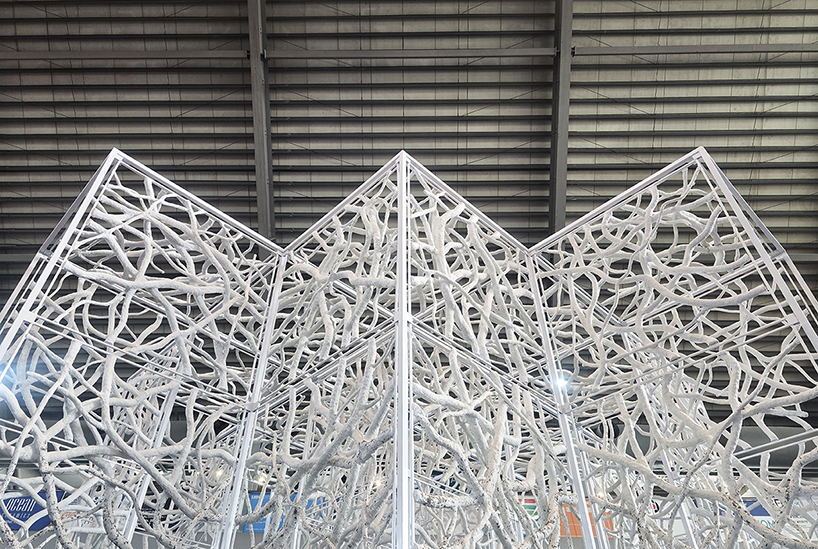
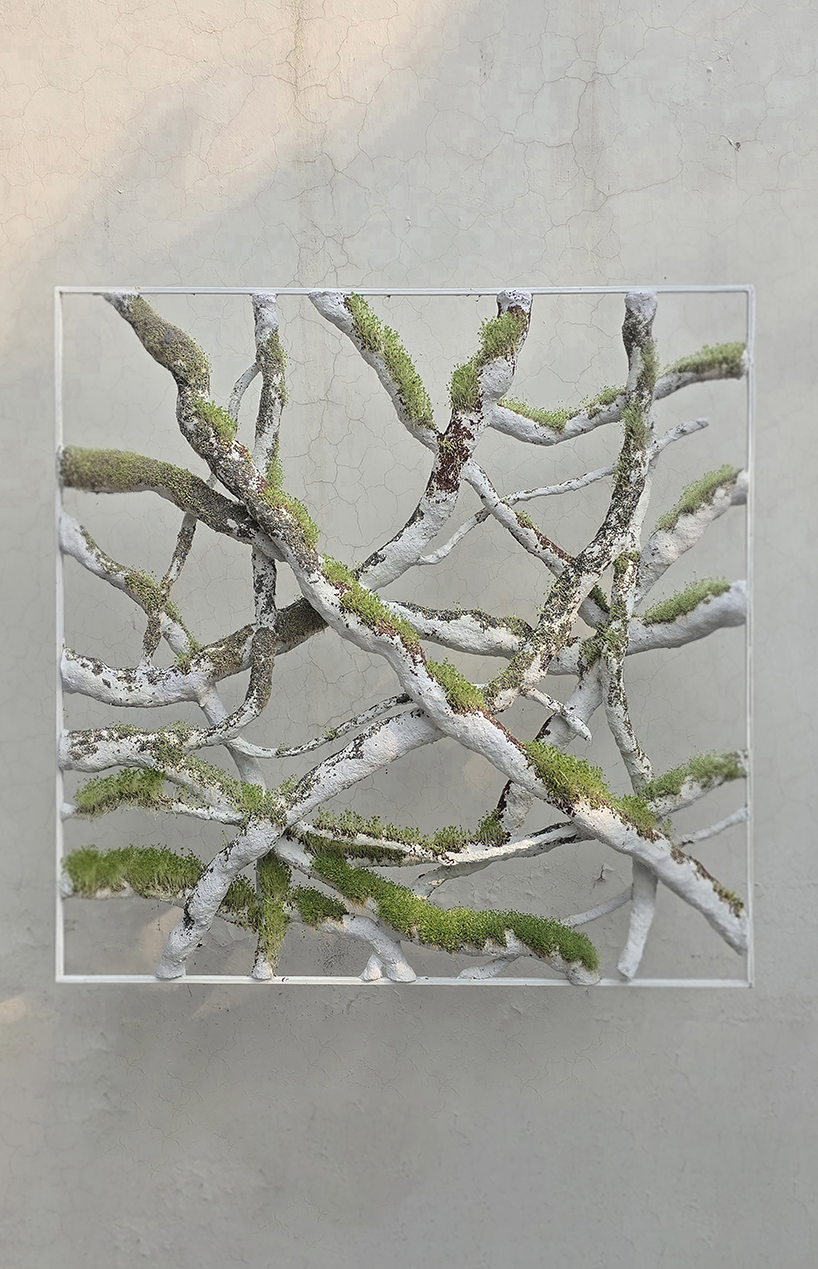
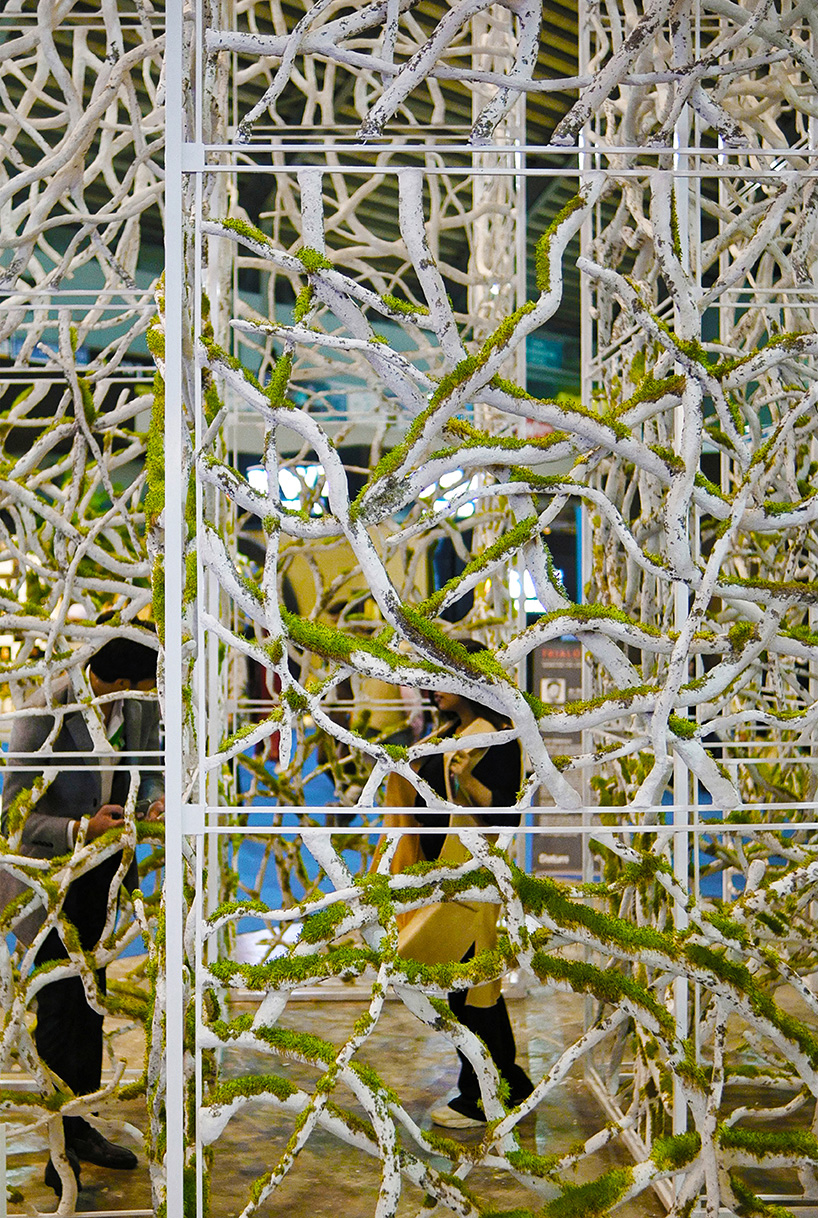
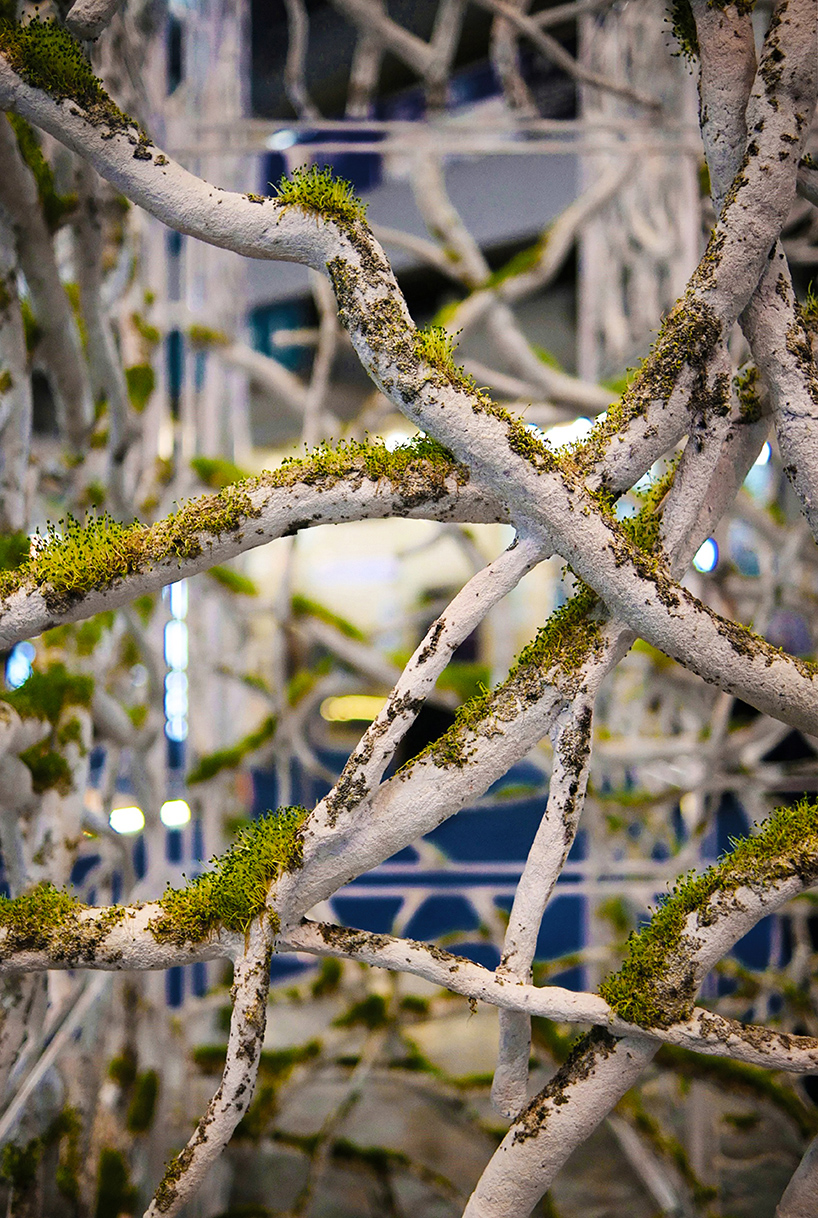
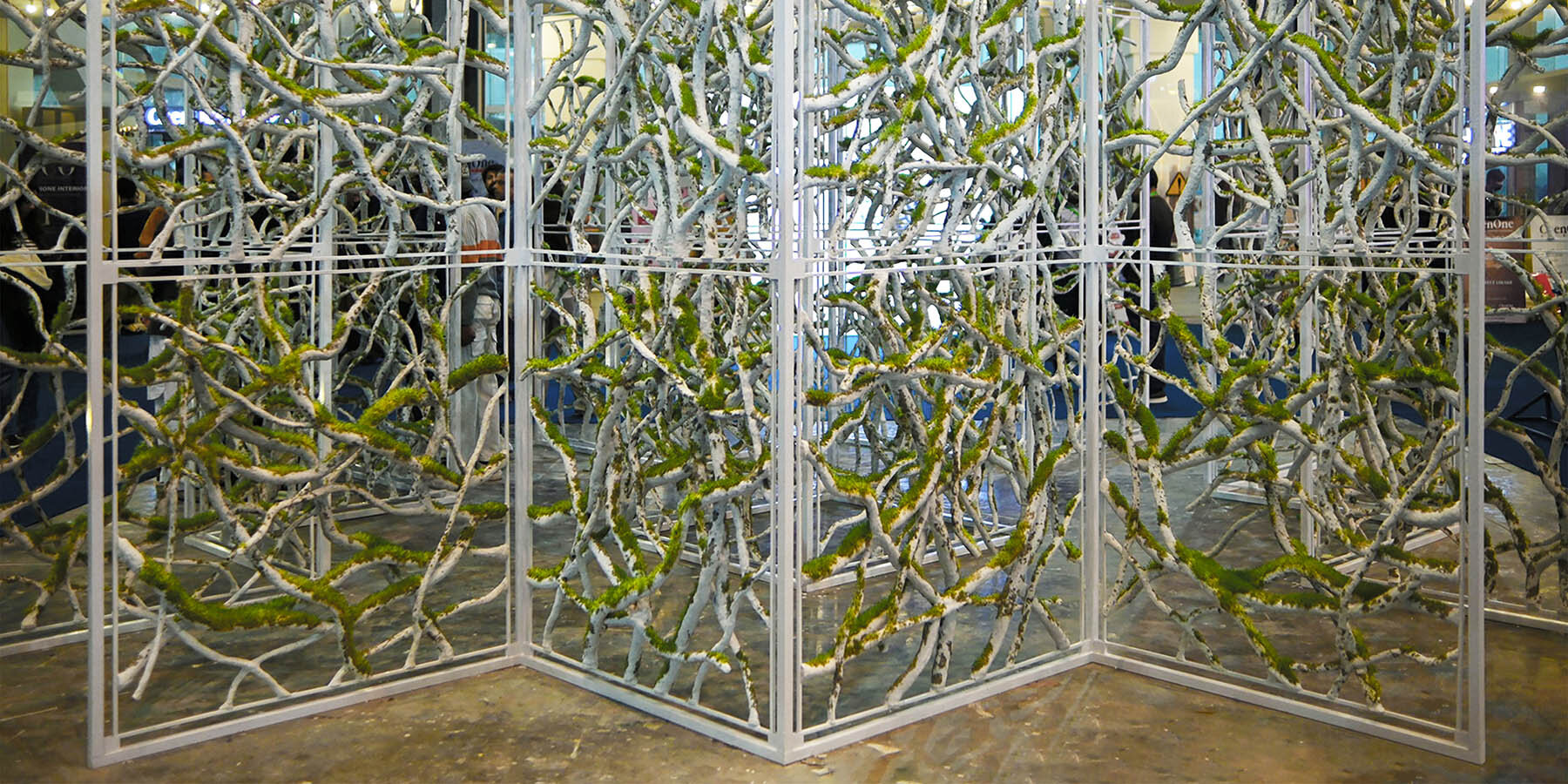
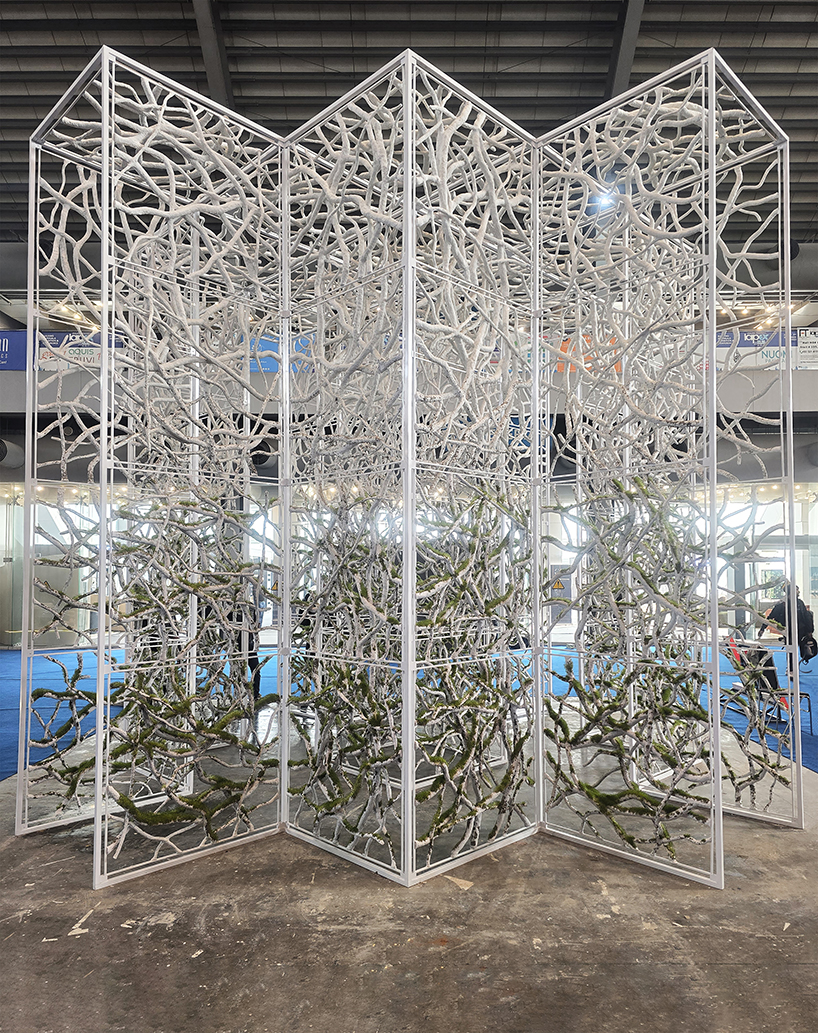
The installation occupies a 5 × 5 × 5 metre volume and shows how paper-based materials can move beyond decorative applications. By combining shredded paper with binders, Zahid creates a mouldable yet stable material inspired by traditional paper-mâché. A powder-coated metal frame supports hand-formed branches, which together create a porous, lattice-like enclosure. As a result, the structure recalls the form and logic of a tree.
Papercrete As A Structural And Spatial Material
Each element differs in shape and density because of the manual production process. Consequently, the installation produces varied light conditions, shifting shadows, and layered transparency. This approach highlights the potential of recycled fibre materials in spatial applications. For example, papercrete could serve as lightweight partitions, acoustic elements, or temporary installations.
Integrating Living Systems Into Material Design
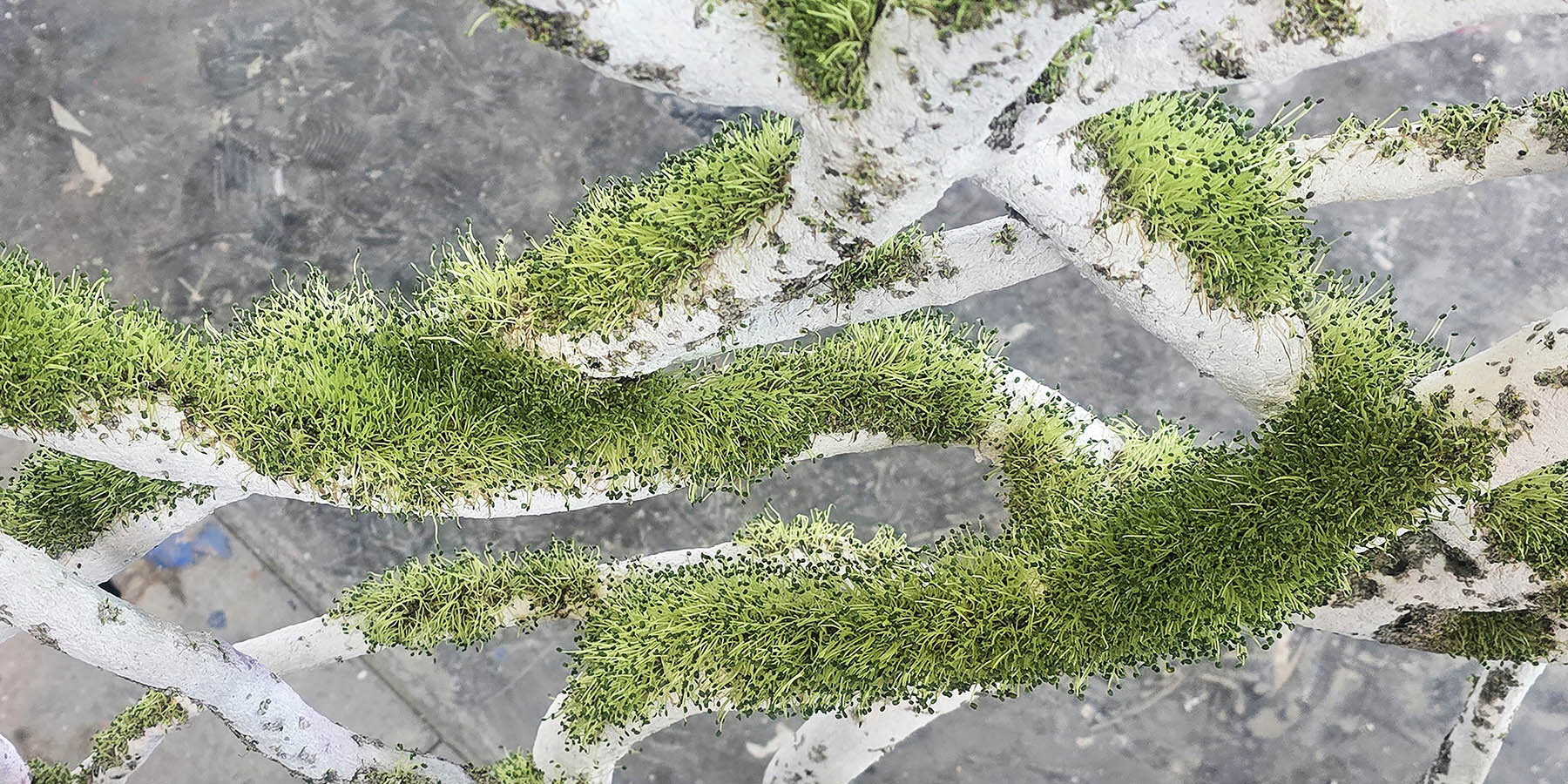
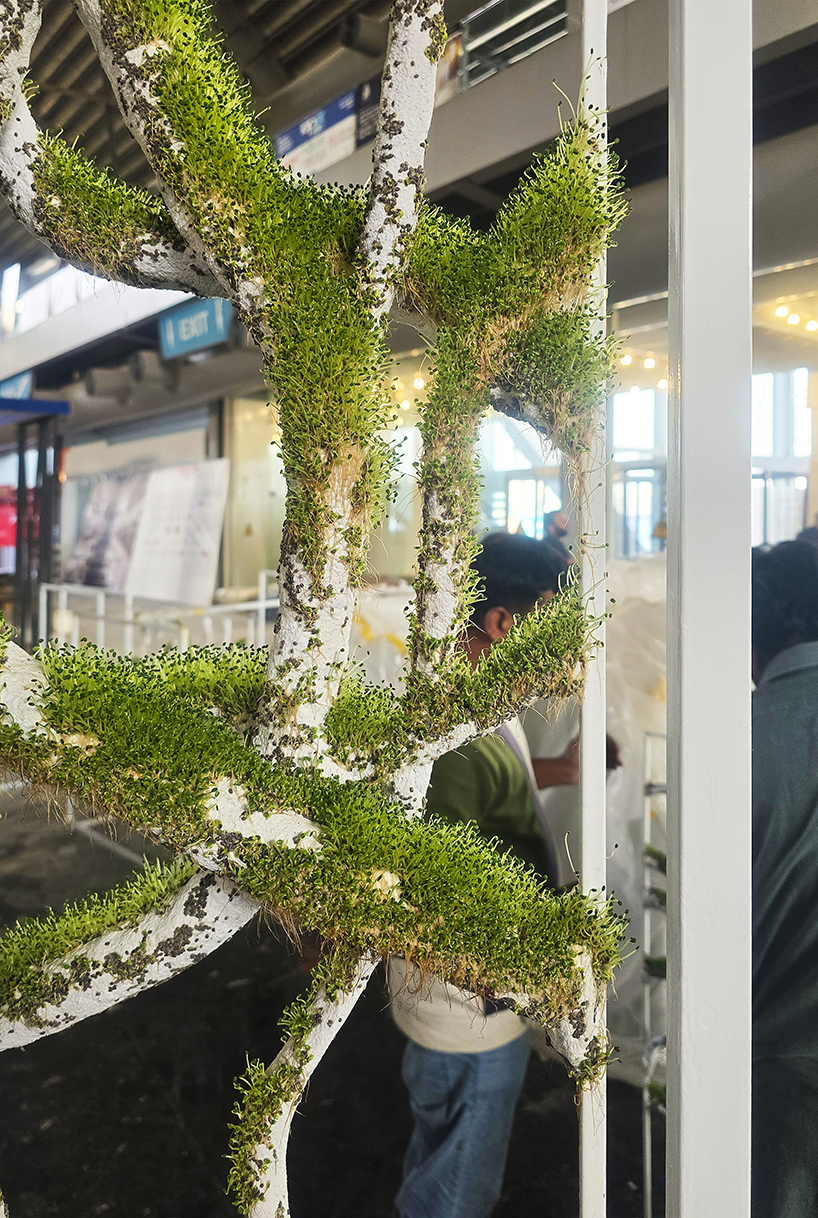
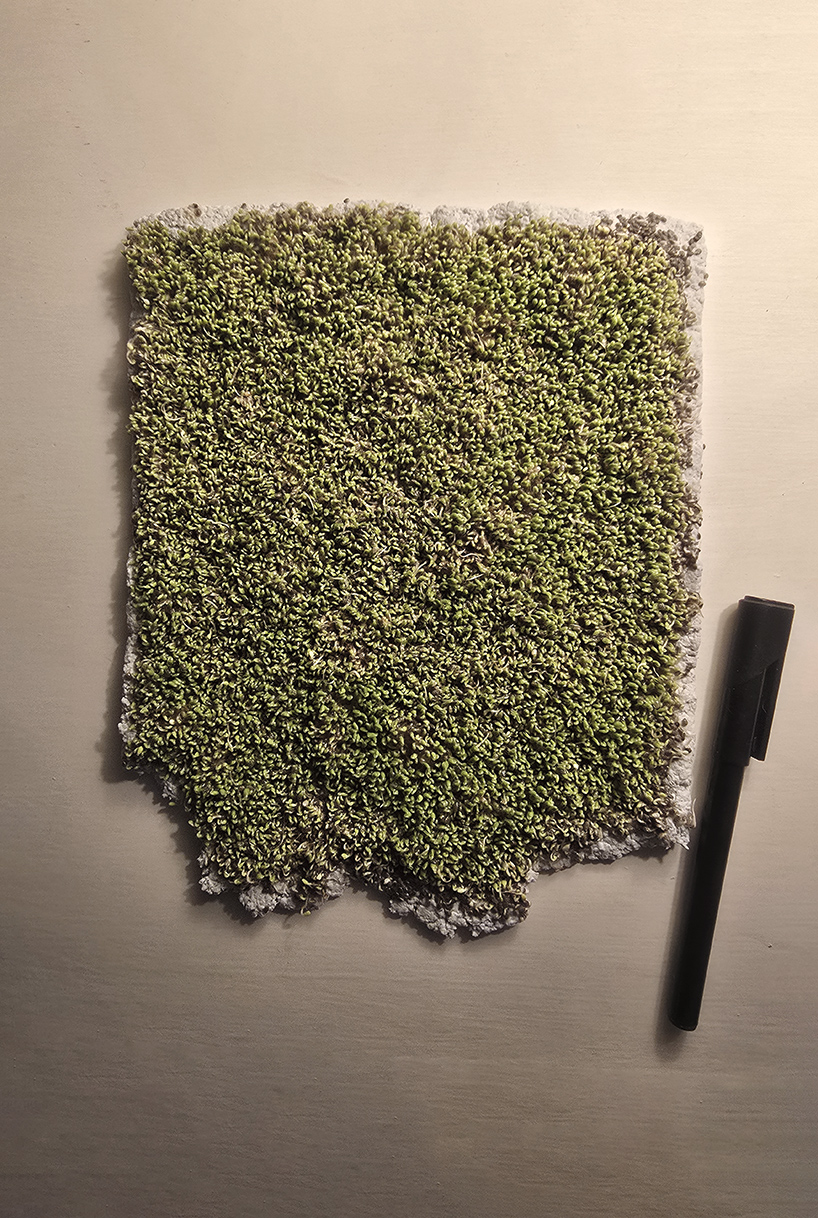
Microgreens are cultivated directly on the papercrete surfaces, transforming the installation into a living system that evolves over time. Growth and decay become integral to the material expression, introducing temporality and ecological cycles into the built environment.
This approach aligns with emerging interests in bio-integrated design, where materials are not inert but actively support life. For landscape architects and designers working with urban greening strategies, the project suggests new ways of embedding vegetation into vertical or interior surfaces using biodegradable substrates.
Craft and Material Experimentation
The installation is rooted in circular design principles, repurposing discarded paper into a new material lifecycle. Its production relies heavily on manual craftsmanship, with makers trained to understand the behaviour and limitations of papercrete. This combination of traditional techniques and experimental material research underlines the importance of tactile knowledge in developing sustainable material systems.
Towards Soft, Ecological Spatial Systems
By merging recycled content, handcrafted processes, and living surfaces, the installation introduces a softer, more organic spatial language within an industrial context. It challenges conventional distinctions between interior and exterior, structure and landscape, and material and organism.
As interest in regenerative and biobased design grows, projects like Morphosis point towards future material systems that are not only sustainable in origin but also active participants in ecological processes.
Source: Designboom
Photos: Raza Zahid

Comments