Discarded Harbour Ropes Become Swinging Seats in Rotterdam
The orange of these swinging seats comes straight from the harbour. The New Raw has turned discarded maritime ropes from the port of Rotterdam into Buoy, a series of public objects that tilt and rock like floating buoys. The colour is not added: it is the colour of the recycled rope itself.
The New Raw is a Rotterdam design and fabrication studio founded in 2016 by Panos Sakkas and Foteini Setaki. It designs circular furniture with robotic 3D printing and local plastic waste, and develops and produces everything in its own Rotterdam workshop. Buoy, realised in 2026, follows that approach at the scale of the street.
From Mooring Line to Printed Seat
The ropes were collected in the Rotterdam harbour, mechanically recycled in the Netherlands and then robotically 3D printed into new forms. The studio worked with Healix and IKM Hendrik Veder on the project. The material is recycled polypropylene (rPP). According to The New Raw, 45 kg of plastic went into the series, saving 117 kg of CO2.
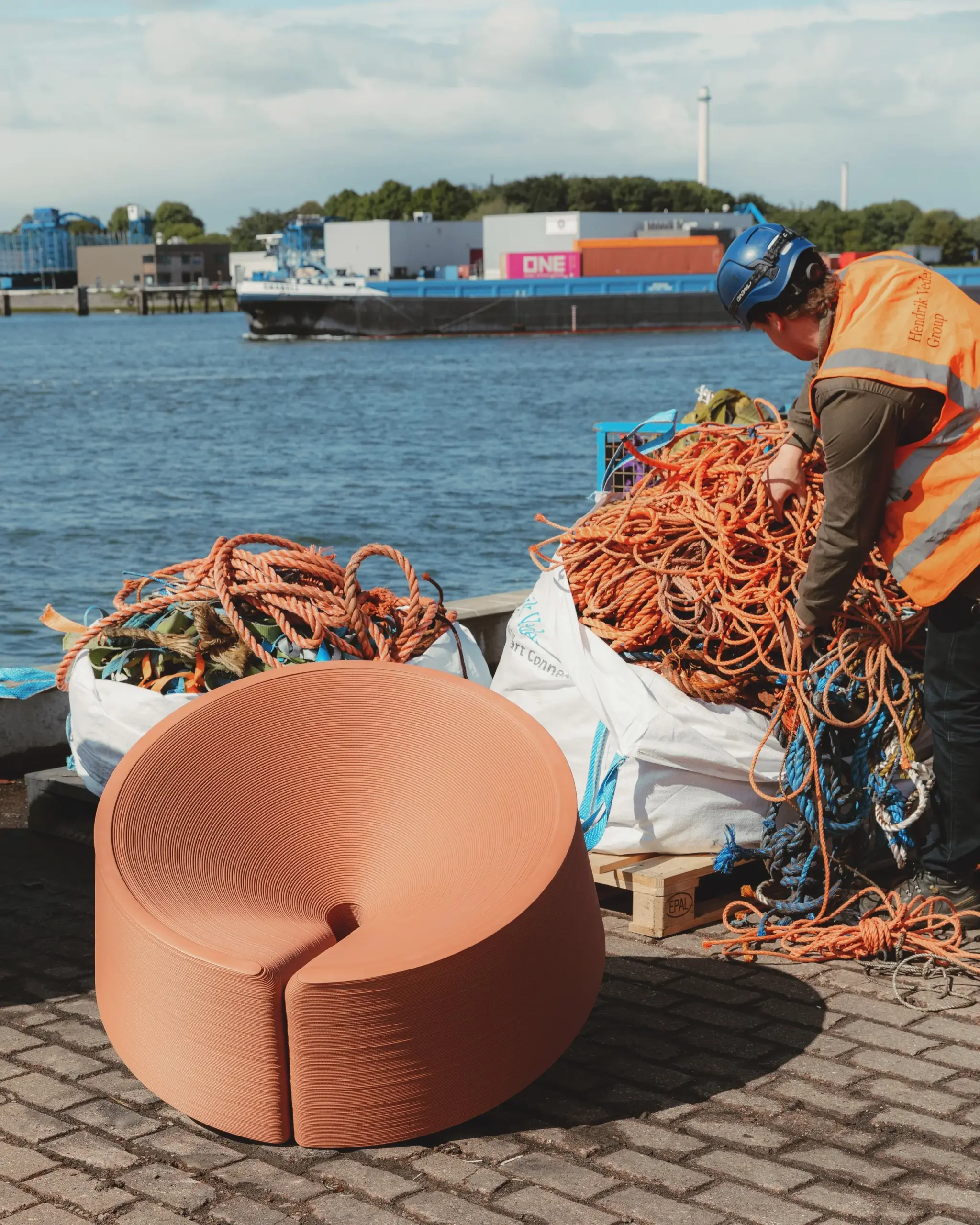
No pigments or coatings were used. The warm terracotta tone shows where the material came from, and the printing leaves a fine horizontal ribbing on every surface. Up close, the layers read almost like the grain of turned wood.
Seats That Move
The shapes are based on the movement of maritime buoys. Each element is a rounded, hollow body with a sloping base, so it tips and swings when someone sits in it, leans on it or pushes it. The studio wants visitors to find their balance together, which turns a piece of street furniture into something closer to play.
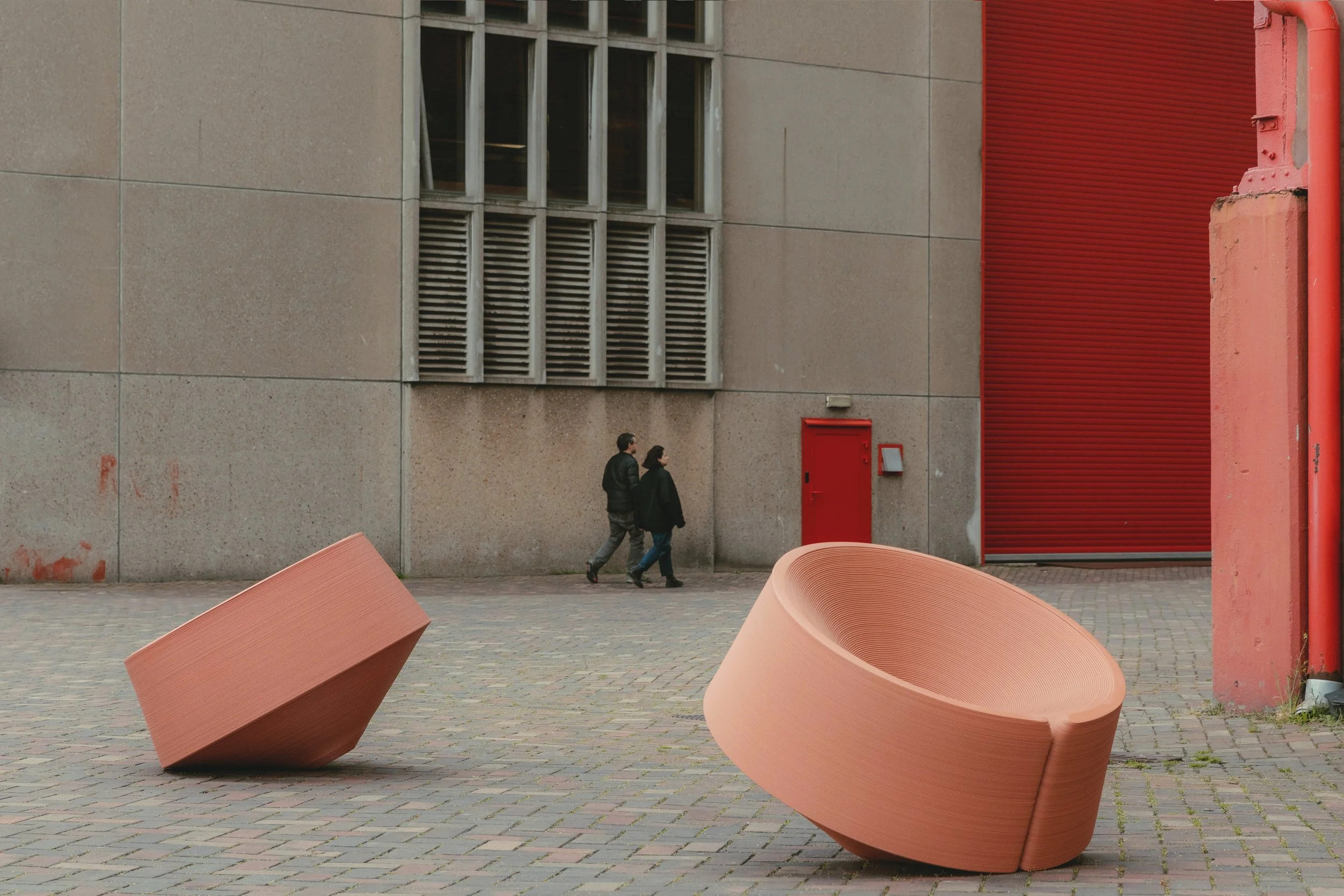
The New Raw places the project between public artwork, urban furniture and material system. The idea is that a city can keep renewing its public space with its own waste streams, here discarded maritime rope, and that the origin of a material can stay legible in the finished object.
Waste Streams as Local Supply
For designers of public space, Buoy shows a short and traceable chain: waste collected in the harbour, recycled in the country and printed in the same city. Earlier MaterialDistrict stories followed similar routes, such as fishing nets turned into 3D printed shells. More projects built on waste streams are gathered in the Recycling channel.
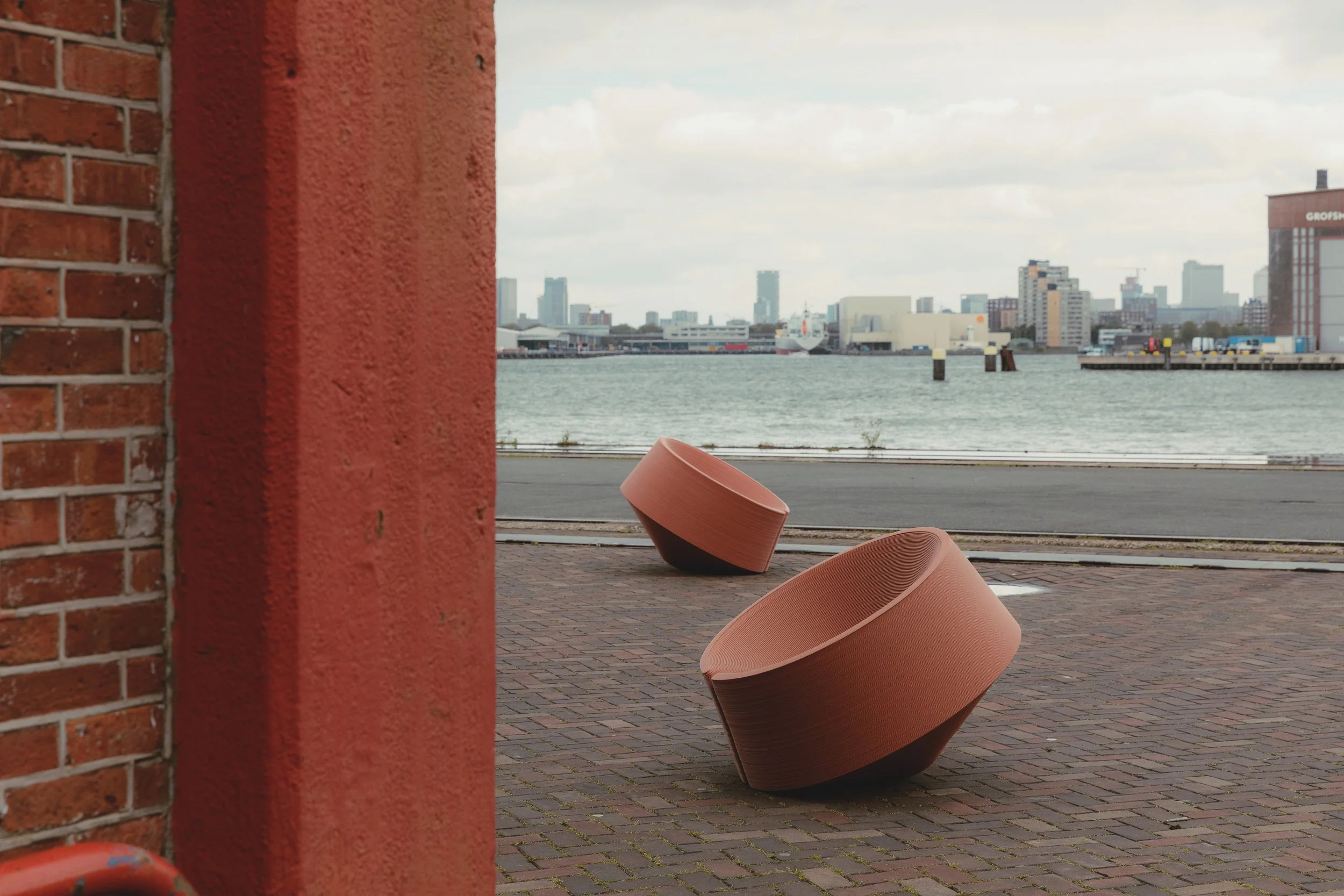
The photos show the elements on the Rotterdam waterfront. The studio presents the series among its projects and invites collaborations for new public objects.
Source & photos: The New Raw.