Pine Bark, Amber Dust and Coffee Grounds: Baltic Biomaterials at Dutch Design Week
At Dutch Design Week 2026, the Vilnius-based Biomaterials Library shows biomaterial samples, prototypes and design objects by Lithuanian and Baltic creators. Many of the materials start from local side streams such as pine bark, amber dust and coffee grounds.
A Library of Material Experiments
Biomaterials Library is an independent material research and knowledge-sharing platform in Vilnius, founded by curator Austėja Platūkytė. Its physical collection preserves materials at different stages of development, from early tests and samples to refined applications and design objects, so that visitors can compare ingredients, processes and outcomes.
The exhibition at DDW brings together works that transform agricultural, food and industrial side streams, and others that explore mycelium, algae and natural fibres. It is on view at BioArt Laboratories (Strijp T+R) in Eindhoven, daily from 11:00 to 18:00 until 25 October, with free access.
Bark, Amber and Coffee
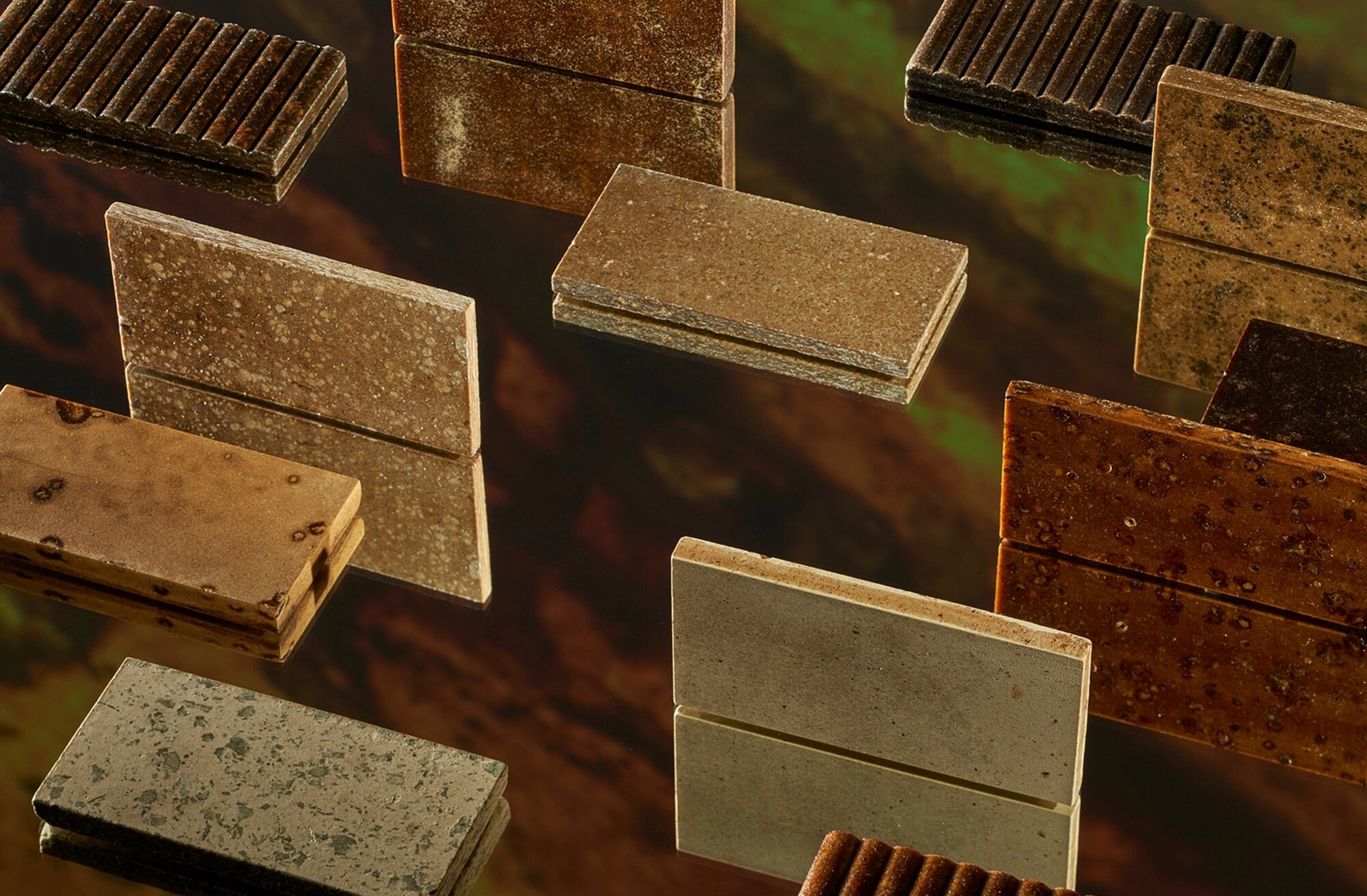
Studio Sarmīte, a materials design studio in Frankfurt am Main, shows PineSkins, a leather-like material made from the freshly harvested inner bark of Scots pine, a by-product of tree cutting. The bark is made flexible with a softening solution and natural wax, and colours itself in the process, from earthy brown and pink to terracotta and ash grey. The studio names wall surfaces and veneer alternatives among its interior applications.
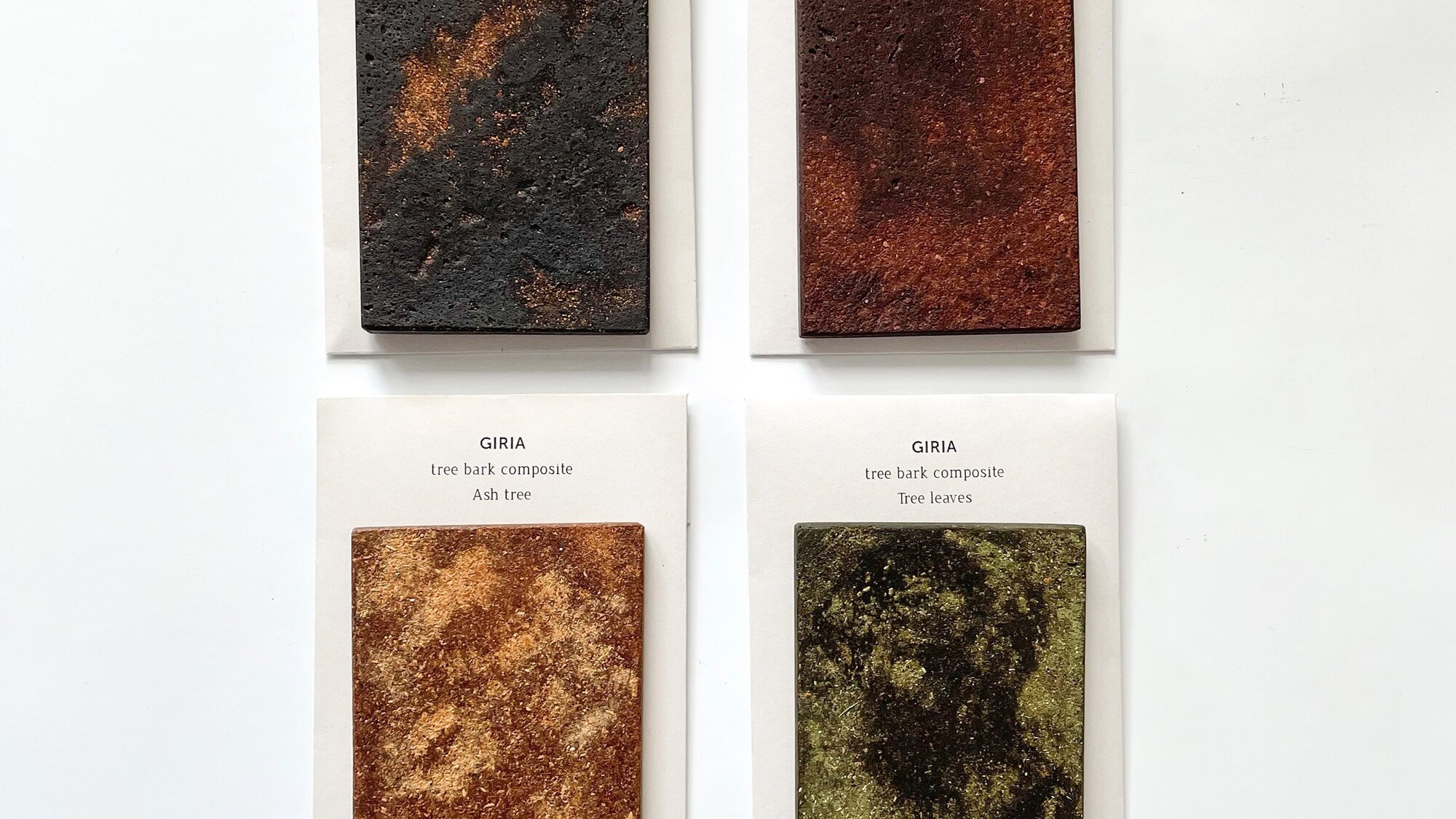
Evelina Kudabaitė presents Giria, a collection that uses tree-bark dust from different sawmills, bound with an organic binder she developed through experimentation and the knowledge of traditional craftspeople. She first presented the idea in 2015 as her bachelor’s project at the Vilnius Academy of Arts.
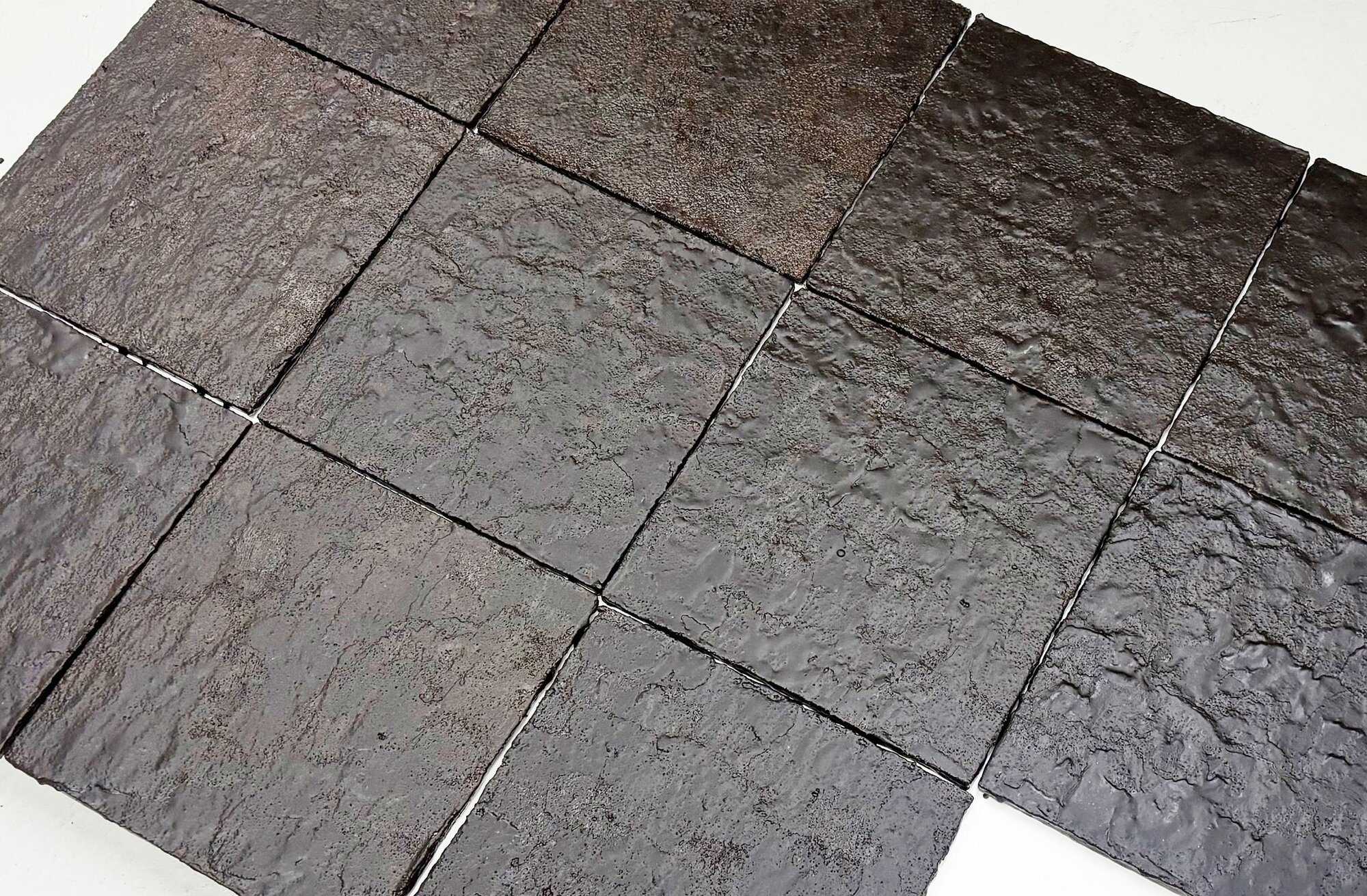
Agnė Kučerenkaitė shows Amber Waste is Bliss, biocomposites made from the dust that is created when natural amber is shaped by hand into jewellery and small objects. According to the project description, tonnes of this residue end up in the sewer because the industry considers it low-grade. The project belongs to her Ignorance is Bliss practice, which turns industrial waste into interior products.
Waste Matters Studio contributes Coffee Waste Tiles made from locally collected coffee grounds and natural bio-resins, while designer and researcher Indrė Spitrytė-Mikuckė presents Vegetative Textiles, part of her ongoing work with plant-based bioplastics.
Rather than proposing one solution, the exhibition presents the materials side by side, showing how local experimentation with regional resources could move towards applications in interiors and products.
Sources: Dutch Design Week / Studio Sarmīte / Lithuanian Culture Institute / Green Concept Award
Images: courtesy of the makers via Biomaterials Library