Search
8 results for “food” in materials
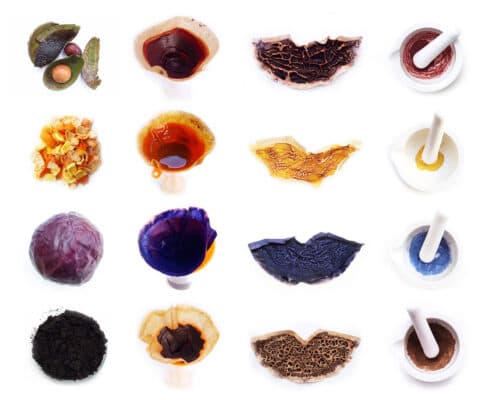
- Food Waste PigmentWith her graduation project, The Colour of Waste, Sara van Laerhoven wanted to go back to basics and show how special and beautiful colour can be and that it can be natural. By using material research, she found a way to make a natural alternative to synthetic inks to use in graphic workshops. This alternative is made from food waste. In this case from coffee grounds, avocado seeds, red cabbages and orange peels.
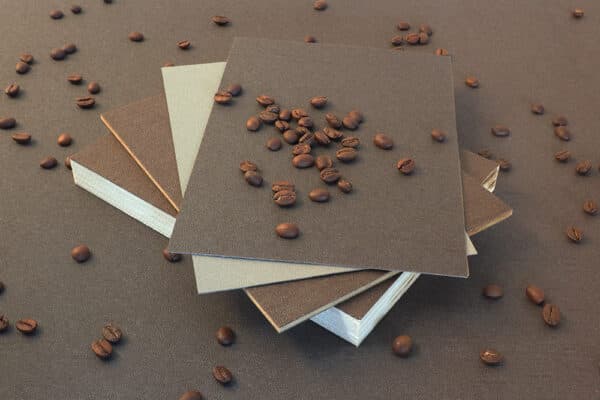
- Arabica Black (food safe)Coffee Based developed 3 different bio-based granules consisting of coffee grounds and a biopolymer. From coffee cups and notebook covers to plant pots and coffee panels, the ‘Arabica Black’ coffee granules are suitable for many product applications.
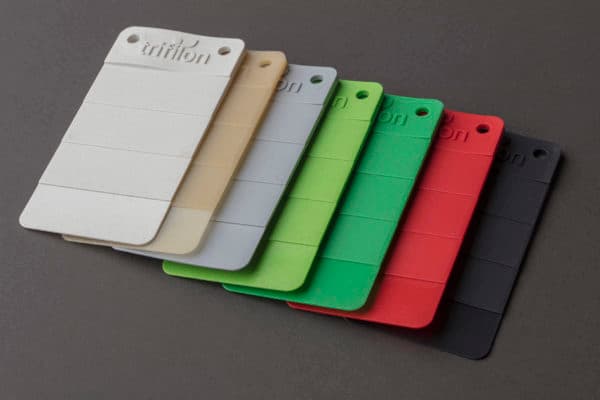
- Trifilon BTrifilon B is a biocomposite material combining food-safe polypropylene (PP) with up to 35% natural fibres. Developed by Swedish material company Trifilon, it is designed as a lower-impact alternative to conventional polypropylene for injection-moulded products, including applications involving food contact and products for children.
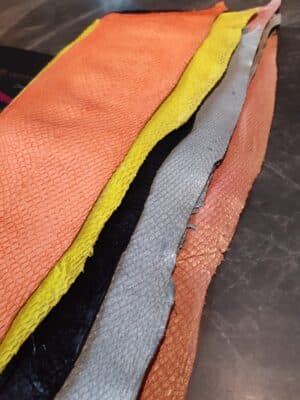
- Salmon leatherSearious Fish Leather specialises in washing, degreasing and descaling fish skins, after which a semi-finished product is created in the form of a sheet of pure functional collagen protein. This can be used as a source material for fish leather. It has developed a leather tanning concept that allows production without environmentally harmful substances. The result is a piece of leather with the structure of a snake.
- Technical MattTechnical Matt by FINSA is ultra matt (gloss level: GU. 2%) with an anti-fingerprint surface with a velvety touch. Suitable for horizontal or vertical use and suitable for contact with food. The combination of acrylic lacquers and electron beam curing (EBC) gives this material excellent surface properties such as anti-bacterial and safe for contact with food.
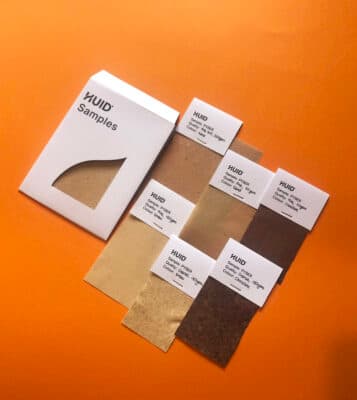
- PyberPyber is a fibre-based packaging material developed by HUID using onion skins as its primary raw material. The material is intended as an alternative to conventional paper and plastic-based packaging, making use of an agricultural by-product that is widely available within food processing streams.
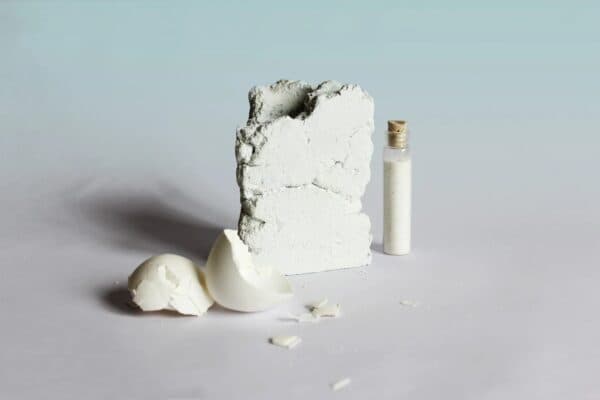
- EggwareEggware is a new ceramic & concrete like material that is made out of calcareous food waste -eggshells and an algae-based biobinder. YLEM meticulously experiments and creates tangibles that are naturally white, lightweight, rigid, powdery, water-absorbent and strong.
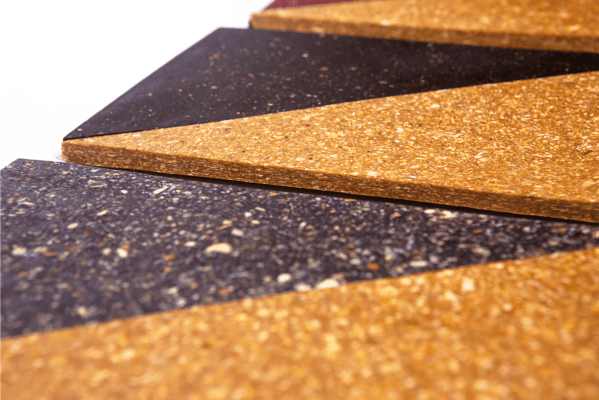
- Orb (organic refuse biocompound)Biohm converts one of the world’s fastest growing waste streams - food waste - into valuable and functional materials that are formed into sheets or moulded to create intricate three-dimensional products. Orb is 100% biodegradable, vegan, sustainable and renewable. By-products from the food production or agricultural sectors are processed into a homogeneous filler which is bound together an organic binder to form a replacement for wood-based sheet materials.