WASP Reinforces 3D Printed Earth With Removable Plastic Layers
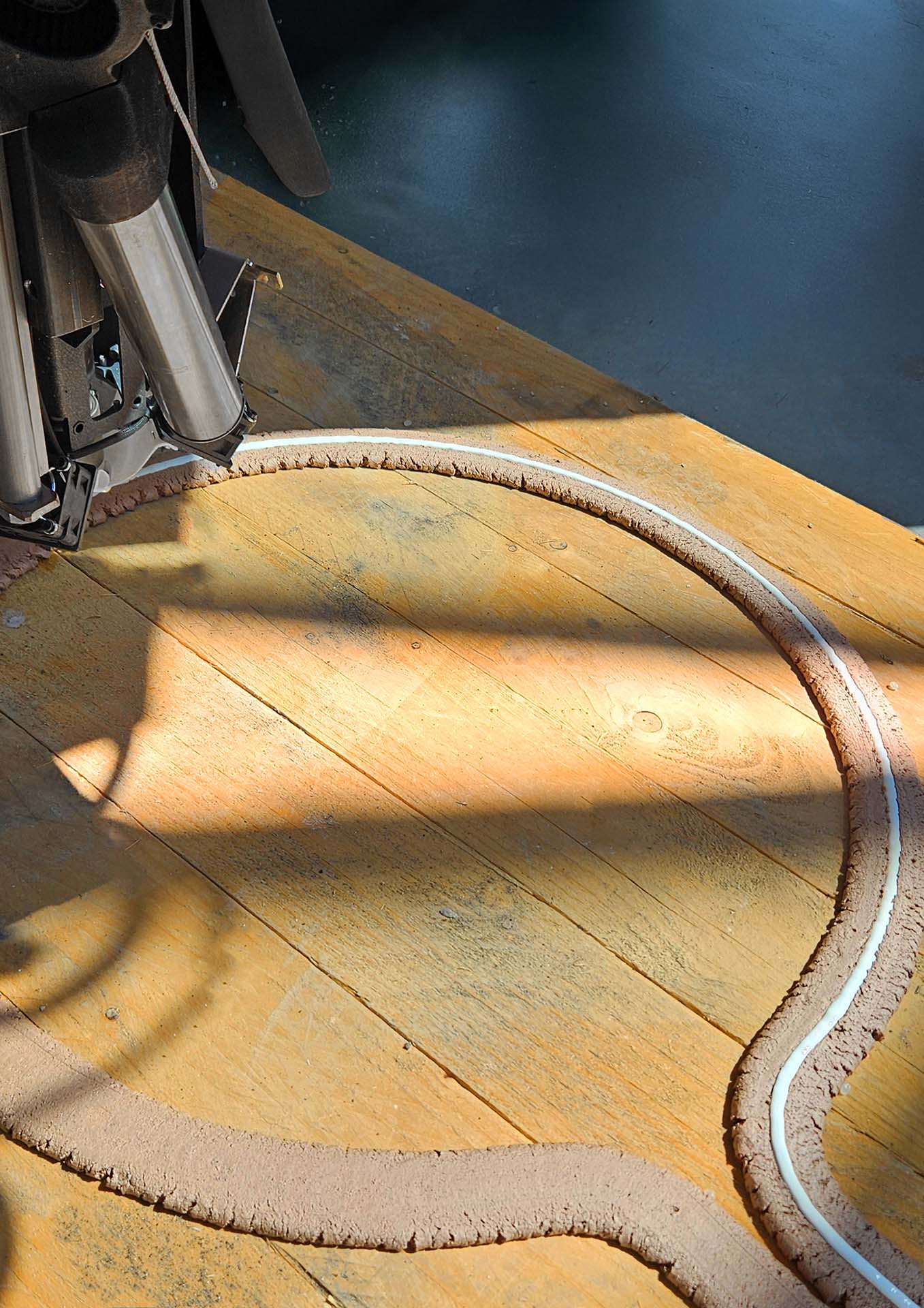
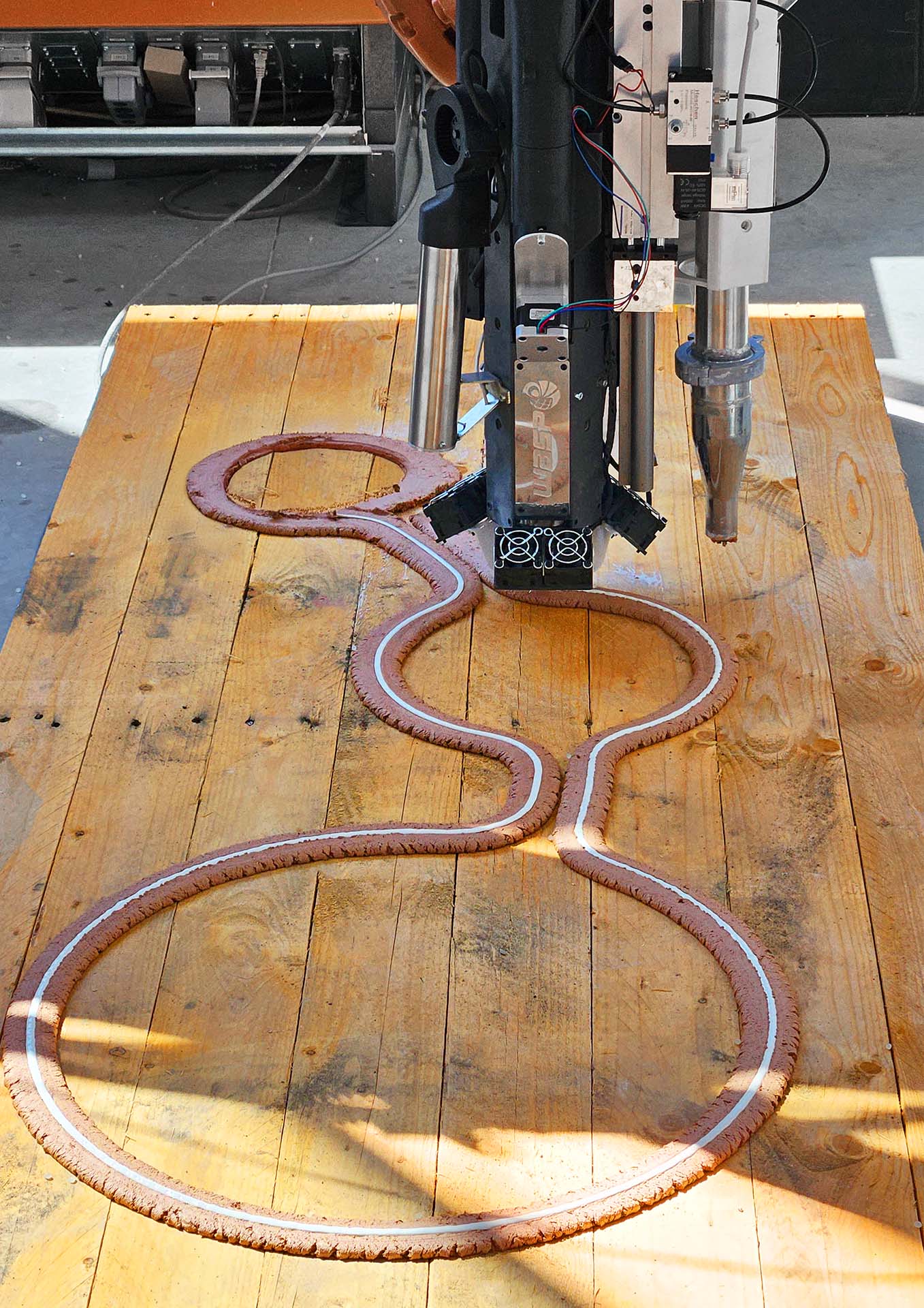
On a wooden print bed in WASP’s workshop, a loop of brown earth paste is laid down – with a thin white line of plastic running right through it. The Italian 3D printing company has combined its two extrusion processes, one for earth and one for plastic, in a single print. The plastic keeps the earth standing during printing, and is meant to come out again at the end of the object’s life.
The patent-pending Dual Extrusion technology is at an early stage: WASP describes the first tests as underway. It builds on two processes the company has developed since 2012. Liquid Deposition Modeling (LDM) pushes dense, fluid materials such as earth through a nozzle. Fused Granulate Fabrication (FGF) prints plastic from granulate.
Earth and Plastic, Layer by Layer
The new system switches between LDM and FGF layer by layer. One pass lays down earth, the next adds a plastic reinforcement layer inside the earth structure. Earth paste on its own tends to collapse in tall, thin or overhanging shapes. With the plastic layers in between, WASP can test geometries that earth alone would not hold.
The idea draws on the potter wasp that gave the company its name. The insect builds its nest from whatever material is close at hand. WASP calls this frugal architecture, and argues that plastic is now simply one of the materials around us. The question is how to use it without losing it for good.
A Composite Designed to Come Apart
In construction and manufacturing, materials that are permanently combined are hard to separate and recover. WASP takes the opposite route. At the end of an object’s life, the plastic layers are pulled out of the earth. Each material can then follow its own path: the earth can be reused, the plastic recycled. Photos from the workshop show dried, ridged earth breaking away from a continuous white plastic strand.
For architects already working with unfired earth, the approach hints at thinner walls and bolder forms without a permanent mix of materials. WASP has printed with earth at building scale before, for instance in Itaca, a 3D-printed building model. Others are looking for ways to make printed earth stronger too, such as the seaweed-derived additive for earthen 3D printing.
Still in the Test Phase
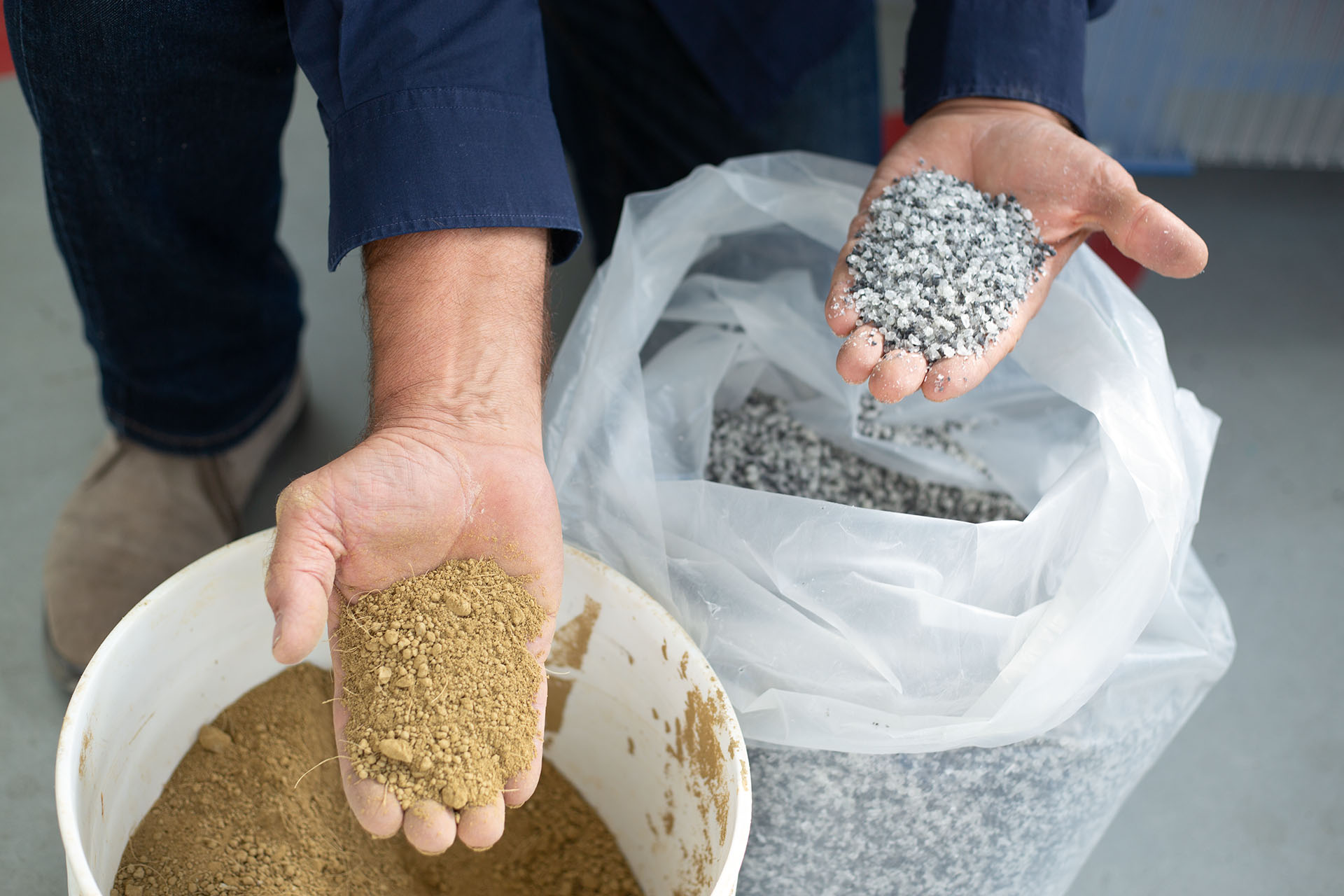
WASP has not yet published figures on strength, durability or which plastics work best. The team is now testing and refining the process to find its limits and new applications. It plans to share results as the research develops.
Source & photos: WASP, “When earth and plastic come together” (12 October 2026) and WASP press release “Can Earth and Plastic Work Together?” (September 2026).