Baltic Reed Pressed Into Biodegradable Boards for an Island Community
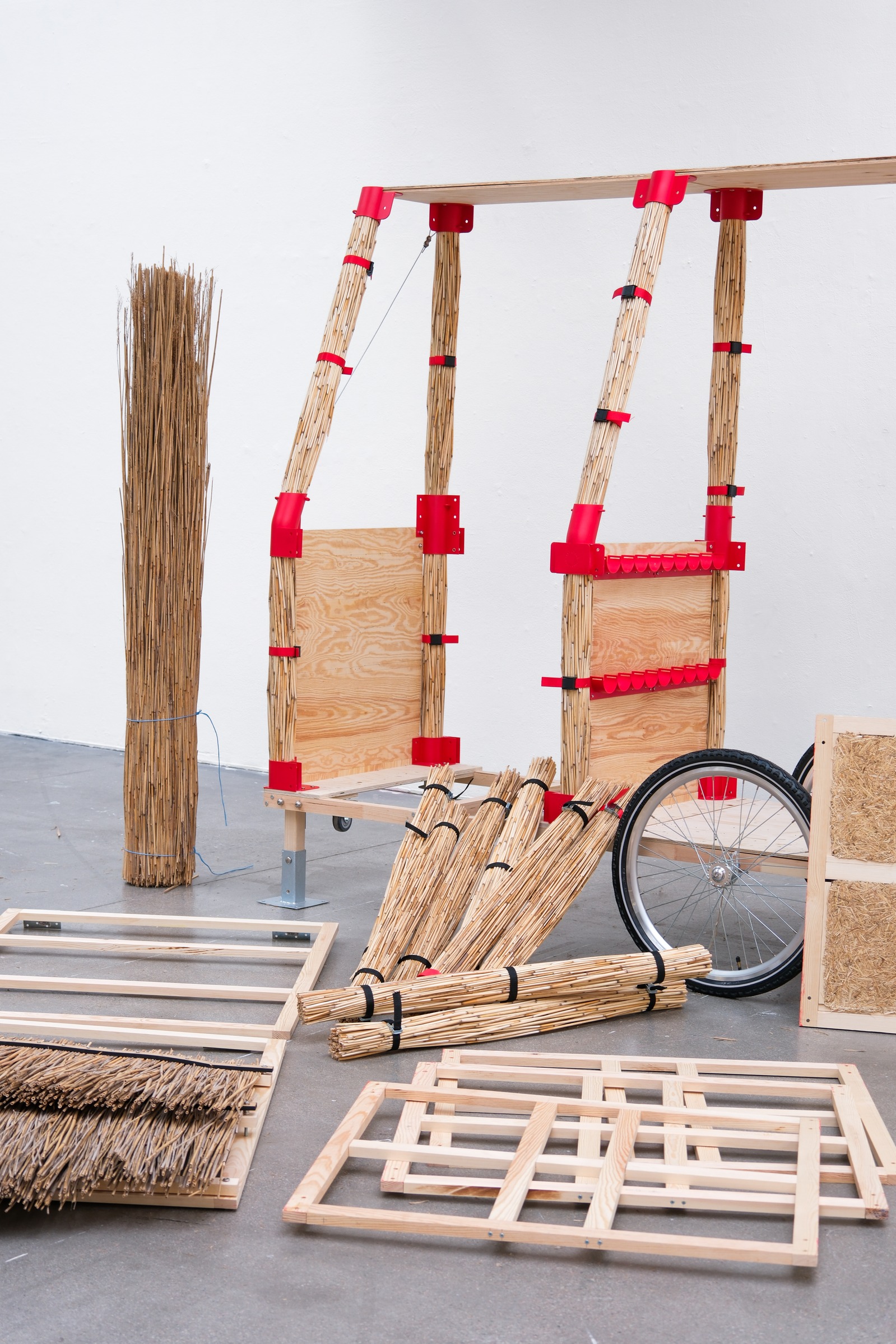
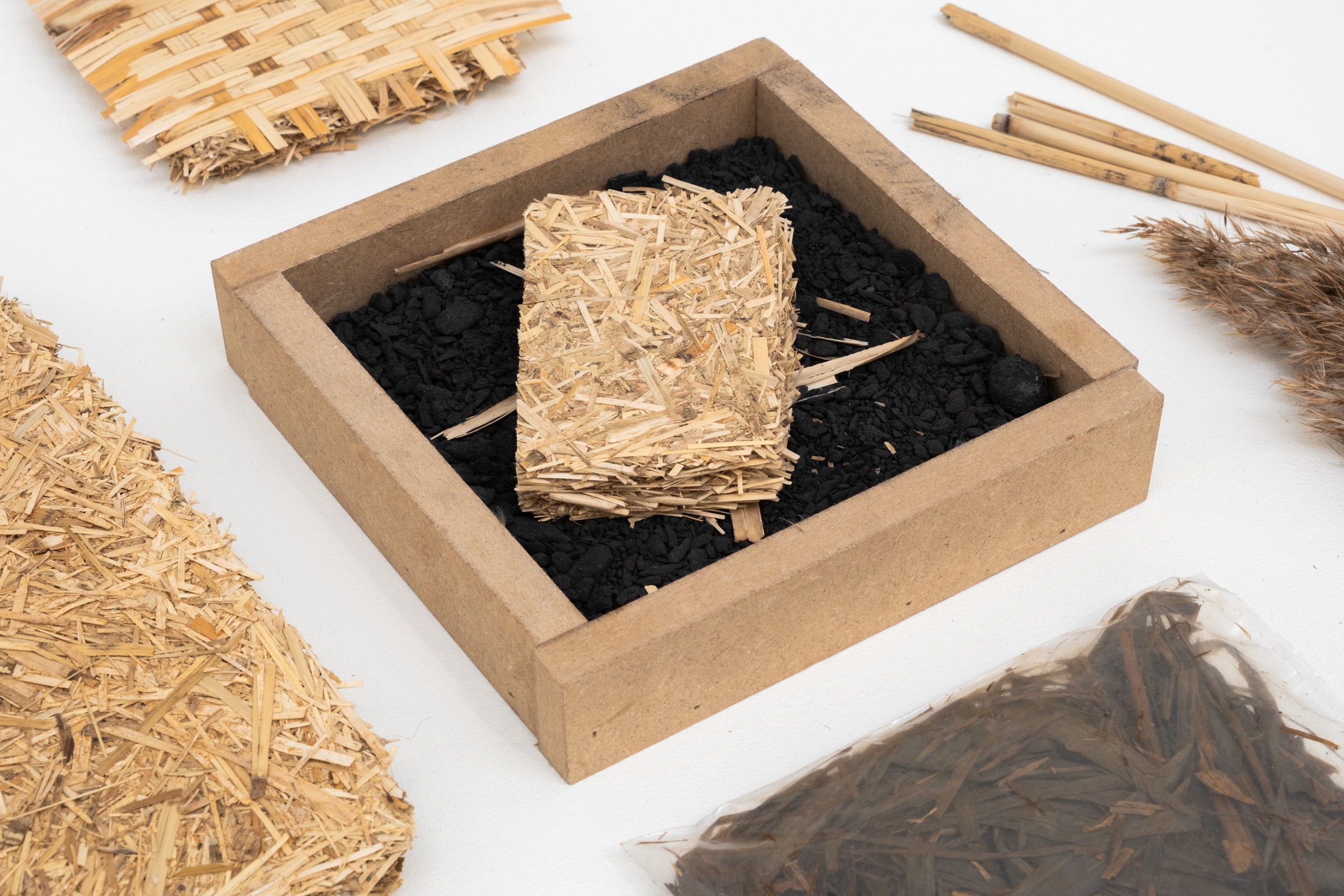
Every autumn, the wetlands on Utö island in the Stockholm archipelago have to be cleared of reed. Berlin-based designer Michelle Heising turned that harvest into building material: pale, coarse particle boards of chopped reed, bonded with a biodegradable glue made from local waste streams. Together with whole reed stems and thatch, the boards form a modular joinery system for small structures on the island.
The project, called Reed Cycle Community, was Heising’s master’s thesis in Design Ecologies at Konstfack University of Arts, Craft and Design in Stockholm. It is a prototype and research project, not a product for sale. The pilot site is Utö, home to Initiativ Utö, a foundation that runs wetlands as a test bed for a cleaner Baltic Sea.
A Harvest That Cleans the Water
Reed takes up excess nitrogen and phosphorus from farmland and wastewater, nutrients that feed algae blooms in the Baltic. When the plants are cut and removed, those nutrients leave the water with them. On Utö the harvest starts in September and is done by hand. Initiativ Utö also hires seasonal workers for it, which gives islanders work after the tourist season ends.
Heising’s question was what the island could do with all that biomass. Her answer is a circular system: the community harvests the reed and turns it into pillars, boards and thatched roofs for the infrastructure it needs.
Glue From Fish and Kitchen Waste
The boards were developed with a team at the Department of Fibre and Polymer Technology of KTH Royal Institute of Technology. The researchers there developed the fully biobased adhesive, with compounds that can be sourced from Baltic waste streams such as the fishing industry and restaurant kitchens. Heising added a woven surface pattern that improves the boards’ water repellence and gives them a textured finish for interiors.
In the prototype structure, light timber frames hold the board panels, bundles of reed stems serve as columns, and bright red connectors join the parts. Thatch, the traditional way of building with reed, makes the surfaces weatherproof.
Back to the Soil
At the end of their life, the boards and the production leftovers can be broken down into material that makes soil more fertile, for instance for community gardens. According to Initiativ Utö, reed can also replace peat in potting soil, whose extraction releases large amounts of stored carbon.
Reed has a long history as a building material, from roofs to the lightweight reed furniture of other designers. Heising’s project adds a board that closes the loop on an island scale. She showed the work at the Konstfack graduation exhibition and at the Reed to Revenue Fair of Race for the Baltics in Helsinki in 2026.
Source & photos: Michelle Heising, mhei design studio and press text “Reed Particle Boards” (2026); Initiativ Utö.