Carbon-Storing Hemp Panels Quieten a Graz Lecture Hall
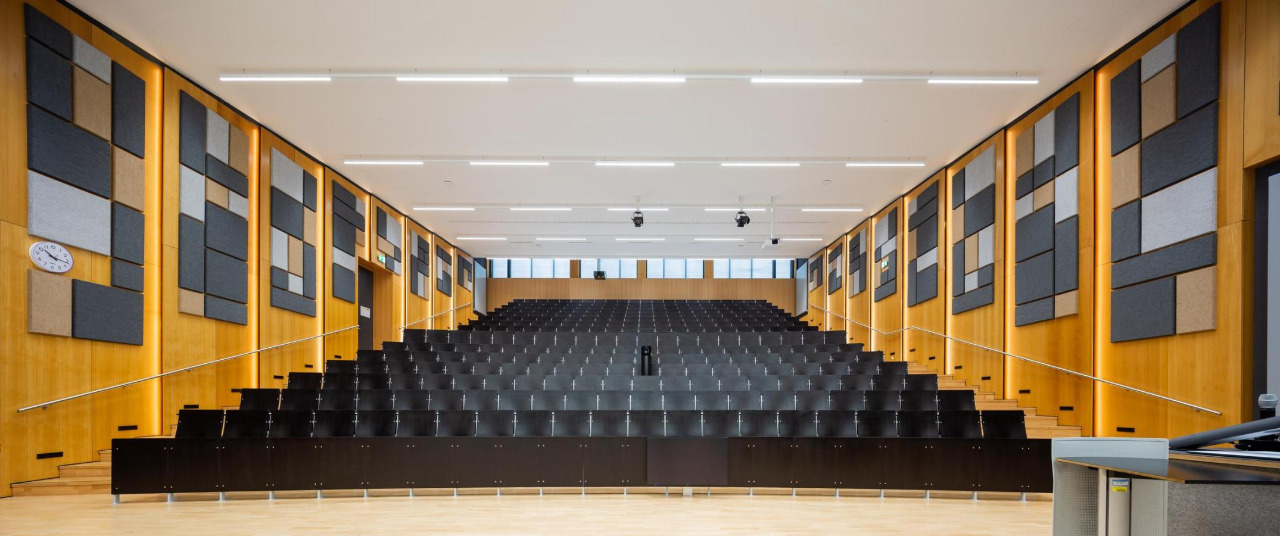
Along the timber walls of the main auditorium at Graz University of Technology, clusters of soft grey, charcoal and sand-coloured panels break up the long wood surfaces. They are SilentHEMP acoustic panels by the Austrian maker SilentFiber, made mainly from hemp straw. According to the product’s environmental declaration, they store more carbon than their production releases.
The panel is a standard product, sold in a format of 62.5 x 62.5 cm and 4.5 cm thick. In 2026 it won Gold in the Sustainable and Circular Product Design category of the International Excellence Awards, and the Workspace category of the Green Product Award. The colour concept for the auditorium came from the in-house colour design studio of the coatings company Synthesa.
Straw, Binder Fibre and a Little Salt
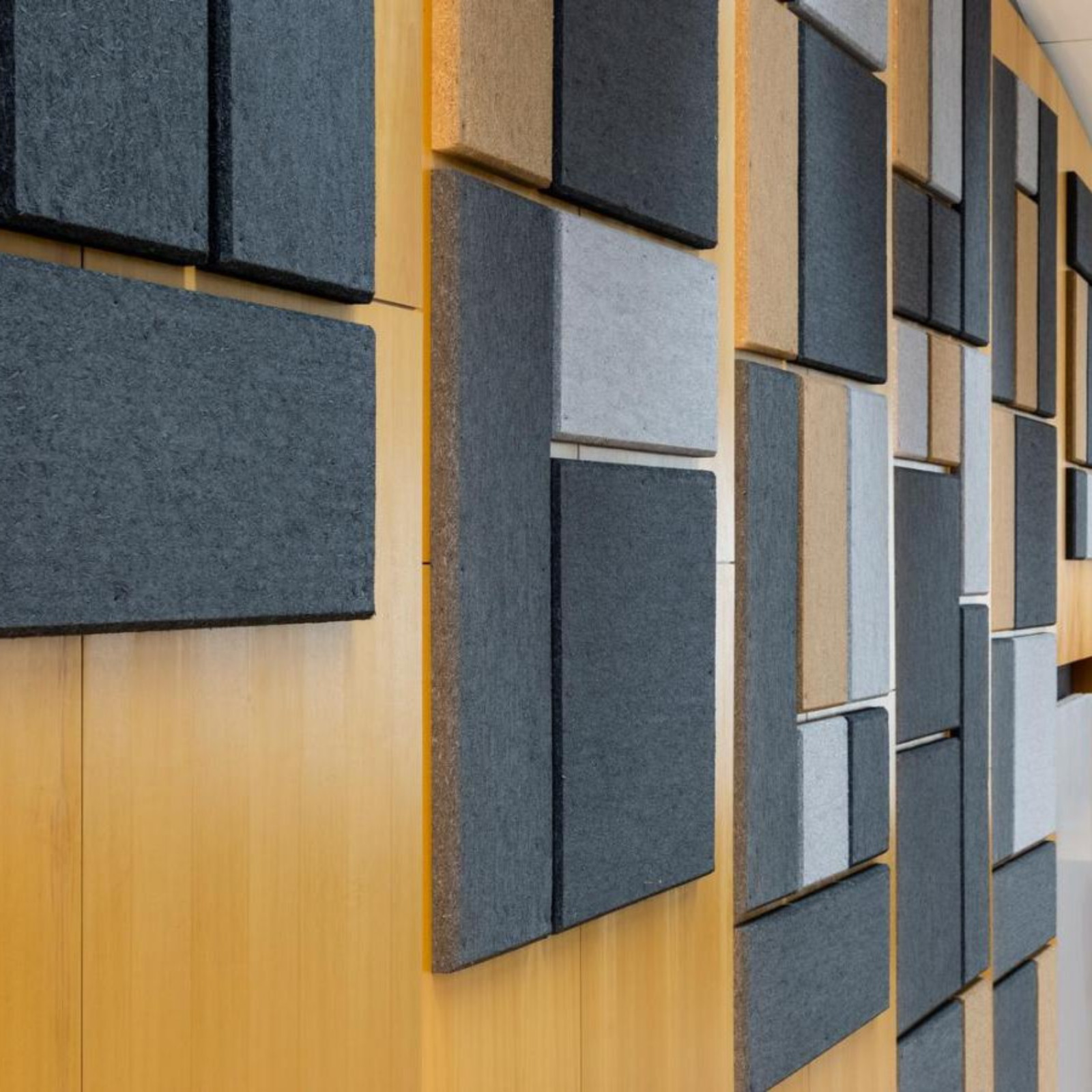
SilentFiber, based in St. Johann am Walde in Austria, uses hemp straw left over from hemp processing in the region. On its product page the company lists 84 per cent hemp straw, 15 per cent bicomponent binder fibre and less than one per cent monoammonium phosphate as fire retardant. The award entry describes a blend of hemp, flax and a PET bicomponent fibre, made with 100 per cent renewable energy. The panel contains no mineral wool.
The surface is fibrous and slightly irregular, a little like a dense felt. It comes uncoated in its natural straw colour, or painted in shades such as off-white, light grey, dark grey, green, red and gold. Wall panels hang on hooks like a picture. On ceilings they are fixed with magnets or adhesive, so they can be taken down when a room is repainted.
A Negative Number on the EPD
The panel’s EPD, drawn up to EN 15804+A2, gives a value of –2.23 kg CO₂e per square metre for modules A1 to A3. In other words, the hemp absorbed more carbon while growing than raw material supply, transport and manufacturing emit. That figure covers production only, not the use phase or end of life.
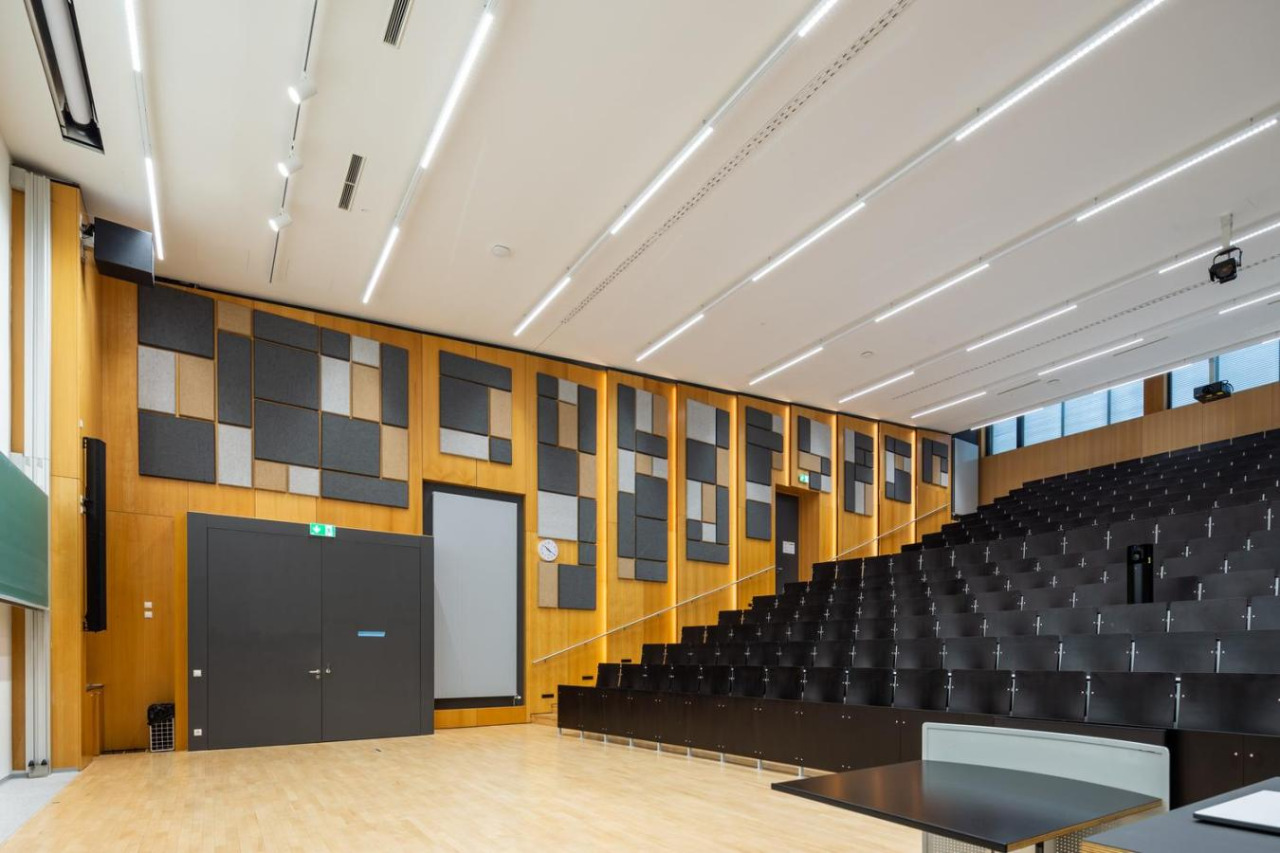
Acoustically, the panel reaches a weighted sound absorption coefficient (αw) of 0.75. Its reaction to fire is classified as Euroclass E under EN 13501. In Graz, the panels were part of the refurbishment of the large lecture hall, where they reduce reverberation and make speech easier to follow.
Colour as Part of the Acoustics
Synthesa’s studio worked out the combinations of panel colours and how they sit against the existing timber. The result is a loose grid of rectangles in charcoal, grey, pale grey and sand, repeated bay by bay along the full length of the hall. The acoustic treatment becomes the main decoration of the room.
The hemp panel is also on MaterialDistrict as SilentFiber Hemp acoustic panel, on the SilentFiber brand page. For another take on hemp in interior acoustics, see Mogu’s Kana wall panels. SilentFiber supplies samples on request.
Source & photos: International Excellence Awards, SilentFiber, Green Product Award. Images: Synthesa.