Search
8 results for “wastewater” in materials
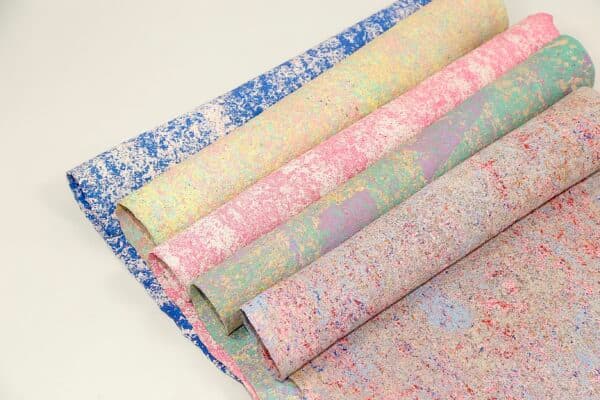
- lokaReboonlokaReboon is a sustainable and environmentally friendly material made from recycled disused coloured balloons. lokaReboon uses recycled coloured balloons as a raw material, which have a long life expectancy due to the rubber's excellent strength and abrasion resistance. At the same time, the rich colours of the balloons are preserved in the new material, so there is no need for secondary dyeing, no secondary industrial wastewater.
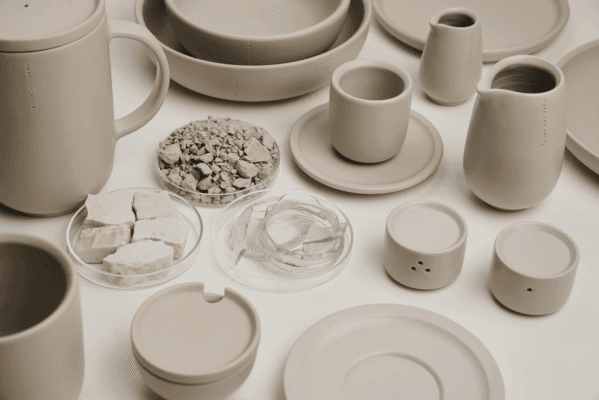
- Circular CeramicsCircular Ceramics designed by Sara Howard in collaboration with Kevala Ceramics, focuses on designing a new way of consuming that reduces the harm inflicted on our planet and preserves our natural resources - without compromising on design. This collection's clay body is made from 100% waste, sourced from Kevala's factory wastewater treatment system. The glaze is engineered from industrial stone manufacturing slurries and consumer glass waste sourced from Bali's rivers.
- KaumeraKaumera is a (hydro)gel that is recovered from bacterial biomass, that is fed on industrial wastewater. The recovery of biopolymers from waste streams makes Kaumera a biobased and circular product. The product consists mainly of (glyco)protein and polysaccharides.
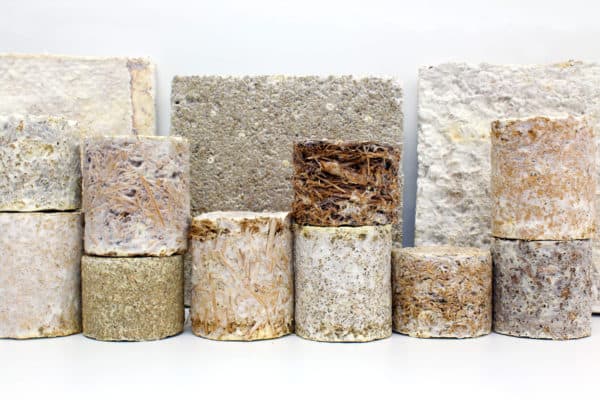
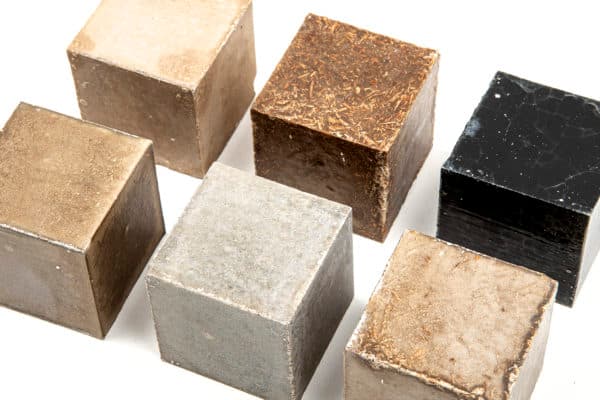
- BiocompositesBiocomposite is a collective term to refer to fibre-reinforced materials with a natural origin. Basically any material that consists of fibres and a binding component (i.e. resin) can be called a composite. If both the fibres and the resin are extracted from biomass, it classifies as a biocomposite. Preferably residual waste is used to obtain raw materials. Sample mycelium executed by Joppe Weeber, student AKV|St. Not for publication.
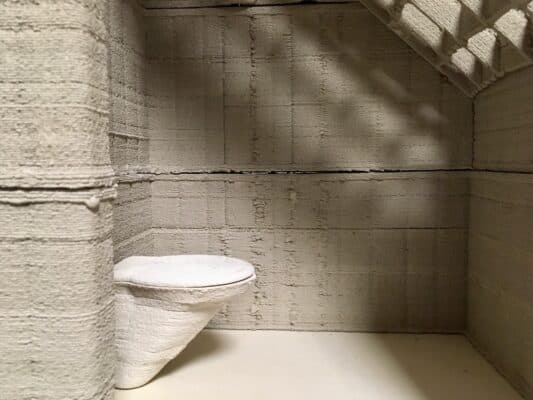
- C-SlurryC-Slurry is 100% Industrial Circular Material which is made from the industrial waste, based on the concepts of alkaline activated concrete. The performance of C-Slurry without cement could be compared with normal cement concrete. It has highly potential in developing sustainable building materials.
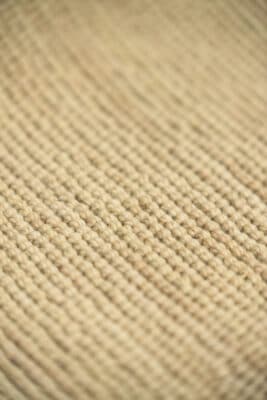
- Seaweed dyed woolen carpetThis wall-to-wall carpet is made from high-quality wool yarns, dyed using Zeefier®, a proprietary dye technology based entirely on seaweed and developed and produced in Europe. The carpet combines the proven performance of wool with a next-generation, biobased colouring process, fully aligned with European manufacturing standards. The colour shown here is sand.
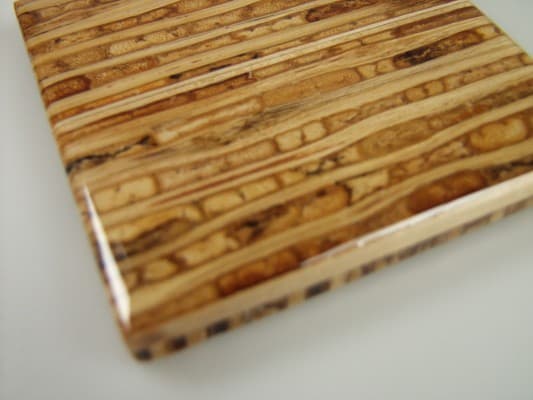
- Kirei BoardKirei Board is an engineered panel product constructed from the stalks of the Sorghum plant grown around the world for food. The stalks left over after harvest are heat-pressed with a non-toxic adhesive to form lightweight, strong, unique Kirei Board.
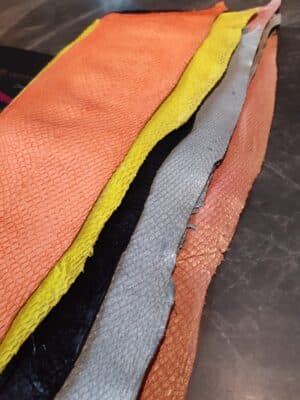
- Salmon leatherSearious Fish Leather specialises in washing, degreasing and descaling fish skins, after which a semi-finished product is created in the form of a sheet of pure functional collagen protein. This can be used as a source material for fish leather. It has developed a leather tanning concept that allows production without environmentally harmful substances. The result is a piece of leather with the structure of a snake.