Bacteria Bind Sand Into a 3D Printed Facade Element
A screen of pale, looping cells looks like carved sandstone, yet no kiln or cement went into it. Bacteria grew the mineral that holds the sand grains together. The facade element comes out of doctoral research by architect Karen Antorveza Paez at ETH Zurich, and is still a research prototype.
Antorveza Paez, who has just completed her doctorate in the Digital Building Technologies group of Benjamin Dillenburger, works with a process called microbiologically induced calcite precipitation, or biocementation. The bacterium Sporosarcina pasteurii makes calcium carbonate – limestone – which grows as tiny interlocking crystals between grains of sand. Cement, by contrast, needs rock fired at over 1,000°C.
A Bio-Ink That Sets Like a Cake
The new step is control. Bacteria binding sand is not new: the technique has been used to stabilise soil and in self-healing concrete. Antorveza Paez combined it with digital fabrication to make free-form architectural parts.
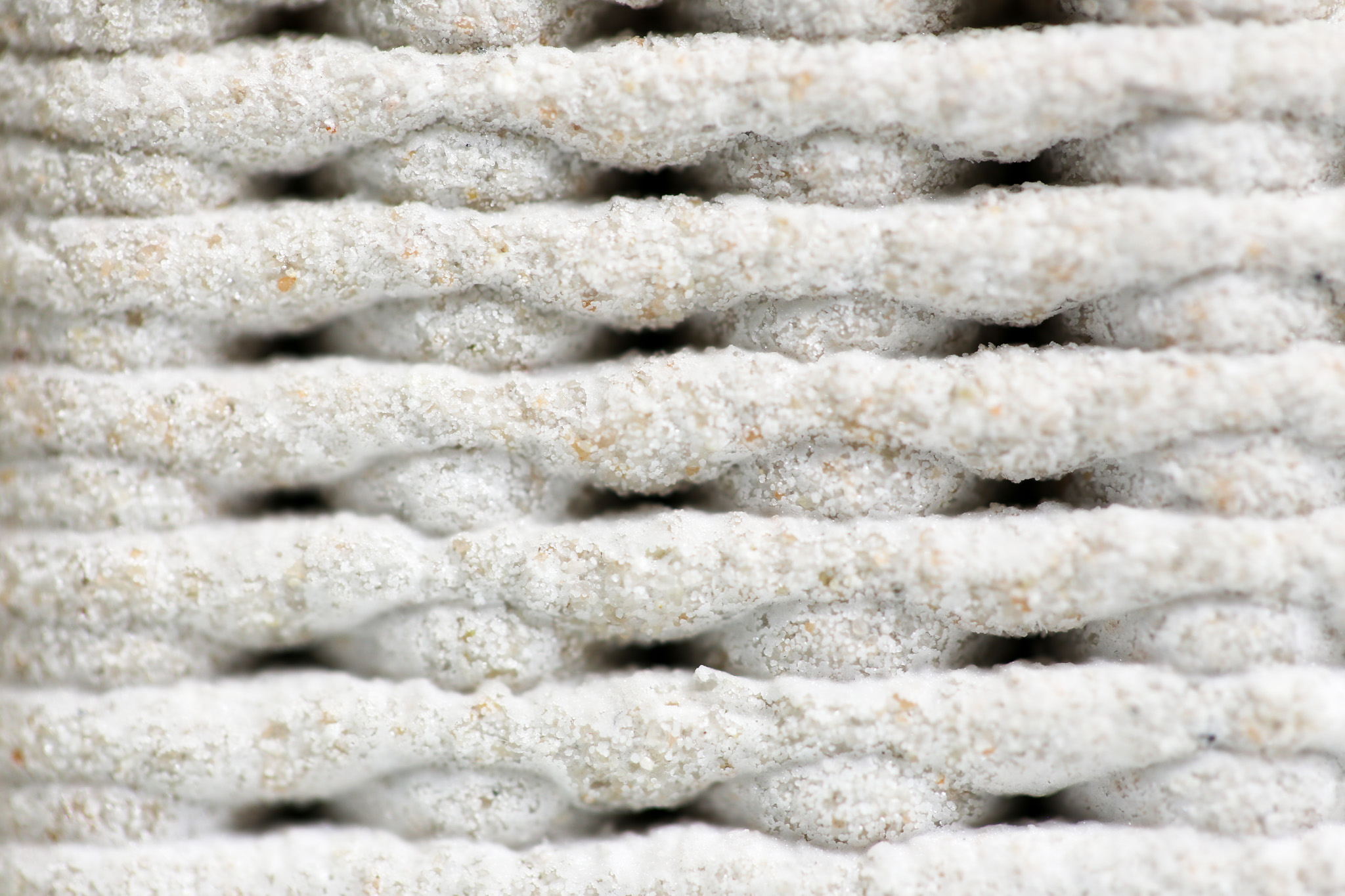
For 3D biocement printing, the team developed a bio-ink of water, the natural thickeners alginate and xanthan, sand and live bacteria. The printed object is then placed in a bath of urea and calcium chloride. The bacteria break down the urea, releasing carbonate that combines with the calcium to form limestone wherever the bacteria sit. The bath is refreshed daily for two to five days, depending on the strength needed, and the part then dries at room temperature. Antorveza Paez compares it to baking a cake, with the bacteria playing the oven. The result can work as a sun screen or a partition wall.
Spraying Surfaces Layer by Layer
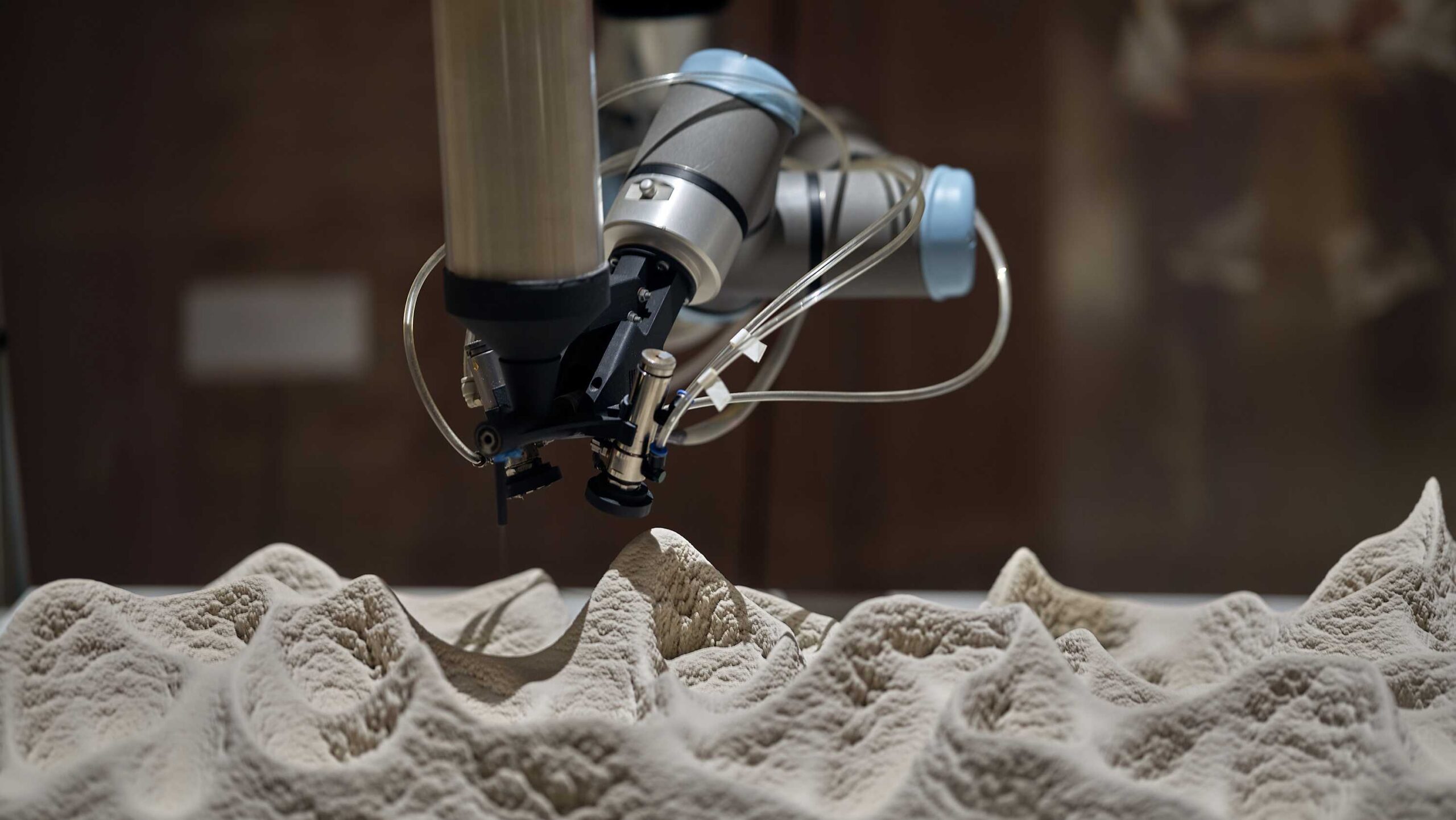
A second method skips the bath. A robotic arm sprays bacteria, mineral solutions and sand in turn, building a surface up layer by layer, inspired by stromatolites. At the 2025 Venice Architecture Biennale, this process ran for six months in the installation Geological Microbial Formations. Printing suits architectural elements; spraying suits surfaces. The spraying method is at an earlier stage and needs more research into its mechanical properties.
Closer to Mortar Than Concrete
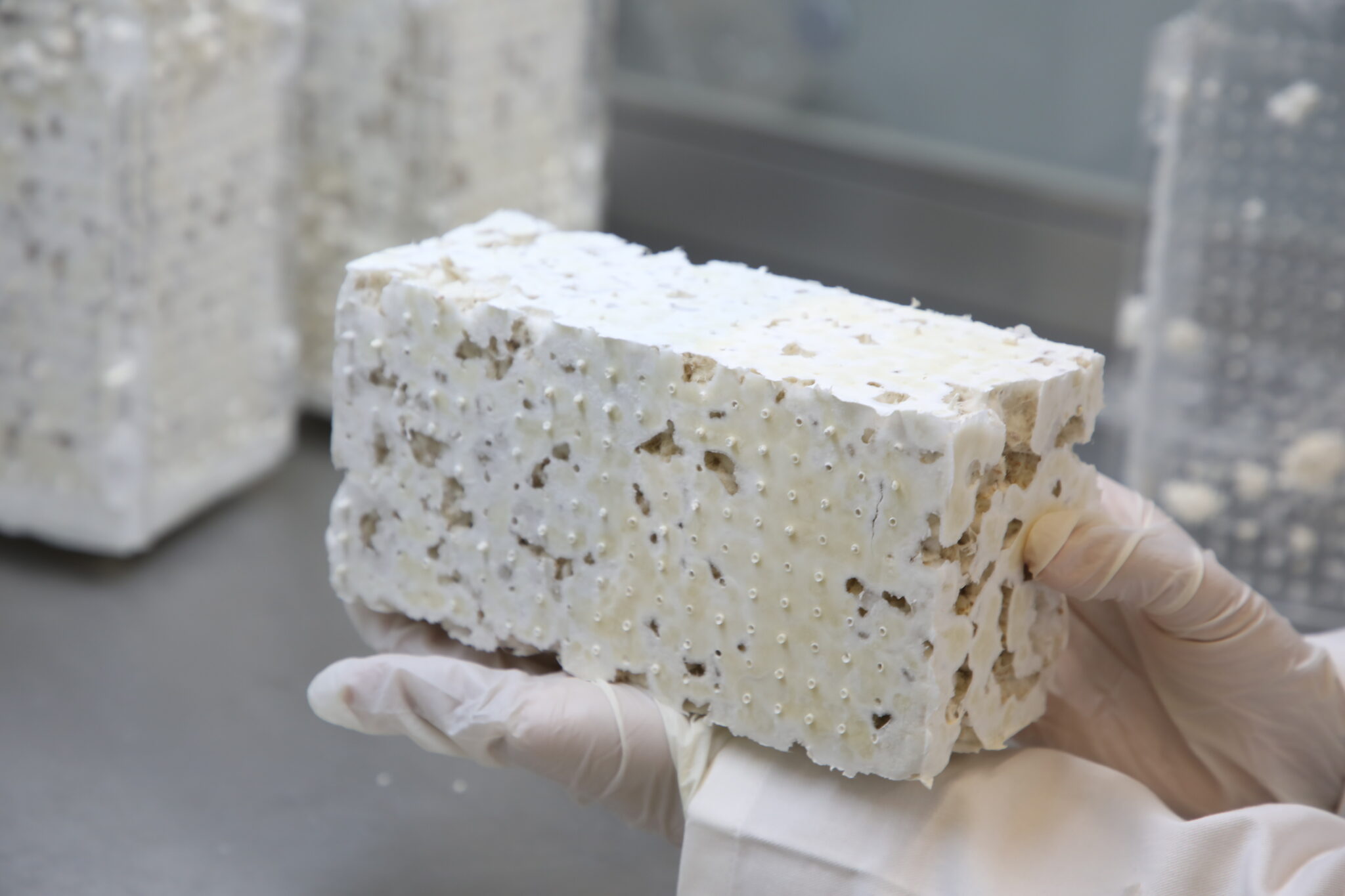
The limits are stated plainly. For now, biocement behaves more like mortar than concrete, and load-bearing structures are a long way off. The right mix of grain sizes for a durable, stable material still has to be worked out. The reaction also releases ammonium, which harms the environment. Antorveza Paez is now working on a third study into that impact and how to deal with it, because without it, she says, biocement would not be a sustainable way to build. MaterialDistrict also covered an earlier reef made of biocement.
The work is published in npj Materials Sustainability, Architectural Intelligence and Biotechnology Design (2026).
Source: ETH Zurich, Digital Building Technologies, ETH Zurich