Moulded Cotton Pulp Forms Paper Lamps Without Added Binders
Béco is an experimental lighting collection that explores how cotton pulp can give a lampshade both its shape and its lighting effect. Developed by Yaëlle Gaussinel and Marie-Claire Beauchesne as a graduation project at the School of Design of the Université du Québec à Montréal (UQAM) in Canada, the collection uses 3D-printed moulds to form three-dimensional paper shells. The cotton fibres interlock as they dry, allowing each shade to hold its shape without an added binder.
Varying the Thickness to Shape the Light
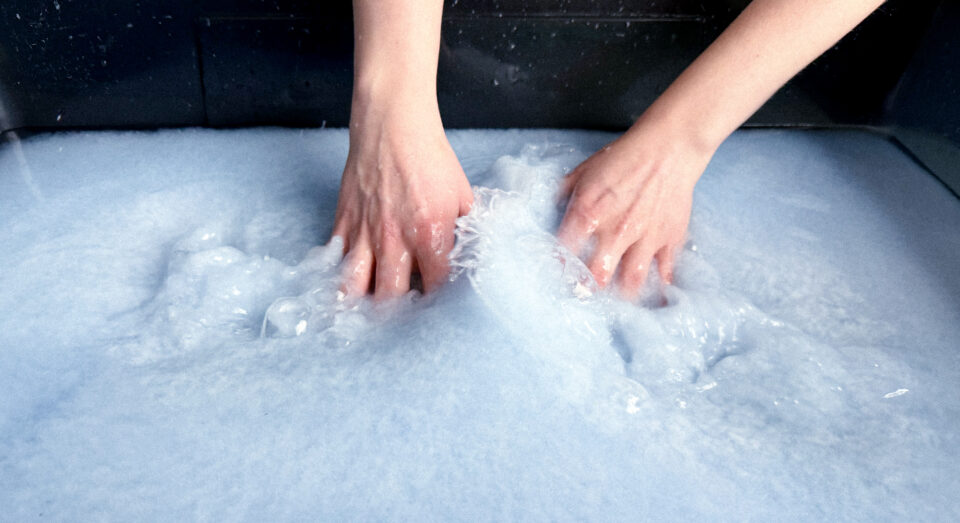
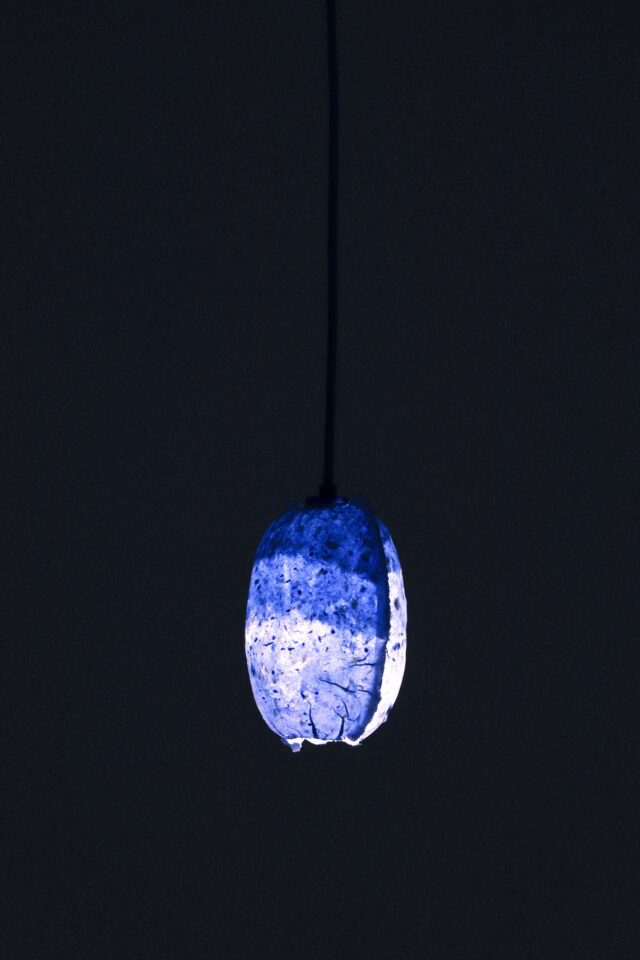
The designers build up the cotton pulp gradually, creating areas of different thicknesses. Thinner areas let more light through, while thicker areas are more opaque. The resulting variation is visible when the lamp is switched on. The build-up of pulp also gives the dried shell its rigidity, so the distribution of fibres determines both how the shade holds its shape and how it transmits light.
Each shade is formed in a two-part 3D printed mould. Perforations in the mould allow water to drain from the wet pulp and leave a raised pattern on the finished paper. The texture records where the pulp met the drainage holes, making a practical feature of the mould visible on the surface of the lamp.
Joining the Paper Shell as It Dries
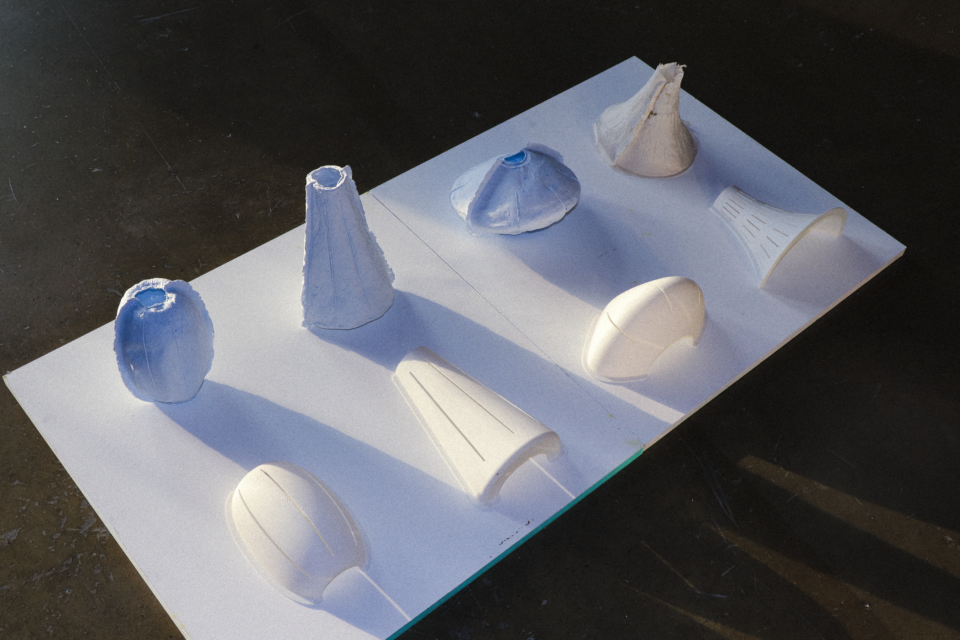
The designers place pulp in both halves of the mould and press the halves together during drying. Where the edges meet, the cotton fibres interlock and bond, joining the two sections into a single shell without glue. The shade then rests on a 3D-printed lamp holder that completes the assembly.
The name Béco comes from a French word for ‘kiss’ and refers to the two edges that meet to form the shade. For lighting designers, the collection shows how varying the thickness of a single plant-based material can give a lampshade its structure, surface texture and light-transmitting properties.
3D printing is commonly used in the production of lamps. You can find more examples at MaterialDistrict.
Source & photos: Yaëlle Gaussinel