Search
6 results for “mud” in materials
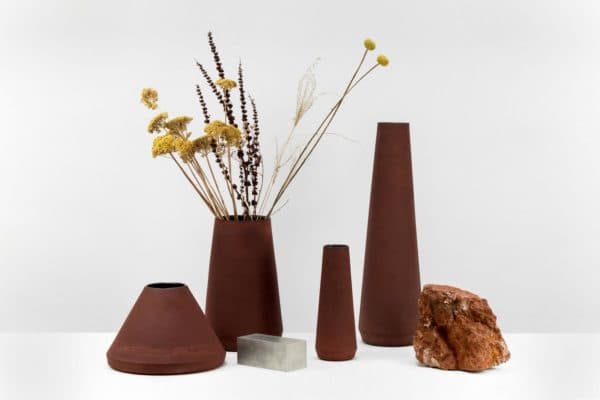
- Bauxite Residue ceramicsRed Mud, a.k.a. bauxite residue, is a waste of the alumina industry. For every part of aluminium made, two and half times more red mud is also produced. Working with factories and research labs, the industrial residue is transformed into ceramic bodies and glazes fit for architectural use.
- Leemsteen (Dutch clay bricks)Dutch clay bricks are made of unbaked clay soil pressed into uniform building blocks. Because these clay bricks are not fired, their unique moisturizing and heat-accumulating properties are maintained. Due to the high mass of limestone, a mud wall can retain and give off heat well so that temperature fluctuations are effectively minimized. Furthermore, clay has a neutralizing effect on odors.
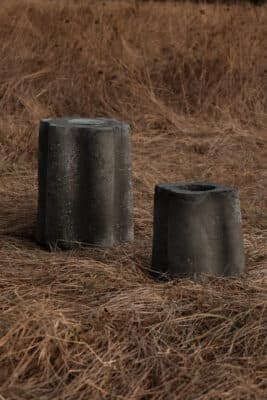
- Biochar-CobInspired by the principles of traditional cob construction, this is a newly crafted material made primarily of biochar, along with a mixture of mud and straw. As the resulting material is unfired, the pieces can be reintegrated into the soil once their purpose has been fulfilled.
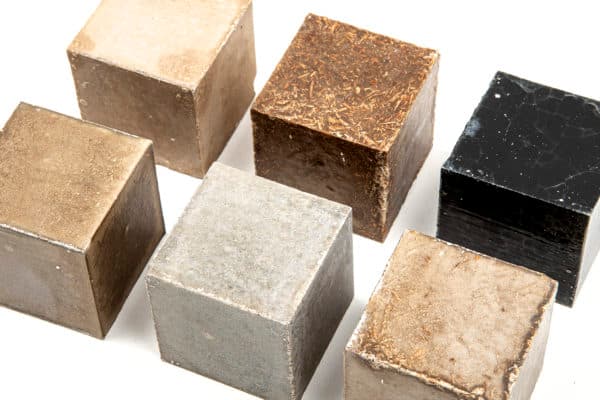
- C-SlurryC-Slurry is 100% Industrial Circular Material which is made from the industrial waste, based on the concepts of alkaline activated concrete. The performance of C-Slurry without cement could be compared with normal cement concrete. It has highly potential in developing sustainable building materials.
- Geofil-BubblesGeofil-Bubbles consist out of 80% waste. Waste from silicate based metallurgical molding forms is produced into foam gravel with heat and sound insulation features, then it is embedded into various adhesive materials, like concrete, and used as construction material.
- Bog OakBog oak is the household name for oak that has been buried in peat bog for hundreds and in some cases thousands of years. Peat – or turf – is a build-up of decaying organic matter. The trees, trunks and logs Wonderwall reclaims are from large oak trees that were felled many moons ago by man or nature. Wonderwall's bog oak is sourced in the Ukraine.