Arup and Queen’s Belfast Plan a Thames Hub for Salvaged Concrete
When a concrete building comes down, its slabs are usually crushed into aggregate. NuBau Labs wants to keep them whole: cut into pieces, tested and mortared into shallow vaults that carry new floors. The €4m project, funded by Horizon Europe, was launched on 13 October 2026 by Arup and Queen’s University Belfast.
Its first pilot manufacturing hub is planned on the River Thames in East London. There, concrete and steel recovered from buildings will be tested, certified and remanufactured into components for new construction. The NuBau programme runs for three years and brings together twelve organisations, with Queen’s as coordinator. The aim is a model that other European cities can copy.
Cities as Material Banks
The partners describe cities as “urban material banks”. The order of priorities is clear: keep, retrofit and reuse existing buildings first, and only salvage parts when deconstruction cannot be avoided. Today, much of what comes out of a demolished building is crushed or recycled into lower-value products, and the next building needs new cement and steel. Recovering whole sections tackles both the waste and the carbon of virgin material. It is the same logic behind tools that map the materials stored in existing buildings before demolition starts.
Concrete Chips in a Shallow Vault
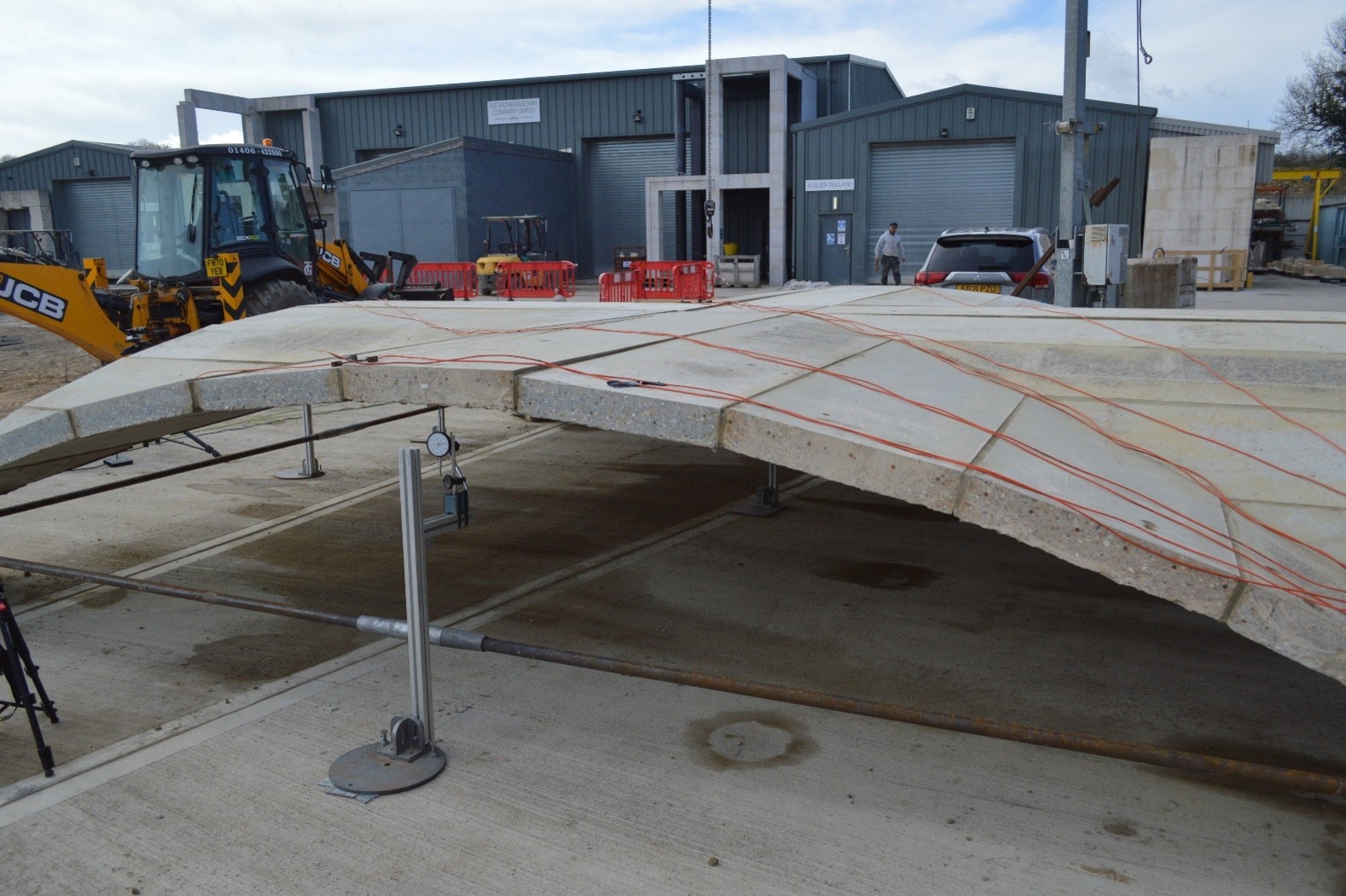
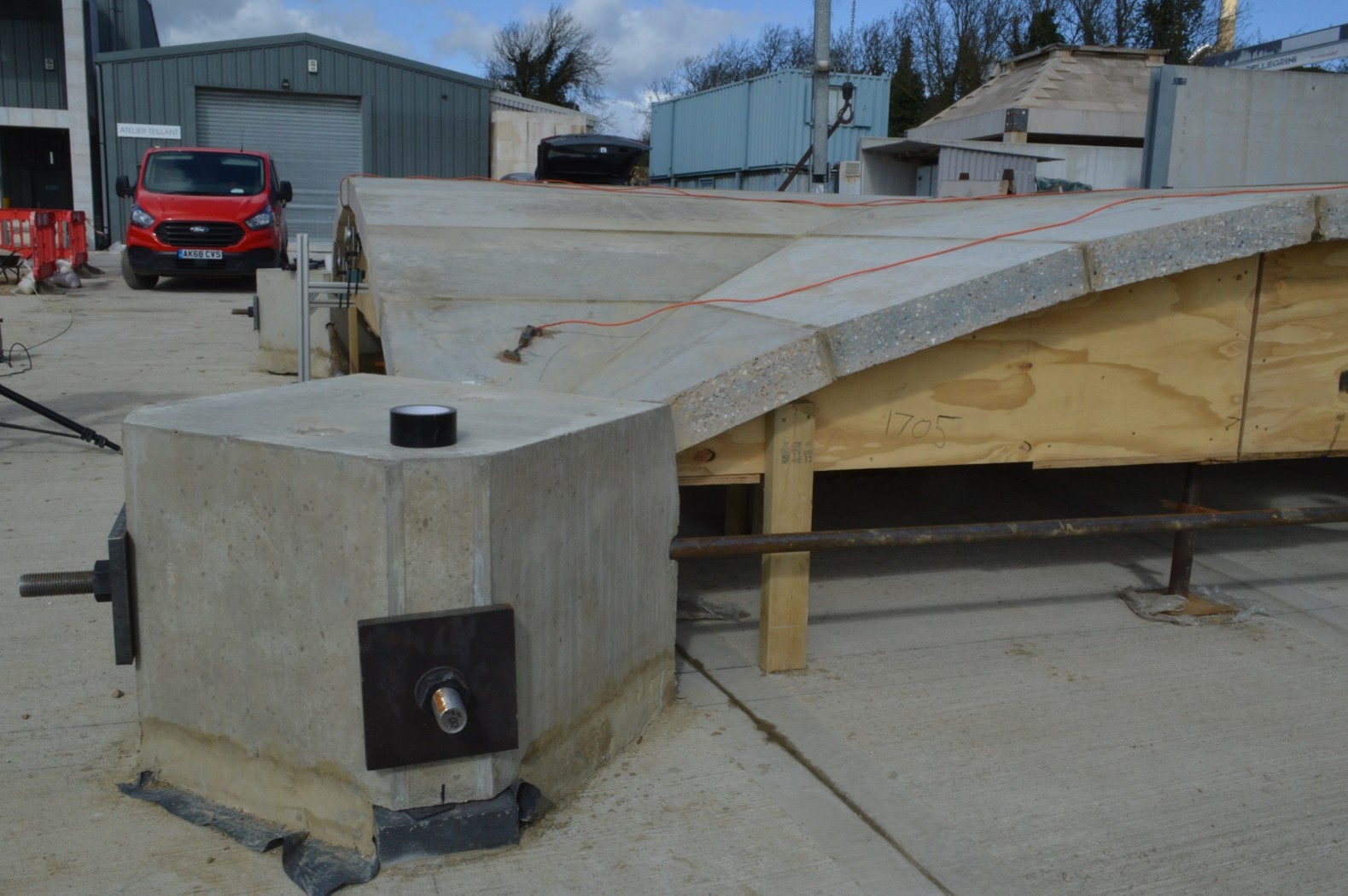
The first solution to be demonstrated is ReVault, a floor and roof system developed by Arup. Concrete panels from an existing building are cut into separate pieces, or “chips”, and mortared together into shallow vaults. These shells work mainly in compression. Loads pass through the joints to precast capitals at the supports, while steel ties take up the horizontal thrust. According to the partners, a ReVault floor has 70% less embodied carbon than a conventional floor system.
A full-size prototype was assembled on temporary timber formwork and then gradually depropped. Queen’s monitored the process with eight vibrating-wire gauges, five dial gauges, three GoPro cameras and optical measurement, recording how the joints, cracks and displacements behaved as the vault became self-supporting. The university also brings its patented FlexiArch system to the project, to give salvaged concrete a new life in other compression structures.
From Precast Yards to a Port Authority
The consortium covers the chain from design to logistics. Alongside Arup and Queen’s, it includes GXN, Politecnico di Torino, Wroclaw University of Science and Technology, Banagher Precast Concrete, The Stonemasonry Company, Pilbrow & Partners and the North Adriatic Sea Port Authority – Ports of Venice. Keltbray, Gardiner & Theobald and the Engineers Reuse Collective also take part. A separate funding application, NuBau River Loop, looks at linking the hub to freight transport on the Thames.
In line with the New European Bauhaus principles behind it, the project will also invite local communities, designers and artists into the design process. The next step is setting up the Thames hub, where the first salvaged components will be tested and certified. Smaller experiments, such as new uses for reclaimed balcony concrete, show the kind of products that reuse at this scale could feed.
Source & images: NuBau Labs / Queen’s University Belfast