Keiji Ashizawa Named Interior Designer of the Year for Material-Led Craft
In a renovated townhouse on the Kamo River in Kyoto, the kitchen counter is a single slab of oak, the joinery is solid mountain cherry and the walls are pale grey plaster. That restraint is typical of Keiji Ashizawa Design. On 16 November 2026, its founder Keiji Ashizawa was named interior designer of the year at the Dezeen Awards in London.
The judges praised how “natural materials, considered details, refined craftsmanship and a sense of calm take centre stage” in his work. Ashizawa founded his studio in Tokyo’s Taito Ward in 2005. It designs architecture, interiors, furniture, lighting and products, guided by a philosophy the studio calls “Honest Design”.
Keeping What a Building Already Has
Several projects start from what is already there. In the Kyoto machiya, completed in 2024, demolition revealed an old roof structure. The studio kept it in view and improved the insulation and soundproofing around it. Gravel from Kurama, north of the city, and the client’s collection of crafts complete the interior.
The Karimoku Research Center in Tokyo, from the same year, began as a concrete building from 1990. Window frames and railings were stripped out to expose the frame, then joined by tinted glass, slim steel and wooden details made by Karimoku. Lounge Ö, a shared workspace that opened in 2026, keeps the industrial character of the more than 60-year-old Shin-Kokusai Building.
Knots Left in View
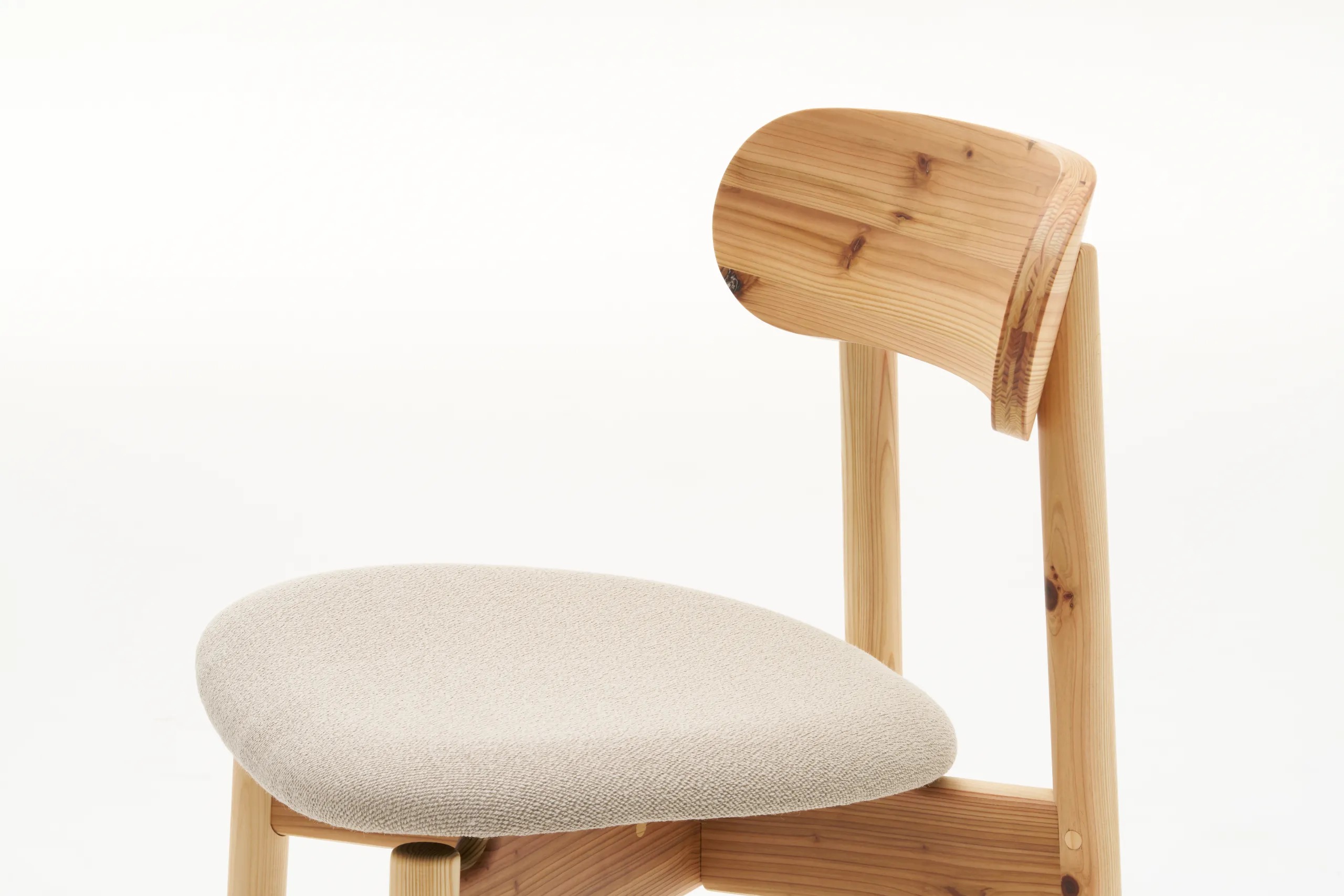
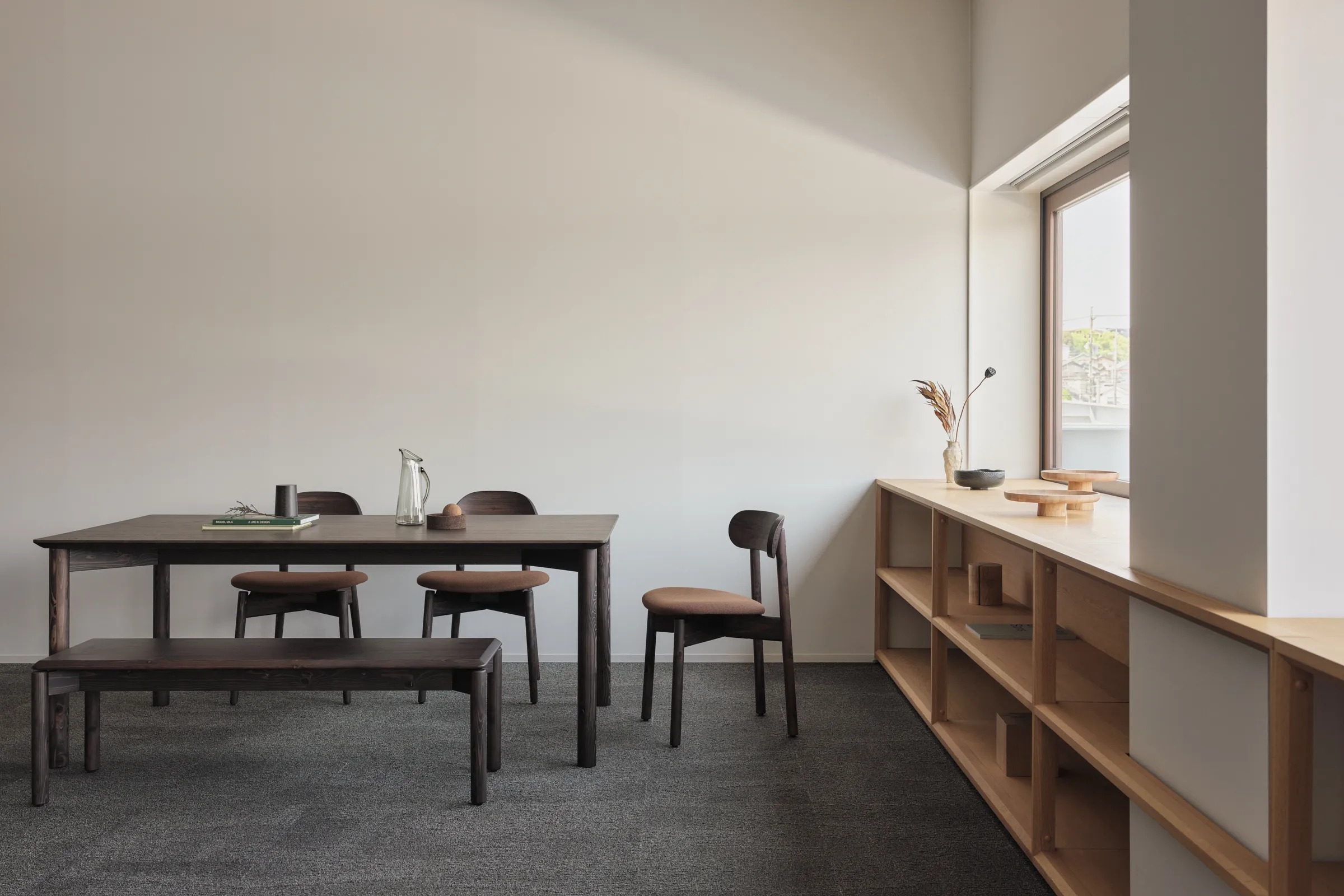
Furniture is a large part of the practice, often with Japanese manufacturer Karimoku. The MORIWA collection, launched in 2026, uses small-diameter, knotty cedar and cypress, wood that has long been hard to use. A structural approach combines the softwood with hardwood, to keep its lightness while adding strength. The knots stay visible in chairs, tables and a bench. The side chair has a seat of high-density foam and stacks two high, so it also suits offices and public spaces.
Karimoku also appears elsewhere on MaterialDistrict, in a Copenhagen listening lounge with eelgrass baffles and in sofas cushioned with recovered trainer foam.
Furniture Made After the Earthquake
For more than ten years, the studio has also driven Ishinomaki Laboratory. The furniture project began as a volunteer initiative after the Great East Japan Earthquake of 2011. It has since grown into Ishinomaki Home Base and a “Made in Local” programme that carries the idea of regional production to other countries.
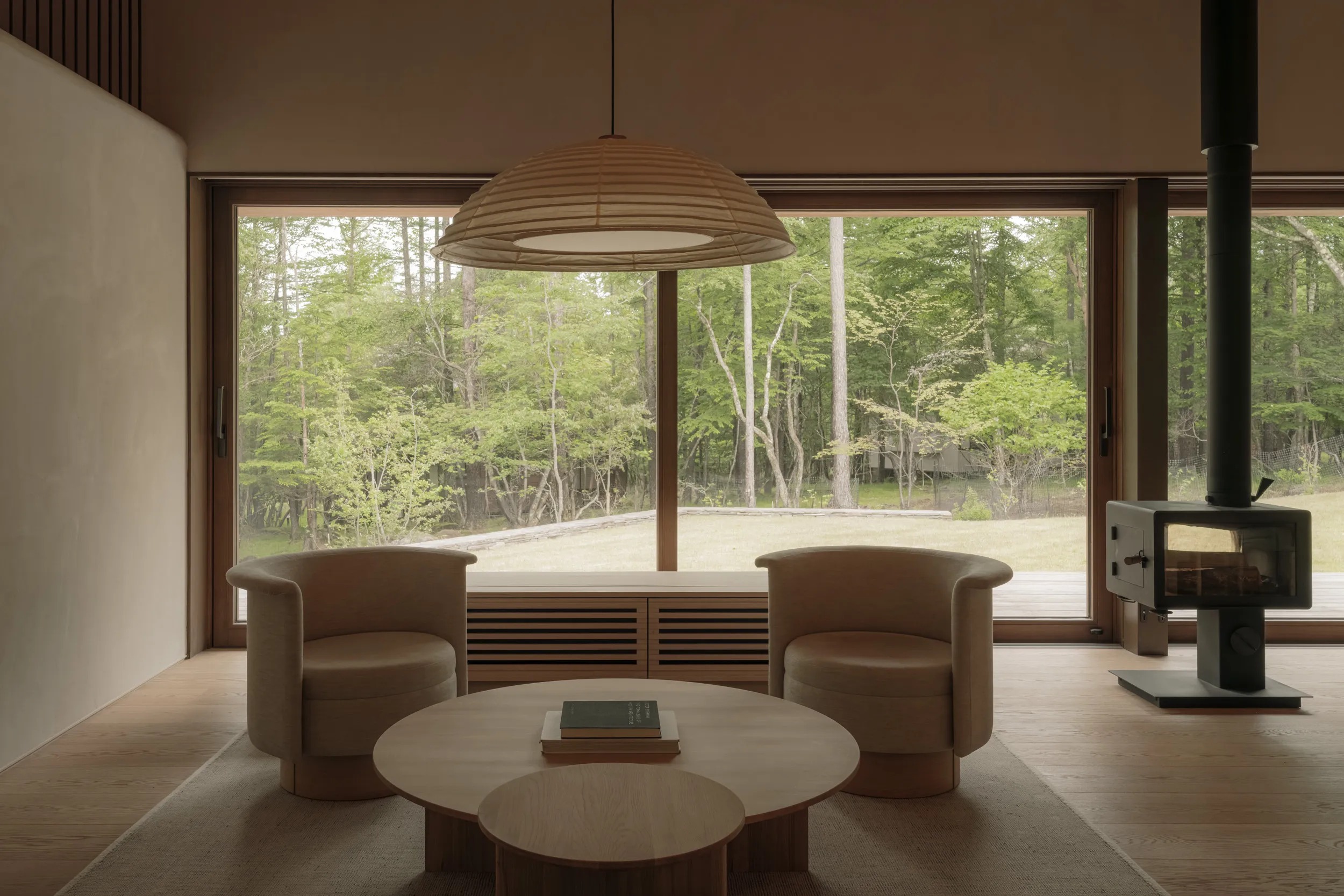
Current work stretches from a single-storey retreat at 1,500 metres on the Yatsugatake plateau, completed in 2025, to projects in China, Vietnam, the US and the Philippines.
Source: Keiji Ashizawa Design, MORIWA Collection, Dezeen Awards 2026