Physicist Derek Stein Turns Nanopore Research Into Moisture-Buffering Paint
A ten-minute shower leaves roughly a soda can of water vapour in a bathroom. One gallon of Lilypad paint can take up about that much and release it again once the air dries. The coating comes from Adept Materials, the company of former Brown University physicist Derek Stein.
Stein spent his academic career studying single biomolecules, nanopores and nanofluidics at Brown University in Providence. In 2024 he retired from his professorship to lead Adept full time; he is now professor emeritus. The company is based in Somerville, Massachusetts. Lilypad, sold as a paint-and-primer kit, went on sale earlier in 2026 as its first consumer product.

A Solar House Changed His Direction
The turning point came in 2014, when Stein advised a Brown student team in the Solar Decathlon. The students designed and built Techstyle Haus, a solar house that was assembled in Versailles, France. The university describes that project as the moment his work began to move from the lab towards buildings.
His answer was a patented two-layer material. In Lilypad, part of the inert filler found in ordinary paint is replaced with desiccants similar to silica gel. Their nanopores store water. When indoor humidity rises, the topcoat absorbs vapour; when it falls, the paint gives it back. The process is reversible. The primer behind it keeps moisture from moving into the wall itself.
Paint for Bathrooms, Kitchens and Ceilings
Adept markets the technology under the name Vaporwisp and suggests Lilypad for rooms where damp builds up: bathrooms, kitchens, nurseries, closets, ceilings and home gyms. According to the company, balancing humidity this way can reduce condensation, limit mould and ease the load on heating and cooling systems. These are the maker’s claims; independent test results are not published on its sites. The paint is now also available in a curated range of colours and is sold online.
Other research groups approach indoor moisture from a different side, from a MOF material that harvests water from air to temperature-responsive windows.
From Startup Award to Building Wrap
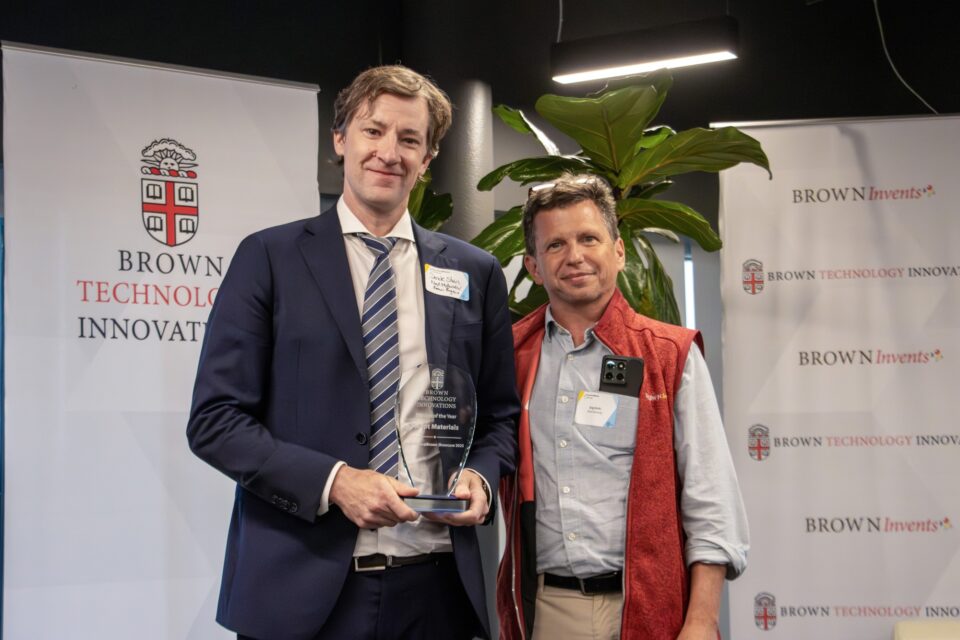
Brown Technology Innovations, the university’s technology transfer office, helped Stein with patents and mentoring. Adept was named Startup of the Year at the 2025 Innovations@Brown Showcase. In 2026 Lilypad won a Fast Company Innovation by Design Award in the Materials and Biodesign category and a silver Edison Award, and was named one of TIME’s Best Inventions.
Paint is meant to be only the first application. Stein and his team are working on a building wrap that steers the direction in which water vapour moves through a wall, and see further uses in food packaging, breathable clothing and agriculture.
Source: Brown University / Adept Materials / Lilypad · Images: Brown University